by The Media Line
A weekly selection of opinions and analyses from the Arab media around the world.
 |
Asharq Al-Awsat, London, June 27
For more stories from The Media Line go to themedialine.org
The Strait of Hormuz has reopened, yet Iran has already begun behaving as its policeman – controlling maritime traffic and speaking openly about levying fees. The White House insists no such fees exist, claiming Tehran pledged not to impose them while warning that US warships remain nearby and could return if necessary. One side is clearly not telling the full truth, or the agreement itself contains deliberate ambiguity.
Even if Iran never collects a single dollar, exercising control over the strait grants it an immensely dangerous political weapon. Tehran’s ultimate objective has always been to position itself as the authority deciding which tankers may pass, meaning Gulf exporters and energy-importing nations alike would become dependent on Iranian naval officers for permission to transit. During any future dispute with a Gulf state, Iran could obstruct that country’s exports under various pretexts, just as it could pressure European or Asian importers by selectively slowing shipments.
It would use Hormuz to impose its regional policies and exact unofficial tribute, consistent with a decades-long pattern of coercion, from detaining foreign nationals on fabricated charges to employing proxy militias across Iraq and Lebanon.
Thus, when US Vice President JD Vance and Secretary of State Marco Rubio say Iran pledged not to charge transit fees, that may well be true, yet it says nothing about Tehran’s broader ambition to dominate the waterway without issuing literal toll tickets. Political hegemony is far more dangerous than financial extortion.
Oman’s announcement of an alternative shipping corridor should therefore be viewed as a test of Iran’s intentions, though it is unlikely to endure without credible military deterrence behind it. The struggle over Hormuz will shape the Gulf’s future, raising the question of whether Gulf states and other affected nations are doing enough to mobilize international opinion against a geopolitical shift that could threaten regional security and global energy exports for years.
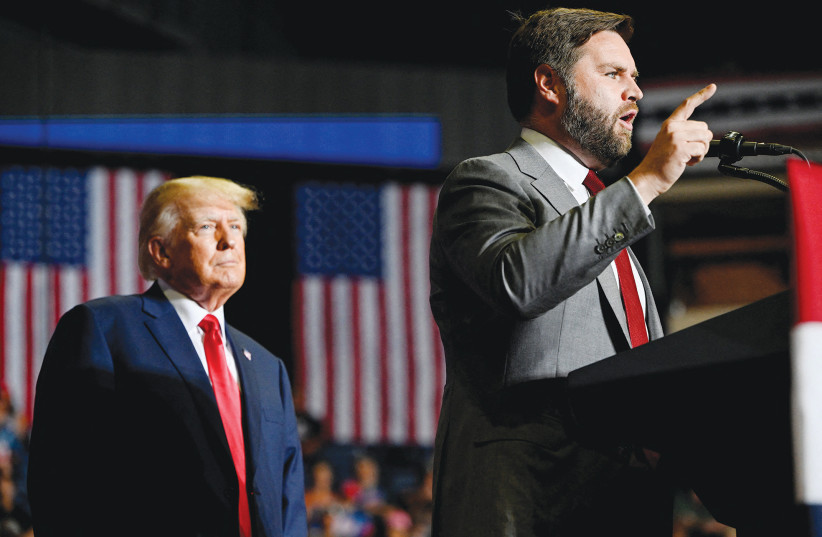
In reality, it was Iran’s closure of Hormuz – not its missiles or drones – that pushed President Donald Trump into rushing toward the Geneva memorandum. As Trump himself acknowledged, Iran had lost the military confrontation but retained leverage by threatening the global economy. The president was candid about his motives: dwindling US strategic oil reserves, rising inflation, higher gasoline prices, and the political risks facing both his presidency and his party before November’s elections left him choosing between prolonging the conflict or striking a deal with Mohammad Bagher Ghalibaf, representing Iran’s new leadership.
Tehran recognized Washington’s urgency and responded with sweeping demands, including control over Hormuz, while Trump’s team focused almost exclusively on securing nuclear concessions regardless of the price elsewhere. Ironically, the American maritime blockade had been effective in bringing Iran to the negotiating table; President Mahmoud Pezeshkian himself admitted during a visit to Pakistan that Iran had been nearing catastrophe before talks began.
Washington entered negotiations demanding an end to Iran’s nuclear program, surrender of enriched uranium, freedom of navigation, and the dismantling of Tehran’s regional militias. It emerged having signed a memorandum pledging not to attack Iran or Hezbollah, releasing frozen Iranian assets, and establishing a reconstruction fund.
Just weeks earlier, the Iranian regime had been buried beneath the rubble of war. What changed?
Vance argues these concessions are confidence-building measures and that the final agreement will eventually reflect balanced compromises. Yet since Geneva, Iran has behaved with growing confidence, escalating pressure and threats while offering no meaningful concessions in return. Even reopening Hormuz came with demands that vessels acknowledge Iran’s authority, submit information, and await approval before passing – not a concession at all, but the foundation of an entirely new system of Iranian control.
– Abdulrahman Al-Rashed
Faced with bad deal or return to war, Trump may choose war
An-Nahar, Lebanon, June 26
The world is anxiously watching the ongoing US-Iran negotiations, mediated by Qatar and Pakistan, in hopes of transforming the memorandum of understanding into a final agreement that prevents renewed war and ushers the Middle East toward greater stability. Yet many observers remain uneasy because Washington and Tehran continue issuing contradictory statements on fundamental issues, particularly Iran’s nuclear program and the future of the Strait of Hormuz.
Each government faces enormous domestic pressure to present itself as the clear victor, insisting that it has imposed its conditions on the other. Although both sides genuinely seek to avoid another war and give diplomacy a chance, the increasingly confrontational rhetoric and inflated public expectations could ultimately undermine the negotiations and reignite hostilities, especially when Israel’s opposition to the process is factored in.
It is still too early to determine who has gained the upper hand, since that judgment can only be made once the conflict has fully ended and military forces have returned to their bases. From Tehran’s perspective, the mere survival of the Islamic Republic constitutes a victory, and there is merit to that claim. Yet the consequences of the war will haunt Iran for years.
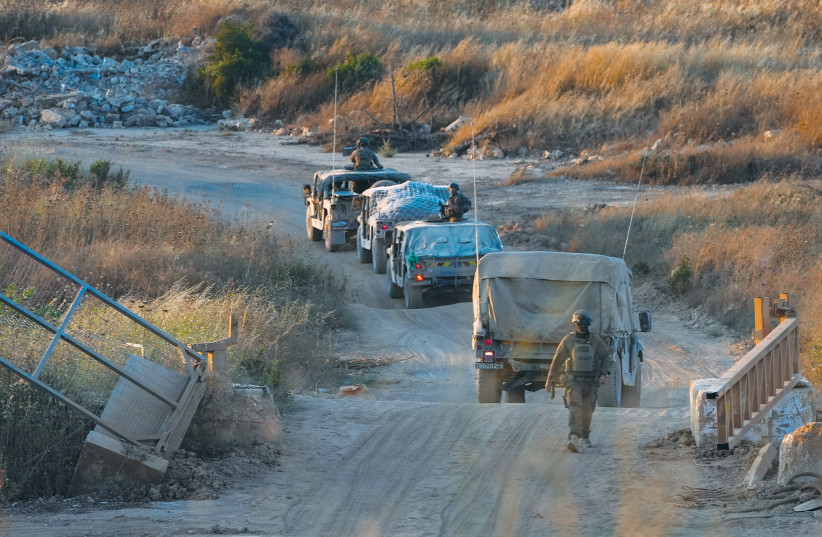
Following decades of sanctions, a devastating military campaign, and a crippling naval blockade, the regime now faces severe economic and social challenges that the release of frozen assets cannot fully resolve. Much of the money to be unfrozen will barely address Iran’s pressing domestic needs, while at least $12 billion is expected to be spent through a US-supervised account purchasing American agricultural products, meaning Tehran will not enjoy unrestricted access to its own resources.
US President Donald Trump, meanwhile, failed to secure the decisive triumph he had envisioned. Iran’s leadership survived the assassination of supreme leader Ali Khamenei, continued fighting under a successor, and succeeded in closing Hormuz, triggering a global economic crisis that placed enormous pressure on Washington. Trump suddenly confronted the prospect of a prolonged conflict requiring US ground forces; precisely the type of Middle Eastern war he has long promised the political base he would never wage.
He also faces another dilemma: any agreement must convincingly eliminate the military dimension of Iran’s nuclear program by removing highly enriched uranium and preventing Iranian enrichment for at least two decades. Anything less risks being viewed by the American public as another version of the 2015 Obama agreement that Trump himself once denounced as the worst deal ever negotiated.
Israel likewise doubts Tehran will ultimately accept those nuclear conditions. Trump’s advisers also understand that no agreement can survive politically without addressing Israel’s security concerns. Consequently, Washington is actively working to dismantle Iran’s regional proxy network, placing particular emphasis on Hezbollah.
Pressure on Iraq has already yielded results, with most Popular Mobilization Forces factions reportedly surrendering their weapons to the state. Including Lebanon in the memorandum is likewise intended to compel Tehran to pressure Hezbollah into ending military operations and withdrawing north of the Litani River, thereby easing negotiations and creating an opening for a lasting settlement of Hezbollah’s arsenal.
Iran’s ballistic missile program remains the most difficult issue, and many diplomats believe Washington may eventually accept leaving it unresolved while strengthening regional missile defenses and allowing certain allies to expand their own ballistic capabilities as a counterweight. Yet influential voices in Tehran appear convinced that Trump is politically trapped and that America has effectively lost.
They are therefore urging Iranian negotiators to make no concessions on either the nuclear file or Hormuz. Such overconfidence risks repeating the same strategic miscalculation that led to war in the first place, when Tehran failed to believe Trump would actually carry out his threats.
Trump has publicly declared that he will never accept Iranian transit fees in Hormuz and insists on a definitive nuclear settlement. He cannot realistically sell an agreement that fails on either count.
Faced with the choice between a weak agreement and renewed military action, even one requiring US forces to secure the Strait of Hormuz, he may ultimately conclude that war is the less costly option, leaving Iran to squander what could be its last genuine opportunity for a negotiated settlement.
– Riad Kahwaji
Israel’s zero-sum approach to Iran
Al-Ittihad, UAE, June 26
Israel’s response following the signing of the US-Iran memorandum of understanding reflects long-standing strategic principles that continue to shape its approach toward Iran. Despite the ceasefire and Washington’s decision to pursue negotiations on issues including Iran’s nuclear and missile programs, sanctions relief, and compensation mechanisms, Israel insists that none of these developments can come at the expense of its national security.
Across both the political and military establishments, there remains broad consensus that Iran constitutes an existential threat requiring definitive, not partial, solutions. While Israel is prepared to cooperate with the American diplomatic initiative, including arrangements concerning Lebanon and limited withdrawals, it intends to spend the 60-day implementation period closely monitoring Iranian behavior while preparing for every possible outcome.
Israeli leaders fear that Tehran’s objective is to maximize concessions by exploiting what they perceive as President Donald Trump’s eagerness to secure an agreement, while the most difficult negotiations remain ahead and much of the process continues behind closed doors. Consequently, Israel rejects any approach that relies on half-measures or allows Iran to re-emerge as a dominant regional actor while retaining significant nuclear or missile capabilities.
For Israeli decision-makers, such an outcome is unacceptable regardless of the diplomatic gains elsewhere. Accordingly, Israel’s military establishment cautions against leaving events entirely in Washington’s hands or allowing prolonged disagreements with the US over strategic priorities. Instead, it advocates maintaining an independent, proactive posture while coordinating closely with American counterparts through the joint intelligence and military mechanisms that have only grown stronger during the conflict.
Israel fully intends to continue its long-running shadow war against Iran and will not abandon its operational doctrine. Throughout the initial implementation period, it will remain deeply engaged, emphasizing that military options continue to precede political calculations.
The same logic applies in Lebanon. Israel plans to preserve and reinforce its security arrangements on the ground despite discussions of partial withdrawals, maintaining buffer zones extending beyond the Litani River and reshaping its defensive priorities in ways similar to its approach in Gaza. These measures reflect Israel’s determination not to compromise its security while remaining prepared for any collapse in US-Iran negotiations.
Such preparations also signal that Israel will never accept the rehabilitation of the Iranian regime as a regional power capable of threatening its national security. At the same time, Israeli leaders are watching political developments in Washington, particularly the upcoming congressional midterm elections, which could alter the American domestic environment surrounding the agreement.
Under every conceivable scenario, Israel has no intention of disengaging from the Iranian file. It will continue maneuvering politically, militarily, and through intelligence operations, reserving the option of intervening during the 60-day period if it believes the agreement is empowering Tehran or failing to eliminate the Iranian threat.
Washington itself appears to recognize that Israel may decide at a certain stage to act independently, potentially disrupting implementation despite the administration’s commitment to preserving the agreement. Above all, Israel remains determined to locate and secure Iran’s stockpile of enriched uranium by whatever means prove necessary.
Ultimately, Israeli leaders regard the current understandings between Prime Minister Benjamin Netanyahu’s government and the Trump administration as fragile tactical alignments rather than enduring strategic consensus. Israel intends to retain full freedom of action and will independently determine its military and strategic course toward Iran, regardless of the diplomatic process unfolding around it.
– Tarek Fahmy
Egypt and Iran: When a Soccer match became the World’s mirror
Al-Masry Al-Youm, Egypt, June 28
When Egypt’s match against Iran ended, what stayed with me was neither the winning goal nor qualification to the next round, important as it was, but a very different question: when did soccer lose its innocence? The game is no longer confined to 90 minutes between 22 players.
Long before the opening whistle, it unfolds in political offices, international federations, sponsorship negotiations, television rights markets, and corporate boardrooms, only to continue afterward across media outlets, social platforms, and policy discussions. That is why I could never see Egypt versus Iran as merely another World Cup fixture. Some matches are played on the pitch, while others, often the more consequential ones, take place outside it.
What struck me most was the expression on the Iranian coach’s face after the final whistle. He did not look like a man disappointed by a missed opportunity or searching for excuses. He stood there carrying something far heavier than a soccer result, as though he had emerged from an examination in history rather than from a sporting contest.
Perhaps this is only my own interpretation, because none of us can truly know another person’s thoughts, yet faces sometimes speak more honestly than words because they are not rehearsed or filtered through political calculation. In that moment, I felt I was watching not a defeated coach but a man carrying the burdens of a nation passing through one of the most difficult periods in its history. It led me to wonder whether sport can still be separated from politics at all.
Half a century ago, people turned to soccer to escape the world. Supporting a team required no declaration of political allegiance or ideology; loving the game was enough. Today, however, the world has become too interconnected for any human activity to remain untouched by politics.
Sport itself has acquired extraordinary influence. When more than 1 billion people watch a World Cup final, each image, flag, and celebration becomes a message that extends far beyond the match. A global soccer star inevitably becomes part of his country’s soft power, whether he intends to or not.
It is therefore unsurprising that governments now treat sport as a strategic investment rather than mere entertainment, spending billions to host tournaments and strengthen national teams because they recognize that a country’s image is shaped not only through diplomacy but through everything that inspires admiration and respect.
Power itself has evolved. Influence increasingly matters as much as military or economic strength. The question is no longer simply what a nation possesses, but how the world perceives it. A national team represents far more than its soccer federation or players; it reflects a country’s culture, discipline, institutions, teamwork, and ability to perform under pressure.
Every strong performance strengthens that image just as effectively as a celebrated film, a leading university, or a scientific breakthrough. Those who dismiss soccer as merely a game overlook how modern economies value reputation. Investors study perceptions alongside financial statements, while tourists choose destinations based as much on image as on price.
Sport has become part of the economy of reputation. A disciplined team, sportsmanlike players, and respectful supporters often shape international perceptions more effectively than expensive advertising campaigns. That is why I believe Egypt’s qualification should not be viewed solely as a sporting achievement but as another chapter in strengthening the country’s international standing.
It does not replace economic reform, education, or development, but it contributes to a broader narrative that Egypt remains present, competitive, and engaged with the world. Yet while celebrating Egypt’s success, I kept returning to the Iranian team. Those players carried not only the hopes of their supporters but also the extraordinary political, security, and media pressures surrounding their country.
Whatever one’s views of governments or policies, athletes in such circumstances bear burdens they never chose. Players want to play soccer, and coaches want to manage matches, yet the world insists on assigning greater meaning to every gesture, every celebration, and every silence. Sport loses part of its innocence but gains another role: becoming one of the clearest mirrors through which the world reveals itself.
Soccer is no longer simply an escape from reality but increasingly one of the ways reality expresses itself. Modern soccer also revolves around broadcasting rights, sponsorships, advertising, digital platforms, merchandise, sports tourism, and betting markets, generating revenues exceeding the GDP of some smaller countries.
Yet its greatest value often lies not in direct financial returns, but in the image it creates. Reputation has become an economic asset. Countries with stronger international images attract greater investment, tourism, and talent, and every successful national team adds another layer to that intangible capital.
Investors may not make decisions because of a single goal, but they do notice societies that demonstrate organization, resilience, and capable institutions. Egypt’s continued presence in the tournament therefore means its name, flag, and anthem continue appearing before worldwide audiences; symbolic perhaps, but deeply significant in today’s economy of image.
The match also reminded me of society itself. For a brief moment, millions of Egyptians with different political views, beliefs, and economic circumstances united behind one shared hope. Few institutions can create such moments of collective identity.
Most striking of all, however, was not the contrast between Egyptian joy and Iranian disappointment but their common humanity. Triumph and sorrow belonged equally to ordinary people. In that instant, I was reminded that what unites nations is often greater than what divides them. Perhaps that is why sport remains one of the few arenas where countries can compete without fighting.
That, above all, was the lesson I took from Egypt versus Iran. It was never merely a soccer match but a small mirror reflecting a much larger world, where politics, economics, identity, culture, and human emotion intersect – and where, despite everything, the human story remains the one most worth telling. – Dina Abdel Fattah
Translated by Asaf Zilberfarb. All assertions, opinions, facts, and information presented in these articles are the sole responsibility of their respective authors and are not necessarily those of The Media Line, which assumes no responsibility for their content.
The Media Line
Source: https://www.jpost.com/middle-east/article-901116

No comments:
Post a Comment