The "Middle East and Terrorism" Blog was created in order to supply information about the implication of Arab countries and Iran in terrorism all over the world. Most of the articles in the blog are the result of objective scientific research or articles written by senior journalists.
From the Ethics of the Fathers: "He [Rabbi Tarfon] used to say, it is not incumbent upon you to complete the task, but you are not exempt from undertaking it."
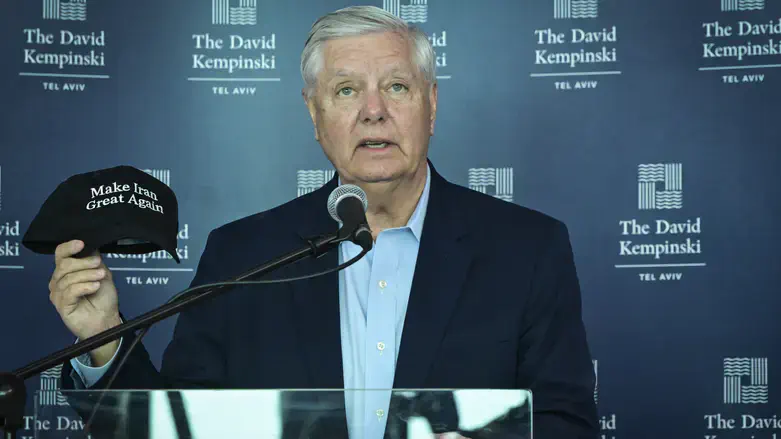
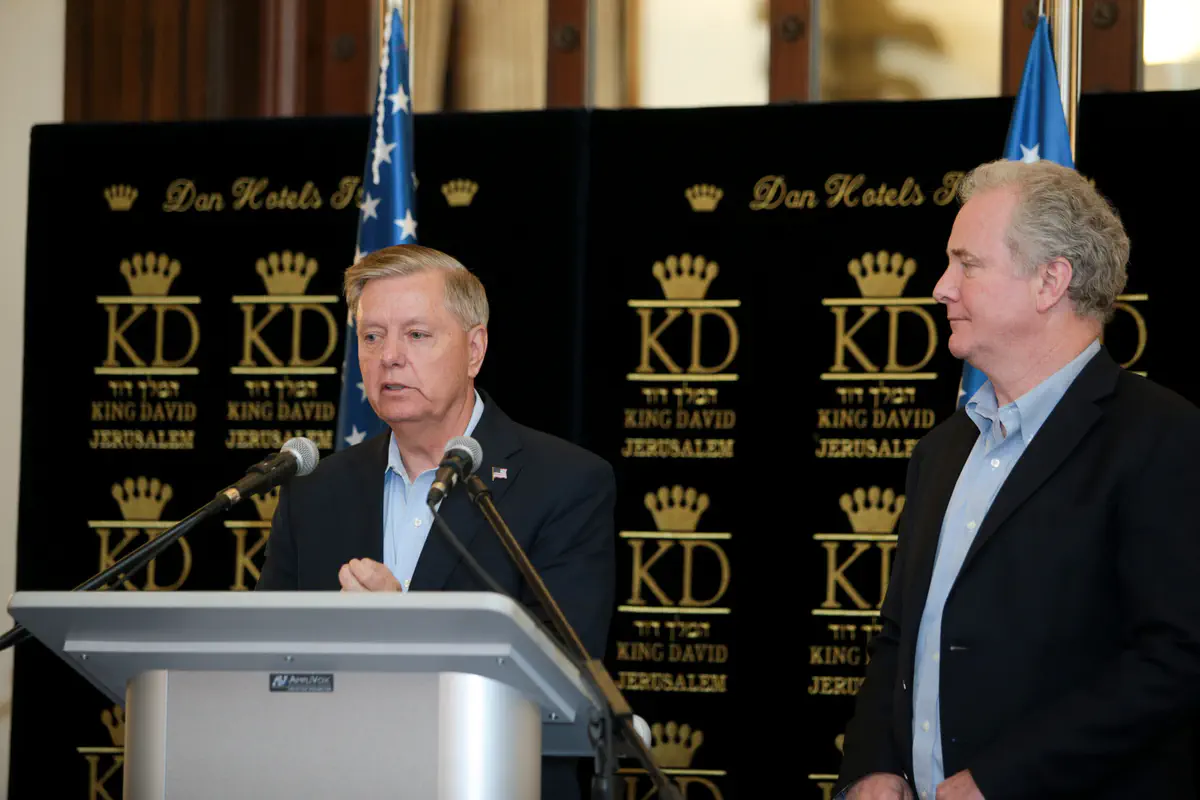
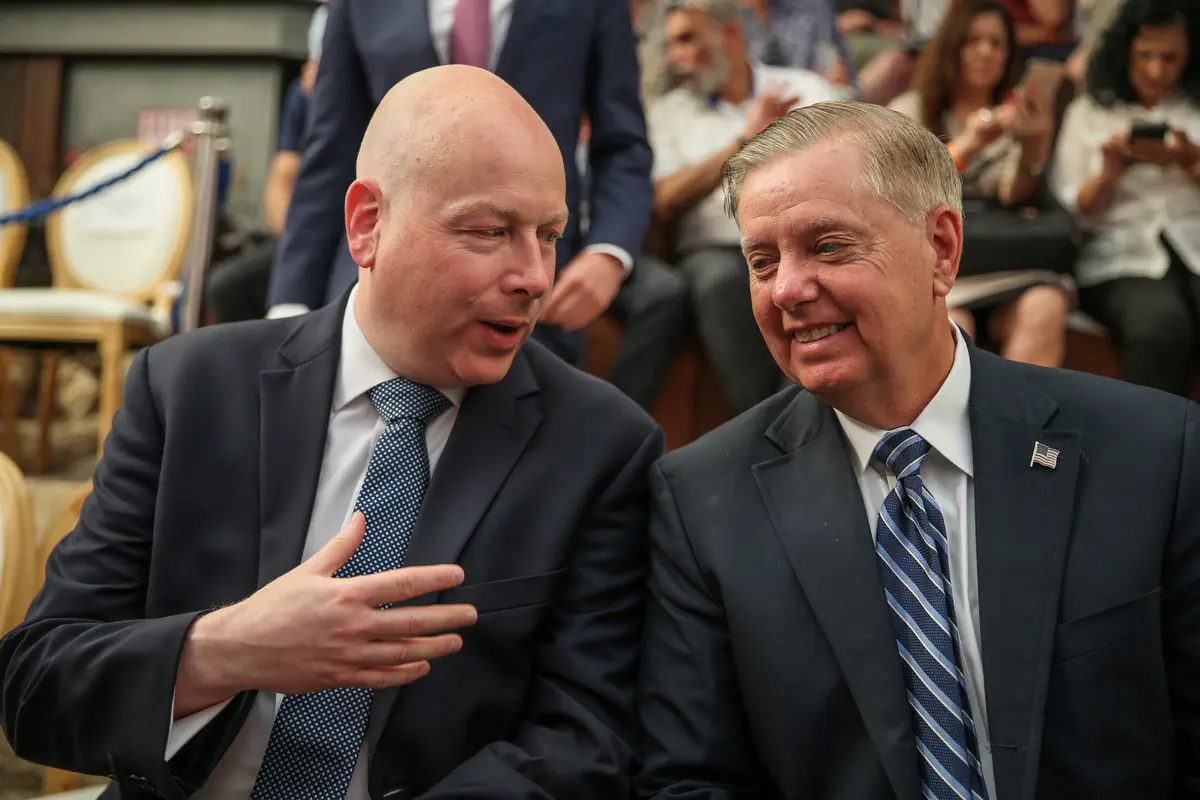
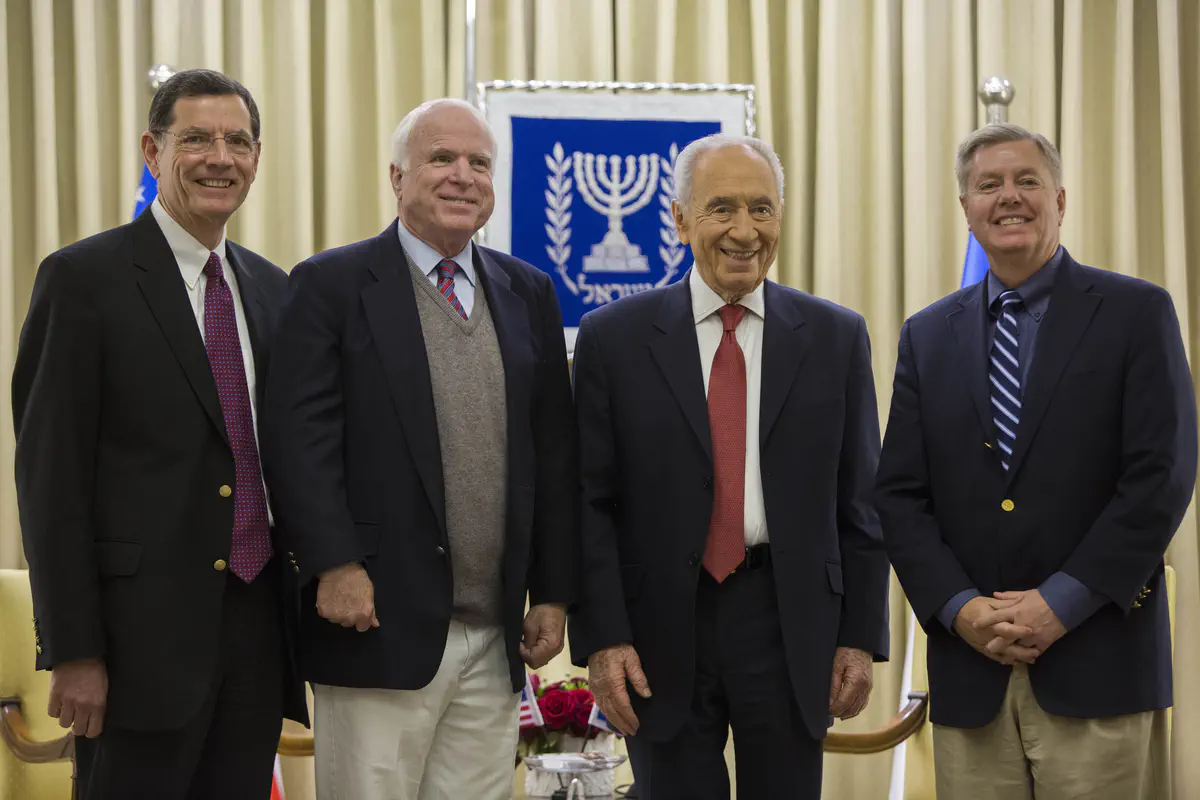
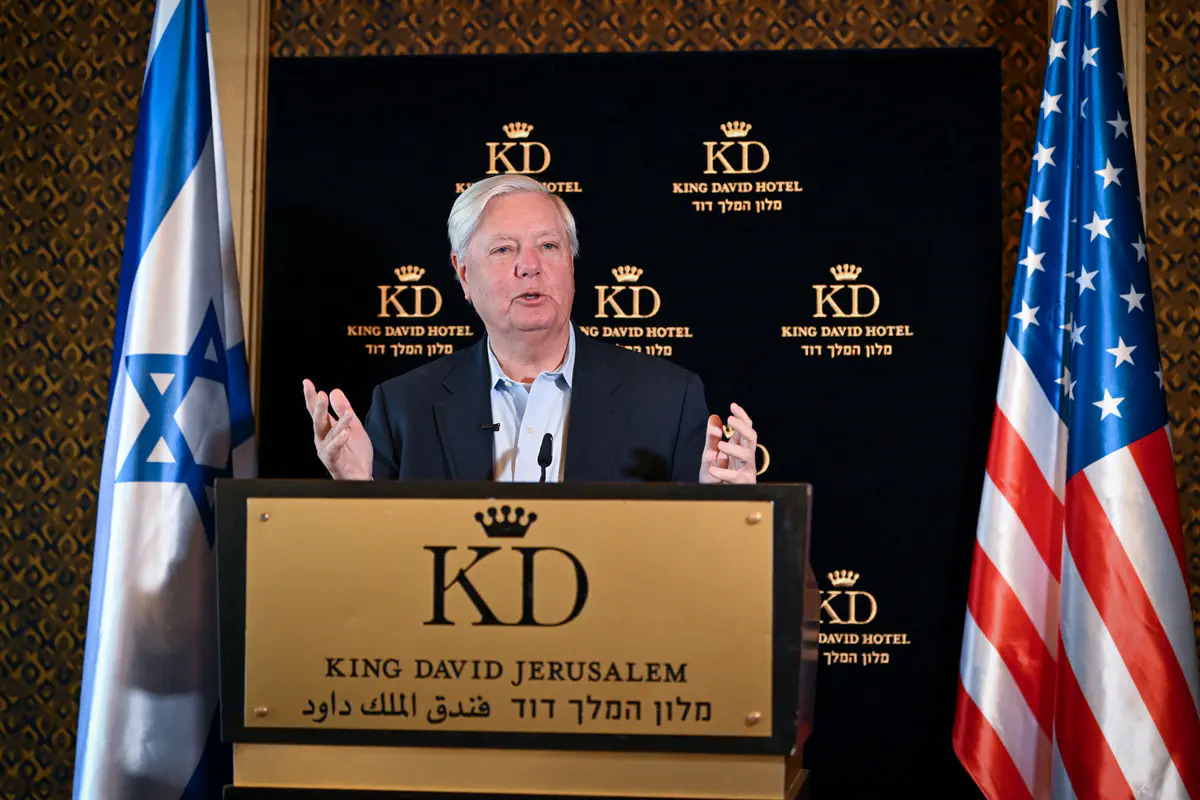
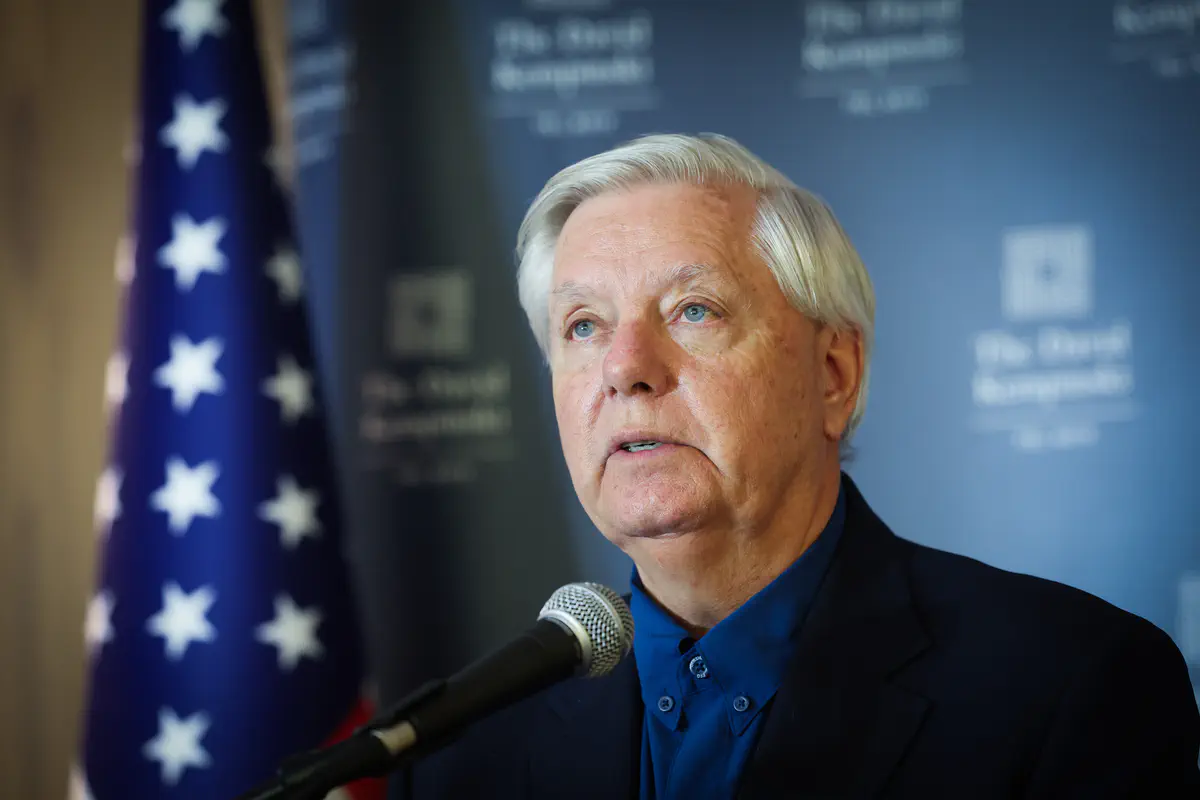
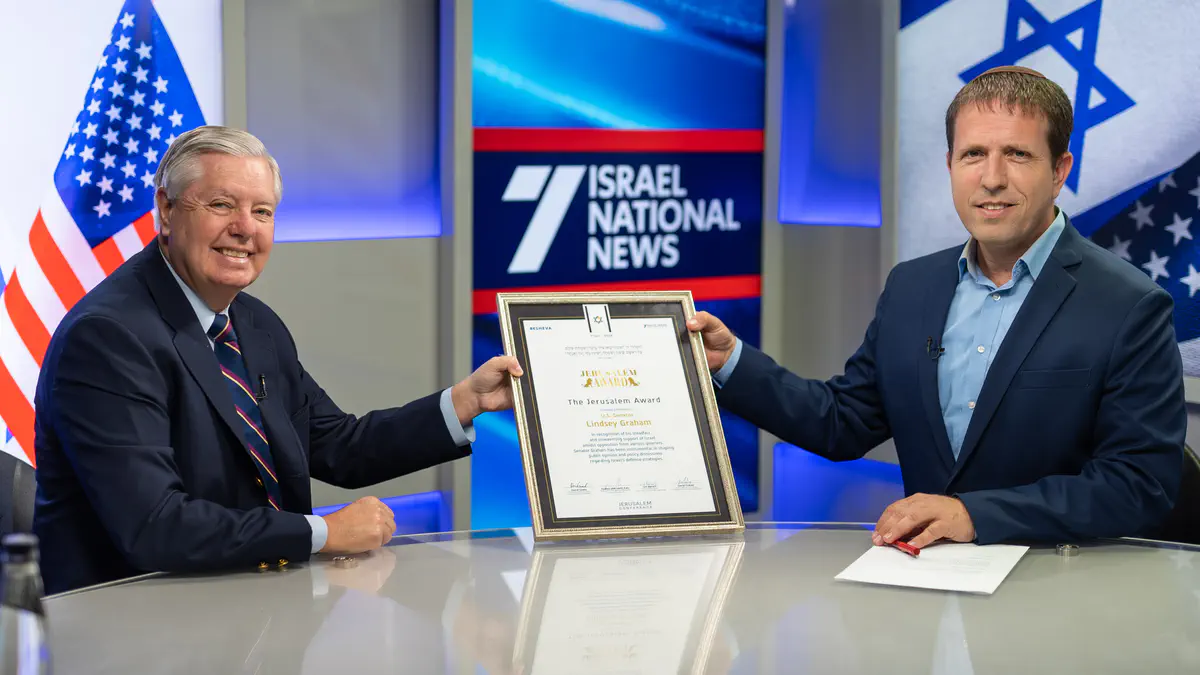
Republican Senator Lindsey Graham, one of Israel's greatest friends and supporters, passes away suddenly at 71.
Republican Senator Lindsey Graham, a staunch and vocal friend of Israel, has passed away unexpectedly at the age of 71.
Graham
served as the senior US senator from South Carolina since 2003 and,
beginning in January 2025, became chairman of the Senate Budget
Committee.
He was first
elected to the South Carolina House of Representatives in 1992 and later
served in the US House of Representatives from 1995 to 2003. In 2015,
he announced his candidacy for the Republican presidential nomination
but withdrew from the race later that year.
Throughout
his political career, Graham has been known for his hawkish foreign
policy views and consistent support for Israel. In 2016, he sought to
secure an additional $3.4 billion in US security assistance for Israel,
and in 2024, during the Swords of Iron War, he sharply criticized the Biden administration's decision to delay weapons shipments to Israel.
In
August 2024, Graham introduced legislation aimed at holding Iran
responsible for attacks carried out by its proxies and authorizing
military action if Iran reached the threshold of acquiring nuclear
weapons.
In May 2025, he
said he would not support a US-Saudi security agreement without
normalization between Saudi Arabia and Israel. Following Operation
Rising Lion, he declared that "Israel's war is our war." In June 2025,
he summed up his foreign policy approach toward Israel by saying, "G-d
blesses those who bless Israel."
During
a visit to Israel in January 2026, amid anti-regime protests in Iran,
Graham described Israel as "America’s strongest ally and friend since
its founding," and called for the overthrow of the Ayatollah regime.
Most
recently, in March 2026, during Operation Roaring Lion, Graham said,
"Israel is a small country with a giant heart and an unshakeable
determination to survive and thrive. Those who wish to destroy Israel
also wish to destroy America."
Ghalibaf issued this message as Iran's IRGC said that its aerospace forces carried out a heavy attack on US aircraft carrier support and refueling platforms in the port of Duqm, in Oman.
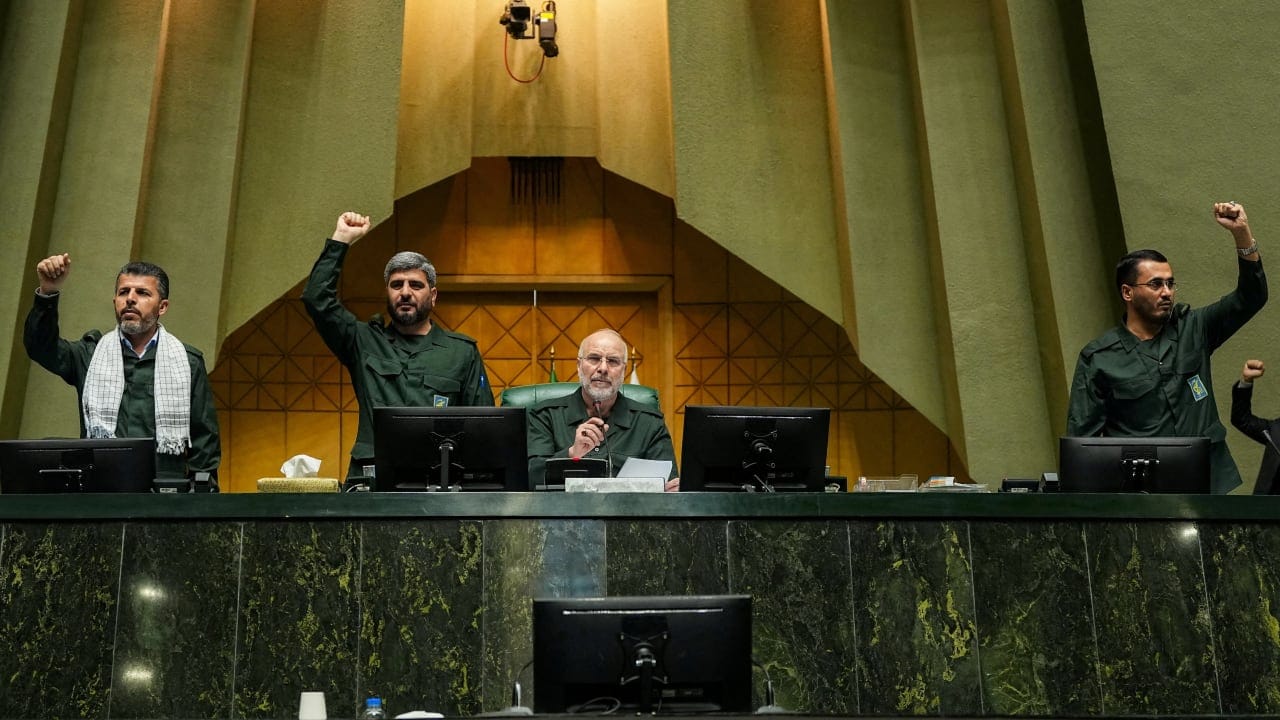
Iranian Parliament Speaker Mohammad Bagher Ghalibaf looks on as
parliament members chant in support of the IRGC while wearing military
uniforms in Tehran, Iran, February 1, 2026; illustrative.(photo credit: Hamed Malekpour/Islamic consultative assembly news agency/WANA/Handout via REUTERS)
Iran's Parliament Speaker Mohammad Bagher Ghalibaf
posted on Twitter/X Sunday morning, saying: "The era of one-sided deals
is OVER. We told you: keep your word or pay the price. Reality is
knocking."
Ghalibaf issued this message as Iran's Islamic Revolutionary Guard Corps
said that its aerospace forces carried out a heavy attack on US
aircraft carrier support and refueling platforms in the port of Duqm, in
Oman, in the third stage of its response to what it called US military
'aggression.'
The IRGC added that the operation targeted logistical support centers for US naval vessels
The era of one-sided deals is OVER. We told you: keep your word or pay the price. Reality is knocking. pic.twitter.com/B97ogCYGaj
— محمدباقر قالیباف | MB Ghalibaf (@mb_ghalibaf) July 12, 2026
Child injured in Qatar as Iranian attacks rattle region
A
series of attacks and security alerts was reported across the Middle
East on Sunday, according to regional officials and state media.
[FILE
PHOTO] Smoke Rises after reported Iranian missile attacks, as seen from
Doha, Qatar, March 1. (credit: MOHAMMED SALEM/REUTERS)
Three people, including a child, were injured by falling shrapnel following Iranian attacks, Qatar’s Interior Ministry said.
Shortly afterward, the Khondab region in central Iran came under attack, a local official told Iranian state media.
Oman’s state news agency later reported that sites in the Musandam Governorate had been targeted by drones.
The
Jordanian military said three missiles launched from Iran fell inside
Jordanian territory, according to the country’s state news agency. No
casualties were reported.
Amid
the developments, Iranian Foreign Minister Abbas Araghchi discussed the
regional situation with Pakistan’s deputy foreign minister during a
phone call, Iran’s Tasnim News Agency reported.
Sirens were subsequently activated in Bahrain, the country’s Interior Ministry said.
US says it struck 140 Iranian military targets Saturday
US forces completed a third round of strikes this week against Iran, the Central Command said late on Saturday in a post on X.
They
hit approximately 140 Iranian military targets on Saturday, the Central
Command said, and added that the targets included Iranian missile and
drone sites, naval capabilities, ammunition storage facilities,
communication networks, and coastal surveillance locations.
During three nights of strikes this week, US forces have struck more than 300 targets, the military added in its statement.
The
Central Command said the strikes on Saturday were in response to the
attack on a commercial ship in the Strait of Hormuz. "Commercial vessel
transits through the vital international maritime corridor continue," it
added.
US
strikes came hours after Iran said it closed the strait after firing a
warning shot that struck a vessel traveling on an unapproved route. It
warned that any retaliation over the incident would be met with a
"severe response."
US Central Command identified the vessel as the M/V GFS Galaxy, a Cyprus-flagged container ship, saying it suffered significant engine-room damage and that a civilian crew member was missing.
US strikes Iran, Tehran says Strait of Hormuz closed, Gulf states hit
A
series of attacks between the US and Iran over the past several days
led US President Donald Trump to declare the end of a ceasefire meant to
halt the fighting that the US and Israel began on February 28, though
Trump has left the door open to continued negotiations.
Iran
said it closed the strait after firing a warning shot that struck a
vessel traveling on an unapproved route. It warned that any retaliation
over the incident would be met with a "severe response."
US
Central Command, however, said commercial vessels continue to transit
through the waterway that carried one-fifth of the world's oil and LNG
shipments before the war.
Beyond the stretchable 60-day "hostile truce," what is needed is a Plan B for Iran that takes into account the realities on the ground and the opportunity for positive change.
The snag in Iran is that
those who wish to make a deal dare not do so because they lack a popular
street base within the Khomeinist movement.
And those who can make a deal because they have such a base won't
do so because if they do, they risk losing not only that support but
also the wealth and position they have illegally acquired.
Beyond the stretchable 60-day "hostile truce," what is needed is a
Plan B for Iran that takes into account the realities on the ground and
the opportunity for positive change.
The snag in Iran is that those who wish to make a deal dare
not do so because they lack a popular street base within the Khomeinist
movement. And those who can make a deal because they have such a base
won't do so because if they do, they risk losing not only that support
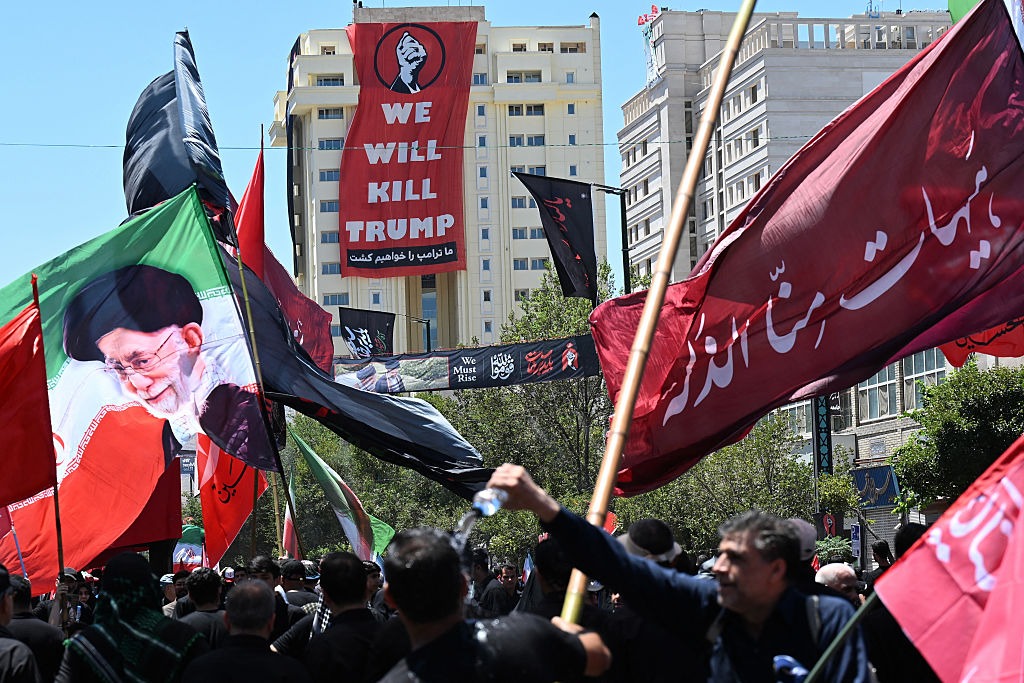
but also the wealth and position they have illegally acquired. Pictured:
Crowds gather for the funeral procession of Iran's late Supreme Leader
Ali Khamenei, in Mashhad, on July 9, 2026. (Photo by Wakil Kohsar/AFP
via Getty Images)
Is the 60-day ceasefire with Iran declared by President Donald Trump
last month over? As is often the case with what the mercurial leader of
the world's only superpower says, the answer is: yes -- but not quite.
In his tongue-lashing of Iran on the margin of the NATO summit in
Ankara, Trump compared the present regime in Tehran to cancer that has
to be cut off and thrown away. He labeled Tehran's leader as "liars" and
claimed to have halted negotiations with them.
So, where do we go from here?
A good piece of advice comes from NATO Secretary-General Mark Rutte,
acknowledged as the best Trumpologist around: Always take what Trump
says seriously but not literally!
We have witnessed the soundness of that advice since June 2025, when
Trump with Israel's Prime Minister Benjamin Netanyahu, in tandem
launched the 12-day war against Iran. In the past 13 months, Trump has
gamboled from one ceasefire to another, culminating in the 60-day
"truce" which is now in peril.
The 60-day scheme could be described as "hostile-truce" a new
category in the lexicon of international bellicosity. In it, you are
supposed to silence your guns and talk to the foe but also keep the
option of opening fire when and where you wish.
The 60-day "hostile truce" was designed to suit Trump's packed early
summer agenda, starting with his visit to Beijing, his birthday, the
250th anniversary of American Independence, the FIFA World Cup, the NATO
summit and the Republican Party primaries.
The same "hostile truce" also helped bring down oil prices, tame
inflation somewhat and open space for a new "reds-under-the-bed"
campaign at home.
Well, all that is now beyond us. So the question is, where do we go from here?
One easy option is more bombing. But Pentagon data show that US
warplanes are forced to hit targets they have already struck several
times before.
The other day, a dairy factory in Bandar Abbas was hit for the second
time and a radar site in Bushehr for the third. Tehran retaliated by
attacking Bahrain and Kuwait, neither of which are party to the
conflict.
Call it gesticulations if you like, but the fact remains that the
latest exchanges indicate how clueless both sides are when it comes to a
way out of the maze they are caught in.
Trump knows that Tehran will not indeed be forced to submit by merely
more bombing. For its part, Tehran knows that launching missiles and
drones at Iran's Arab neighbors won't end bombings by Trump. We have a
zugzwang that defies even the Mission Impossible squad.
Trump's description of the Khomeinist regime as a form of cancer is
misleading. Cancer cells have a way of spreading and multiplying while
destroying healthy ones. The Khomeinist ideology hasn't spread beyond
Iran's borders except in the form of paid-for proxies. In fact, the
Middle East has made a historic leap away from all such ideologies to
embark on a new path to modernity, freedom and prosperity.
But even if we accept the cancer diagnosis, Trump should know that
these days cancers are treated with chemotherapy rather than "cutting
off and throwing away."
There is no doubt that the "Iran problem" could have a military solution.
Theoretically, the US has the power to invade Iran, march on Tehran,
bring the leftover Khomeinist leadership to a Nuremberg-style trial, and
recruit new leaders as it did in Germany, Italy, Japan, and later in
Afghanistan and Iraq.
In practice, however, that option is too risk-ridden to become policy.
But that does not mean that the option of "regime change," through a
mixture of proximity pressure, political spade-work and diplomacy,
should be shelved forever.
Right now we face four levels of power in Iran that partly overlap and partly diverge.
The first is Iran's strong bureaucratic structure with a history of
at least five centuries. With Ali Khamenei gone, it is now reasserting
its claim for a seat at the high table. Over more than a year of war, it
has shown that it can manage the paraphernalia of statehood without
Khamenei's North Korean-style control.
The second layer consists of political and military figures that have
always been keen on rapprochement with the "Great Satan". Many of them
US-educated, these are the ones who send their children to the US. In
2015, the Iranian parliament reported that children of some 1,500 senior
officials were in the US, while numerous senior officials had Canadian
residency permits.
The third layer is represented by several dozen ultra-rich oligarchs,
many of them retired one-star generals in the Islamic Revolutionary
Guard Corps (IRGC), clerics or strawmen for senior ayatollahs.
Though not necessarily pro-West, all three above-mentioned groups
tend to desire an end to the conflict with the outside world and a
return to normality, something Khamenei adamantly rejected.
Finally, we have the hardcore Khomeinist constituency that consists
of Mafia-style fraternities linked to the IRGC and the other
paramilitary and security services. Their rivals within the system call
them "merchants of sanctions". Accounting for 10 to 15 percent of the
population, they control the street base of the regime, the so-called
"dispossessed" masses that are now calling for revenge rather than
accommodation with it.
A letter by a number of former diplomats attached to this group sent
to Foreign Minister Abbas Araghchi reminds him of the fate of Walther
Rathenau, the German foreign minister who signed the Versailles Treaty
and was assassinated as a traitor.
The snag in Iran is that those who wish to make a deal dare not do so
because they lack a popular street base within the Khomeinist movement.
And those who can make a deal because they have such a base won't do
so because if they do, they risk losing not only that support but also
the wealth and position they have illegally acquired.
In Iran today, the management of uncertainty is the name of the game.
More bombing will strengthen the bitter-enders who have fed on raw
anti-Americanism for half a century.
Paradoxically, doing nothing may also strengthen them and discredit
the accommodationists who are already blamed for having kowtowed to the
"Great Satan" and obtained nothing in return. Not a single dollar of
frozen assets has reached Tehran while huge amounts of sanction-free
Iranian oil remains unsold in tankers in the Indian Ocean.
Beyond the stretchable 60-day "hostile truce," what is needed is a
Plan B for Iran that takes into account the realities on the ground and
the opportunity for positive change.
Gatestone Institute would like to thank the author for his kind
permission to reprint this article in slightly different form from Asharq Al-Awsat.
Amir Taheri was the executive editor-in-chief of the daily Kayhan
in Iran from 1972 to 1979. He has worked at or written for innumerable
publications, published eleven books, and has been a columnist for Asharq Al-Awsat since 1987. He graciously serves as Chairman of Gatestone Europe.
Israel -- has proven its value as a partner through resilience and deep knowledge of the Iranian threat. It is the ally we can trust most in this theater — the one whose interests, capabilities and willingness converge perfectly with America's.
Israel is the party most
directly affected by any development involving Iran — whether diplomatic
negotiations, sanctions relief, or military action. Its security is
daily on the line. Israel therefore must be included in every
discussion, every operation, and every strategic decision concerning
Iran.
The Islamic Republic of Iran, for all of its 47-year existence,
has pursued the destruction of Israel and the United States as a core
ideological goal, using proxies, terrorism, and the development of
nuclear weapons to advance it. Israel, in turn, has proven its value as a
partner through resilience and deep knowledge of the Iranian threat. It
is the ally we can trust most in this theater — the one whose
interests, capabilities and willingness converge perfectly with
America's.
The U.S. must maintain the closest possible coordination with
Israel, including it fully in all talks, operations and strategies
regarding Iran. When America and Israel stand together, they can deter
aggression, protect shared values, and safeguard democracy, peace and
stability more effectively than any alternative approach. Iran knows
this — and that is precisely why it seeks to divide them. In the best
interests of the United States, its alliance with Israel must remain
unbreakable.
For decades, Israel has stood shoulder-to-shoulder with the
United States against the Iranian regime, a hostile power that threatens
regional stability, global security, and the very existence of
democratic values in the world. Israel has proven its value as a partner
through resilience and deep knowledge of the Iranian threat. It is the
ally we can trust most in this theater — the one whose interests,
capabilities and willingness converge perfectly with America's.
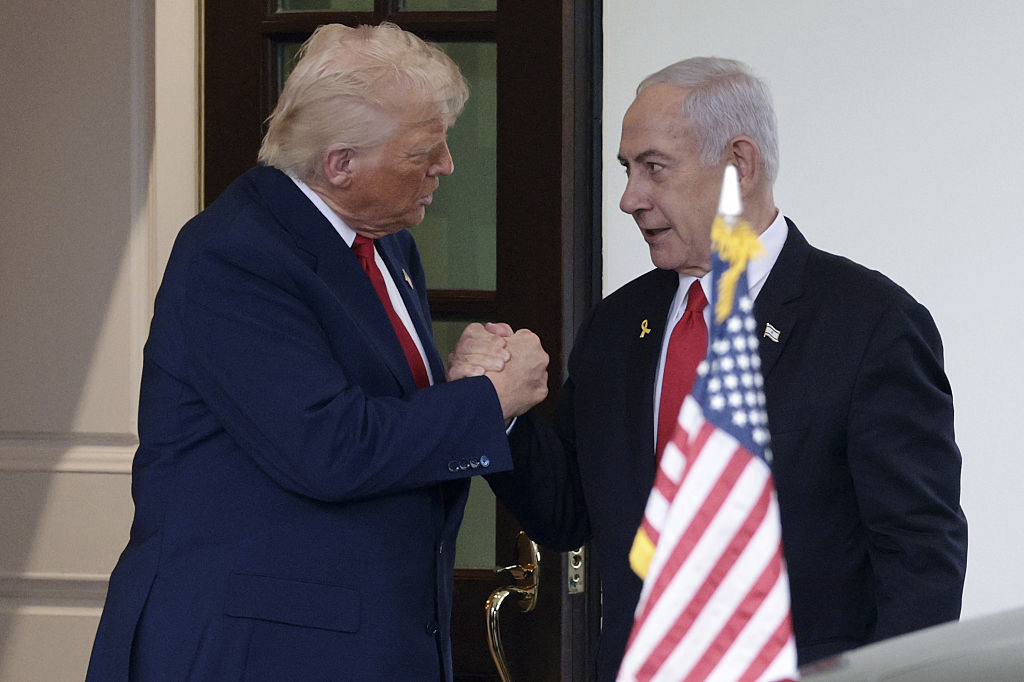
Pictured: US President Donald Trump with Israeli Prime Minister Benjamin
Netanyahu at the White House on April 7, 2025. (Photo by Alex
Wong/Getty Images)
For decades, Israel has stood shoulder-to-shoulder with the United
States against the Iranian regime, a hostile power that threatens
regional stability, global security, and the very existence of
democratic values in the world. Whether facing direct threats or
terrorist groups and proxy militias, Israel has demonstrated unwavering
and steadfast resolve, and a willingness to act when others in the world
hesitated.
This alliance has proven critical time and again; Israel has been with the U.S. in moments of need, from intelligence sharing
to coordinated responses against Iranian aggression. This partnership
is not one of convenience but of shared strategic interests and mutual
defense against a common foe. The Iranian regime itself acknowledges
this reality in its rhetoric. It labels the United States the "Great
Satan" and Israel the "Little Satan," viewing both as existential
enemies to its revolutionary ideology. Israel is the only truly
dependable Middle Eastern ally of the West and bastion of democratic
values.
Iran's hatred of both Israel and the United States only underscores
why deepening the U.S.-Israel alliance is essential in any strategy to
counter the "sick," Islamic Revolutionary Guard Corps (IRGC) now ruling the country with a toxicity
that should be as unacceptable to everyone as it is to its neighbors
and its own brutalized citizens. The Iranian regime's ambitions — for
nuclear weapons, intercontinental ballistic missiles, control of
international waterways, regional dominance through proxies, and the
spread of its theocratic influence — directly target both the U.S. and
Israel, as well as Europe and Iran's Gulf neighbors. As a result,
strengthening coordination between Washington and Jerusalem is a
strategic imperative.
A recent assessment highlighted in reports from the Jerusalem Post and Israeli officials reveals that Iran has no interest in drawing Israel into broader regional conflicts. According to multiple Israeli sources, including those cited by the Jerusalem Post,
Tehran is currently refraining from direct attacks on Israel precisely
to avoid escalating involvement that could pull Israel fully into the
fray. Israeli officials assess that Iran would only face strikes if Iran or its proxies directly attack it, or if Israel is requested by the U.S. to attack.
Why this caution from Tehran? Iran deeply fears the power of Israel.
Israel's intelligence capabilities inside Iran, Lebanon and Gaza have
been dramatically demonstrated in recent operations. In June 2025,
during the twelve-day war, Israel conducted precise strikes on Iranian
nuclear facilities, military sites and leadership targets, while
showcasing sophisticated infiltration and real-time intelligence.
Similar effectiveness was evident in follow-on actions, including the
first few hours of February 28, when, in sixty seconds,
Israel successfully decapitated virtually the entire leadership of
Iran's regime. Mossad operations, combined with precision capabilities,
exposed vulnerabilities deep within the Iranian regime.
Israel knows Iran intimately. For nearly five decades, Israel has
lived on the front lines, watching Iranian leaders repeatedly vow to "wipe"
it off the map. Iranian Supreme Leaders and IRGC commanders have made
threats of elimination a cornerstone of their ideology. Through funding
and arming proxies such as Hamas, Hezbollah, and the Houthis, Iran has
pursued a strategy of encirclement and attrition. These groups serve as
Tehran's forward operating arms, launching attacks designed to bleed
Israel while providing Iran plausible deniability.
The brutal massacre by Hamas on October 7, 2023 — enabled and
emboldened by Iranian support — represented a horrific escalation.
Though the attackers failed in their ultimate goals, the event
highlighted the regime's genocidal intent and the resilience required to
counter it.
Israel has consistently demonstrated not only military superiority
but also the intelligence and determination to disrupt these networks.
From thwarting plots to striking high-value targets, Israel's actions
have repeatedly set back Iran's timelines.
This proximity and lived experience give Israel unparalleled insight.
No other nation in the region matches Israel's understanding of Iranian
tactics, decision-making, and weaknesses. Israel is the party most
directly affected by any development involving Iran — whether diplomatic
negotiations, sanctions relief, or military action. Its security is
daily on the line. Israel therefore must be included in every
discussion, every operation, and every strategic decision concerning
Iran.
Excluding or sidelining Israel creates the risk of flawed policies
that ignore ground realities and endanger shared interests. When the
United States and Israel work in close coordination, their combined
strength is formidable. Joint intelligence, technological edge, and
operational synergy amplify effectiveness far beyond what either could
achieve alone. Israel's advice aligns inherently with U.S. interests:
both nations face the same determined adversary. Most of all, the
Islamic Republic of Iran fears this unity -- the regime knows that a
tightly aligned U.S.-Israel front severely constrains its options and
raises the costs of aggression.
The Islamic Republic, for all of its 47-year existence, has pursued the destruction of Israel and the United States
as a core ideological goal, using proxies, terrorism, and the
development of nuclear weapons to advance it. Israel, in turn, has
proven its value as a partner through resilience and deep knowledge of
the Iranian threat. It is the ally we can trust most in this theater —
the one whose interests, capabilities and willingness converge perfectly
with America's.
The U.S. must maintain the closest possible coordination with Israel,
including it fully in all talks, operations and strategies regarding
Iran. When America and Israel stand together, they can deter aggression,
protect shared values, and safeguard democracy, peace and stability
more effectively than any alternative approach. Iran knows this — and
that is precisely why it seeks to divide them. In the best interests of
the United States, its alliance with Israel must remain unbreakable.
Dr. Majid Rafizadeh is a political scientist, Harvard-educated analyst, and board member of Harvard International Review. He has authored several books on the US foreign policy. He can be reached at dr.rafizadeh@post.harvard.edu
The move undermines the Trump-backed NATO effort to boost European defense spending and alliance goals to improve missile defense capabilities.
Amid reports that the Europeans are at a “breaking point”
with the United States as President Donald Trump cajoles and pressures
them to spend more on mutual defense, the reality is that his strategy
has worked, respected military historian Victor Davis Hanson tells Just the News.
Ahead of a North Atlantic Treaty Organization (NATO) summit
last week in Turkey, European leaders’ frustrations with their American
counterpart was the key story.
The Wall Street Journalreportedextensively
on the breach between Washington and its allies over Trump’s threats to
seize Greenland, boost defense spending and questioning the U.S.
commitment to the alliance.
But, Hanson, a senior fellow at the Hoover Institution at
Stanford University, argues the actions of those European allies show
Trump's pressure is working, despite their protestations and suggestions
that they have reached a breaking point with the U.S.
Since Trump took office last year and called for Europeans
to boost the percentage of GDP spent on defense, the NATO allies have
responded with action. At a summit last year, the allies committed to
boosting defense spending to 5% of GDP.
“Europe is very upset with Trump, but it's largely because
he's forcing them to do what they know is in their own self-interest,
and they can't admit that they were wrong by not arming to the 2% prior
NATO standard or reaching the 5%,” Hanson told the John Solomon Reports podcast.
“But, the net result of it is that in a year or two, NATO
is going to be much more independent, much better to protect itself from
Russia, and will allow us to pivot and really take care of our equally
important allies in Australia, the Philippines, Japan, South Korea, and
Taiwan against the rising hegemony of China,” he also said.
At the NATO summit in Turkey, Trump acknowledged the
progress that many members of the alliance have made toward meeting that
spending goal.
“In the working session this morning, we discussed the progress other members are making toward the 5% target,” Trump said.
“Some have truly answered the call and others are making big changes,
and will be answering the call. ... I urge all nations to accelerate
their plans to get to the benchmark as quickly as possible.”
The data show that many European countries appear to be
taking the commitment seriously. Defense spending on the continent has
grown by almost 13% in real terms in both 2024 and 2025.
Germany, whose military strength has lagged behind its
position as the continent’s dominant economy since the end of the Cold
War, is leading the pack. This week, German Chancellor Friedrich Merz’s
cabinet approved a draft budget that would allocate one fifth of federal
expenditures to defense next year.
"We cannot defend ourselves against Putin with a balanced
budget," German Finance Minister Lars Klingbeil said when presenting the
budget, according to Politico.
"Germany is doubling its defense budget within four years,"
Merz said in Berlin. "This is the greatest effort we have ever made to
strengthen our defense capabilities.”
In response to Trump’s complaints that NATO is not spending
enough, he said, “In that regard, we have nothing to hide from
anyone.”
Last year, Germany suspended a constitutional constraint on
budget deficits by exempting a large portion of defense spending. This
allowed for Merz’s government to approve a massive increase in military
expenditures.
Germany has been followed by many NATO members, all of which have now exceeded prior commitments to raise defense spending above the 2% of GDP threshold. Many have promised to raise expenditures even higher by the end of the decade.
Hanson told Just the News that these gains will
ultimately make NATO allies, and the world, safer, despite any
resentments their leaders harbor about Trump’s style.
“[T]he overall theme of the Trump administration should be
we had to give the world tough medicine, and at times they resented our
unsolicited advice, but it wasn't just for our own geostrategic
interest, but to make a safer and better world, especially for our
allies,” Hanson said.
Steven Richards
Source:https://justthenews.com/government/diplomacy/europe-may-be-upset-trump-his-tough-love-approach-working-historian-says
Follow Middle East and Terrorism on Twitter
For most of American history, pornography was regulated. Only the internet era broke that tradition—and America is still paying the price.
Americans born after the mid-1990s have lived their entire lives in a world awash with hardcore pornography.
Never has so much pornography been so available to so many at so little
cost. Our laws leave much pornography effectively unregulated. Our
technology, especially smartphones, brings portable, private porn shops
to everyone’s phone.
Like today, there were no prosecutions for
obscene libel in colonial America or in our early republic. Some take
this as evidence that the American Founders were, like today’s
progressives, indulgent toward obscenity.
As I show in a new report,
in reality, the lack of obscenity laws in early America speaks to the
strictness of morals and the costs of publishing and distribution. There
were no laws against obscenity until there was obscenity, and there was
no obscenity until there was cheap printing. As new technologies
reduced printing costs, the national government almost immediately
banned the importation of obscene materials, and state governments
regulated obscene publications.
The founding generation accepted speech
restrictions that furthered public morality. The Founders agreed with
English jurist and legal theorist William Blackstone that the state had
broad powers to regulate obscenity. In his “Commentaries,” Blackstone
recognized that common law courts could sanction as libel “any writings,
pictures, or the like, of an immoral or illegal tendency.” Justice
James Kent similarly wrote in the American context that, to protect “the
tender mercies of the young” from “gross violation[s] of decency …
[t]hings which corrupt moral sentiment, as obscene actions, prints and
writings … have … been held indictable.”
Only after obscenity arrived, however, did
the statesmen of the early republic put such principles into practice.
In 1803, Connecticut passed a law forbidding the “print, import, sale,
or distribution of books, pamphlets, ballads or other printed material
of an immoral tendency containing obscene language, prints, or
descriptions.”
Criminal statutes banning obscenity were
introduced in Vermont in 1821 and Massachusetts in 1835. In 1815, in
Commonwealth v. Sharpless, a printmaker was indicted for displaying an
obscene painting. The Pennsylvania Supreme Court upheld the conviction.
In Commonwealth v. Holmes, the Supreme Judicial Court of Massachusetts
upheld a conviction for publishing an illustrated edition of the erotic
novel “Fanny Hill.”
Consider the developments in New York when
the publication of “Fanny Hill” led to public outrage and legal
responses. Obscenity prosecutions in New York City increased
dramatically. Eventually, New York passed an obscenity statute. By the
end of the Civil War, 20 states and four territories had passed
obscenity statutes. In 1842, Congress passed its first anti-obscenity
statute. In 1873, Congress passed the Comstock Act, banning the delivery
of obscene materials through the mail.
As obscenity circulated through different
media, laws were immediately passed, creating the American tradition of
obscenity regulation. As radio and film emerged, and later as television
became popular, regulations were promulgated and implemented.
Even as courts loosened the definition of obscenity, governments still regulated pornography.
Throughout the 20th century, when most obscene material was in print
(or later on videocassette), zoning laws forced purveyors of obscene
materials to remote interstate highway exits or other similar areas,
keeping most pornography away from homes.
Yet this age-old consensus finally
collapsed with the advent of the internet, the first technological
advance made without a corresponding, effective law to regulate it.
Part of the problem was that the internet
cut out the middleman. People could make pornography and then distribute
it to anyone with an internet connection; no porn shop was necessary.
Zoning laws could no longer cordon off obscenity. The ubiquity of the
internet might have prompted the court to extend legislative powers to regulate obscenity. Internet pornography was more easily available and potentially more pervasive.
The court instead rejected Congress’
efforts to regulate pornography as the internet era began. In 1996,
Congress passed the Child Pornography Prevention Act and the
Communications Decency Act. In 1998, Congress passed the Child Online
Protection Act. The courts, seemingly taken with the internet’s
technological promise, struck down restrictions against online
pornography and obscenity in each case. As a result, the courts
permitted private, ubiquitous, and unfettered access to pornography for
children and adults alike.
From the Founding through most of American
history, courts allowed the legislature to control pornographic
material. Judicial reactions to internet pornography broke this
tradition to our great detriment. Recent Supreme Court cases
allowing states to require age verification for minors accessing
obscene material online, however, may point toward its partial
restoration.
Shas Council of Torah Sages member Rabbi Yitzhak Yosef is poised to throw his support behind Gadi Eisenkot in the race for prime minister, as frustration with Prime Minister Netanyahu grows
Rabbi Yitzhak Yosef Chaim Goldberg/FLASH90
Shas Council of Torah Sages member and former Chief Rabbi of Israel,
Rabbi Yitzhak Yosef, has raised his rhetoric against Prime Minister
Benjamin Netanyahu.
In a closed conversation published by Galei
Tzahal on Sunday, Rabbi Yosef said that he is leaning toward dismantling
Netanyahu's bloc with United Torah Judaism, and prefers Gadi Eisenkot
as a candidate for Prime Minister.
Rabbi Yosef said that Shas may
support Eisenkot in the upcoming elections, adding that he hopes that
UTJ would also join the move. He noted that he intends to express open
support closer to election day.
According to the rabbi, "Gadi
Esenkot is a good person, a warm Jew, he loves those who study Torah,
his grandmother voted Shas and wanted him to be a rabbi; while that
didn't happen, you could trust him."
He added, "We can go with him
in the upcoming elections, we can support him to be the next prime
minister." He later spoke out against the Prime Minister: "Netanyahu
cheated us on the conscription law and other things. He can not be
trusted; he's a liar."
During his weekly lecture on Saturday
night, Rabbi Yosef said: "We live, unfortunately, in a secular country,
not a haredi one. We pray that everyone repents. Some have repented, and
some I don't believe will repent."
At that point, he began
listing senior politicians and directly targeted Prime Minister
Netanyahu: "Bibi Netanyahu will repent? There is no chance."
At the same time, the rabbi made a surprising remark about the head of the Yashar party: "Eisenkot may repent.".
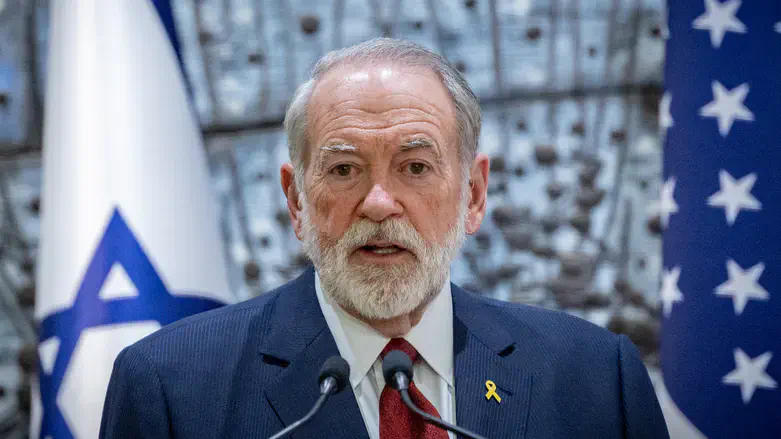
US Ambassador to Israel Mike Huckabee confirms Israeli intelligence passed US President Donald Trump concrete intel on assassination attempt by Tehran police.
Mike Huckabee Chaim Goldberg/Flash90
US Ambassador to Israel Mike Huckabee has confirmed that Israeli
intelligence passed US President Donald Trump information on a concrete
assassination plan that Tehran police attempted to carry out.
Earlier
on Saturday, Trump wrote on Truth Social, "1000 Missiles are Locked and
Loaded and aimed at the Islamic Republic of Iran, with thousands of
more to immediately follow, should the Iranian Government act on its
threat, pronounced in many corners of the Globe, to assassinate, or
attempt to assassinate, the sitting President of the United States of
America, in this case, ME! Orders have already been given, and the U.S.
Military is ready, willing, and able, for a one year period of time,
subject to extension, to completely decimate and destroy all areas of
Iran - PRAISE BE TO ALLAH!"
Also on Saturday, Iranian Supreme Leader Mojtaba Khamenei promised to avenge his father's death by killing a list of leaders, among them Trump and Israeli Prime Minister Benjamin Netanyahu.
Earlier this week, after The Wall Street Journal reported that Israeli intelligence had uncovered
a fresh plot against the American leader, Trump discounted the notion
of a brand-new conspiracy. Instead, he underscored that Tehran’s desire
to eliminate him has been an ongoing baseline for years.
"No,
no. Israel came up with nothing. No, no," Trump noted. "I’ve been No. 1
[on Iran’s kill list] for a long time, and it’s the way life is, you
know."
“This study demonstrates that a wind-solar-battery policy to meet electricity demand is physically implausible, cost-prohibitive, and unjustifiable on the basis of goals to reduce CO2 emissions,” the researchers conclude.
Renewable energy proponents often claim that the problem of
intermittent generation from wind and solar power can be addressed with
batteries. In an opinion piece on Friday, for example, a Reuters
columnist heaped praise on batteries as the technology that would bring
about "net-zero" – the amount of energy consumed being offset by the
amount of renewable energy generated.
“In little more than three decades, batteries have moved
from an afterthought in energy systems to one of the defining
technologies of the transition away from fossil fuels,” Global Energy
Transition columnist Gavin Maguire wrote.
Maguire makes no mention of the fact the globe has exponentially increased the volume of fossil fuels it consumes – a decades-long trend that shows no reversal – nor does he mention the amount of energy stored in batteries is measured in minutes.
Researchers with the National Center for Energy Analytics
set out to find out if it’s possible to power the grid with wind, solar
and batteries. Their report,
which was released Thursday, casts considerable doubt on renewable
energy proponents’ promise that batteries can resolve the problems of
intermittency with wind and solar.
“This study demonstrates that a wind-solar-battery policy
to meet electricity demand is physically implausible, cost-prohibitive,
and unjustifiable on the basis of goals to reduce CO2 emissions,” the
report concludes.
Staggering costs
Jonathan Lesser, senior fellow with the NCEA, and Mitch
Rolling, director of research at Always On Energy Research, used the PJM
Interconnection system, the nation’s largest grid operator, to evaluate
the cost and feasibility of a system powered by wind, solar and
batteries. The operator supplies electricity to 67 million people living
in 13 states and the District of Columbia.
The researchers looked at three different scenarios. One
evaluated the PJM grid running on wind, solar, batteries and existing
nuclear power plants. Under this scenario, all coal and natural gas
generation is retired. In the second scenario, batteries are used along
with new and existing gas-powered generators, as well as new nuclear
power plants. In the last scenario, battery storage is added to replace
gas-fired generators during peak demand.
To compensate for the intermittency of wind and solar under
the renewable-only scenario, the analysis found, PJM would need to add
roughly 10 times the total generation capacity by 2045 than would be
needed under the natural gas and nuclear scenario. That extra capacity
would not only serve daily and seasonal variations in supply and demand,
it would accommodate days in which there’s little to no wind or
sunshine.
The study also found that to pay for this ideal net-zero
grid with no new nuclear facilities, ratepayers served by PJM would need
to fork over $4 trillion over the next 20 years. That figure accounts
for savings on fossil fuels.
Low benefit for cost
The authors note that the rationale for such a grid is that
it will reduce carbon emissions that contribute to global warming. The
study estimated that the annual costs of avoided emissions comes to $771
per ton. Recent estimates of the social cost of carbon – an estimate of
the economic damages caused by emitting carbon dioxide into the
atmosphere – range from $180a ton in 2025 to $320 a ton in 2045.
Even in terms of reducing emissions, the renewable-only
scenario costs more than the benefits it produces, the researchers
conclude.
Under the other two scenarios, the costs to ratepayers are still quite high.
With the natural gas and nuclear scenario, PJM customers
would need to pay $668 billion over the next 20 years, and under the
scenario in which battery storage is added to replace gas-fired
generators during peak demand, PJM customers would need to pay $768
billion over 20 years.
Limited capacity
Pushed on by subsidies and state-level climate mandates,
battery storage in the U.S. has grown rapidly. Despite that growth,
Lesser and Rolling note, the total grid-scale battery storage at the
beginning of 2026 could satisfy about 15 minutes of average U.S.
demand.
California holds about one-third of the total U.S. battery
capacity. Lesser and Rolling estimate that its capacity could satisfy
about two hours of the state’s average demand. On a high demand day,
batteries would supply less than one hour.
The researchers also looked at the electricity consumption
on the PJM grid on July 29, 2025, from 6 p.m. to 7 p.m. Supplying enough
battery storage to meet that day’s demand, according to the report,
would require 50% more battery capacity than currently exists in the
entire country.
Safety concerns
One issue with battery storage the researchers didn’t look
into is safety, which has become a significant concern for zoning boards
following recent fires that took days to put out and released large
amounts of toxic water and gases into the environment.
Firefighter organizations are growing concerned
about the ability of local fire departments to have the resources and
training to deal with such fires. Currently, it’s a challenge that most
departments have never encountered.
While proponents of renewable energy are pinning their
hopes on batteries to solve the intermittency problem, the report
suggests this is another unworkable path to powering the U.S. without
carbon emissions.
“The quantities of wind and solar generation and battery
storage that are needed to meet existing reliability standards would
cost trillions of dollars, cause electricity prices to skyrocket, and
require vast amounts of land – all of which would adversely affect rural
communities and agricultural production,” the report states.



![[FILE PHOTO] Smoke Rises after reported Iranian missile attacks, as seen from Doha, Qatar, March 1.](https://images.jpost.com/image/upload/f_auto,fl_lossy/c_fill,g_faces:center,h_537,w_822/712078)