Monday, October 31, 2011

The UN’s Indifference to Dead Jews


by Joseph Klein

The “international community” is always quick to blame Israel for any reprisals it takes against Palestinian terrorists. Accusations of “collective punishment,” “disproportionate force,” and “extrajudicial targeted assassinations” are regularly hurled at Israel from the chambers of the dysfunctional Human Rights Council and other United Nations bodies, including the UN Security Council.

Yet when Israel seeks even the mildest of rebukes from the Security Council for continued rocket attacks launched against Israeli civilians from Hamas-controlled Gaza, it is met with stone-faced silence.

Israeli UN Ambassador Ron Prosor has just sent yet another letter dated October 29, 2011 to the Security Council calling “attention to a very serious escalation of rocket fire from the Gaza Strip.” On that very day, wrote Ambassador Prosor, major cities throughout southern Israel were bombarded with a barrage of dozens of rockets and mortars launched from the Gaza Strip. These attacks killed one Israeli civilian and injured a number of others. In Ashkelon, a man sitting in his home was murdered when a rocket exploded on top of him. Numerous rockets rained into the Israeli port city of Ashdod, injuring one man and causing significant damage to homes. In Gan Yavne, a suburb of Ashdod, one man was injured as rockets and mortars struck homes and civilian vehicles, setting fires in the streets.

“The scenes coming out of Southern Israel today should shock and appall the international community and all decent people,” wrote the Israeli ambassador. “There is no question that the terrorists who carried out these attacks intended to deliberately target innocent civilians.”

Ambassador Prosor’s latest letter came just two days after he had sent a letter to the Security Council complaining of rocket attacks that had been launched from Gaza on October 26th, which struck near Ashdod. The letter fell on deaf ears, which is the most likely fate of his most current letter as well.

“Two days ago, I wrote to the Security Council and expressed my Government’s concern about the escalating violence emanating from Gaza, alerting the international community about the dangerous potential for civilian casualties,” Ambassador Prosor reminded the Council in his October 29th letter. “The Council did not utter a single word of condemnation. Today one Israeli civilian was murdered and others lay injured in hospitals this evening as a result of the escalating rocket fire – and we still only hear silence from the Security Council.”

Indeed, as Ambassador Prosor pointed out, the Security Council has failed to take any steps to ensure compliance with the provisions of Security Council Resolution 1860, passed on January 9, 2009, that called for a cease-fire in Gaza and an end to “illicit trafficking in arms and ammunition.” Instead, thousands of guns, rockets and mortars have continued to be smuggled into Gaza, facilitated by Iran. While Israel has shown extraordinary restraint in the face of continued rocket attacks against its citizens and has opened its borders with Gaza to many more shipments of goods and materials entering and exiting Gaza, the arms smuggling has increased. “The terrorist rockets in Gaza are traveling further, their warheads are getting larger and their method of delivery is becoming more sophisticated.” Ambassador Prosor warned the Security Council.

Most of the rockets were fired by Islamic Jihad, which is funded and armed by Iran and shares Hamas’s goal of destroying Israel. Israel quite appropriately holds Hamas, which has controlled Gaza for more than four years and is also aided by Iran, responsible for all attacks on Israel that emanate from Gaza.

At a time when Palestinian Authority President Mahmoud Abbas is trying to convince the Security Council that he represents a government worthy of becoming a member state of the United Nations, he remains silent as terrorist attacks continue to be launched from a Palestinian territory he is utterly incapable of controlling.

Abbas did finally bring himself to admit that the Arab world should not have rejected the United Nations’ 1947 plan to partition Palestine into a Palestinian and a Jewish state. “It was our mistake. It was an Arab mistake as a whole,” Abbas said during an interview on Israeli TV on October 28th. But then he complained that the Palestinians were still being punished for the mistake the Arabs made 64 years ago. Although Abbas now cites the UN General Assembly partition resolution (Resolution 181) as a legal basis for his bid for Palestinian state membership status in the United Nations, he is perpetuating the same mistake made by the Arabs back in 1947. He refuses to recognize the right of a “Jewish State” to exist side-by-side with an Arab state, which is central to the partition resolution he only selectively adopts today.

The Palestinians continue to demand all of the rights and privileges of statehood without assuming any reciprocal responsibilities. For example, while insisting on the pre-1967 lines as the recognized international border with Israel, the Palestinians also demand that pre-1967 Israel be flooded with millions of Palestinians exercising their so-called “right of return.” That is like neighbor A insisting that neighbor B strictly abide by the terms of a disputed surveyed line while neighbor A gets to move his huge extended family into neighbor B’s house.

The Palestinians’ alleged right of self-determination to live in a state of their own choosing cannot be at the expense of the Jewish people’s own right of self-determination to live in a state of their own choosing. The Israelis do not deny the right of the Palestinians to a state based on their own Islamic beliefs, so long as those beliefs do not include the continuation of a violent jihad against Israel. But the Palestinians continue to deny Israel the guarantees of security to live as Israelis wish to live – in a Jewish state – which would be completely undermined by the Palestinians’ continued insistence on their bogus “right of return.”

Before the Security Council proceeds to a final decision on the Palestinians’ application for UN member state status, it should respond affirmatively to Israeli Ambassador Prosor’s plea to “act with a common purpose against the escalating violence flowing from Gaza” and to condemn continued Palestinian terrorism against innocent Israeli civilians. Ambassador Prosor has put the Security Council and the Palestinians on notice. There will be “serious consequences for continued rocket fire,” he said. “Israel has exercised and will continue to exercise its right to self-defense, as appropriate, and will take all necessary measures to protect its citizens.”

If the Security Council puts its head in the sand as expected, it will bear full responsibility for the consequences.

Joseph Klein

Source: http://frontpagemag.com/2011/10/31/the-uns-indifference-to-dead-jews/

Copyright - Original materials copyright (c) by the authors.

Totally Totalitarian Britain


by A. Millar

The breathtaking contempt at the heart of the British government for its own people and for democracy was showcased by its Conservative-Liberal Democrats coalition on October 24. Prompted by popular sentiment, a non-binding motion on Britain and the European Union was scheduled to be debated by MPs. The motion proposed holding a referendum, giving the public a chance to express their opinion on whether the country should withdraw from the EU, or remain a part of the EU, perhaps with the intention of negotiating some powers back from Brussels.

With three parties virtually indistinguishable on every major issue, and largely unresponsive to public opinion, faith in the democratic process in Britain has been seriously shaken over the last decade. Nevertheless, there has been reason to hope: The UK Government has a public website for petitions that can potentially raise the concerns of the public. Any British citizen can create a new petition, and members of the public can sign their names to it. If a petition that gets more than 100,000 signatures, it can be debated in the House of Commons.

As the three main parties – the Conservatives, the Liberal Democrats, and Labour – all promised to give the public a vote on membership of the Europe Union – and as David Cameron gave his "cast iron guarantee" that there would be one – you would expect that they would be delighted to learn that this threshold had recently been reached on the issue.

Nikki Sinclaire, and independent Member of Parliament, formerly with UKIP, had initiated a petition calling for a vote on Britain's membership in the EU. It received more than 121, 000 signatures.

If the European Union was created as a counterweight to the United States, the EU looks ever-increasingly as if it was modeled on the Soviet Union.

There is no "inconvenient" opposition party in the EU Parliament, where legislation is drafted and passed into law that must be obeyed by the British people.

Neither the British nor any other people in Europe voted for its President, Herman Van Rompuy. Nor do they --or anyone, for that matter -- have the power to vote him or anyone out. Yet at least 75% of laws passed in Britain are currently drafted in the EU. Vladimir Bukovsky, a former jailed dissident who fled the former Soviet Union, calls it, "The EUSSR." The EU is, fundamentally, totalitarian.

At best, the EU Parliament is a benign oligarchy that controls more and more the affairs of Europe's nation states and their people. Whether it will be benign in ten or twenty years, or to future generations, is, of course, unknown. History and human nature, however, suggest that a one-party Parliament with an appointed President and an "elite" that drafts legislation in secret is not a recipe for a free and prosperous people.

Polls consistently show that a majority of Britons want to leave. Who can blame them?

In response to the petition's 121,000 signatures, Conservative MP David Nuttall tabled a motion calling for a public referendum on EU membership, effectively giving the majority of Britons the finger.

The reaction of the three main parties has been baffling, to put it mildly. Ed Miliband, leader of the Labour Party congratulated the Prime Minister over the ousting of the Gaddafi regime, and spoke of the importance of Libya being able to decide its own future. Without the slightest hint of irony, he then claimed that Britain had to remain in Europe, negotiating its place. As such, he asserted, it would be wrong to allow the British public to vote on EU membership. It might be good for Libyans to decide their future, but apparently not for Britons.

Most astonishing, however, was the response by the Conservative Party leadership, rightly described by Peter Hitchens – author of The Abolition of Britain, and brother of Christopher Hitchens – as "a near-medieval group of courtiers beyond the reach of any sort of accountability." Prime Minister Cameron and his clique made British democracy appear as little more than an elaborate sham on Monday as they attempted to justify denying the public a voice on their future, and the future of their children and grandchildren. That may seem a dramatic statement, but unfortunately it is accurate.

The debate tabled for Parliament was then brought forward so that both the Prime Minister and Foreign Secretary William Hague could lead the charge against party "rebels" who wanted to give the country a vote.

Strict instructions were issued, ordering Conservative MPs to vote with Cameron, and against giving the British people a referendum on EU membership. Those who said that they would not go along with the Government were threatened that their careers in politics would be finished.

Considering the level of intimidation, most pundits believed that only around 70 MPs would vote for the motion, and one BBC 5 pundit predicted that only about 12 would. In the end, 111 MPs voted for it, and 483 against it.

The motion was debated amid heckles, mocking and angry laughter. The mood in parliament was uncharacteristically tense and heated, as have been some of the personal exchanges among frontbench and backbench MPs in private. As Tim Montgomerie of the respected ConservativeHome website tweeted: "One brave MP got call from George Osborne ten minutes before vote. Told him [Osborne] to "f**k off". This is now mood of many Tory MPs towards govt."

The Conservative "rebels" have been treated disgracefully by the party leadership, as has the country -- and democracy.

Since the motion was non-binding it would not have prompted a referendum automatically, but it would put pressure on the Government to hold one if the EU made another grab for more power.

Cameron and other Europhiles asserted, again and again over the day that, with Europe's debt crisis and cracks in the union beginning to appear, "now is not the time" for a referendum. This mantra was designed for the press. It is a good sound bite, but without substance. The "party rebels" were not even hoping for a vote in the near future, but perhaps in three years?

Regardless, Cameron told Parliament, "When your neighbor's house is on fire your first instinct is to put out the flames, not least stopping them from reaching your own house. This is not the time to talk about running away."

The analogy is seriously flawed, of course. The EU may be on fire, but it is not our "neighbor's house." Britain is in the EU – but despite public opposition, not because of it. In other words, the EU is Britain's house, but if the public cannot debate whether to get out when the house is on fire, when exactly can it?

A. Millar

Source: http://www.hudson-ny.org/2545/totalitarian-britain

Copyright - Original materials copyright (c) by the authors.
France: "This Mosque Is a Direct Obstacle to the Integration of [Muslims]"


by Soeren Kern

A French court has annulled the construction permit for a mega-mosque in the southern city of Marseille, home to the largest Muslim community in France.

The court ruling represents a major setback for proponents of the mosque, which has long been touted as the biggest and most potent symbol of Islam's growing place in France -- and Europe.

The move comes as a French newspaper published the contents of a leaked intelligence report about the rise of Islam in Marseille. The document states that "even if the number of individuals who have been radicalized to the point of supporting the Jihadists is relatively low, Islamic fundamentalism has progressed to the point where it has won over the majority of the Muslim population" who live in the city and who now number over 250,000.

The Administrative Tribunal of Marseille ruled on October 27 that the mega-mosque project would have to be cancelled because of failures to meet urban-planning requirements. The court raised particular concerns over the project's failure to finalize a deal for a 450-space parking lot and to reassure planners that the mosque would fit in with the urban environment.

The tribunal noted "a lack of graphical material permitting the evaluation of the project's integration with neighbouring buildings, its visual impact and the treatment of access points and land."

The 22-million-euro ($31-million) project would have seen the Grand Mosque -- boasting a minaret soaring 25 meters (82 feet) high, and room for up to 7,000 worshipers in a vast prayer hall -- built on the north side of the city's old port in the city's northern Saint-Louis area, an ethnically mixed neighborhood that suffers from poverty and high unemployment.

Several decades in the planning, the project was granted a construction permit in November 2009. At the time, city officials said the new mosque would help the Muslim community better integrate into the mainstream and foster a more moderate form of Islam.

The first cornerstone of the 8,300 square meter (92,000 square feet) project was laid in May 2010. The elaborate stone-laying ceremony was attended by Muslim religious leaders and local politicians, as well as more than a dozen diplomats from Muslim countries.

Full-scale construction of the Grand Mosque -- which was also to have included a Koranic school and a library, as well as a restaurant and tea room -- was scheduled to begin in February 2012.

But the project has faced stiff opposition from local residents and businesses. Opponents of the Grand Mosque have argued that it would be out of harmony with the neighborhood's economic and social fabric.

Local residents also pointed to potential parking problems surrounding the building. Authorities have estimated that the number of people attending Friday prayers at the mosque could reach 1,500, a figure that could rise to up to 14,000 on Muslim holidays.

The court decision comes as the French newspaper La Marseillaise on October 24 published extracts of a leaked intelligence report about the state of Islam in Marseille, France's second-largest city, where the Muslim population has reached 25% of the total population.

The confidential seven-page document, drafted by domestic intelligence in the French administrative department of Bouches-du-Rhône in March 2011, focuses on the phenomenon of Muslim street prayers in Marseille, but also provides a more general assessment of Islam in the city.

The document also addresses a specific mosque on Gaillard Street in the 3rd district of Marseille that is associated with Muslim immigrants from the Comoros Islands, an archipelago island nation in the Indian Ocean that gained independence from France in 1975.

"Far from being Comorian, this mosque promotes Islam marked by tribalism. It is clear that this mosque is a direct obstacle to the proper integration of Comorians in the Marseilles area, a kind of voluntary marginalization," the document states.

The Koranic school associated with this mosque is also criticised: "Far from awaking spirituality and minds, it locks them even further into a cultural loop and thus increases their communitarian inwardness."

The report describes the Muslim population of Marseille as a "marginalized population, poorly informed, uncultured and with a limited understanding even of their own religion, finding themselves in the hands of self-proclaimed imams, barely more competent than their flocks but sufficiently charismatic to obtain their blind obedience."

The document also calls for fewer mosques in Marseille. It states: "The abundance of prayer rooms in Marseille is largely a reflection of divisions of all kinds: obediential as well as nationalistic, ethnic and even business strategies that set Muslims in Marseille against each other."

The proposed solution is to "refocus the places of worship" which would "permit a professionalization of the imams, achieve economies of scale and force the Islamic federations and sects to reach a consensus. It would marginalize extra-national interests and also facilitate relations and observations with our institutional partners. Not more mosques but better mosques."

Nevertheless, the report warns against the construction of a grand mosque: "This building would dominate an entire part of the city which is not very elevated. It would be visible from most of the surrounding main roads and would perform the call to prayer by using a massive beam of light that would be seen across Marseille. The mosque is generally considered aggressive to the point where a local referendum on the matter would give results at least equivalent and perhaps more emphatic than the voting organized in the Swiss confederation last year [the Swiss vote to ban minarets]."

The report says that building new mosques is only a solution if their architecture is "discreet" in order to "limit their visual impact on the urban landscape."

The document concludes by stating that Muslims in France appear to want the state to intervene in religious matters: "It is interesting to note that the majority of Muslims find it natural for the state to organize religious practice, even by force if necessary, and that many of them even declare that they do not understand the neutrality of France in this matter."

Soeren Kern is Senior Fellow for Transatlantic Relations at the Madrid-based Grupo de Estudios Estratégicos / Strategic Studies Group.

Source: http://www.hudson-ny.org/2546/marseille-mosque

Copyright - Original materials copyright (c) by the authors.

Freeze on Jewish Construction A Double Standard


by Eli E. Hertz

Arabs claim that Jewish settlements “change the status” of the Territories and represent a distortion of the Oslo Accords. The phrase applies to acts that change the political status of the disputed territory – such as outright Israeli annexation, or a Palestinian declaration of statehood. Since Jewish settlements are legal, any halt in construction should be reciprocated.

The Oslo Accords do not forbid Israeli or Arab settlement activity. Charging that further Jewish settlement activity preempts final negotiations by establishing realities, requires reciprocity.

If Jews were forcibly expelled from the West Bank in 1948 during a war of aggression aimed at them, then these Territories must be considered disputed Territories, at the least.

The Israeli-Palestinian border dispute is like every other major and minor boundary dispute around the globe. Since the West Bank was redeemed in 1967 in a war of self defense and is not “Occupied Territory” gained illegally by a bellicose power, and since this fact is recognized in the wording of UN Resolutions 242 and 338 that call for a settlement to institute “secure and recognized boundaries.”

According to a former policy planning official, the tempo of Arab construction is “more than 10 times the number of buildings under construction [in the Territory] than those approved [by the Israeli government] for the [Jewish] settlers.”

Calls for a freeze on Jewish construction in Judea, Samaria and Jerusalem while Arab construction, which far exceeds Jewish development, continues unfettered – are clearly biased.


Eli E. Hertz


Source: http://www.mythsandfacts.org/article_view.asp?articleID=218

Copyright - Original materials copyright (c) by the authors.

Setting the Record Straight on the U.S. Troop Withdrawal from Iraq


by Aymenn Jawad Al-Tamimi

Following President Obama's promise that all American troops will be home from Iraq by Christmas time, there have been numerous misconceptions circulated in media reports about what is precisely going on regarding the U.S. withdrawal.

To begin with, there is a widespread notion that, in the words of one report in the Guardian, Iraq's Prime Minister Nouri al-Maliki "[h]ad wanted to keep some U.S. troops in Iraq. … But he had to bow to pressure from pro-Iranian politicians and others in his coalition government who wanted all U.S. troops out."

These remarks are highly misleading, to put it mildly.

Here is what actually transpired: the U.S. military had for quite some time been intent on keeping between ten to twenty thousand troops in the country beyond the withdrawal deadline stipulated in the Status of Forces Agreement (SOFA) originally drawn up between the Bush administration and the Iraqi government.

However, with the exception of the Kurdish parties, all Iraqi political factions were opposed to this idea from the start, including al-Maliki and his State of Law bloc.

Nonetheless, in August, Iraq's various parties — excluding the followers of the pro-Iran Shi'ite cleric Muqtada al-Sadr — held a meeting and agreed in principle on the idea of allowing a few thousand American soldiers to stay beyond the SOFA deadline and provide additional training for the Iraqi security forces.

The two reasons behind this desire for further American training are that the Iraqi military is seen as incapable of defending the country from foreign threats and that there is a lack of Iraqi know-how on the use of advanced weaponry, such as fighter jets, which the military has recently been purchasing. In fact, the Iraqi military estimates that further training will be needed until at least 2020.

The Iraqi politicians also agreed, however, on the condition that American troops should not be granted immunity from prosecution in Iraqi courts, primarily because of memories of U.S. abuses like the Abu Ghraib prison scandal.

This principle was reaffirmed in another meeting in October (again, excluding the Sadrists). In any case, the primary purpose of the October meeting was not to discuss the impending U.S. withdrawal, but to try (unsuccessfully, as usual) to resolve the problems in forming the Iraqi government, a process that's been going on since the March 2010 elections.

The debate over immunity has proven to be the main obstacle in negotiations between Washington and Baghdad regarding keeping troops beyond 2011. It was an Iraqi consensus nationalist position and not any pro-Iranian opposition to the U.S. presence that proved the stumbling block.

Even given all these issues, however, it is not necessarily true that no U.S. troops will remain on Iraqi soil after December 31. Iraq and the United States still agree on American soldiers remaining to train Iraqi security forces. General Babakir Zebari, the Iraqi army's chief of staff; al-Maliki; and Defense Secretary Leon Panetta have all issued statements to this effect.

Thus, despite the initial failure of talks, there is still a significant chance of a small contingent force of a few hundred troops — rather than a few thousand — staying as "trainers."

Discussion is still taking place as the Iraqi government and the Obama administration try to find a compromise for a loophole on the immunity issues. U.S. soldiers would not have immunity status but trainers would get it by technically working for the State Department or NATO, which already has a 200-member training mission that will stay at least until 2013.

And if this solution fails, Iraq will probably hire ex-U.S. soldiers as civilian contractors to provide further training.

In light of all the misreporting in the media on these happenings, the most important point is that Iraq is setting the terms of its relationship with the United States as a sovereign nation, and is not acting at the behest of a foreign power, namely Iran.

Iran's government has had no role in influencing the Iraqi political factions' stances on the troop extension. In short, Baghdad is simply doing whatever it wants. A key underlying principle is simply this: Iraq doesn't want to be either too dependent on the United States or on Iran.

The Iraqi government will use the United States to ensure its sovereignty vis-à-vis Iran while insisting on showing that it isn't a U.S. protectorate. This strategy is likely to work and is not only in Iraq's but also in the U.S. interest.

Aymenn Jawad Al-Tamimi is a student at Brasenose College, Oxford University, and has done work as an intern for the Middle East Forum.

Source: http://www.meforum.org/3084/us-troop-withdrawal-iraq

Copyright - Original materials copyright (c) by the authors.

Sunday, October 30, 2011

Obama Is Isolating Israel


by George Allen

The Obama administration recently warned Israel that it is becoming “increasingly isolated” in the Middle East and must take “risks for peace.” However, it is the very policies of the administration that are undermining Israel’s ability to take such risks and have served to increase Israel’s vulnerability in a hostile region.

Historically, strong American support has enabled Israel to make tough, risky decisions. For example, Israel unilaterally withdrew Israeli Defense Forces and uprooted settlements from the Gaza Strip in August 2005, knowing that it had the unwavering support and commitment of the United States. In fact, unwavering support for Israel has long been a core tenet of U.S. foreign policy, supported by Republicans and Democrats alike.

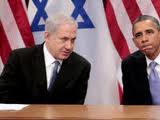
Image of Prime Minister Benjamin Netanyahu meeting with President Barack Obama.
Netanyahu meets with Obama.


I am proud of my consistent record of standing with our friend and ally Israel throughout my public service. As governor of Virginia and in the U.S. Senate as a member of the Foreign Relations Committee, I vigorously promoted and encouraged close cultural, economic, educational and strategic ties between the freedom loving people of our two nations.

I have long believed that Israel and the United States share an unshakable bond, and the United States must stand with Israel in the face of these burgeoning threats.

Unfortunately the Obama administration sees it differently. In less than three years President Obama’s attempts to create a distance between the United States and Israel while accommodating Israel’s enemies have severely undercut our relationship in a very public way, leaving Israel increasingly vulnerable and isolated while emboldening their enemies.

In speech after speech, Obama has distanced the United States from Israel, castigating Israel over housing projects in Jewish neighborhoods in Jerusalem, even making a dangerous and unprecedented call to start negotiations based on the pre-1967 borders that made Israel’s security vulnerable in the first place.

Perhaps the Obama administration believed that creating distance with Israel would improve U.S. standing with the Palestinians and that the Palestinians in turn would be more accommodating for peace. In fact, the opposite has occurred. Israel has received more rockets from Iranian-supported Hamas in Gaza, including missiles fired at school buses. And there are concerns about shoulder-fired missiles from Libya getting into Gaza.

Palestinian Authority (PA) leader Mahmoud Abbas has rejected Obama’s pleas not to move forward in the United Nations with the Palestinian statehood resolution. The fallout of this rebuke and of a vote, which will fail in the Security Council (where we will have to veto it) but will pass in the General Assembly, will be detrimental for the United States and for Israel.

While a General Assembly resolution will not confer statehood, it is a step up the ladder to that of “observer state,” sufficient to confer a misplaced sense of legitimacy to aggressive anti-Israel elements everywhere. It also will give Abbas the green light to bring war crimes charges against the Israeli government and military officials in the International Criminal Court.

The fallout extends beyond the U.N. processes in New York City. Israel is dealing with stepped-up violent attacks and unraveling diplomatic relations at home. Long-standing good relations with nearby Muslim Turkey have fallen apart over Israel’s interception of a ship in a Gaza-bound flotilla last year.

Moreover, with Arab Spring in full bloom, changes in leadership in Egypt and other countries increase uncertainty for Israel. A series of terrorist attacks in August near the border with Egypt left eight Israelis dead. And last month’s deadly attacks on the Israeli Embassy in Cairo and the targeting of Israel’s embassy in Amman, Jordan, do little to instill confidence that long-standing peace treaties will continue to be honored.

Egypt and Jordan are the only members of Arab League that have full diplomatic relations with Israel; reneging on these treaties would destroy the delicate regional diplomatic balance that has kept peace for over three decades.

If the Obama administration expects Israel to take “risks for peace,” Obama should stop the reckless policy of undercutting the position of our only reliable friend and partner in the Middle East and instead stand up to terrorist organizations Hamas and Hezbollah, which seek Israel’s destruction, along with their sponsors Iran and Syria.

The following five steps will put us back on the road to better relations with Israel:
  • Publicly affirm that Israel must have safe and secure borders and is not bound by the pre-1967 borders.
  • State that Israeli settlements are a final status issue that should be negotiated between the parties, not a precondition to negotiations.
  • Urge the PA to abandon the push for a statehood resolution at the U.N. and instead return to direct negotiations with Israel or risk losing U.S. aid.
  • Stress to leaders in Cairo and Amman the importance of honoring their respective peace treaties with Israel. Make it clear to Cairo that American recognition of, and support for, any future Egyptian government will depend upon this adherence.
  • Stand up to a belligerent Iranian regime which has declared the United States and Israel as enemies since 1979, and is now dangerously emboldened after almost three years of being allowed to attack U.S. and Israeli interests with impunity.
Israel remains our only reliable democratic ally in a very hostile region in the world. The world is watching; friend and foe alike need to know that America’s bond with Israel remains unbroken.

George Allen is former governor of Virginia and senator, running for U.S. senate this year.

Source: http://www.newsmax.com/InsideCover/netanyahu-obama-hamas-israel/2011/10/27/id/415958

Copyright - Original materials copyright (c) by the authors.

The Region: Why Obama Can't Tame the Islamists


by Barry Rubin

Many people find it hard to comprehend what the Obama administration thinks it’s doing in the Middle East. One liberal friend of mine has called my analysis “mind reading.” But it’s really very simple if you know the history of the arguments, read the speeches and documents of Obama administration officials carefully and observe their actions.

Leaving aside a number of points I’ve made in previous articles (which would be good to read in conjunction with this one), I want to focus on the idea that the US government has outsmarted the Islamists.

After all, it has “lured” them into sharing power openly by participating in elections and a share of power, so now, it is argued, the Islamists have to play by the rules of the electoral and democratic game. They must produce policies that please and benefit the people if they want to remain in power, since if they fail to do so, they will just lose the next election.

Having accepted democratic norms, the US administration’s expectation is that the Islamists will be locked into the system and have no choice but to compromise ideologically or hand over power with a show of good sportsmanship.

Western officials and experts generally and genuinely believe radical Islam cannot produce material results.

They believe the Islamists will have to water down their “impractical” beliefs to be effective in government. To remain in power they will gradually abandon their radical ideologies. In short, the Obama administration believes it’s got the Islamists where it wants them.

THERE ARE just a few problems with that view.

1. No Arab nationalist regime (even those pretending to be democratic) or monarchy in the Middle East has ever let itself be voted out of office. There are ways of persuading the masses to keep supporting a regime even if in Western eyes that government has “failed.” There are also many ways to win “elections” – by manipulation, selective repression, media control, using patronage to buy votes, etc.

Together, instead of “one man, one vote, one time” you can get “one man, one vote, one result.”

For example, consider Turkey, where the regime has steadily increased its base of support among voters; or Egypt and Jordan, where the regime always wins the election.

Once in office, there is no reason to think the Islamists can’t last as long as the Arab nationalists in Egypt, Tunisia, Libya, Iraq and Syria – that is, for decades.

In addition, as a last resort elections can always be canceled, as they were in Algeria, or results can be repressed if the incumbents think they’ll lose. Another example is the Islamist regime in Iran, which finally lost popularity after three decades of mismanagement but remained in power by simply quashing internal resistance, and faced no external costs due to the stolen election.

2. Don’t underestimate the power of ideology and demagoguery, which can be more powerful than material pay-offs. The history of the modern Arab world is full of examples where ideology and demagoguery trumped material political achievement. Look at the history of the PLO and of Yasser Arafat’s leadership.

(Yes, I know Hamas won the 2006 elections and rules in Gaza, but Fatah still runs the more important West Bank to this day).

And let’s not forget the use of foreign scapegoats, which will be as important for the Islamists as it was for the nationalists. Consider how the Turkish Islamist regime has made Israel and the West into an enemy in order to mobilize both nationalist and religious fervor at home. This can also lead to foreign adventures – wars and terrorism – that are popular at home, even if they are lost.

3. The elected regimes can use the educational system, religious institutions and media to indoctrinate the public and ensure continued support. They can use jobs and the economy to control patronage and votes; create or control trade unions and professional associations.

By controlling the religious institutions, Islamists can get rid of traditionalist Islam and entrench their own interpretations.

And let’s not forget the greatest prize of all: control over the military, a plan that might include creating separate elite units (Islamic Revolutionary Guard Corps in Iran, Revolutionary Guards in Iraq, Republican Guards in Syria, etc.)

4. The intrinsically radical nature of the Islamists themselves: if you’re taking your orders directly from the Supreme Being and in accord with the most sacred religion, you’re unlikely to change your views. Western materialist cynicism goes too far in thinking Islamists will sell out for luxury and power. Besides, they can enjoy luxury and power (see Iran) without having to throw away their principles.

Moreover, we are not dealing with Communism in the era of Leonid Brezhnev here. The Islamists are a relatively young movement, unbowed by failure and not jaded by long possession of power. They genuinely believe the future belongs to them. Maybe they will become tired and lose their confidence in 30 or 40 years, but not now.

5. Knowing that they confront such idiots in the West, the Islamists can use the credulity of their enemies to play moderate when necessary and get lots of benefits and concessions. How about the idea of massive US aid to Islamist regimes? That’s about to happen, isn’t it? Played on by Middle Eastern con men and eager to avoid confrontation, it’s easy to understand how those with no real understanding of the region make the mistake of believing they can “tame” radical Islam.

Yet they will surely fail in this endeavor. Those who are wise will avoid paying the price for this foolishness.

Barry Rubin is director of the Global Research in International Affairs (GLORIA) Center.

Source: http://www.jpost.com/Opinion/Op-EdContributors/Article.aspx?id=243765

Copyright - Original materials copyright (c) by the authors.

Assad Threatens Regional War if Syria Attacked by West


by Rick Moran

This is part bluff, part belief that Iran would come to his aid if the west decided it had a "responsibility to protect" Syrian civilians.

Telegraph:

In his first interview with a Western journalist since Syria's seven-month uprising began, President Assad told The Sunday Telegraph that intervention against his regime could cause "another Afghanistan".

Western countries "are going to ratchet up the pressure, definitely," he said. "But Syria is different in every respect from Egypt, Tunisia, Yemen. The history is different. The politics is different.

"Syria is the hub now in this region. It is the fault line, and if you play with the ground you will cause an earthquake ... Do you want to see another Afghanistan, or tens of Afghanistans?

"Any problem in Syria will burn the whole region. If the plan is to divide Syria, that is to divide the whole region."

[...]

President Assad admitted that "many mistakes" had been made by his forces in the early part of the uprising, but insisted that only "terrorists" were now being targeted.

"We have very few police, only the army, who are trained to take on al-Qaeda," he said. "If you sent in your army to the streets, the same thing would happen. Now, we are only fighting terrorists. That's why the fighting is becoming much less."

On Friday alone, however, opposition groups claimed that 40 people were killed by the regime, and government troops shelled a district of Homs, a centre of opposition.

If Assad is seeking to divide the west by claiming the protests are staged by terrorists, it won't do any good. First of all, no one believes him. Secondly, even if it were true, many if not most diplomats at the UN, the EU, and even in America wouldn't mind seeing the Muslim Brotherhood take over for Assad.

The Christians and Alawite minorities in Syria have every right to fear a Sunni takeover. Despite the apparent secular nature of some of the opposition to Assad, it would be the Islamists - as has happened everywhere else - who would gain the most in Assad's overthrow.

Rick Moran

Source: http://www.americanthinker.com/blog/2011/10/assad_threatens_regional_war_if_syria_attacked_by_west.html

Copyright - Original materials copyright (c) by the authors.

NY Times Exculpates Hamas From Gaza Rocket Barrages Against Israeli Towns


by Leo Rennert

Palestinian terrorists in Hamas-ruled Gaza broke a relative two-month calm on Oct. 26 and fired an advanced rocket deep into Israel. While there were no physical casualties, tens of thousands of Israeli civilians endured the agony of blaring warning sirens that gave them only a few seconds to find shelter. Children especially are traumatized by lingering psychological after-effects from such attacks.

Israel, exercising its right to self-defense, retaliated with a precision drone strike on Oct. 29 against a terrorist cell responsible for the earlier missile attack on Israel and preparing to fire another round. Five members of the terrorist group Islamic Jihad were killed, including a rocket commander.

Gaza terrorists in turn unleashed a barrage of more than 20 rockets and mortar shells aimed at civilian populations in southern Israel, including Ashdod and Ashkelon. An Israeli father was killed, a school was damaged and several Israelis were injured as hundreds of thousands of Israelis darted into shelters.

Two more Islamic Jihad terrorists subsequently were killed by Israeli retaliatory strikes. The Israeli government issued a statement declaring that it was not interested in ratcheting up exchanges of cross-border fire, but would not countenance further attacks from Gaza. The statement also made clear that Israel was holding Hamas solely responsible for the Gaza-originated attacks on Israel.

So how did the New York Times report these events in its Sunday, Oct. 30, edition? By toning down the full extent and impact of terrorist cross-border fire on Israeli civilians and by absolving Hamas from any blame for the rocket barrages fired from Gaza.

Times readers, over their Sunday morning coffee, were treated on page 12 to a huge photograph spread across four columns which showed Palestinians at a Gaza morgue with "the bodies of militants killed in an airstrike," according to the caption. There was no parallel photo of relatives of the Israeli father killed by rocket fire, of injured Israelis, or of damage to an Israeli schoolhouse. Readers had to turn to the second sentence of the caption under the Gaza morgue photo to discover that "rocket attacks on Israel killed a man in Ashkelon." No mention that this "man" was a father of four children.

Palestinian terrorist fatalities count for more than Israeli civilian casualties when it comes to photo selection by Times editors.

The headline similarly tilts toward emphasis of Palestinian losses rather than Israeli ones. In large type, it declares: "Israeli Drone Strike Kills Militants in Gaza." For readers who didn't go any further, their clear, but false, impression would be that Israel provoked renewed cross-border fire by killing "militants" -- not terrorists -- in Gaza.

A sub-head, in much smaller type, reads: "Retaliation for a Rocket Attack on Wednesday That Ended a Few Weeks of Calm"

As with the photo selection, the Times puts a greater priority on Palestinian terrorist casualties than on Israeli civilians killed or hurt by Gaza rocket fire. There is no mention, in either the main or secondary head, of the Israeli fatality.

As far as the article goes, Times correspondents Fares Akram and Isabel Kershner also assign top billing to Israel killing seven members of "Islamic Jihad's armed wing" (a strained avoidance of calling them terrorists.) To complete their lead paragraph, they also mention that Gaza "militants" (another euphemism to mask Palestinian terrorism) fired salvos of rockets that killed an Israeli man (no further identification) and wounded at least two others "in a sudden escalation" of cross-border violence. No mention, either, in their lead paragraph of the earlier Palestinian rocket attack that started all this cross-border violence. Readers were not told until the end of the next paragraph that the "sudden escalation" was traceable to the Palestinian cease-fire breach three days earlier.

The most glaring bias in the article, however, pops up when Akram and Kershner go to great lengths to exculpate Hamas, the iron-fisted ruler of Gaza, from responsibility for the renewed cross-border fire. Drawing a dubious distinction between Hamas and Islamic Jihad, they assert that "Hamas, the Islamic militant group that controls Gaza, has made efforts to enforce a cease-fire since the last round of cross-border air strikes and rocket attacks."

In their view, Hamas emerges unblemished; it's just the fault of Islamic Jihad. Or as they put it:

"Hamas is largely committed to the fragile cease-fire that first came into effect after Israel's three-week military offensive in Gaza that ended in January 2009. Smaller groups like Islamic Jihad and the Popular Resistance Committees are not."

Which is absurd on its face. For one thing, there is scant evidence for the notion that small terrorist splinter groups are allowed by Hamas to decide when to break a cease-fire and renew attacks on Israel's civilian population. It doesn't apparently occur to Akram and Kershner that Hamas and Islamic Jihad may be playing a good-cop-bad-cop game, with Hamas outsourcing terrorist fire against Israel to the likes of Islamic Jihad so as to fool the New York Times into believing that Hamas somehow has remained above the fray.

Alternatively, if Akram and Keshner are correct in their surmise that Hamas is blameless, what does this say about the Times' agenda to coax Israel to negotiate directly with Hamas. What good would that accomplish if Islamic Jihad and the Popular Resistance Committee could veto any deal struck between Israel and Hamas? If Hamas is that feeble a ruler of Gaza, as they depict it, why rely on its ability to deliver the goods in any rapprochement between Israel and Hamas?

Either way, the Akram-Kershner thesis of a good-cop Hamas, bad-cop Islamic Jihad doesn't stand up to real scrutiny. It's just one more mirage spawned by the Times to sell a phony "peace process."

Leo Rennert is a former White House correspondent and Washington bureau chief of McClatchy Newspapers.

Source: http://www.americanthinker.com/blog/2011/10/ny_times_exculpates_hamas_from_gaza_rocket_barrages_against_israeli_towns.html

Copyright - Original materials copyright (c) by the authors.

Tunisian Elections and the Road to the Caliphate


by Raymond Ibrahim

Tunisia, where the 2011 Arab uprisings began, remains an ominous model for where these uprisings will end.

The nation’s first round of elections are in, and, as expected, the Islamist party, al-Nahda, won by a landslide, gaining over 40% of the seats in the national constituent assembly. As usual, the mainstream media, interpreting events exclusively through a Western paradigm, portrayed this largely as a positive development.

Thus, a Washington Post editorial, “Tunisia again points the way for Arab democracy,” asserts how “the country’s leading Islamic party claimed victory—and that, too, could prove a positive example.” Other reports, perfunctorily prefixing the word “moderate” to “Islamist”—an oxymoron to common sense, an orthodoxy to the MSM—gush and hail “democracy.”

Such sunny depictions are not mere products of Western projection but augmented by conniving Islamists who spoon-feed the world what it wants to hear. Thus, an MSNBC report, “Tunisia’s Islamists Seek to Reassure Secularists,” optimistically talks of how the Islamists “said they would share power and would not try to push through radical measures.”

Of course they did.

Meanwhile, despite these fantasies, the mood among seculars on Tunisian ground is one of dread and urgency. Wael Elebrady, host of the popular show Al Haqiqa, speaking to a corresponded in Tunisia soon after al-Nahda’s “sweeping victory,” confirmed that the Islamists have immense grassroots support, that they will have a major say in the formulation of laws (Sharia), and that, if the Western MSM is eating up Islamist talk of “sharing power,” the apparently outnumbered “liberals and secularists” are not.

Some reflections: First, among Arabic speaking nations, Tunisia has long been recognized as an especially “Westernized” nation, secular and liberal—at least in comparison to other Arab countries, and not unlike traditional Lebanon.

Now, if Islamists have risen to power in onetime “moderate” Tunisia, through the usual conduits—grassroots support, lip-service to democracy, promises of “sharing power,” and a complacent West—is there any doubt that Islamists will also takeover in those nations where they are especially entrenched, like Egypt and Libya?

Ali Akbar Velayati, top advisor of Iran’s Supreme Leader, accurately predicts that “the result of the election in Tunisia will positively affect regional developments. We will observe the victory of Islamists in future elections in Egypt and Libya.”

A Wall Street Journal report elaborates:

Tunisia’s small, well-educated and religiously moderate population could make it an unreliable metric for gauging the regional political changes that will follow. The Nahda Party distinguished itself as uniquely moderate when compared with other Islamist parties in the Arab world. Egyptian Islamists, who are led by an 83-year-old organization, the Muslim Brotherhood, in general take a stricter view of the role Islamic law, known as Shariah, should play in Egyptian governance.

Accordingly, not only are Islamists better positioned to come to power through elections in Egypt than Tunisia, but more critical consequences are sure to follow: peace with Israel will be contemptuously scrapped—once capability permits—and the suffering of Christian Copts, who are already under attack in a myriad of ways, will be institutionalized.

Yet the West remains transfixed before the words “democracy” and “elections.” Nice words, to be sure; but just as the generic word “terror”—as in “War on Terror”—provides absolutely no understanding of the ideas motivating it, so too does the generic word “democracy” provide no understanding of the draconian, anti-infidel ideas the “will of the people” will establish—ideas encapsulated by one word: Sharia.

Consider the following excerpt from a Fox News report:

“I am the enemy of democracy,” Hesham al-Ashry said in an interview with Fox News in his Cairo tailor shop. The devout Muslim is a main organizer in a group called the Salafists, which is working to bring Shariah law to Egypt. They, along with the Muslim Brotherhood, have risen quickly in the past eight months to fill the power vacuum left in post-Mubarak Egypt.

Left unspoken is how they rose—and will continue to rise—to power: democracy, “people-power,” which al-Ashry gladly exploits, even as he is “the enemy of democracy.”

The report continues: “As for what’s next if al-Ashry and his followers get their way, ‘instead of one Iran …you have two.’”

Actually, “what’s next,” in the grand picture of things, not the myopia of the moment, is the resurrection of a Sharia-enforcing Caliphate and the ushering of a new age of conflict—an age when future generations will look back to their Western predecessors and see in them the sort of passive naivety that would make Neville Chamberlain​ look like Winston Churchill.

Raymond Ibrahim

Source: http://frontpagemag.com/2011/10/28/tunisian-elections-and-the-road-to-the-caliphate/

Copyright - Original materials copyright (c) by the authors.