by Khaled Abu Toameh
That Mladenov is appealing to the UN Security Council to pressure Hamas reveals the core flaw of the entire approach: the "Board of Peace" and its international sponsors continue to view Hamas as a rational political actor rather than what it actually is: a jihadist terror group.
Hamas remains armed, organized, and committed to its declared goal of destroying Israel through jihad (holy war). Yet instead of confronting this reality, international diplomats continue to indulge in dangerous fantasies about negotiating Hamas out of existence.
[Nickolay] Mladenov [former United Nations Special Coordinator for the Middle East Peace Process] added that the biggest obstacle to full implementation of the ceasefire remains "Hamas's refusal to accept a verified decommissioning, relinquishing coercive control, and permit a genuine civilian transition in Gaza."
That Mladenov is appealing to the UN Security Council to pressure Hamas reveals the core flaw of the entire approach: the "Board of Peace" and its international sponsors continue to view Hamas as a rational political actor rather than what it actually is: a jihadist terror group.
Mladenov's roadmap repeatedly speaks about "reciprocity," "verification," "implementation mechanisms," and "phased decommissioning."
Hamas's charter states that "Israel will continue to exist until Islam will obliterate it," and mandates jihad as a religious and individual duty for all Muslims to "liberate Palestine."
Hamas [in the "roadmap"] is even being allowed to remain armed and influential during the early stages of the transition process....
This is unacceptable and contradicts the very spirit of the UN Security Council Resolution 2803, on which the roadmap claims to be based. The resolution authorizes a temporary International Stabilization Force and requires the complete demilitarization of the Gaza Strip, including the full disarmament of Hamas and the destruction of all its military infrastructure.
The message being sent to Hamas is unambiguous: continue holding your weapons, continue ruling the Gaza Strip through intimidation and terror, and the international community will keep negotiating with you.
The latest roadmap explicitly states that the proposal "does not call for immediate surrender or unilateral disarmament." Instead, it outlines a "phased, Palestinian-led internationally verified process."
Hamas... has already made clear that it rejects the proposal altogether.
Hamas is again telling the world openly that it has no intention of disarming. It wants to remain in power so it can continue pursuing, with the help of the Iranian regime, its jihad against Israel.
Hamas also seems to understand something that many Western diplomats and officials refuse to acknowledge: armed Islamist groups are not removed through conferences, committees, or UN resolutions. They are removed through force. The only countries capable of removing Hamas militarily are Israel and the US.
While diplomats hold meetings in Cairo, New York, Doha, and Ankara, Hamas uses time to entrench itself, rearm, regroup, recruit, and tighten its control over the Gaza Strip's population.
Despite recognizing this reality, the proposed solution is still more diplomacy, more negotiations, and more phased implementation mechanisms.
The new roadmap offers no serious answers because it is based on the false premise that Hamas will agree to disarm and give up power through negotiations and diplomacy.
There is another, equally serious reality that many prefer to ignore. Some of the region's main mediators are themselves deeply sympathetic to Hamas. Qatar and Turkey are not neutral actors genuinely committed to dismantling Hamas's military machine.
Expecting Qatar or Turkey to help remove Hamas from power is like expecting Iran to dismantle its Lebanese proxy, Hezbollah.
The hard truth is that Hamas will not voluntarily disarm. It will not transform itself into a peaceful political movement. It will not abandon its jihadist ideology because of UN resolutions or international conferences.
When the Mladenov roadmap inevitably collapses under Hamas's rejectionism, the world may finally be forced to admit what should have been obvious long ago: Negotiations do not defeat Islamist terrorist groups. As with Afghanistan and Iran, deciding not to defeat them only re-empowers them.
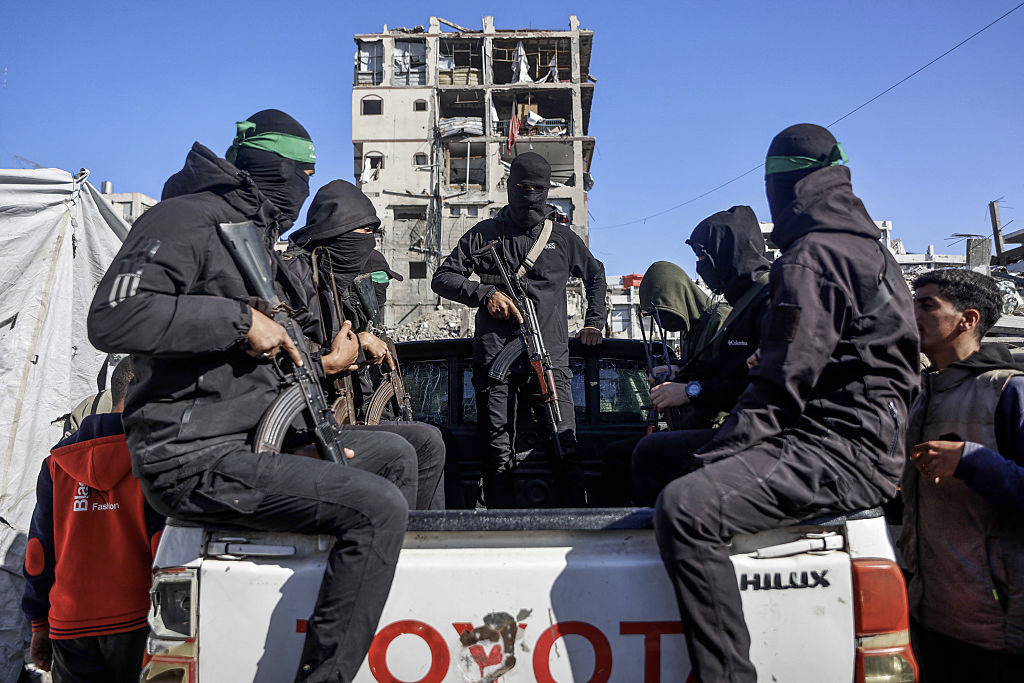
Nearly two-and-a-half years after the October 7, 2023 Hamas massacre in Israel, the Islamist terror group is still firmly entrenched in the Gaza Strip.
Hamas remains armed, organized, and committed to its declared goal of destroying Israel through jihad (holy war). Yet instead of confronting this reality, international diplomats continue to indulge in dangerous fantasies about negotiating Hamas out of existence.
The latest example comes from former United Nations Special Coordinator for the Middle East Peace Process, Nickolay Mladenov, who has presented to the UN Security Council a 15-point "Roadmap to Complete the Implementation of President Trump's Gaza Comprehensive Plan."
Mladenov chairs the so-called "Board of Peace," an international organization established by Trump with the stated purpose of overseeing the processes of his Gaza peace plan.
Mladenov urged the Security Council to use "every means at its disposal" to press Hamas to disarm and called on Israel to honor its ceasefire commitments. "There is no third option," he said. "There never was, and the people of Gaza should not be made to wait while some pretend that there is." Mladenov added that the biggest obstacle to full implementation of the ceasefire remains "Hamas's refusal to accept a verified decommissioning, relinquishing coercive control, and permit a genuine civilian transition in Gaza."
At the center of Mladenov's proposal is an astonishing assumption: that Hamas can somehow be persuaded, pressured, or diplomatically maneuvered into surrendering its weapons and relinquishing power.
Since when has Hamas complied with UN Security resolutions? Hamas is not Belgium or Canada. It is an Islamist terrorist organization designated as such by the US, Canada, the European Union, and other countries.
That Mladenov is appealing to the UN Security Council to pressure Hamas reveals the core flaw of the entire approach: the "Board of Peace" and its international sponsors continue to view Hamas as a rational political actor rather than what it actually is: a jihadist terror group.
Mladenov's roadmap repeatedly speaks about "reciprocity," "verification," "implementation mechanisms," and "phased decommissioning."
This language might work in negotiations between states or legitimate political parties. It does not work with an armed Islamist group whose 1988 charter openly calls for Israel's elimination.
The Hamas charter asserts that "the land of Palestine is an Islamic Waqf [holy possession] consecrated for future Moslem generations until Judgement Day." Hamas's charter states that "Israel will continue to exist until Islam will obliterate it," and mandates jihad as a religious and individual duty for all Muslims to "liberate Palestine."
The roadmap's sequencing is especially revealing. Disarmament, once supposedly central to the process, has now been pushed down to Point 6 under the slogan "One Authority, One law, One Weapon."
In effect, Hamas is even being allowed to remain armed and influential during the early stages of the transition process:
"Point 6: One Authority, One Law, One Weapon. What this means: This point establishes the governing principle of the transition: that only authorized Palestinian institutions would exercise security authority inside Gaza; only authorized personnel carry weapons, armed groups cease military activity, and governance and security structures become unified under one civilian authority. No society can sustainably recover while multiple armed structures operate alongside civilian institutions."
This is unacceptable and contradicts the very spirit of the UN Security Council Resolution 2803, on which the roadmap claims to be based. The resolution authorizes a temporary International Stabilization Force and requires the complete demilitarization of the Gaza Strip, including the full disarmament of Hamas and the destruction of all its military infrastructure.
The message being sent to Hamas is unambiguous: continue holding your weapons, continue ruling the Gaza Strip through intimidation and terror, and the international community will keep negotiating with you.
The latest roadmap explicitly states that the proposal "does not call for immediate surrender or unilateral disarmament." Instead, it outlines a "phased, Palestinian-led internationally verified process."
Hamas, however, has already made clear that it rejects the proposal altogether.
Hamas spokesman Hazem Qassem accused Mladenov of adopting the "Israeli narrative" and providing justification for Israel's military actions.
Hamas-affiliated political analyst Yasser Za'atreh went even further, denouncing Mladenov as "Netanyahu's envoy" and declaring that Hamas and other Palestinian terror groups would never surrender their weapons.
"Hamas and the resistance forces will not accept this despicable game, nor will they surrender their weapons," Za'atreh said.
There could hardly be a clearer answer.
Hamas is again telling the world openly that it has no intention of disarming. It wants to remain in power so it can continue pursuing, with the help of the Iranian regime, its jihad against Israel.
Hamas also seems to understand something that many Western diplomats and officials refuse to acknowledge: armed Islamist groups are not removed through conferences, committees, or UN resolutions. They are removed through force. The only countries capable of removing Hamas militarily are Israel and the US.
The "Board of Peace" appears increasingly detached from reality. Nearly every failed diplomatic effort in the Gaza Strip over the past two decades has rested on the same flawed assumption that Hamas can eventually be persuaded to lay down its weapons and relinquish power.
Instead, every ceasefire with Israel and every diplomatic initiative has produced the same result: Hamas becomes stronger.
While diplomats hold meetings in Cairo, New York, Doha, and Ankara, Hamas uses time to entrench itself, rearm, regroup, recruit, and tighten its control over the Gaza Strip's population.
Even Mladenov himself acknowledged before the UN Security Council that Hamas remains in "military and administrative control" over more than two million Palestinians. Despite recognizing this reality, the proposed solution is still more diplomacy, more negotiations, and more phased implementation mechanisms.
What happens when Hamas inevitably refuses to disarm? What happens when Hamas attacks members of the proposed new governing authority? What happens when Hamas continues terrorizing Palestinian civilians who oppose its rule? What happens when Hamas uses the transition period to rebuild its military infrastructure?
The new roadmap offers no serious answers because it is based on the false premise that Hamas will agree to disarm and give up power through negotiations and diplomacy.
There is another, equally serious reality that many prefer to ignore. Some of the region's main mediators are themselves deeply sympathetic to Hamas. Qatar and Turkey are not neutral actors genuinely committed to dismantling Hamas's military machine. Both countries have long supported Hamas politically, financially, and diplomatically.
Expecting Qatar or Turkey to help remove Hamas from power is like expecting Iran to dismantle its Lebanese proxy, Hezbollah.
The tone of the diplomacy surrounding the Gaza Strip has clearly shifted. There is growing pressure on Israel to accommodate Hamas indirectly through international frameworks, while Hamas itself continues rejecting the most basic condition for peace: surrendering its weapons. This approach, bluntly, rewards terrorism.
Trump's "Board of Peace" now risks becoming a mechanism for prolonging Hamas rule. Every day spent pursuing diplomatic fantasies is another day that Hamas uses to solidify its grip on the Gaza Strip and prepare for more terror attacks.
The hard truth is that Hamas will not voluntarily disarm. It will not transform itself into a peaceful political movement. It will not abandon its jihadist ideology because of UN resolutions or international conferences.
At some point, reality will catch up with diplomacy. When the Mladenov roadmap inevitably collapses under Hamas's rejectionism, the world may finally be forced to admit what should have been obvious long ago: Negotiations do not defeat Islamist terrorist groups. As with Afghanistan and Iran, deciding not to defeat them only re-empowers them.
- Follow Khaled Abu Toameh on X (formerly Twitter)
Khaled Abu Toameh is an award-winning journalist based in Jerusalem.
Source: https://www.gatestoneinstitute.org/22543/gaza-roadmap-diplomatic-fantasy

No comments:
Post a Comment