by Khaled Abu Toameh
The notion that Hamas would voluntarily surrender the means that allow it to dominate the Gaza Strip, intimidate Palestinians, and wage jihad (holy war) against Israel is detached from reality.
Hamas is not agreeing to disarm. It is bargaining.
The Cairo meetings reportedly focused heavily on what mediators described as the "restriction of weapons" rather than outright disarmament. Some proposals reportedly envision Hamas and other armed groups "depositing" weapons with Palestinian authorities or placing them under international supervision.
This brush-off alone should convince Washington that the current strategy of negotiating with Hamas, as with Iran, is failing.
The notion that Hamas would voluntarily surrender the means that allow it to dominate the Gaza Strip, intimidate Palestinians, and wage jihad (holy war) against Israel is detached from reality. Hamas did not spend decades building a military infrastructure, digging tunnels, stockpiling rockets, and indoctrinating generations of Palestinians only to hand over its weapons because mediators asked politely.
Any agreement that allows Hamas to survive politically while retaining influence over the Gaza Strip is only postponing the next war.
That Qatar and Turkey are once again serving as mediators just adds another layer of lunacy to the process. Both countries have long been among Hamas's most important political and financial supporters.
Expecting Qatar and Turkey to pressure Hamas into disarming is asking sponsors to dismantle the very organization they have spent years supporting.
For months, Washington has sought calm and stability across the Middle East. America's adversaries, however, increasingly interpret this desire for stability as weakness.
Hamas sees endless negotiations. Hezbollah, Iran's Lebanese proxy, sees repeated efforts to preserve ceasefires. Iran sees a US administration eager to avoid significant escalation at any cost.
Instead of complying with American demands, Hamas, Hezbollah, and Iran are setting conditions and leading the Trump Administration around by the nose.
For the past few years, every ceasefire has allowed Hamas to regroup. Every negotiation has given it time. Every diplomatic initiative has enabled it to re-entrench itself.
That is not a sign of diplomatic progress. It is evidence of diplomatic failure.
At some point, the Trump Administration might confront a simple reality: terrorist organizations do not voluntarily negotiate themselves out of existence.
For both Hamas and Iran, survival means remaining armed so that they can continue pursuing their ultimate goal: the elimination of Israel, and for Iran, eventually Europe and the US.
Until this reality is acknowledged, the world will continue to witness the same futile spectacle: mediators begging a terrorist organization to surrender weapons it never intends to give up.
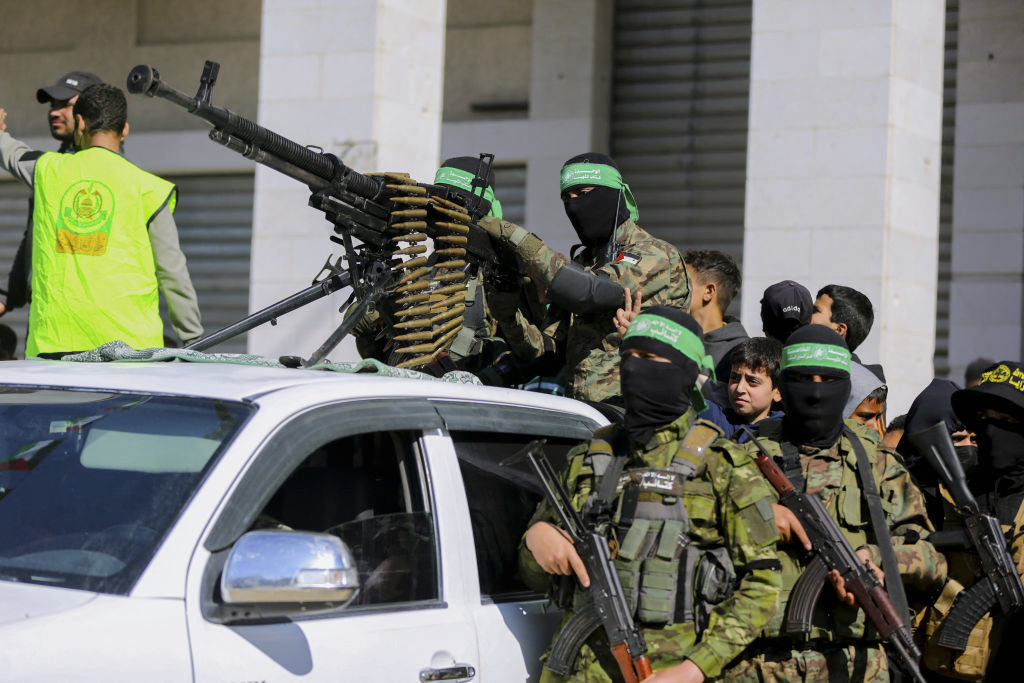
Nearly three years after the October 7, 2023 Hamas-led massacre in Israel, and more than six months after US President Donald Trump announced his ceasefire initiative for the Gaza Strip, one reality remains painfully clear: Hamas is still armed, still in control of large parts of the Gaza Strip, and still openly refusing to surrender its weapons.
This week, mediators from Egypt, Qatar, and Turkey gathered in Cairo with Hamas leaders and representatives of several Palestinian factions in yet another attempt to persuade the Iran-backed Islamist group to comply with Trump's peace plan, which calls for the demilitarization of the Gaza Strip and the decommissioning of weapons held by Hamas and other armed groups.
That Hamas is still negotiating the issue of disarmament nearly three years after October 7 is in itself a damning indictment of the international approach toward the terrorist group. If there were any doubts about Hamas's intentions, the latest round of talks should put them to rest.
According to reports from the meetings, Hamas continues to set conditions before it would even consider surrendering its weapons. Among its demands are a full Israeli withdrawal to the border, increased humanitarian aid, guarantees for the safety of its leaders and members, the dismantling of armed groups it claims are backed by Israel, and the integration of its administrative personnel into any future governing structure in the Gaza Strip.
A Palestinian source told Sky News Arabia on June 9 that the Palestinian factions negotiating in Cairo had not reached an agreement by midnight on Monday regarding the fate of Hamas's weapons. The unnamed source said that Egypt, Qatar and some Palestinian factions pressured Hamas to accept the formula of gradually handing over weapons to the newly established Palestinian National Committee for the Administration of Gaza overseen by the international "Board of Peace" to avoid a return to war with Israel.
According to the source, Hamas still links the handover of its weapons to guarantees regarding the safety of its members and leaders and that they will not be harmed from potential acts of revenge.
In other words, Hamas is not agreeing to disarm. It is bargaining.
This should alarm anyone who genuinely seeks peace and stability in the Middle East and wants to prevent more massacres against Israel.
The message Hamas is sending remains as defiant as ever. Hamas does not take Trump's plan seriously. Hamas is not behaving like a defeated terrorist group responsible for the largest massacre of Jews since the Holocaust, but like a victorious army dictating its terms.
This brush-off alone should convince Washington that the current strategy of negotiating with Hamas, as with Iran, is failing.
The Cairo meetings reportedly focused heavily on what mediators described as the "restriction of weapons" rather than outright disarmament. Some proposals reportedly envision Hamas and other armed groups "depositing" weapons with Palestinian authorities or placing them under international supervision.
Such ideas belong in the realm of fantasy.
The notion that Hamas would voluntarily surrender the means that allow it to dominate the Gaza Strip, intimidate Palestinians, and wage jihad (holy war) against Israel is detached from reality. Hamas did not spend decades building a military infrastructure, digging tunnels, stockpiling rockets, and indoctrinating generations of Palestinians only to hand over its weapons because mediators asked politely.
Even more absurd is the suggestion that weapons could simply be "frozen" or "deposited" for later use.
No serious observer believes that Hamas would permanently relinquish its military capabilities while continuing to exist as a political movement. Any agreement that allows Hamas to survive politically while retaining influence over the Gaza Strip is only postponing the next war.
The fundamental problem with the current approach is that it treats Hamas as a legitimate political actor rather than what it actually is: an Islamist terrorist group committed to the destruction of Israel and the broader jihadist project championed by Iran.
Negotiating with Hamas over whether it should surrender its weapons is like negotiating with a bank robber over whether he should keep his gun.
That Qatar and Turkey are once again serving as mediators just adds another layer of lunacy to the process. Both countries have long been among Hamas's most important political and financial supporters. Hamas leaders have enjoyed safe haven in Qatar and Turkey for years. Senior Hamas officials have operated from these countries while raising funds, coordinating activities, and promoting Hamas's agenda.
Expecting Qatar and Turkey to pressure Hamas into disarming is asking sponsors to dismantle the very organization they have spent years supporting.
The latest negotiations also expose a deeper problem confronting the Trump Administration. For months, Washington has sought calm and stability across the Middle East. America's adversaries, however, increasingly interpret this desire for stability as weakness.
Hamas sees endless negotiations. Hezbollah, Iran's Lebanese proxy, sees repeated efforts to preserve ceasefires. Iran sees a US administration eager to avoid significant escalation at any cost.
The result is predictable. Instead of complying with American demands, Hamas, Hezbollah, and Iran are setting conditions and leading the Trump Administration around by the nose.
Rather than accepting disarmament, they are attempting to create new facts on the ground. Hezbollah insists that Israeli responses to attacks should be limited. Iran claims a right to retaliate whenever it chooses. Hamas demands concessions before discussing weapons.
All of them appear convinced that Washington is more interested in avoiding confrontation than enforcing its own red lines.
This perception is dangerous. It emboldens the Iranian regime and its network of proxies across the Middle East.
Hamas, Hezbollah, and the Houthis in Yemen are not independent actors pursuing local agendas. They are components of Iran's regional project. They share a common objective: the destruction of Israel and driving America out of the Middle East. Like their patrons in Tehran, they view the US as an enemy.
The continued discussion about Hamas's future role in the Gaza Strip misses the central point. Hamas has no intention of laying down its weapons. It has no intention of relinquishing control voluntarily. It has no intention of abandoning its jihad against Israel. To do so would mean to them abandoning its entire reason for being and signing its own death warrant.
For the past few years, every ceasefire has allowed Hamas to regroup. Every negotiation has given it time. Every diplomatic initiative has enabled it to re-entrench itself.
Today, nearly three years after October 7 and more than six months after Trump's ceasefire plan was announced, Hamas remains armed, organized, and defiant.
That is not a sign of diplomatic progress. It is evidence of diplomatic failure.
At some point, the Trump Administration might confront a simple reality: terrorist organizations do not voluntarily negotiate themselves out of existence.
The ongoing effort to persuade Hamas to disarm has become a late-night comedy skit. Each new round of talks further undermines the credibility of those promoting them. Every additional meeting sends the message that Hamas can continue rejecting demands while suffering no meaningful consequences.
If Trump truly wants peace and stability in the Gaza Strip, he would do well to stop negotiating with Hamas and start increasing pressure on it and its sponsors.
The lesson of the past three years is that Hamas and Iran are not interested in peace. They are interested in survival. In their eyes, if they can maneuver the "Great Satan," the US, to compromise, they win and America loses.
For both Hamas and Iran, survival means remaining armed so that they can continue pursuing their ultimate goal: the elimination of Israel, and for Iran, eventually Europe and the US.
Until this reality is acknowledged, the world will continue to witness the same futile spectacle: mediators begging a terrorist organization to surrender weapons it never intends to give up.
- Follow Khaled Abu Toameh on X (formerly Twitter)
Khaled Abu Toameh is an award-winning journalist based in Jerusalem.
Source: https://www.gatestoneinstitute.org/22596/hamas-disarmament-charade

No comments:
Post a Comment