Thursday, November 10, 2022

China unveils giant new drone that may point to future of air warfare - Seth J. Frantzman


by Seth J. Frantzman

The new drone can fly up to 10,000km and has a 24-meter wingspan. It can carry up to 16 munitions, including missiles and bombs.
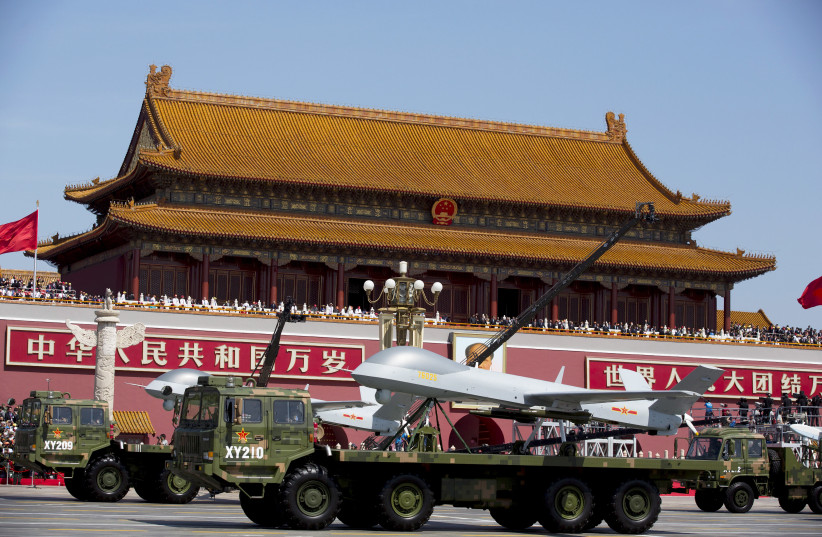
 

 Military vehicles carrying Wing Loong, a Chinese-made medium altitude long endurance unmanned aerial vehicle, travel past Tiananmen Gate during a military parade to commemorate the 70th anniversary of the end of World War II in Beijing (photo credit: REUTERS)
Military vehicles carrying Wing Loong, a Chinese-made medium altitude long endurance unmanned aerial vehicle, travel past Tiananmen Gate during a military parade to commemorate the 70th anniversary of the end of World War II in Beijing
(photo credit: REUTERS)

China is showing off a new large drone at its important Zhuhai air show. This event is the 14th exhibition of its type in China and is usually where Beijing shows off new airplanes, drones and munitions. China has become a major player in the military drone market over the last decade.

While China makes a large number of drones, many of them borrow heavily from how American Reaper and Predator drones look. Those drones also have commonalities with Israeli large UAVs, such as Herons and Hermes.

As such China’s decision to unveil what is called the Wing Loong-3 is an attempt to showcase Beijing’s ability to build upon its existing smaller versions of the same drone, and claim that it now has a long-range drone capable of carrying numerous missiles. 

Drones have been in the news lately because Russia is using Iranian kamikaze drones in the war on Ukraine. These are relatively cheap and simple delta-wing designs that are actually what is known as a “loitering munition,” meaning it’s a flying munition similar to a cruise missile.

The Iranian drones don’t even “loiter,” they just fly on a path into a target. They are deadly but they are also relatively simple as a concept. The Chinese Wing Loong is supposed to be a more complex version of the American Reaper.
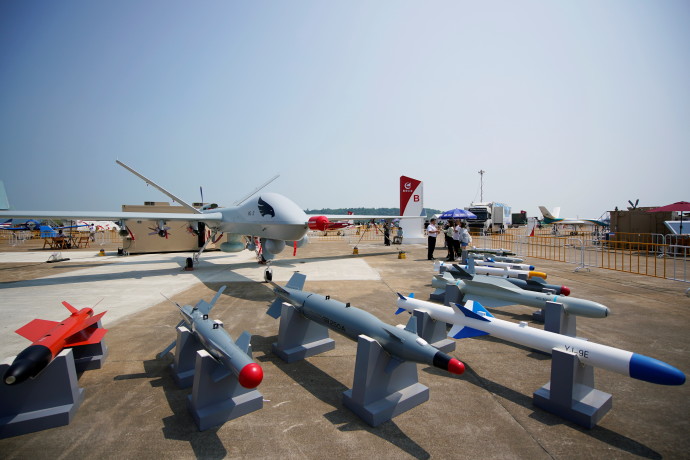
According to reports in China, the new drone can fly up to 10,000km and has a 24-meter wingspan. It can carry up to 16 munitions, including missiles and bombs. It can carry air-to-air missiles which would make it more interesting than existing similar drones that are made in Israel or the US.

These kinds of drones are large UAVs, sometimes called “medium altitude, long endurance” or “MALE” as an acronym.

The US also makes the Global Hawk, a large drone that is used for surveillance. That drone has a takeoff weight of some 14,000kg and looks like a flying beluga whale. In comparison, the American Reaper has a takeoff weight of some 4,000kg and a wingspan of 21 meters.

The Reaper has a range of almost 2,000km and flies up to 50,000 feet and can carry some 1,400kg of munitions on its wings and 300kg of payloads internally. It can carry a variety of munitions but mostly is equipped with Hellfire missiles and JDAMs.

The Wing Loong drone models

By contrast, the new Chinese drone claims to be able to carry PL-10E air-to-air missiles so it can also strike helicopters and other drones. It can fly for some 40 hours and China claims it has a massive range of some 10,000km. It is made by the Chinese company AVIC.

AVIC already made other Wing Loong models that have been exported to 11 countries around the world. Now it has unveiled not only the large Wing Loong model, but also new versions of its existing drones; called Wing Loong 1E, Wing Loong 2y, and Wing Loong 2H, as well as the 10A and 10B.

The big question around all these drones is whether they will be exported and whether they will meet the needs of customers. In the past, China made rapid inroads in the Middle East with its drones because the US was reticent to sell the Reaper and Predator in armed versions.

China therefore could flood the market, but many countries appear to have been disappointed by some of the older models of China’s drones.

At the end of the day, the US has decades of experience with the Predator, and it takes a lot of experience to get drones to work in all-weather environments and have them do what countries want them to do. Israel also has four decades of experience with UAVs, having developed them in the late 1970s and early 1980s.

China, in contrast, can show off a lot of new platforms and make claims about the long ranges and weapons they can carry, but it’s unclear if they can accomplish these tasks until they have to be put into a war situation.

China’s drones have been used not only in the Middle East but also in North Africa. Some 17 countries used China’s armed drones, and countries like Pakistan have imported them for years.

The new Wing Loong 3 hints at the concept of using drones in combat against other drones or aircraft. This would be a major step in the use of UAVs.

Drones in future wars

Future wars are likely to be fought by countries that both have drones. Using drones as early warning systems in the air, or as pickets and trip wires for enemy forces, forcing them to go through an advance guard of expendable drones is a novel concept.

If a country can field dozens or hundreds of armed drones out in front of its forces armed with air-to-air missiles and other devices, then those countries may have an advantage.

China would have to show it can mass produce these drones and that they are able to conduct the kinds of long-range missions, staying aloft for a day or two, capabilities that the companies which make the drones claim can be accomplished.

The fact that Russia has sought out Iranian drones shows countries are hungry for the technology. The fact China isn’t exporting to Russia also shows the sensitivities involved.  

Recent wars such as the one between Armenia and Azerbaijan show what drones can deliver on the battlefield. China’s new drones may hint at where air warfare is going. 


Seth J. Frantzman

Source: https://www.jpost.com/international/article-721977

Follow Middle East and Terrorism on Twitter

How Iran Has Been Attempting to Suppress the Great Hijab Rebellion - Lawrence A. Franklin


by Lawrence A. Franklin

Where are the strong, powerful actions backing up the protestors from the US, President Biden and his apparently pro-Russia, pro-China and pro-despot administration?

  • Regime leadership shrewdly did not attempt to suppress the women-led protests in Iran with massive deployments of the Islamic Revolutionary Guard Corps (IRGC) and shoot-to-kill orders. Such a response might have run the risk of galvanizing even more Iranian men to join the protests.

  • Instead, Tehran dispatched local police units and specially trained civilian, paramilitary Basij units -- the regime's civilian-clad regime protection forces, to engage the protestors. While the Basij are authorized to shoot-to-kill... Basijis also infiltrate the crowds of protestors to identify the ringleaders.

  • President Ebrahim Raisi on October 8... was greeted with chants of "Get lost!" Simultaneously the regime was energizing pro-regime members of the student Basij forces to bully students and report on anti-regime campus leaders.

  • The tyrannical theocracy's judicial institutions are killing and arresting dissidents, which was filmed at several sites. Many anti-regime activists will most likely be tried in special revolutionary court sham trials, at least 1,000 of which will reportedly be public.... Presumably everyone under arrest will be "found" guilty.

  • If the demonstrations gather momentum or spring up in areas once apparently pacified, the regime might finally deploy massive and deadly force to extinguish their unimaginably courageous citizens -- whose "crime" is to be fighting for their freedom from a brutal, tyrannical dictatorship.

  • Where are the strong, powerful actions backing up the protestors from the US, President Biden and his apparently pro-Russia, pro-China and pro-despot administration?

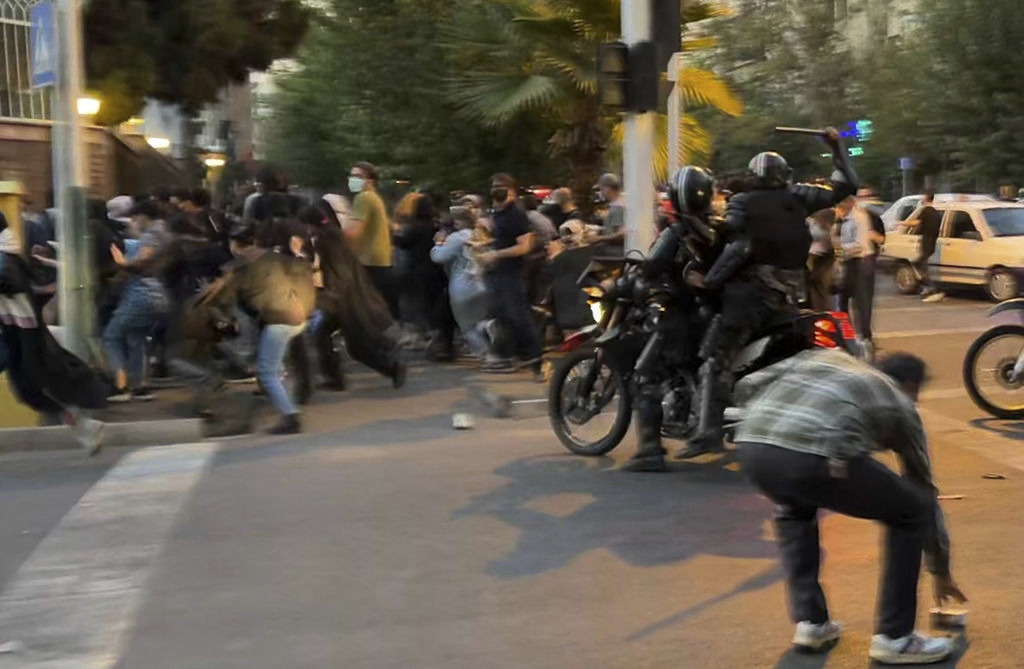
Iran's tyrannical theocratic regime is killing and arresting dissidents. Many anti-regime activists will most likely be tried in special revolutionary court sham trials. Where are the strong, powerful actions backing up the protestors from the Biden administration? Pictured: Iranian policemen chase anti-regime protestors and beat them with batons in Tehran, on September 19, 2022. (Photo by AFP via Getty Images)

Iran's security forces have skillfully been trying to prevent the latest series of anti-regime protests from spinning out of control. After decades of suppressing challenges to regime stability, the regime's militias and law enforcement agencies are doubtless hoping to have perfected their strategy and tactics against opposition movements.

After the death in custody of Mahsa Amini, a 22-year-old Kurdish woman, opposition demonstrations exploded across Iran. The "Morals Police" had ostensibly arrested Amini for failing to cover her hair adequately – or "bad hijab."

Women, especially professional women, have long expressed their contempt for the hair-covering mandate ever since the start of the Islamic Revolution in 1979, when tens of thousands of them marched in Tehran to denounce the ruling by the newly installed "mullahcracy."

What began as public protest -- with women burning their hijabs to protest Amini's death in a hospital on September 16 -- quickly evolved into massive street clashes across the country.

The demonstrations have continued for two months. Several commentators remarked that that this time the anti-regime protests are different, implying that the regime might not survive. After decades of anti-regime demonstrations, the security forces perhaps believe they have learned how and when to apply the right amount of force.

As usual, pro-regime mouthpieces labeled the protestors as being in league with foreign espionage agencies, with Saudi Arabia, Israel and the US as the primary culprits. Iran's shelling of Kurdish regional government sites in Iraq appeared designed to lend authenticity to Tehran's charge that the US and Israel were helping Iraqi Kurds to fan anti-regime protests by Iranian Kurds. Iran also accused Arab Gulf states, particularly Saudi Arabia, of exploiting the rebellion among Iran's Sunni minority. Iranian military and religious leaders have threatened the US, Israel and Saudi Arabia with retaliation.

Regime leadership shrewdly did not attempt to suppress the women-led protests in Iran with massive deployments of the Islamic Revolutionary Guard Corps (IRGC) and shoot-to-kill orders. Such a response might have run the risk of galvanizing even more Iranian men to join the protests. Instead, Tehran dispatched local police units and specially trained civilian, paramilitary Basij units -- the regime's civilian-clad regime protection forces, to engage the protestors. While the Basij are authorized to shoot-to-kill, protestors are mostly chased by ordinary Basij forces wielding batons and chains, and tossing tear gas canisters. Basijis also infiltrate the crowds of protestors to identify the ringleaders.

Iranian authorities concentrated their initial internal suppression operations in non-Persian minority provinces such as Kurdistan, Lorestan (land of the Luri people), Khuzestan (Arab-Iranians), and Sistan and Baluchistan (Baluchi people and Sunni Muslims). The authorities appeared to be more brutal in their use of force against ethnic minorities in these more isolated regime dominions. Tehran also deployed regular military units in ethnic Azeri areas of Iran, across its northern border with the nation-state of Azerbaijan.

The pockets of resistance where anti-regime activity remains most pronounced are in university campuses in Iran's largest cities, especially in Tehran. The regime dispatched dignitaries such as such as President Ebrahim Raisi on October 8 to address the all-female Al-Zahra University; he was greeted with chants of "Get lost!" Simultaneously the regime was energizing pro-regime members of the student Basij forces to bully students and report on anti-regime campus leaders.

The tyrannical theocracy's judicial institutions are killing and arresting dissidents, which was filmed at several sites. Many anti-regime activists will most likely be tried in special revolutionary court sham trials, at least 1,000 of which will reportedly be public. As Tehran claims that the CIA is behind the protests, state prosecutors will most likely charge some of the dissidents with working for foreign spy networks. Presumably everyone under arrest will be "found" guilty.

If the demonstrations gather momentum or spring up in areas once apparently pacified, the regime might finally deploy massive and deadly force to extinguish their unimaginably courageous citizens -- whose "crime" is to be fighting for their freedom from a brutal, tyrannical dictatorship.

Where are the strong, powerful actions backing up the protestors from the US, President Joe Biden and his apparently pro-Russia, pro-China and pro-despot administration?


Dr. Lawrence A. Franklin was the Iran Desk Officer for Secretary of Defense Rumsfeld. He also served on active duty with the U.S. Army and as a Colonel in the Air Force Reserve.

Source: https://www.gatestoneinstitute.org/19099/iran-hijab-rebellion

Follow Middle East and Terrorism on Twitter

Close All China Consulates, Slash Embassy Staff - Gordon G. Chang


by Gordon G. Chang

China uses every point of contact to try to bring down America, and American institutions are now being overwhelmed by the onslaught. It may sound drastic to some, but the survival of freedom and democracy in America critically depends on getting the Chinese regime out of the U.S.

  • Beijing reportedly has... used the station to track Chinese individuals of interest to the regime and, short-circuiting legal procedures, to persuade those Chinese to voluntarily return to China.

  • "[T]hey are very bold because they know they can do as they like and the State Department won't do a damn thing." — Maura Moynihan, author, to Gatestone, October 2022.

  • Prior to the recent indictments, the U.S. government often let off Chinese agents with only a warning, sometimes because of intervention by the State Department.

  • Law enforcement is essential, but it is hardly an answer to China's massive campaigns against the United States.

  • One solution is to deny Chinese wrongdoers the safe havens they enjoy in America. China's principal safe havens are its embassy and consulates.

  • [T]he U.S. should also be closing China's non-diplomatic presences — primarily banks and companies — to even out the situation.

  • China uses every point of contact to try to bring down America, and American institutions are now being overwhelmed by the onslaught. It may sound drastic to some, but the survival of freedom and democracy in America critically depends on getting the Chinese regime out of the U.S.

  • The best way to do that is to expel the military officers, spies, agents, provocateurs and criminals finding protection in China's diplomatic presences in the United States. Nothing else would better communicate resolve to Beijing than getting dangerous Chinese actors off American soil.

  • The Biden administration should of course be shutting down the Chinatown police station, as well.

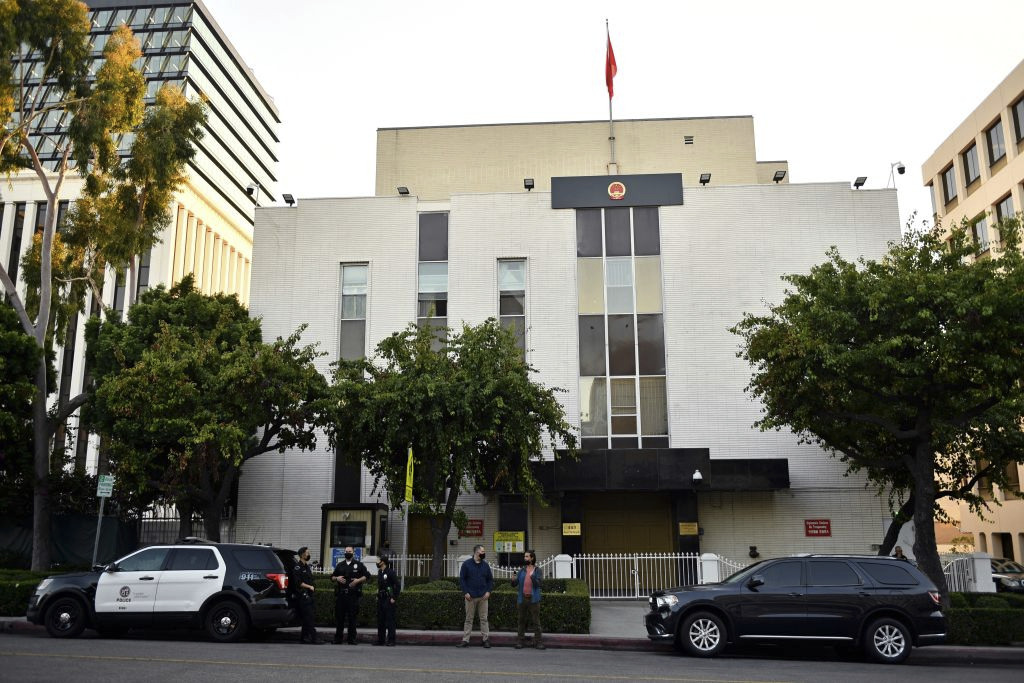
China's regime has established a police station in Manhattan, and reportedly has used it to track Chinese individuals of interest to the regime and, short-circuiting legal procedures, to persuade them to voluntarily return to China. One solution is to deny Chinese wrongdoers the safe havens they enjoy in America. China's principal safe havens are its embassy and consulates. Pictured: China's consulate in Los Angeles, California. (Photo by Patrick T. Fallon/AFP via Getty Images)

Americans in recent weeks have been outraged by reports that China's regime has established a police station on the Lower East Side of Manhattan, in Chinatown.

The New York Post last month reported that the IRS-blacklisted ChangLe Association NY Inc., which had failed to file required reports for three consecutive years and thereby lost tax-exempt status in May, still owns and operates a "service station" at 107 East Broadway.

The location houses the Fuzhou Police Overseas Chinese Affairs bureau. The bureau's stated purpose is to help China's nationals with Chinese-government identification cards and drivers' licenses.

Beijing reportedly has also used the station to track Chinese individuals of interest to the regime and, short-circuiting legal procedures, to persuade those Chinese to voluntarily return to China.

Whether handling routine services or hunting down individuals, the bureau has been engaged in activities violating American sovereignty. The U.S. and China do not have an extradition treaty.

"This is a disgrace," said Beau Dietl, the celebrity retired NYPD detective, to the Daily Caller News Foundation. "How in God's name could they openly have these communist police stations in our country?"

Unfortunately, there is no mystery as to why the Chinese regime felt it could get away with this on American soil.

China's boldness is the result of Presidents Obama, Trump and Biden — and perhaps those before them — knowing about improper and illegal activities in America of Chinese consular officials and Ministry of State Security agents but choosing not to expel or punish the perpetrators.

America's highest elected leaders, in short, have failed to enforce American law against China.

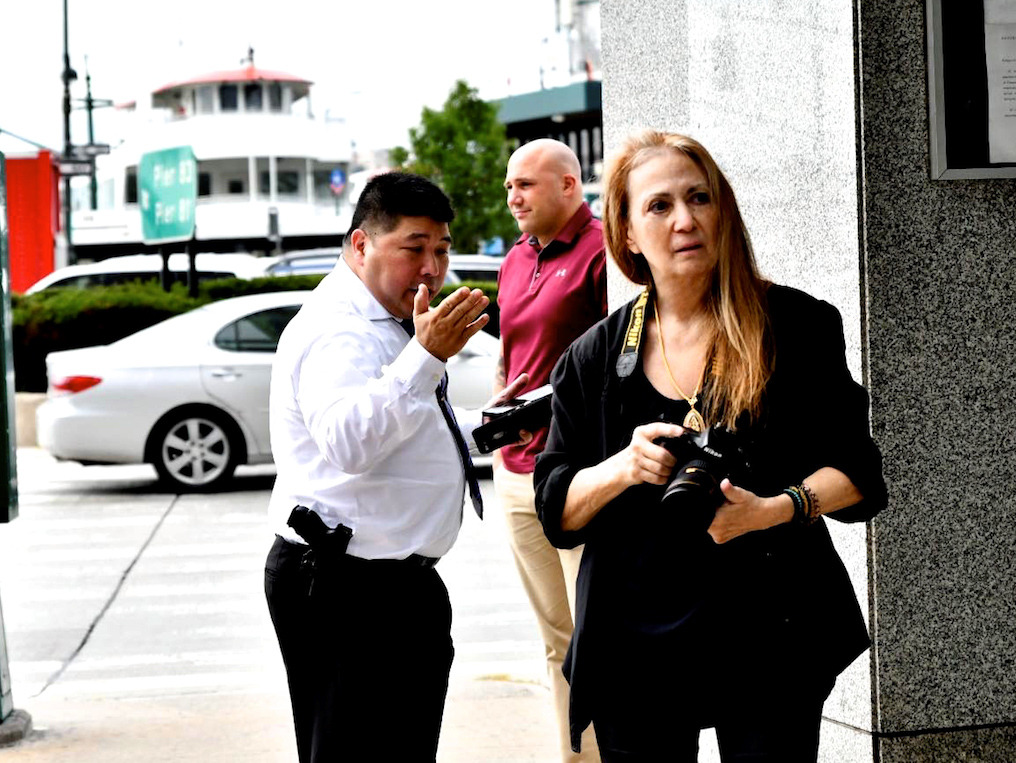
We begin on the 100th anniversary of the founding of the Communist Party. During the afternoon of July 1 of last year, an armed security guard attached to the Chinese consulate in New York City caused facial injuries to Jane Stein, a Manhattan resident, as she was photographing a protest on the sidewalk outside the Chinese diplomatic outpost.

The incident — the guard shoved Stein's heavy camera into her face, causing swelling above her left eye — occurred on the sidewalk just outside the consulate, on the north side of 42nd Street.

The consulate guard, in short, was interfering with Americans, on sovereign U.S. territory, exercising First Amendment rights.

Although the FBI interviewed Stein about the assault, the Biden administration does not appear to have taken any action against either the guard or China's New York consulate.

The guard who assaulted Stein is seen in the photo below. The guard's gun is clearly visible in this image. Stein is the woman with the camera.

(Photo by Tenzin Wangdue Rangzen)

"For years we have held protests at the consulate and they just ignored us," said Maura Moynihan, the daughter of the late US Senator Daniel Moynihan, to Gatestone. "But now they are very bold because they know they can do as they like and the State Department won't do a damn thing."

American attitudes are, fortunately, stiffening, albeit late. For instance, on October 20, the Justice Department unsealed indictments of Quanzhong An, his daughter, and five other Chinese nationals for surveilling and harassing a U.S. resident and his son. Those charged were allegedly a part of Beijing's notorious Operation Fox Hunt, a long-running effort to force individuals back to China. Prior to the recent indictments, the U.S. government often let off Chinese agents with only a warning, sometimes because of intervention by the State Department. This has not been reported but is known among China-watchers.

Law enforcement is essential, but it is hardly an answer to China's massive campaigns against the United States. For instance, only two of the defendants indicted last month were apprehended. The remaining five are believed to be in China. There, they will likely remain beyond the reach of American justice.

One solution is to deny Chinese wrongdoers the safe havens they enjoy in America. China's principal safe havens are its embassy and consulates.

In July 2020, Mike Pompeo's State Department closed China's Houston consulate. According to then-spokesperson Morgan Ortagus, State ordered the closure of the facility "in order to protect American intellectual property and Americans' private information." Those reasons, of course, could be used to close all China's consulates and its embassy as well. China in fact used the Houston location to house a People's Liberation Army intelligence unit that was fomenting violent Antifa and Black Lives Matter protests, in other words, working to overthrow the U.S. government.

It is now time to close the remaining consulates — in Chicago, Los Angeles, New York, and San Francisco — and send home almost all the Washington, D.C. embassy staff.

China will retaliate by ordering reciprocal closures of America's four consulates in China — in Guangzhou, Shanghai, Shenyang, and Wuhan — and embassy staff reductions.

Such actions will deny services to Americans and American businesses. Denial of consular services will be in America's interest, however. For personal safety, business, strategic, national security, and moral reasons, Americans should not be in China at this time. The end of such services will encourage Americans to do something they should be doing on their own: Leaving China.

One can argue that, as China's President Xi Jinping closes off Chinese society from the world, the U.S. needs its embassy and consulates in China more than China needs its diplomatic outposts in America. There is a measure of truth in that argument, but the U.S. should also be closing China's non-diplomatic presences — primarily banks and companies — to even out the situation.

China uses every point of contact to try to bring down America, and American institutions are now being overwhelmed by the onslaught. It may sound drastic to some, but the survival of freedom and democracy in America critically depends on getting the Chinese regime out of the U.S.

The best way to do that is to expel the military officers, spies, agents, provocateurs and criminals finding protection in China's diplomatic sites in the United States. Nothing else would better communicate resolve to Beijing than getting dangerous Chinese actors off American soil.

The Biden administration should of course be shutting down the Chinatown police station, as well.

 
Gordon G. Chang is the author of The Coming Collapse of China, a Gatestone Institute distinguished senior fellow, and a member of its Advisory Board.

Source: https://www.gatestoneinstitute.org/19104/close-china-consulates

Follow Middle East and Terrorism on Twitter

Ukrainian troops celebrate capture of frontline town - Reuters


by Reuters

The town, seen as the last remaining Russian-occupied town in the Mykolaiv region, is important for control of a strategic road that leads to the city of Kherson, which Russia captured in March.


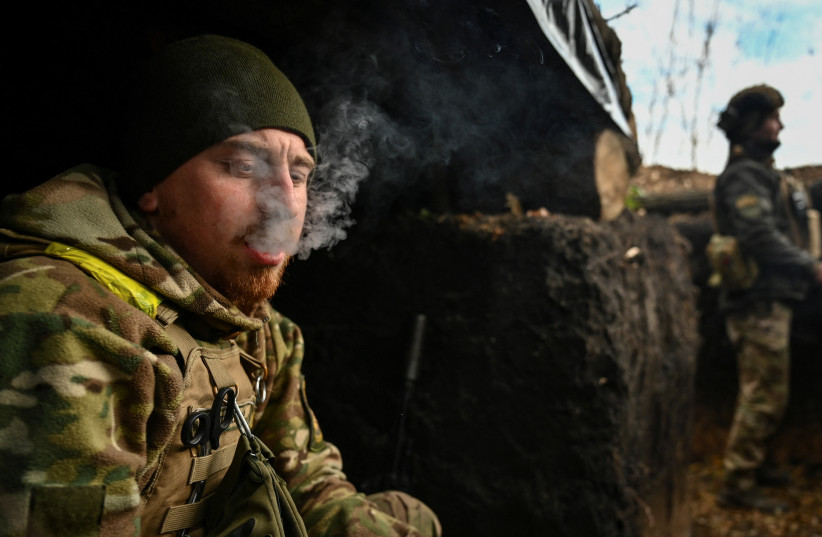
A serviceman smokes in a trench at his position on a front line, amid Russia's attack on Ukraine, in Zaporizhzhia region, Ukraine November 3, 2022.  (photo credit: STRINGER/ REUTERS)
A serviceman smokes in a trench at his position on a front line, amid Russia's attack on Ukraine, in Zaporizhzhia region, Ukraine November 3, 2022.
(photo credit: STRINGER/ REUTERS)

Ukrainian troops claimed on Thursday to have recaptured the town of Snihurivka in the southern Mykolaiv region from Russian forces, speaking in video footage published on social media and by Ukrainian national television.

The town, seen as the last remaining Russian-occupied town in the Mykolaiv region, is important for control of a strategic road that leads to the city of Kherson, which Russia captured in March.


"Today on Nov. 10, Snihurivka was liberated by the forces of the 131st Separate Intelligence Battalion. Glory to Ukraine!" a soldier shouted as civilians clapped and cheered.

Reuters was able to verify the location of the footage, but not the date it was filmed. There was no immediate confirmation of the town's recapture from the Ukrainian Defense Ministry, a day after Russia ordered its forces to retreat from the area.

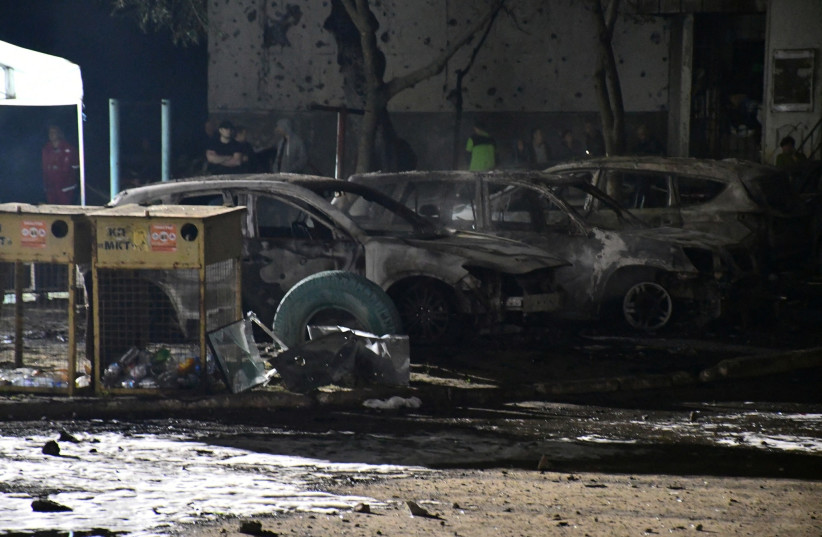
Damaged vehicles are seen in the aftermath of a rocket attack in the location given as Mykolaiv, Ukraine in this handout picture released September 30, 2022. (credit: STATE EMERGENCY SERVICES/HANDOUT VIA REUTERS) Damaged vehicles are seen in the aftermath of a rocket attack in the location given as Mykolaiv, Ukraine in this handout picture released September 30, 2022. (credit: STATE EMERGENCY SERVICES/HANDOUT VIA REUTERS)

Fog hung over the settlement in the background as the soldier stood in a group of heavily armed troops, one of whom was holding up the Ukrainian flag on a military infantry vehicle.

Ukrainian forces capture 12 new settlements 

Ukrainian forces have advanced seven km (4.3 miles)in two directions in the south and captured 12 new settlements in the last 24 hours, Ukrainian army chief Valeriy Zaluzhnyi said on Thursday.

"We can't yet confirm or deny the information of the so-called withdrawal of Russian occupation troops from Kherson. We continue to conduct the offensive operation in line with our plan," he wrote in a post on Telegram.

Wary of Russian withdrawal and possible Kremlin trap 

Despite Russia announcing its withdrawal from the area, Kyiv has said it is wary of rushing in and warned it may be some kind of a Kremlin trap.

Kyiv officials have been careful not to blurt out sensitive military information during earlier counteroffensives in the east and near Kyiv, and they gave few clues of their movements on Wednesday.

The head of the Ukrainian presidential office published an emoticon of a bird, an apparent reference to Snihurivka, which contains the word for a breed of bird in Ukrainian.

Vitaliy Kim, governor of the neighboring region of Mykolaiv said: "We'll wait for official information from the Armed Forces. From myself, I can say that as of now, authorities of that district are already, let's say, close. Let's not lay our cards open. We are preparing humanitarian aid, trucks with food, starlinks."


Reuters

Source: https://www.jpost.com/breaking-news/article-722015

Follow Middle East and Terrorism on Twitter

Gingrich suspects Trump rethinking 2024: He's 'got to look at the results and be troubled' - Nicholas Ballasy


by Nicholas Ballasy

"I thought we'd win a lot more seats," said former Speaker of the House.


Former House Speaker Newt Gingrich told Just the News that former President Donald Trump is likely "rethinking and reappraising" running for president again in 2024, adding that he personally doesn't see a scenario where Florida Republican Gov. Ron DeSantis decides not to run for president in 2024.

"I mean, just in my own emails today, the number of people who want somebody other than Trump who have decided, literally overnight, that person is going to be DeSantis, he's going to find it almost impossible to avoid running," Gingrich said on Wednesday. 

"I think Trump's got to look at the results and be troubled," he added. "I can tell you, for me, this was not the result I expected. I thought we'd win a lot more seats."

Gingrich added that Republicans have to look at the results and ask themselves what they did wrong and where they go from here.

Gingrich was asked if he thinks Trump is going to announce a 2024 run or decide that it's no longer his time.

"I think he's a very, very smart man," he said. "And I'm sure that he is very disappointed. He worked very hard. He did a whole array of rallies with thousands of people. And I know, because I have the same feeling, I know that he went into Election Day thinking it was going to be a huge success. And I suspect that he's going through the same kind of rethinking and reappraising that I'm going through.

"He is a very smart guy, and he's got asked two questions: Can he in fact beat DeSantis? He probably would say yes. Coming out of that fight, would he be able to win a general election? I don't think he wants to run and, you know, have that kind of situation."

Gingrich elaborated on his personal reaction to the results of the midterm election so far.

"I was pretty shaken because that was not the election I expected," he admitted. "And I don't have as much confidence in my own judgment as I would have had yesterday morning."

Earlier on Wednesday, Trump pushed back on media reports that he was furious about the midterm election results, calling them fake news.

"There is a fake news narrative that I was furious, it is just the opposite," he told Fox News Digital. "The people I endorsed did very well. I was batting 98.6% in the primaries, and 216 to 19 in the general election — that is amazing."


Nicholas Ballasy

Source: https://justthenews.com/politics-policy/elections/gingrich-suspects-trump-rethinking-2024-hes-got-look-results-and-be

Follow Middle East and Terrorism on Twitter

What the Palestinians Need Now - Khaled Abu Toameh


by Khaled Abu Toameh

There are two reasons why, under the current circumstances, the Palestinians cannot hold elections.

  • Palestinians in the West Bank and Gaza Strip live under two regimes that crack down on critics, and imprison and intimidate journalists, human rights activists and political opponents. Those who dare to criticize the Palestinian Authority or Hamas often face various forms of punishment, including torture and incarceration.

  • The situation under the Palestinian Authority in the West Bank is not any better. There, Palestinian security forces continue to arrest, harass and intimidate political activists, university students and academics.

  • In the past week, the Palestinian Authority security forces arrested and threatened a number of Palestinian political activists who called for reforms.

  • There are two reasons why, under the current circumstances, the Palestinians cannot hold elections.

  • First, the split between the West Bank and the Gaza Strip due to the ongoing dispute between the Palestinian Authority and Hamas. The PA fears that Hamas will not allow a free election in the Gaza Strip, especially in light of Hamas' crackdown on its opponents there. Similarly, Hamas fears that the PA will not allow a free election in the West Bank, especially in light of the continued security crackdown on Hamas members there.

  • Second, the high probability that Hamas would win.

  • While one can understand why it is not a good idea to hold elections that would help Hamas extend its control to the West Bank, there is no reason why Palestinians should be arrested and intimidated for demanding freedom of expression and an end to corruption.

  • Unsurprisingly, violations committed by Palestinians against Palestinians are virtually always ignored by the Western media and the international community. Such abuses are of no interest to Westerners because they cannot be blamed on Israel. By turning a blind eye to the violations, the international community and media effectively incentivize the Palestinian Authority and Hamas to continue their repressive measures against their own people.

  • Sadly, it does not look as if the Palestinians are coming any closer to freedom of speech or freedom of assembly -- unless it is to denounce Israel. Rather, as their corrupt and incompetent leaders clearly do not care about their well-being, it looks as if they are going in exactly the opposite direction.

  • While, literally across the street, the Israelis have free debate in newspapers, quarrelsome programs on television and protests, the Palestinians continue to find themselves arrested, silenced and terrorized for daring to demand the freedoms they see every day next door.

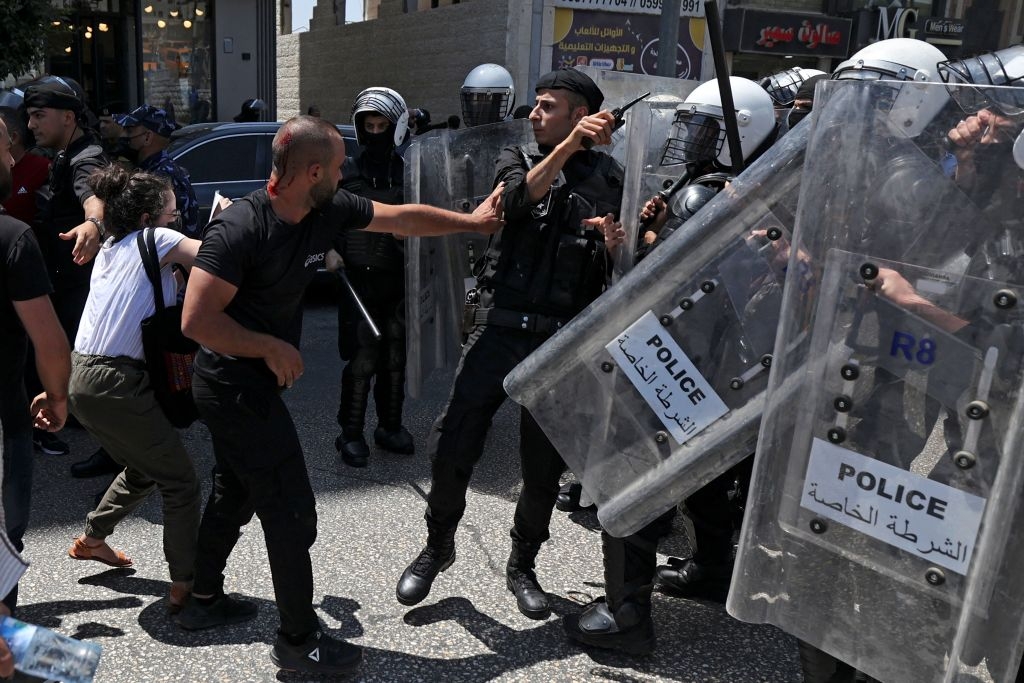
Palestinians in the West Bank and Gaza Strip live under two regimes that crack down on critics, and imprison and intimidate journalists, human rights activists and political opponents. Those who dare to criticize the Palestinian Authority or Hamas often face various forms of punishment, including torture and incarceration. Pictured: A bleeding protester scuffles with PA security forces during a demonstration in Ramallah on June 24, 2021, following the beating death in police custody of human rights activist Nizar Banat. (Photo by Abbas Momani/AFP via Getty Images)

Under the kleptocratic Palestinian Authority (PA) and the theocratic Hamas regimes, Palestinians have no freedom of speech and no independent or free media.

Palestinians in the West Bank and Gaza Strip live under two regimes that crack down on critics, and imprison and intimidate journalists, human rights activists and political opponents. Those who dare to criticize the Palestinian Authority or Hamas often face various forms of punishment, including torture and incarceration.

Take, for example, the case of legal expert Dr. Mohammed al-Talbani, who was forced to sign a pledge not to offend Hamas or its government on social media. The move came after he criticized death sentences issued by Hamas courts in the Gaza Strip.

Al-Talbani told the Palestinian news website Amad:

"I received a call in which they [Hamas] asked me to come to the Shejaiya police station - the Cybercrime Investigation Department. There was a complaint against me for comments I made on my Facebook page about executions in the Gaza Strip. They had taken took a screenshot of these comments, and considered them as a mockery against Hamas."

Al-Talbani said that the interrogators also delivered a "veiled threat": He had better not write anything against Hamas or else he would be summoned again.

"They asked me to sign a pledge so that the complaint would not be transferred to the Public Prosecution and become an official case," he recounted. "I agreed to sign the pledge that I will respect the Palestinian law and not offend the [Hamas] movement and the government."

In another incident in the Gaza Strip last May, Hamas security forces questioned songwriter and composer Massoud al-Draimli and five other people after they produced a video clip without receiving prior permission from the authorities. The video clip included a female singer -- Hamas was furious.

Al-Draimli and his friends were forced to delete the song and sign a pledge not to perform any lyrical work without the approval of Hamas. Al-Dreimli later said:

"I posted the video of the song on Facebook on Thursday, and an hour later, the [Hamas] General Investigation Service called me and ordered me to delete the video. They summoned me for interrogation about the participation of a girl in singing. They said that this is forbidden and that I did not obtain a permit to film the song."

The situation under the Palestinian Authority in the West Bank is not any better. There, Palestinian security forces continue to arrest, harass and intimidate political activists, university students and academics.

In the past week, the PA security forces arrested and threatened a number of Palestinian political activists who called for reforms.

On November 7, Palestinian security officers broke up a press conference held by the activists in Ramallah.

Palestinian activist Omar Assaf said that the security officers cut off the electricity to stop the conference, and then used force to prevent him and his friends them from completing it.

Fakhri Jaradat, another activist said:

"The security forces raided the headquarters of the People's Alliance for Change when the press conference started. They cut off the electricity, detained some participants. They also forced the journalists to stop covering the event."

A few days earlier, the Palestinian Authority security forces banned several activists from participating in a video conference organized by a group called the Palestinian Popular Conference (PPC) to protest against PA President Mahmoud Abbas's hegemony over the Palestinian leadership and refusal to share powers.

Omar Assaf, the political activist, was arrested by Palestinian Authority security forces while he was on his way to prepare for the conference.

The Palestinian security services subsequently arrested another activist, Bashar Takrouri and confiscated the mobile phone of a third activist, Jamileh Abed. A number of journalists who came to cover the event were also detained by the security officers.

The PCC said that the crackdown is aiming to "silence the voices calling for the reform of the PLO." It condemned the detention of the political activists and journalists and remarked that the crackdown "reinforces the national need to rebuild the PLO on democratic foundations to allow the revival of the Palestinian political system and preserve the rights and dignity of the Palestinians away from the hegemony of the security services."

The Palestinian NGO Network and the Council of Human Rights Organizations also denounced the Palestinian Authority crackdown and said that peaceful assembly and freedom of expression are rights guaranteed in the Palestinian Basic Law.

"The principle of the rule of law is the basis of governance in Palestine, and all authorities, agencies, bodies, institutions and persons are subject to the law," the two groups said.

"We consider that prohibiting and preventing the holding of peaceful activities and gatherings, especially those calling for reforming the Palestinian political system, is a very dangerous step for the future of the existing Palestinian political system and for the social fabric. The continued restrictions on peaceful activities and assemblies harm the image of Palestine at the international level, and place Palestine in the company of violators of human rights."

The Palestinian Independent Commission for Human Rights (ICHR) condemned the crackdown, as well:

"The commission considers that storming a closed meeting and depriving attendees of completing their press conference constitutes a violation of the citizens' right to express their opinions freely, a violation of their right to political participation and to hold private meetings...

"The commission again calls on law enforcement and official authorities to respect freedom of expression, and to stop prosecuting or harassing opponents for expressing their opinions."

For the fifth time since 2019, Israelis, on November 1, voted in yet another national election. Their Palestinian neighbors in the West Bank and Gaza Strip can only watch with envy as Israelis practice a basic democratic right to elect their own leaders.

There are two reasons why, under the current circumstances, the Palestinians cannot hold elections.

First, the split between the West Bank and the Gaza Strip due to the ongoing dispute between the Palestinian Authority and Hamas. The PA fears that Hamas will not allow a free election in the Gaza Strip, especially in light of Hamas' crackdown on its opponents there. Similarly, Hamas fears that the PA will not allow a free election in the West Bank, especially in light of the continued security crackdown on Hamas members there.

Second, the high probability that Hamas would win.

The last Palestinian presidential election took place in 2005, when Mahmoud Abbas was elected for a four-year term to succeed Yasser Arafat. Nearly two decades later, the 87-year-old Abbas remains in power -- although his term in office expired in 2009.

During this period, Abbas saw nine Israeli prime ministers and presidents come and go through free and democratic elections.

The last Palestinian parliamentary election was held in 2006. It resulted in a victory for Abbas's rivals in the Islamist movement Hamas.

A year later, Hamas expelled Abbas's Palestinian Authority from the Gaza Strip through a violent coup. Since then, the Palestinian parliament, the Palestinian Legislative Council (PLC), has been paralyzed due to the (ongoing) dispute between the Palestinian Authority in the West Bank and Hamas in the Gaza Strip.

By contrast, Israelis have since 2006 held nine elections for their parliament, the Knesset.

Just when it seemed that the Palestinians were finally headed toward holding parliamentary and presidential elections last year, Abbas decided to call off the vote.

Although he cited Israel's alleged refusal to allow the Palestinians to include Jerusalem in the electoral process, it is widely believed that the real reason behind the decision was his fear that his corruption-riddled and fragmented Fatah faction would, as widely predicted, lose the elections to Hamas.

While one can understand why it is not a good idea to hold elections that would help Hamas extend its control to the West Bank, there is no reason why Palestinians should be arrested and intimidated for demanding freedom of expression and an end to corruption.

Unsurprisingly, violations committed by Palestinians against Palestinians are virtually always ignored by the Western media and the international community. Such abuses are of no interest to Westerners because they cannot be blamed on Israel. By turning a blind eye to the violations, the international community and media effectively incentivize the Palestinian Authority and Hamas to continue their repressive measures against their own people.

Sadly, it does not look as if the Palestinians are coming any closer to freedom of speech or freedom of assembly -- unless it is to denounce Israel. Rather, as their corrupt and incompetent leaders clearly do not care about their well-being, it looks as if they are going in exactly the opposite direction.

While, literally across the street, the Israelis have free debate in newspapers, quarrelsome programs on television and protests, the Palestinians continue to find themselves arrested, silenced and terrorized for daring to demand the freedoms they see every day next door.

  • Follow Khaled Abu Toameh on Twitter

 
Khaled Abu Toameh is an award-winning journalist based in Jerusalem.

Source: https://www.gatestoneinstitute.org/19106/what-palestinians-need

Follow Middle East and Terrorism on Twitter

UC Berkeley Calls Cops on Protest Against “Jewish Free Zones” - Daniel Greenfield


by Daniel Greenfield

At Berkeley, banning Jews is free speech, protesting anti-Semitism isn’t.


During the Black Lives Matter riots, UC Berkeley Chancellor Carol Christ endorsed police defunding. “Elements of our country’s law enforcement culture dehumanize some of the very people whose safety and wellness police officers are sworn to protect,” she falsely claimed.

Two weeks ago, UC Berkeley called the police on a conservative truck protesting campus antisemitism and the “Jewish Free Zones” erected by elements of its law school.

Berkeley Law School Dean Erwin Chemerinsky had claimed that the university couldn’t take any action against the “Jewish Free Zones” enacted by student organizations even as he admitted that they would bar 90% of Jewish speakers. “That is their First Amendment right. I find their statement offensive, but they have the right to say it. To punish these student groups, or students, for their speech would clearly violate the Constitution,” he argued.

That was in early October.

In late October, Chemerinsky responded to a truck rented by a conservative group protesting the “Jewish Free Zone” by threatening that, “we’re exploring whether there’s any action that can be taken against the Accuracy in Media for the truck.”

According to Chemerinsky and Berkeley, banning Jews is free speech, protesting the ban isn’t.

Chemerinsky described the ban of 90% of Jewish speakers as merely “offensive”, but condemned a protest against it as “despicable” and “outrageous behavior.”

Adam Guillette, the president of Accuracy in Media, had decided to challenge the culture of campus antisemitism by renting a truck to name and shame the students responsible for the  “Jewish Free Zones”.

It’s a tactic that has been successfully used by groups fighting antisemitism like Canary Mission.

Recalling his own student days, Adam told me that, “When I attended the University of Florida we dealt with the same sort of nonsense and our campus Jewish groups wouldn’t do a thing about it.

“Most Jewish students and most Jewish student groups just want to go to class, live their life, and not be bothered. They think standing up to these bullies will only make things worse, so they remain silent and hope the problem goes away. Silence is never the correct response when dealing with bullies.”

Instead of silence, he sent a truck naming the perpetrators and declaring, “shame, shame.”

And UC Berkeley responded with violence and legal threats.

A previous AIM truck protesting UC Berkeley’s antisemitism had been met with thrown rocks and condemnations by the ADL, Berkeley’s Hillel and the local JCRC.

UC Berkeley administrators offered “emotional support” to students who felt upset by a truck with a picture of Hitler on it reading, “All in favor of banning Jews, raise your right hand.”

In response to the latest AIM protest truck, Adam Guillette told me that “the university called law enforcement on our truck last week. The police told our driver that he was violating a city statute and wasn’t allowed to park on the public street in a paid parking spot near the law school.”

It isn’t clear if such a regulation even exists, but what is clear is that despite his professed support for free speech, UC Berkeley Law Dean Erwin Chemerinsky attempted to suppress a non-violent protest against antisemitism by abusing police resources and local regulations.

“It’s a shame that Chemerinsky’s devotion to free speech extends to antisemites but not to those who combat them. It seems he’d rather see us silenced than those who wish to intimidate Jews,” the AIM president told Front Page Magazine.

Chemerinsky and UC Berkeley failed to protect Jewish students, but turned to the police to protect some of the students named by the AIM truck, like Jasmin Luz, of the Womxn of Color Collective, Jung Kim, of the Asian Pacific American Law Students Association, and Nicki Guivatchian, of the Middle Eastern and North African Law Students Association.”

The AIM truck had a very simple message, “Stand Up To the Ringleaders of Antisemitism at Berkeley.” Instead, UC Berkeley Law rushed to protect them while suppressing free speech.

“Whatever the disagreement on issues, to put students’ names on the side of the truck was despicable,” Dean Chemerinsky fulminated.

The disagreement, as Chemerinsky had already admitted, was a plan to, in his own words, “exclude about, I don’t know, 90 percent or more of our Jewish students.” But banning Jewish students is a “disagreement on issues” while naming antisemitic students is “despicable”.

According to him, naming Bull Connor at a protest was worse than the actual segregation.

Jewish campus groups proved equally useless.

Adam Naftalin-Kelman, Berkeley Hillel’s executive director, described the protest against antisemitism as “reprehensible” and “antithetical to building community”.

Naftalin had previously condemned a similar campaign by the David Horowitz Freedom Center: #StopTheJewHatredOnCampus named students involved in the BDS “Hamas-inspired genocidal campaign to destroy Israel”. Naftalin had claimed then that the Freedom Center posters were “counterproductive to creating a vibrant and healthy community”.

How Naftalin intends to build community with students who ban Jews has yet to be clarified.

“It’s consistently frustrating to see how little campus Jewish groups will do to stick up for themselves,” AIM President Adam Guillette told me.

Accuracy in Media intends to continue pressuring UC Berkeley with an email campaign and ongoing protests. And UC Berkeley has made it clear that it will continue protecting antisemites.

Dean Chemerinsky argued that the perpetrators of the “Jewish Free Zones” have “free speech rights, including to express messages that I and others might find offensive.”

He clearly doesn’t believe that those protesting against antisemitism do.

UC Regents Chair Richard Leib issued a statement falsely claiming that “the existence of ‘Jewish Free Zones’ at the campus are both incorrect and designed to inflame the situation” and that student groups have a First Amendment right to “express their views” even “when some of us find those views reprehensible or offensive.”

“That is the basis for free speech and UC will always support that,” he concluded.

UC Berkeley Chancellor Carol Christ admitted that the bans on Jews were “regrettable”, but that “there is no legal basis for sanctioning, defunding or deregistering” the organizations involved in them.

All of that support for free speech for antisemites by UC Berkeley leaders falls apart when Jewish activists and conservative organizations actually protest against the antisemites.

Then UC Berkeley sends in the lawyers and the cops.

Are Christ, Chemerinsky or Leib willing to commit to the same level of free speech protection for Jews protesting against antisemitism as they do for antisemites protesting against Jews?

The difference in their rhetoric and the systemic discrimination of their responses makes it clear that they believe that banning Jews is more legitimate than protesting against those bans.

Their rhetoric and their actions reveal the underlying bias of their political sympathies.

Former Beverly Hills Mayor John Mirisch responded to the crisis at Berkeley by challenging Chemerinsky to recognize that “groups advocating for BDS are frequently looking to wipe the state of Israel off the face of the earth, as their oft-repeated slogan ‘from the river to the sea’ so vividly illustrates.” They’ve begun by trying to wipe Jewish students out of college campuses.

UC Berkeley continues providing cover to those hateful organizations, students and faculty.


Daniel Greenfield, a Shillman Journalism Fellow at the David Horowitz Freedom Center, is an investigative journalist and writer focusing on the radical Left and Islamic terrorism.

Source: https://www.frontpagemag.com/uc-berkeley-calls-cops-on-protest-against-jewish-free-zones/

Follow Middle East and Terrorism on Twitter

As Biden celebrates election results, corporate America lays off workers with recession looming - Aaron Kliegman


by Aaron Kliegman

The combination of corporate fears of a recession and voter concerns about the economy indicate President Biden won't be able to rest easy despite Democrats' stronger-than-expected election results.


As the country was focused on the midterm elections, corporate Americans was bracing for an economic downturn by cutting jobs to rein in costs.

The tangible impacts of companies anticipating a possible recession next year come as exit polls from Tuesday's voting show the economy, particularly inflation, ranked across the board as the top issue for voters — reinforcing what countless polls showed for months leading up to Election Day.

The combination of corporate fears of a recession and voter concerns about the economy indicate President Biden won't be able to rest easy after he celebrates Democrats performing better than expected in the election.

The latest job cuts occurred on Wednesday, when Facebook parent Meta announced the company is laying off 13% of its staff.

"Today I'm sharing some of the most difficult changes we've made in Meta's history," CEO Mark Zuckerberg wrote in a message to employees. "I've decided to reduce the size of our team by about 13% and let more than 11,000 of our talented employees go. We are also taking a number of additional steps to become a leaner and more efficient company by cutting discretionary spending and extending our hiring freeze through Q1."

The layoffs came after Meta issued a weak forecast last month for its fourth quarter earnings, spooking investors and causing its shares to drop nearly 20%.

Meta's costs and expenses jumped 19% year over year in the third quarter to $22.1 billion while its overall sales declined 4% to $27.71 billion in the quarter. Operating income dropped 46% from the previous year to $5.66 billion.

"I want to take accountability for these decisions and for how we got here," said Zuckerberg, who explained recruiting will be disproportionately affected since the company plans to hire fewer people in 2023. "I know this is tough for everyone, and I'm especially sorry to those impacted."

Meta's decision was the latest of a string of recent corporate layoffs amid fears of a coming recession next year.

Twitter, for example, laid off half its workforce last week after Elon Musk purchased the company. Intel is cutting thousands of employees, perhaps 20%. Microsoft laid off about 1,000 workers this week. Ride-hailing firm Lyft said it will lay off about 13% of its workforce. Digital payments firm Stripe is cutting its staff by about 14%. And Morgan Stanley is expected to start a fresh round of layoffs in the coming weeks.

Several other companies have also laid off employees, plan to do so, or imposed hiring freezes.

Job cuts announced by U.S.-based employers increased 13% to 33,843 in October, the highest since February 2021, according to a recent report by the firm Challenger, Gray & Christmas.

Meanwhile, forecasts of a recession next year have become increasingly common — in many cases a matter of when, not if, due to the highest levels of inflation in four decades.

"I think it's quite likely the U.S. has a mild recession next year," former Boston Federal Reserve President Eric Rosengren told CNBC on Tuesday. He explained the Federal Reserve may need to increase interest rates to more than 5% in an effort to combat inflation, which could push the economy into a downturn next year.

The U.S. and European economic teams for Barclays bank also forecast recessions for next year.

The wave of layoffs and recession predictions come as Biden and Democrats celebrate an unexpectedly strong performance in the midterm elections, confounding expectations of a massive, "red tsunami" victory for Republicans.

Biden appeared to have the best midterm election of any president in 20 years by minimizing his party's losses — a result that almost defies credulity in light of what voters consistently told pollsters was motivating their choices this election cycle However, once the dust settles and all the results are finalized, the economy will remain a key issue for which the American people expect improvement — especially with the prospects of a recession looming on the horizon.


Aaron Kliegman

Source: https://justthenews.com/nation/economy/biden-celebrates-election-results-corporate-america-lays-workers-recession-looming

Follow Middle East and Terrorism on Twitter

Prominent pollster says time for America to mandate all ballots be counted on Election Day - Charlotte Hazard


by Charlotte Hazard

Prominent pollster says time for America to mandate all ballots be counted on Election Day


With states like Arizona, Nevada and Alaska taking days to determine midterm election results, influential pollster Scott Rasmussen says there is overwhelming support for America to mandate ballots be in and counted by Election Day.

"One of the 80% issues, and there aren't a whole lot of 80% issues in America-one of them is that all ballots should be in by Election Day," Scott Rasmussen said Wednesday night on the "Just the News, No Noise" TV show. "We should know the results on Election Day."

Such a new mandate would make it nearly impossible to have a system like ranked-choice voting, which is how Alaska conducts its elections. Ranked-choice voting is "an alternative voting system that allows voters to rank multiple candidates on a ballot in order of preference." As a result of this system, Alaskans won't find out results of their midterm for a few weeks.

"I think that system, in theory sounds fine, but voters are really uncomfortable with it," Rasmussen explained.

"Alaska is five hours behind us or whatever, but not not three weeks," he said. "I think this is something we're going to have to address. through the political process. For example, when you lose the Super Bowl, you lose. You don't keep stretching it out for a few more games. That's what has happened in the country today. If you're talking about reforms that really have strong support, they are things like photo ID and getting the ballots in by Election Day."

While some Republicans were hoping for a big red wave, it was more of a red ripple with the GOP predicted to take the House but the Senate uncertain with a runoff in Georgia slated for next month.

Rasmussen said governors such as Texas Gov. Greg Abbott and Florida Gov. Ron DeSantis really pulled through wins because of how they governed during COVID. 

"The pandemic impact on this race was Ron DeSantis and Greg Abbott," Rasmussen said. "They did very, very well, because of their pandemic policies. Governors like Whitmer and Hochul did much more poorly than they might have expected because of their pandemic policy. The way you govern does make a big difference."

As of now, Georgia is going to go into a runoff for the Senate while other Senate and Gubernatorial races in Arizona and Nevada are still too close to call.


Charlotte Hazard 

Source: https://justthenews.com/politics-policy/elections/holdprominent-pollster-says-80-voters-think-all-votes-should-be-counted

Follow Middle East and Terrorism on Twitter

Wednesday, November 9, 2022

Putin Declares War on the Starving - Austin Bay


by Austin Bay

Famine: an old mercenary specializing in mass slaughter.


Vladimir Putin’s invasion of Ukraine has become a war on the world’s poor and starving.

As his army retreats, Putin weaponizes food. Somalia, Yemen, Ethiopia, Bangladesh, Congo — Putin’s war will kill in these hard corners.

On the battlefield Ukraine is steadily defeating Putin’s corrupt Kremlin war machine.

In his bid to create Great Russia, Putin tried to smash Ukraine’s will to resist. But Kremlin missile attacks have failed to crush the Ukrainian people’s will.

Footnote: Adolf Hitler’s bombing blitz of London hardened the Britons’ will to defeat the National Socialist Fuhrer.

As for Putin’s threats to strike Ukraine with nuclear weapons?

They boomeranged. Cold War vets saw the nuke threats as a desperation.

My speculation: at the diplomatic-strategic level, the Kremlin received vicious warnings from Europe and North America of massive conventional retaliation if it used a nuke.

As for the Kremlin’s mass conscription and reservist ploy? Putin was threatening Ukraine with human wave attrition, which translates as “we Russians will die you to death.”

The ploy incited mass resistance in Mother Russia. Even the oligarchs noticed.

So, what does a dictator on the edge of ignominious defeat do?

In Putin’s case he enlists an old mercenary specializing in mass slaughter: Famine, The Rider on the Black Horse, the third horseman of the Book of Revelations’ Four Horsemen of the Apocalypse.

Let theologians debate John’s visions. The historical evil of weaponized famine is occurring in our time on Earth.

Our time background: this year the Food and Agriculture Organization of the United Nations (FAO) explored the effects of the Ukraine war on world food supply. The FAO used simulations to “wargame” scenarios estimating Ukraine War diminished food supplies and likely human malnutrition, starvation and what aid professionals call “food insecurity.”

In its June “Information Note,” FAO said “simulations suggest” that in a scenario “involving a prolonged reduction of food exports by Ukraine and Russia the number of undernourished people globally could increase by between 8 and 13 million in 2022/23.” The Asia-Pacific and sub-Saharan Africa would suffer the worst but “…the impacts will last well beyond 2022/23.”

“Moreover, other projections for 2022 indicate that up to 181 million people in 41 countries could face food crisis or exacerbated levels of acute food insecurity.”

More: “The war will increase humanitarian needs in Ukraine” with millions of people displaced by the war “that has lasted more than eight years.”

Ukraine’s 2022 suffering echoes an evil StrategyPage.com noted earlier this year: “Stalin starved Ukraine in the early 1930s and felt justified because of its continued resistance to communist rule. This Holodomor (Great Hunger) killed over three million Ukrainians as too much Ukrainian grain was exported for hard currency.”

On July 22 Turkey brokered the Black Sea Grain Initiative, which allowed Ukraine to restart food exports stalled by Russia’s invasion. The U.N. and NATO backed it. The deal ensured safe passage for grain ships in and out of Ukraine. It amounted to a “de facto ceasefire” potentially leading to a real ceasefire.

On Oct. 29 Russia declared it was pulling out of the deal. Why? Suspected Ukrainian drones attacked Russian ships near Sevastopol.

Russia insinuated the drones were launched from freighters carrying food from Ukrainian ports. However, on Oct. 31 the U.N. said no ships were in the maritime humanitarian grain export sea corridor the night of Oct. 29.

U.S. Secretary of State Antony Blinken condemned Russia’s decision as “weaponizing food in the war it started, directly impacting low- and middle-income countries and global food prices and exacerbating already dire humanitarian crises and food insecurity.”

Putin thinks the action gives him diplomatic leverage.

Stay tuned.


Austin Bay

Source: https://www.frontpagemag.com/putin-declares-war-on-the-starving/

Follow Middle East and Terrorism on Twitter