Monday, February 1, 2021

Russia: Putin Shoots Himself in the Foot - Judith Bergman


​ by Judith Bergman

Putin, ironically, may largely have himself to thank. If it had not been for the arrest and jailing of Navalny, the current protest movement might have remained dormant.
  • Navalny has been in and out of Russian jails more than ten times since 2011, when he first became the face of Russian opposition to Putin and coined the phrase that the ruling United Russia party was "the party of crooks and thieves".

  • "We came up with this investigation, while I was in intensive care, but we immediately agreed that we would release it when I returned home, to Russia, to Moscow, because we do not want the main character of this film to think that we are afraid of him and that I will tell about his worst secret while I am abroad." — Alexei Navalny, YouTube video, "Putin's Palace", January 19, 2021.

  • Thousands demonstrated -- and were arrested by police armed with stun guns and batons -- this weekend as well, voicing anger over falling living standards, shrinking political freedoms, "corruption, a skewed court system" and a political system that is rigged before "another round of fraudulent elections," possibly this spring and no later than next fall.

  • Putin, ironically, may largely have himself to thank. If it had not been for the arrest and jailing of Navalny, the current protest movement might have remained dormant.

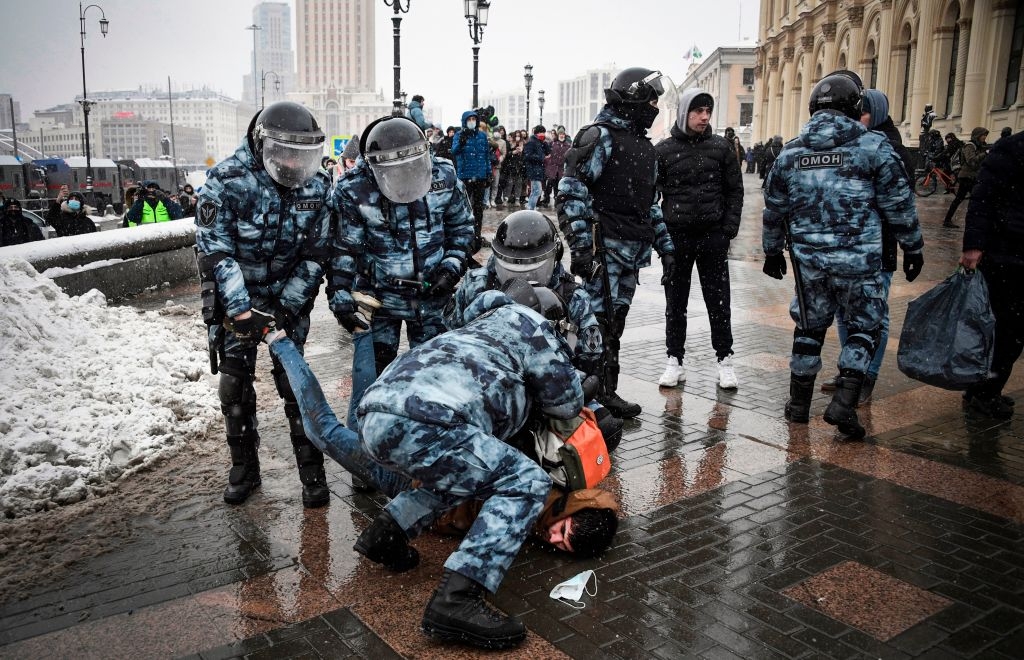
Across Russian, thousands demonstrated -- and were arrested by police armed with stun guns and batons -- this weekend as well, in support of jailed opposition leader Aleksei Navalny, and voicing anger over falling living standards, shrinking political freedoms, corruption, "a skewed court system and rigged elections" and a political system that is rigged before "another round of fraudulent elections", possibly this spring and no later than next fall. Pictured: Police detain a protestor in Moscow on January 31, 2021. (Photo by Alexander Nemenov/AFP via Getty Images)

Aleksei Navalny, opposition leader, anti-corruption activist and fierce critic of Russian President Vladimir Putin, returned to Russia on January 17 after recovering for five months in Germany from having been poisoned with a military grade nerve agent, Novichok. It was an event widely reported to have been an assassination attempt by Russian state agents.

Upon landing, Navalny was immediately arrested on charges that he had violated the parole terms from a suspended sentence received in 2014 for alleged fraud, a conviction that the European Court of Human Rights ruled was "arbitrary and manifestly unreasonable".

Upon his arrest, Navalny was denied access to a lawyer, and -- after a hearing that took place in a police station, which only pro-Kremlin media were allowed to attend -- ­­jailed for an initial term of 30 days. He is due to go on trial on February 2.

"It seems," Navalny said about the proceedings, "that the grandpa in the bunker is so afraid of everything that they demonstratively ripped apart the code of criminal procedure and threw it in the trash."

Navalny has been in and out of Russian jails more than ten times since 2011, when he first became the face of Russian opposition to Putin and coined the phrase that the ruling United Russia party was "the party of crooks and thieves". In 2018, the European Court of Human Rights found that the Russian authorities' arrests of Navalny in 2012 and 2014 had caused "several violations" of his rights and been politically motivated. In 2013, Navalny was allowed, surprisingly, to run for mayor of Moscow, where he came in second after the Kremlin-backed candidate, Sergei Sobyanin, in elections that Navalny called "deliberately falsified." When he wanted to run again in the 2018 presidential elections, he was barred from the ballot.

On January 19, just two days after his arrest, Navalny's anti-corruption investigation team released a video report, "Putin's Palace" -- subtitled in English and well worth watching -- alleging that Putin had built a gigantic 17,691 square meter palace on the Black Sea at an estimated cost of $1.37 billion, paid for by Putin's cronies "with the largest bribe in history". The palace is complete with a huge pool, saunas, spa, gym, hairdresser, casino, underground ice hockey rink, theater, hookah room, vineyards, $26,000 couches, and $52,000 tables.

"We came up with this investigation, while I was in intensive care," Navalny said in the video, "but we immediately agreed that we would release it when I returned home, to Russia, to Moscow, because we do not want the main character of this film to think that we are afraid of him and that I will tell about his worst secret while I am abroad."

Putin, who refuses to utter Navalny's name, responded that the video was "boring" and that, "Nothing that is listed there as my property belongs to me or my close relatives, and never did."

The video has attracted more than 100 million views on YouTube and probably played a role in mobilizing street protests across Russia against Navalny's arrest. It is estimated that on January 23, more than 100,000 people took to the streets in what were reported as the largest anti-government demonstrations in seven years. Protesters even turned out in Russia's most remote cities, such as the eastern Siberian city of Yakutsk, where 150 protesters took to the streets in minus 52 degrees Celsius (minus 61.6 degrees Fahrenheit).

Police arrested an estimated 4,000 people amid widespread reports of police violence, including beatings, although, according to Human Rights Watch, the vast majority of the protesters were peaceful.

Thousands demonstrated -- and were arrested by police armed with stun guns and batons -- this weekend as well, voicing anger over falling living standards, shrinking political freedoms, corruption, "a skewed court system and rigged elections" and a political system that is rigged before "another round of fraudulent elections", possibly this spring and no later than next fall.

"Time and time again, Russian authorities have suppressed free speech and peaceful protest through police brutality, violence, and mass arrests and January 23 was no exception," said Damelya Aitkhozhina, a researcher on Russia at Human Rights Watch. "The authorities understand their obligations to respect fundamental human rights and choose not just to ignore them but to trample all over them."

Following the protests, police raided Navalny's home and offices. According to authorities, Facebook, Twitter, TikTok and others are facing fines of up to 4 million rubles ($53,000) for not having deleted posts calling for Russians to demonstrate.

Although Navalny has been opposing Putin unsuccessfully for at least a decade, the current protests, especially if they continue and grow, may actually have a chance of making a dent in Putin's power base. Putin, ironically, may largely have himself to thank. If it had not been for the arrest and jailing of Navalny, the current protest movement might have remained dormant.

When Navalny revealed that he had been poisoned by state agents, Russians did not take to the streets in support of him, even though an attempted assassination by the state on Putin's fiercest critic is a huge scandal, even by Russian standards. People, however, remained apathetic or fearful.

In a late 2020 poll, performed by the Levada center, a respected independent Russian non-governmental research organization -- so unpopular with Putin that it has been forced to register as a foreign agent -- 33% of Russians said that they considered Putin to be "man of the year," whereas only 5 % said the same of Navalny. Now, Putin's arrest of Navalny and the clampdown on his organization, have brought renewed impetus to the protest movement and mobilized thousands -- especially young people -- for Navalny and against the government.

In addition, Navalny's arrest comes at an all-time low for Russians, 88% of whom, for the first time since 1991, according to Levada, called the outgoing year more difficult for the country than the previous one. Sixty-five per cent said this year was more difficult than the previous year for them and their families, the highest figure since 1998. Such dissatisfaction could, by itself, be enough to fuel a protest movement, but coupled with Navalny's arrest and the soaring corruption in the country, especially with the latest revelations about Putin's palace, Putin might be in for a lot more than he had bargained for when he placed Navalny under arrest.


Judith Bergman, a columnist, lawyer and political analyst, is a Distinguished Senior Fellow at Gatestone Institute.

Source: https://www.gatestoneinstitute.org/17014/russia-putin-navalny-protests 

Follow Middle East and Terrorism on Twitter

Researchers in Israel found something wonderful - Andrea Widburg


​ by Andrea Widburg

This has nothing to do with politics; instead, it's a rare glimpse into the world of Kings David and Solomon.

The Bible is a dynamic book, peopled with characters who have a tremendous immediacy. That immediacy just got a boost over the weekend when Israeli researchers announced that they'd found scraps of purple cloth dating back to the time of Kings David and Solomon.

I didn't grow up in a religious family, so I first read the Bible as a college freshman when I took a "Bible as Literature" class.  For me, it sparked a lifelong fascination with Old Testament history.  I've listed at the bottom of this post the books I've found most fascinating, as well as a video I recommend to anyone interested in the Exodus.

What's so wonderful about ancient history is that our fund of knowledge keeps growing.  The Earth is constantly moving, whether from erosion or because modern people are always digging, and this movement invariably turns up amazing treasures, things that are fascinating and, quite often, beautiful.

Most importantly, these finds offer a window into the past.  When we see a noblewoman's jewels, a warrior's sword, or a child's toys, it doesn't matter that these treasures are hundreds or thousands of years old.  They tell us that humankind is unchanged.  Sure, autres temps, autres mÅ“urs, and all that, but the core of human nature is always the same: to play as a child; fight as a man; and acquire treasures throughout life, no matter our sex, caste, or wealth.

Every day, I check LiveScience's history page to see what the earth has turned up.  In just the last few days, I've learned that a new eagle sculpture was uncovered at an Aztec temple in Mexico, a 1,500-year-old house in Turkey showed puppy paw prints, 6,500 medieval coins and some gold rings showed up in a Polish cornfield, an Anglo-Saxon burial site emerged in Northamptonshire, and archaeologists found evidence that conquistadors took a terrible vengeance against Acolhua people who sacrificed members of a Spanish caravan and then ate them.

But for me, the most exciting find in I don't know how long (maybe since King Richard III's skeleton was found in a parking lot) is the story that researchers found some 3,000-year-old fabric in Israel, which puts it at the time of David and Solomon:

Rare purple wool cloth scraps from the era dating back to the time of King David and King Solomon, approximately 3,000 years ago, have been discovered in Israel.

Researchers in southern Israel found the remnants of woven wool fabric that had been dyed the color of royal purple while examining textiles from the Timna valley, a copper production district of King Solomon's day. 

[snip]

In ancient times purple cloth was a luxury item, and those who wore it were associated with the nobility, priests, and royalty. The dye used to make the color was sourced from a few kinds of mollusks in the Mediterranean Sea. The dye was produced from a gland located within the body of the mollusk by way of a complex chemical process that took several days to occur. 

If you go to the linked article, you can see photographs of the exquisitely preserved wool fabric, which is a lovely, warm purplish/mauve color.

There is nothing more immediate than fabric because it is so tactile. Even when it's royal purple, it's a homey item that people wear every day.  Just as people in David's and Solomon's time did 3,000 years ago, we too wear purple woolens, although we can buy them anywhere, and, if we're not too fussy about quality and style, they're affordable, rather than being, literally, worth a king's ransom.

We live in unsettling times, and the news is often deeply depressing for those of us whose values are not aligned with the new government in Washington, D.C.  Nevertheless, stories such as this one remind us that the world is full of wonders.  We are connected by shared humanity with people who are not mythical at all but, instead, did exactly what we still do: got up in the morning, dressed for the day, and went about their business.  There's something magical about that thought.

Old Testament history books I recommend:

I also can't recommend highly enough Timothy P. Mahoney's fascinating Patterns of Evidence: The Exodus, which posits that those archaeologists and historians who deny that the Exodus really happened because, they say, there's no archaeological record have gotten the dates wrong.  If you re-date the Exodus by a few hundred years, there turns out to be a surprising amount of archaeological evidence that matches the biblical story.


Andrea Widburg 

 Source: https://www.americanthinker.com/blog/2021/02/researchers_in_israel_found_something_wonderful.html 

Follow Middle East and Terrorism on Twitter

'Palestinians' Want London to Give Back 'Big Ben' - Daniel Greenfield


​ by Daniel Greenfield

When your entire history is fake, you can believe anything.

"The Jerusalem Clock is hidden in London today," Fatah, the political movement behind the PLO and the Palestinian Authority, asserts in a post titled, "Jerusalem Stolen Clock".

It goes on to claim that the British military ordered the clock tower dismantled. Then the "British moved the clock first to a new tower across from the municipality of Jerusalem, and transferred it to the British Museum in London, to become the famous British icon, 'Big Ben'."

How did Big Ben, which was built in 1859, become a Muslim clock tower from the 20th century?

There are some other slight differences between London’s Big Ben and the “stolen clock” such as the fact that Big Ben is 316 feet tall while the ‘Palestinian’ clock tower was only 42 feet.

But the story of the “Palestinian clock” is also the story of the entire myth of “Palestine”.

When you believe that the Jerusalem of King David and King Solomon was originally yours, you can just as easily believe that London’s Big Ben was originally the property of “Palestine”.

The “Palestinian clock” is as real as “Palestine”. The myth of a “Palestinian” people propounded by Fatah which has spent decades killing over it is also the story of the “Palestinian clock”.

There’s no more of a “Palestinian” people who were dispossessed by the Jews than Big Ben is a “Palestinian” clock stolen and passed off as London’s Big Ben. Both are fake history built out of resentments and garbled stories whose context has been lost, but whose hatreds remain real.

There were never any Palestinians. When the clock was built the region had been part of the Ottoman Empire, the last Caliphate until ISIS. The caliphates had settled it with Arab Muslim clans who dominated Christian refugees fleeing Muslim persecution, along with groups of other minorities from escaped slaves to gypsies, along with the indigenous Jewish population.

The Ottomans had become obsessed with clock towers as a symbol of their empire. But the Ottomans hadn’t invented them, they had adopted them from Europe, and planted them in major cities of the empire to create a common sense of time and belonging for their subjects.

Sultan Abdul Hamid II, the last real sultan of the empire, obsessively erected clock towers to show off how modern the Ottoman Empire was. But by then the Empire was anything but modern and Hamid's clock tower craze was powered by his German allies. Kaiser Wilhelm II gave Hamid a batch of clocks at the turn of the century which the Turks put into clock towers.

The Ottoman Empire erected some of its clock towers in Israel. These clock towers utilized the talents and funds of the indigenous Jewish and the Arab Muslim settler population. The clock tower projects in Israel began in 1901 which is also the date when Wilhelm sent Hamid a whole bunch of clocks. One of these clock towers was stuck on Jerusalem’s Jaffa Gate which Hamid had previously cut a hole in so that the Kaiser could enter Jerusalem in his tall plumed helmet.

The relationship between Germany and the Ottoman Empire destroyed the remnants of the “Sick Man of Europe” by dragging it into WWI and allowing the British to claim the region.

And the British decided to get rid of the eyesore of the Jaffa Gate Clock Tower by moving it.

The Jaffa Gate Clock Tower, built out of white limestone, would have looked nice in the town square of some British village. The British objection to it was that it was very European and didn’t belong with the biblical setting of the Jaffa Gate. They weren’t repressing a brilliant example of Islamic architecture, but a mediocre Islamic imitation of European architecture.

Critics at the time had called it “that damned German tower”.

Older Ottoman clock towers had been styled after minarets. The clock towers in Israel looked European. Paradoxically, the British got rid of the Jaffa Gate clock because it wasn’t “oriental” enough for their taste. They were trying to protect the traditional architectural character of the region only to be accused by the Muslim leaders in Jerusalem who saw the clock tower as a symbol of their accomplishment, of stealing their clock because its glory put Big Ben to shame.

There was no “Palestinian clock”. Just like there are no “Palestinians”.

The “Palestinian” clock likely used a German mechanism, was styled after European clock towers, and was a project of the Ottoman Empire. Not of any imaginary “Palestine”. Some saner “Palestinian” revisionist history diatribes shy away from claiming that Big Ben is the actual clock tower from Jaffa Gate due to the missing few hundred feet distingushing the two towers.

They claim that only the mechanism from the stolen “Palestinian clock” was used for Big Ben.

But the “Palestinian Clock” wasn’t some great triumph of Islamic science. It was most likely one of the Kaiser’s clocks. If the British had wanted a German clock mechanism, they would have bought it. And the Jaffa Clock Tower the Ottomans built in Jaffa (not to be confused with the Jaffa Gate one in Jerusalem) utilized the services of a Jewish clockmaker, Moritz Schoenberg.

Big Ben’s clock mechanism was genuinely revolutionary and the challenges of running giant clocks at hundreds of feet in freezing weather are very different than anything put together by the Ottomans for the modest clock towers plopped down for the Sultan’s 25th anniversary.

Transplanting the clock mechanism from the Jaffa Gate clock to Big Ben would be disastrous.

And yet the myth of the “Palestinian Clock”, the incredible work of genius that the British coveted so much that they turned it into Big Ben, nurtures a resentment built on a fake history.

“Palestine” is a German clock installed by the Ottoman Empire and transposed to Big Ben.

It’s the delusions of the former elite of a fallen Islamic empire passing down garbled resentments, spinning them into conspiracy theories, and building an identity around them. But when you research the claims they collapse into myths, legends, and fairy tales.

The “Palestinian” cause was built up by a few major Muslim ruling families in Jerusalem and Hebron not because they had lost a nation that never existed, but the status and power that came from being part of an occupying Islamic empire under which Jews were inferiors.

There was never a “Palestinian” nation or a people. There were influential clans, like the Husseini clan, whose members included Hitler’s Mufti and Yasser Arafat, who are not, despite their myths, descended from the Caananites let alone the Philistines, but came over from Egypt. Even after spending a generation trying to wipe out the indigenous Jewish population, when the revolution came and Israel won its independence, they were not driven out in a ‘Nakba’.

They left ahead of their invading Islamic armies that they expected to wipe out the Jewish population. And when that didn’t happen, they claimed to be an exiled “Palestinian” people.

Now their descendants recalling family legends have built up a story of a glorious Islamic clock that was stolen by the infidels and passed off as Big Ben. One day they’ll reclaim Big Ben and stick it on the Jaffa Gate again and take over all of Jerusalem. Meanwhile the Israelis have been caring for the remaining Ottoman clocks. The entire set, including the banished Jaffa Gate clock, have shown up on Israeli postage stamps. The Ottoman plaques with their praises of Allah have been left alone though other plaques praising G-d were sometimes added.

Where the Arab Islamic elites made it their practice to destroy and defile Jewish synagogues, cemeteries, and holy sites, the Israelis have preserved the legacy of Arab Islamic colonialism, along with the legacies of Greek, Roman, Crusader, and British colonial rule in Israel.

When the land actually belongs to you, there’s no need to revise and erase its history.

The “Palestine” myth compounds resentment with insecurity. The Ottoman Empire could be brutal and backward, but it accomplished something. All the Arab Islamic military colonists who built up dynasties under its shadow in backwaters like Israel have is someone else’s clock.

They traded their own shameful history as the camp followers of caliphates, pillagers and colonizers of someone else’s land, for an even more pathetic imaginary history as the “Palestinians”. They insist that as the “Palestinian” people, they are the true indigenous population of Israel even though they arrived there thousands of years after the fact.

Palestine was the name given by the Roman occupiers to Israel. The Romans associated the area with the Philistines: the sea peoples who had come from the Aegean to colonize it.

The “Palestinian” people have spent two generations claiming to be the original indigenous population because they’re using the name of a European people given to it by a European empire. Anyone that hopelessly ignorant might as well claim that Big Ben is part of “Palestine''.

When your entire history is fake, you can believe anything.


Daniel Greenfield, a Shillman Journalism Fellow at the Freedom Center, is an investigative journalist and writer focusing on the radical Left and Islamic terrorism.

 Source: https://www.frontpagemag.com/fpm/2021/02/palestinians-want-london-give-back-big-ben-daniel-greenfield/ 

Follow Middle East and Terrorism on Twitter

Tim Cook & the War on Conservatives - Discover the Networks


​ by Discover the Networks

Apple’s poster boy for virtue signaling.


Sixty-year-old Tim Cook has been the CEO of Apple Inc. since 2011, when he filled the void left by the death of the company’s founder, Steve Jobs. In late 2011, Forbes magazine named Cook one of the “World’s Most Powerful People.” In 2012 he was the best-paid CEO among the heads of large publicly traded companies. Although his salary was about $900,000, Cook took in $378 million in total compensation from stock awards and bonuses.

With Cook at the helm, Apple came under legal scrutiny in 2013 for its practice of storing wealth overseas. That May, Cook testified before the U.S. Senate Permanent Subcommittee on Investigations, which had recently completed a probe into how Apple avoided paying tens of billions of tax dollars by shifting its profits into Irish subsidiaries that the subcommittee’s chairman described as “ghost companies.” Denying that Apple was trying to circumvent U.S. tax laws, Cook asserted that his company was paying an effective tax rate that was among the highest of any major corporation: “We pay all the taxes we owe, every single dollar. We do not depend on tax gimmicks.... We do not stash money on some Caribbean island.”

Cook’s public statements were undermined, however, when in 2017 the German newspaper Süddeutsche Zeitung leaked the so-called “Paradise Papers” -- a set of more than 13.4 million confidential electronic documents pertaining to offshore investments -- which showed that Apple had arranged a sweetheart deal with the Republic of Ireland that allowed the company to pay a miniscule tax rate, sometimes as low as 0.005 percent, on its Irish assets.

On March 29, 2015, Cook wrote an op-ed for the Washington Post in which he attacked the long-sacrosanct protections for religious freedoms included in the First Amendment:

“There’s something very dangerous happening in states across the country. A wave of legislation, introduced in more than two dozen states, would allow people to discriminate against their neighbors. Some, such as the bill enacted in Indiana last week that drew a national outcry and one passed in Arkansas, say individuals can cite their personal religious beliefs to refuse service to a customer or resist a state nondiscrimination law.

“Others are more transparent in their effort to discriminate. Legislation being considered in Texas would strip the salaries and pensions of clerks who issue marriage licenses to same-sex couples — even if the Supreme Court strikes down Texas’ marriage ban later this year. In total, there are nearly 100 bills designed to enshrine discrimination in state law.”

Cook has taken positions on various other political issues as well, that place him to the left side of the political spectrum.

For example, he supports Deferred Action for Childhood Arrivals (DACA), a 2012 executive action through which then-President Barack Obama granted temporary work authorization as well as protection from deportation to illegal aliens who had been brought to the U.S. before they were 16 years of age. “The DACA situation is one that I am truthfully, as an American, deeply offended by,” Cook said in 2018. “The DACA situation is not an immigration issue. It’s a moral issue…. This is one that goes to the core of who we are as Americans. Who among us would think that it’s the right thing to do to kick somebody out of this country when they came here when they were 1, 2, 3 years old, that have only known this country as their home, that know no other country as their home? This just doesn’t make any sense.”

On December 3, 2018, Cook made a speech to the Anti-Defamation League in which he made clear his plan to censor conservative voices on the pretext that they foment misinformation, violence, hatred, division, and white supremacy. Exhorting his listeners “not to be bystanders as hate tries to make its headquarters in the digital world,” Cook said: “We [at Apple] only have one message for those who seek to push hate, division and violence: You have no place on our platforms. You have no home here. From the earliest days of iTunes to Apple Music today, we have always prohibited music with a message of white supremacy. Why? Because it’s the right thing to do. And as we showed this year, we won’t give a platform to violent conspiracy theorists on the App Store. Why? Because it’s the right thing to do.”

After the highly publicized death of George Floyd on May 25, 2020, Cook became a vocal supporter of the Black Lives Matter (BLM) movement. At the Apple Worldwide Developers Conference (WWDC) the month after, Cook said that he understood not only the pain being experienced across America, “especially in our black and brown communities after the senseless killing of George Floyd,” but also motivations underlying the BLM protests that had swept the country. Asserting that Floyd’s death and the public reaction to it had caused Americans to “face longstanding institutional inequalities and social injustices,” Cook stated: “This country was founded on the principles of freedom and equality for all. For too many people, and for too long, we haven’t lived up to those ideas. This means taking action.”

In 2020 as well, Cook published a statement titled “Speaking Up On Racism,” on the Apple website, where he said:

“Right now, there is a pain deeply etched in the soul of our nation and in the hearts of millions. To stand together, we must stand up for one another, and recognize the fear, hurt, and outrage rightly provoked by the senseless killing of George Floyd and a much longer history of racism.

“That painful past is still present today — not only in the form of violence, but in the everyday experience of deeply rooted discrimination…. We commit to continuing to fight the forces of environmental injustice — like climate change — which disproportionately harm Black communities and other communities of color. We commit to looking inward and pushing progress forward on inclusion and diversity, so that every great idea can be heard. And we’re donating to organizations including the Equal Justice Initiative, which challenge racial injustice and mass incarceration…. To the Black community — we see you. You matter and your lives matter.”

On June 11, 2020, Apple vowed to spend $100 million to challenge what Cook described as “systemic barriers that limit opportunity for communities of color in the critical areas of education, economic equality, and criminal justice.”

In a January 2021 interview with Fox News, Cook was asked to comment on Apple’s recent decision to suspend the social media platform Parler, which was a competitor to Facebook and Twitter, from its App Store. Because the suspension occurred shortly after a January 6 incident where several hundred people had swarmed into the Capitol building in Washington, ostensibly to protest what they viewed as an illegitimate presidential election in which Joe Biden had defeated Donald Trump, Cook’s implication was that Parler had been used by Trump supporters to organize and promote that event. Said Cook: “We looked at the incitement of violence that was on there. We don’t consider that free speech and incitement to violence has an intersection.”

Notably, Cook did not provide any examples of the purported incitement to violence to be found on Parler, nor was he asked why Apple’s App Store had not suspended either Twitter, Facebook, or YouTube when, throughout the spring and summer of 2020, so many Black Lives Matter supporters were clearly glorifying and inciting violent riots from those platforms. Moreover, on January 12, leftwing journalist Glenn Greenwald reported that of the thirteen people who had been arrested thus far for the breach at the Capitol, “none appear to be active users of Parler.” Rather, “The Capitol breach was planned far more on Facebook and YouTube.”

If the dictionary entry for “leftist” were to be accompanied by a picture, Tim Cook’s photo would be a suitable choice. He has thoroughly mastered the shallow, insipid arts of virtue signaling and moral preening, while adopting political positions rooted in the premise that America is a racist cesspool which must be fundamentally transformed into something less objectionable. Moreover, Cook views conservatives as little more than a pack of unschooled Neanderthals who must be censored and silenced by any means necessary.


Discover the Networks  

Source: https://www.frontpagemag.com/fpm/2021/02/tim-cook-war-conservatives-discover-networks/ 

Follow Middle East and Terrorism on Twitter
Netanyahu can't afford a splintered right-wing bloc - Mati Tuchfeld


​ by Mati Tuchfeld

The prime minister knows that if he wants to stick around at the PM's office for a few more years, he has to ensure Bezalel Smotrich's Religious Zionist party makes it into the Knesset. In recent days, the premier has done everything in his power to ensure that happens.

Netanyahu can't afford a splintered right-wing bloc
National Union leader Bezalel Smotrich, Prime Minister Benjamin Netanyahu and Otzma Yehudit chief Itamar Ben Gvir | Photo: Liron Moldovan, Oren Ben Hakoon

As the deadline for submitting Knesset lists draws nearer, last-minute talks on political unions and resignations are at a fever pitch. The political system was shocked by Avi Nissenkorn's decision to take a break from politics, alerted to The Israelis party head Ron Huldai's statement to the press, followed the internal moves led by Labor chief Merav Michaeli and her party's Monday primaries. The candidacies of Telem head Moshe Ya'alon, former Yesh Atid MK Ofer Shelach, and economist Yaron Zelekha, among others, meanwhile, remain in doubt.

From Prime Minister Benjamin Netanyahu's perspective, all this is trivial compared to his political agenda. His top priority is the national religious parties because his political fate and theirs is intertwined.

If the two parties to the right of the Likud fail to pass the electoral threshold, Netanyahu's chances of forming a government are seriously impaired. The key to a 61-member right-wing coalition passes through Yamina head Naftali Bennett and Religious Zionist Party chief Bezalel Smotrich. If one of them fails to make it into the Knesset, then his chances of forming a government are slim to none. Unlike the first of Israel's four recent elections, Bennett's party is looking pretty good. The concern is over Smotrich. The four Knesset seats he will garner could give Netanyahu the keys to the Prime Minister's Office for a few more years. In recent days, the premier has done everything he can to ensure that happens.

Netanyahu realized weeks ago that the best path to 61 seats was to split up the Right and distribute power between Smotrich and Bennett. Having convinced Hagit Moshe to run against Bennett confidante Nir Orbach for head of Habayit Hayehudi, Netanyahu was halfway there; but he couldn't afford to rest on his laurels just yet. The next phase: Ensure Smotrich passes the electoral threshold, and avoid wasting precious right-wing votes by providing radical Otzma Yehudit head Itamar Ben-Gvir with the political space that will keep him from making a hopeless run for Knesset.

Although both Netanyahu and Smotrich are interested in ensuring the Religious Zionist party passes the electoral threshold, they disagree on how to get there. Netanyahu believes there is no other choice but to bring Ben-Gvir into the fold; Smotrich thinks it will be easier without him.

Netanyahu will do everything he can to pressure all sides involved, from politicians to rabbis and anyone in-between, to achieve his goal. He is also willing to, once again, make use of his reserved slots within the Likud party slate to this end.

On the left side of the political map, what once looked like an extravaganza of wasted votes is now turning out to be the correct layout that will ensure the bloc maintain its status and its current number of seats.  The parties expected to make it into the Knesset are Yesh Atid, Labor, and Meretz. All the others will likely need to either join forces or drop out of the race.

The only weak link in the anti-Netanyahu camp, then, is the Joint Arab List. Recent polls predict the faction will lose Knesset seats in the next election. According to reports, the Joint Arab List may even dissolve before the weekend is upon us. Netanyahu is also directing his efforts in that direction, and although he will find it hard to rely on Arab support for him at the polls, will continue to campaign for it nonetheless. The extent of the impact of his moves in the sector remain unclear. In the moment of truth, it may become clear to everyone, including those Arab lawmakers now sending out distress signals, that he never really had any influence on the sector to begin with.


Mati Tuchfeld  

Source: https://www.israelhayom.com/2021/02/01/netanyahu-cant-afford-splintered-right-wing-bloc/ 

Follow Middle East and Terrorism on Twitter

Tragic Heterosexuality and Toxic Masculinity - Mark Tapson


​ by Mark Tapson

Normality is a crime against gender justice.

What do women want? According to one University of California at Riverside professor, the answer to the mystery which haunted Sigmund Freud is: other women. What do men want? The same professor believes the answer is that men want to be freed from the straightjacket of toxic masculinity, enabling them to enjoy more feminism and gender “equity”* in their relationships.

UC Riverside’s Jane Ward, author of The Tragedy of Heterosexuality and professor of – wait for it - Gender and Sexuality Studies, gave an interview with Insider last month in which she declared that surveys taken during the coronavirus pandemic have exposed the “tragedy” of lackluster heterosexual sex and the ongoing misogyny of heterosexual men. “She feels sorry for straight people, especially straight women, who typically report some of the lowest sexual satisfaction in society, Ward told Insider. But she also feels sorry for straight men, who are pigeon-holed into toxic-masculine culture that teaches them they both need, and yet should also demean, women.”

Ward’s book has been praised by The New York Times Book Review (naturally) and by something called Bitch magazine, which referred to the book as “a loving lesbian intervention.” She interviewed almost 100 men, women, and “non-binary” people of various sexual orientations about their thoughts on heterosexuality, and concluded that “from an LGBT perspective,” being straight “looks actually very tragic.” It’s unclear if Ward interviewed anyone about non-binary relationships and whether they look tragic from a heterosexual perspective.

As an example, one “queer” European white female told Ward she felt sorry for her straight female friends for having to put up with relationships with “a cruel, insensitive, self-centered, or simply boring man” -- the implication being that straight men are typically cruel, insensitive, self-centered, and boring, and that their partners would be happier in “queer” relationships because women arent ever cruel, insensitive, self-centered, or boring.

“Straight culture is based in a presumption that men and women are really different kinds of people, that they want different things, that they have different interests, and that they are sort of opposite,” Ward claims. “And they come together sexually and romantically because opposites attract.” No, they come together sexually and romantically because they are biologically and emotionally complementary, not opposites. In any case, Ward’s view is that heterosexuality is not just tragic but also a danger to society, since “binary” traditions such as gender-reveal parties and large weddings have resulted in wildfires and coronavirus deaths.

According to the article, Ward asserts in her book that, prior to the late 19th century, everyone was cool with same-sex relations and didn’t refer to themselves as hetero- or homosexual: “Before then, people engaged in homosexual sex acts but it was just considered an act, not a type of person.” Ward goes on to state that when a person had sex with a member of the opposite sex it was for reproductive purposes, while sex with the same sex was pleasure-based and not for reproduction. Oh. Okay.

Insider explains that

everything changed when Hungarian journalist Karl Maria Kertbeny coined the terms “heterosexual” and “homosexual” in the 1860s. Psychotherapists began to suggest heterosexuality was a superior “type” because it allowed for procreation. Thus a romanticized narrative of the gender binary, or idea that there are two genders of man and woman, was born. This story taught people that opposite-sex attraction, love, and family planning was the most natural way to do things.

So, no one before the 1860s believed heterosexuality, love, and families were “the most natural way to do things”?

Ward concluded, “I think that if men could recognize that equity and feminism are actually really central to a healthy and happy relationship, if that’s something they want, then they might be able to move further in that direction.” If she believes more feminism will make couples happier and more fulfilled, then despite her years of research she has no idea what men or the vast majority of women want.

In other toxic masculinity news: unconflictedly straight, unapologetically masculine actor Gerard Butler (Olympus Has Fallen, Machine Gun Preacher, 300) has found himself embroiled in controversy over a South African TV commercial he starred in for Windhoek beer. The ad has been banned by the country’s Advertising Regulatory Board (ARB) for promoting – gasp – “gender stereotyping.”

The commercial features Butler, described in the ARB’s decision as “a macho looking movie star,” remonstrating with a “gentle-looking” male bar patron who asks the bartender for a slice of lime with his Windhoek. “Hey,” interjects Butler from his nearby stool at the bar, where he himself is enjoying a pint. “That’s a Windhoek. It’s 100% beer. You don’t need any… lime,” Butler adds with barely-restrained contempt for the idea. The other patron takes a swig from his bottle and is pleasantly surprised to discover that Butler is right.

Most viewers would find the ad innocuous and even entertaining, especially given Butler’s growling, alpha male presence. But corporate and bureaucratic “wokeness” is notoriously humorless and over-sensitive, and so the ARB disapproved of how this scenario exemplified “the entrenchment of the role of men as having to behave in a certain way” and “the entrenchment of male behaviour that is bullying, and what has come to be labelled as ‘toxic masculinity.’”

Bullying? There is no indication in the ad that the bar patron felt shamed or intimidated, only taken aback that he was sharing the bar with a movie star. Nonetheless, the ARB complained that “the unspoken nature of the communication” itself “makes it particularly dangerous – the gender stereotype portrayed as so normal that it does not even require explanation.”

Dangerous. This ad depicting normal male behavior as, well, normal is dangerous. So it has been banned, because wherever wokeness rules, normality and masculinity are crimes against gender justice.

While all of the above may seem easy to dismiss as absurd, what underlies it is the very serious cultural Marxist imperative to dismantle the norms of the capitalist West – first and foremost the biological norms of heterosexuality and the nuclear family, the latter of which Karl Marx openly stated must be abolished in order for people to be free of the “serfdom” of bourgeois values. To accomplish this, the radical left has spent over a half century denigrating stay-at-home moms, smearing masculinity as poisonous, delegitimizing traditional marriage while suing into poverty anyone who doesn’t publicly celebrate same-sex marriage, inventing what even the White House now asserts is an “infinite” number of genders, and warping schoolkids about their sexual identity before they're even old enough to realize they have one. And this agenda is spreading successfully throughout the Western world.

That, and not heterosexuality, is the real tragedy.

*             Keep in mind that “equity” is not the same as “equality.” Equity, in the social justice lexicon, means present discrimination to balance past discrimination – balancing out the purported inequalities of the past by reversing those inequalities in the present. Equity, and not equality (a word you never hear anymore), is the new Holy Grail of social justice activists, who keep moving the goalposts because true equality does not further their agenda to grip the reins of social, cultural, and political power. Hence, the old civil rights aim of treating everyone the same (equality) is passé – indeed, this ideal is now considered racism and white privilege. The new civil rights goal is to give special consideration (i.e. privilege, though it is never called that) to victim groups and to put oppressor groups (whites, “heteronormatives,” etc.) at the back of the bus.


Mark Tapson is the Shillman Fellow on Popular Culture for the David Horowitz Freedom Center.

Source: https://www.frontpagemag.com/fpm/2021/02/tragedy-heterosexuality-and-toxicity-masculinity-mark-tapson/ 

Follow Middle East and Terrorism on Twitter
Sunday, January 31, 2021

Winds of Change: Israel Joins the US Central Command Area - Assaf Orion, Udi Dekel


​ by Assaf Orion, Udi Dekel

On the eve of a new administration in Washington, the Pentagon announced the transfer of Israel from the US European Command (EUCOM) to the Central Command (CENTCOM). Like the Abraham Accords, this decision brought to the surface deep, discreet, and longstanding relations between the parties, in this case the IDF and CENTCOM. It reflects a substantive change in the region, and will facilitate greater cooperation between Israel, the US, and other states in the Command. What significance is there to this development, and what are its implications?


On January 15, 2021 it was reported that the Trump administration decided to transfer Israel from the US European Command (EUCOM) area to the Central Command (CENTCOM). The decision, published on the eve of the change in administration in the United States, seeks to promote regional security arrangements, particularly in face of threats from Iran. Like the Abraham Accords, this decision brought to the surface deep, discreet, and longstanding relations between the parties, while narrowing gaps between policy and organization and the emerging strategic environment. Israel's move to CENTCOM has potential benefits for the United States, Israel, militaries in the region, and the partnerships between them, alongside challenges requiring more work.

On January 15, 2021, the Pentagon announced a change in its 2020 United Command Plan (UCP), whereby Israel was transferred from the US European Command (EUCOM) Area of Responsibility (AOR) to the Central Command (CENTCOM). The decision was made in the framework of the biannual DoD reassessment of the commands and their boundaries against the operational environment, seeking to mitigate risks and protect the interests of the United States and its partners. The same day, the Wall Street Journal reported that President Trump had recently ordered the Pentagon to transfer Israel to CENTCOM, to spur Israeli-Arab cooperation against Iran: the decision comes on the heels of the changes in Israel's relations with countries the region, following decades of hostility toward it on the part of many countries in CENTCOM's AOR. Like others, the article bundled the decision with a series of actions taken by the Trump administration in its final days in order to shape the Biden administration's agenda. Given the violent riots in the Capitol, and along with the barrage of last-minute decisions and orders, the inclination to broadly tar all the outgoing administration's decisions as political and negative is perhaps predictable. The transfer of Israel to CENTCOM's AOR, however, justifies a broader, deeper, and more professional assessment.

Indeed, the transfer of Israel to CENTCOM is not an irregular or unwarranted decision. Over the history of the UCP, many changes were introduced following strategic and technological developments that justified redrawing boundaries between regional commands or the creation of new ones, such as the Cyber and Space Commands. CENTCOM was established in 1983, following the 1979 Soviet invasion of Afghanistan, and perhaps also due to the Islamic Revolution in Iran. It was decided at the time not to add the “confrontation states of Israel, Syria, and Lebanon” to CENTCOM, to allow it to be "more effective and credible in dealing with other Arab and Muslim states," and these three countries were therefore left under the responsibility of EUCOM. In 2004, following the US invasions of Afghanistan and Iraq, President Bush approved the transfer of Syria and Lebanon to CENTCOM. Israel, along with the Palestinian Authority, remained under EUCOM responsibility. A change of command areas, therefore, is part of the Pentagon's routine, adapting organization to the strategic environment, and reflecting ripened recognition of such changes.


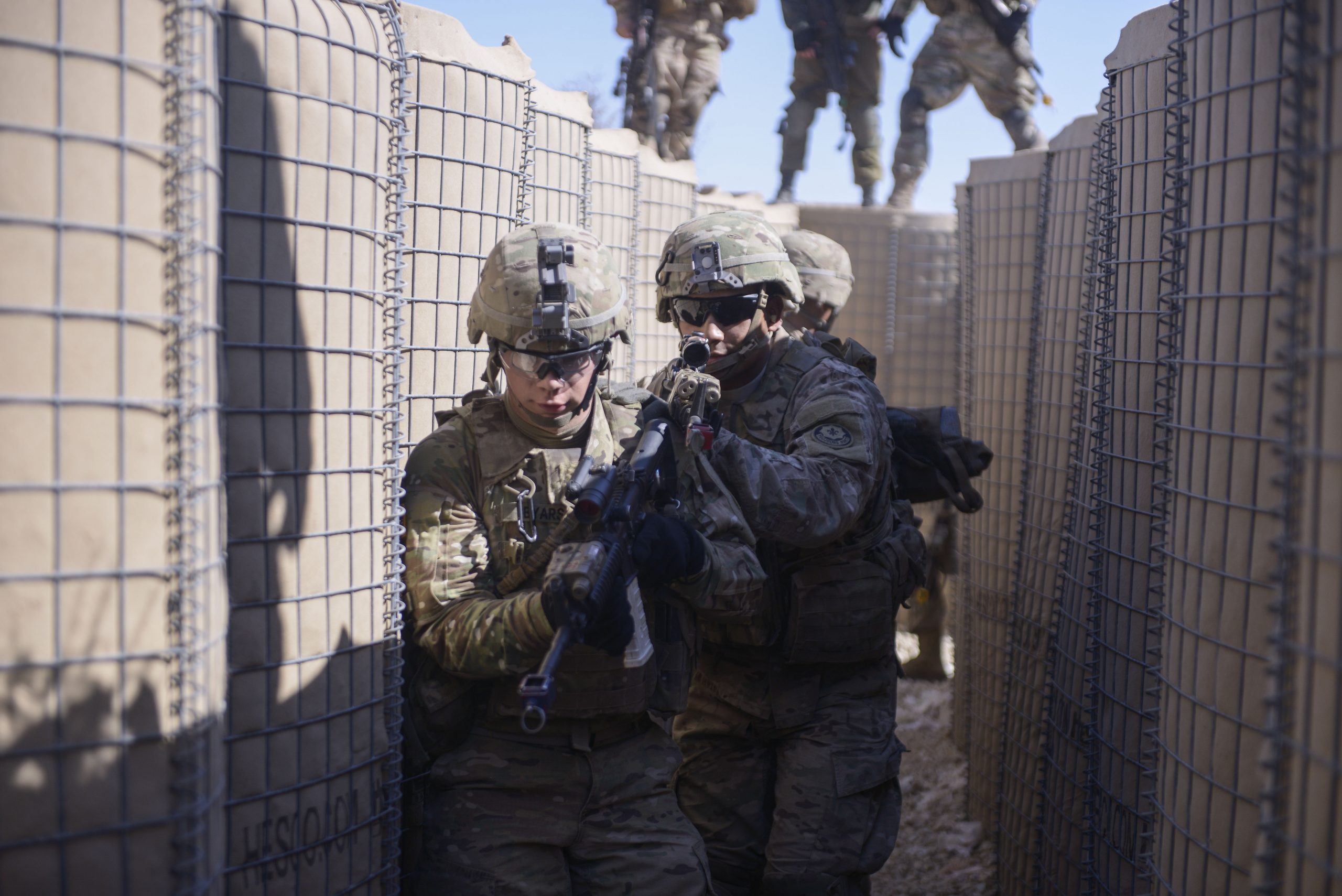
A joint exercise for the IDF and the United States Army |

The regional commands are responsible for United States forces and relations with its partners in their areas. EUCOM, which currently focuses on Russia and its threats against Europe and NATO, is responsible for strategic and operational planning, operations, intelligence, logistics, training, technology and procurement, and coordination with US partners in Europe, including Israel. A prominent sphere in EUCOM's joint operations with the IDF is missile defense, in which they work together to plan, coordinate, exercise, and link their respective operational systems, sometimes also with selected NATO countries. Tens of thousands of IDF soldiers and US EUCOM troops have taken part over the years in joint missions in both peacetime and in contingencies.

Yet even in the highly impressive realm of missile defense cooperation, gaps emerged in the comprehensive response to threats. While EUCOM is responsible for Israel's defense, the missile threats against Israel come from CENTCOM's AOR: both the launching areas stretching from Iran to Lebanon and Yemen, and the airspace in which Israel must act against them. CENTCOM also has the relevant US intelligence and strike capabilities in the region. Thus a comprehensive operational response to threats against Israel requires combining the IDF's efforts with those of CENTCOM and EUCOM, and with other strategic parts of the US defense establishment.

What has Changed?

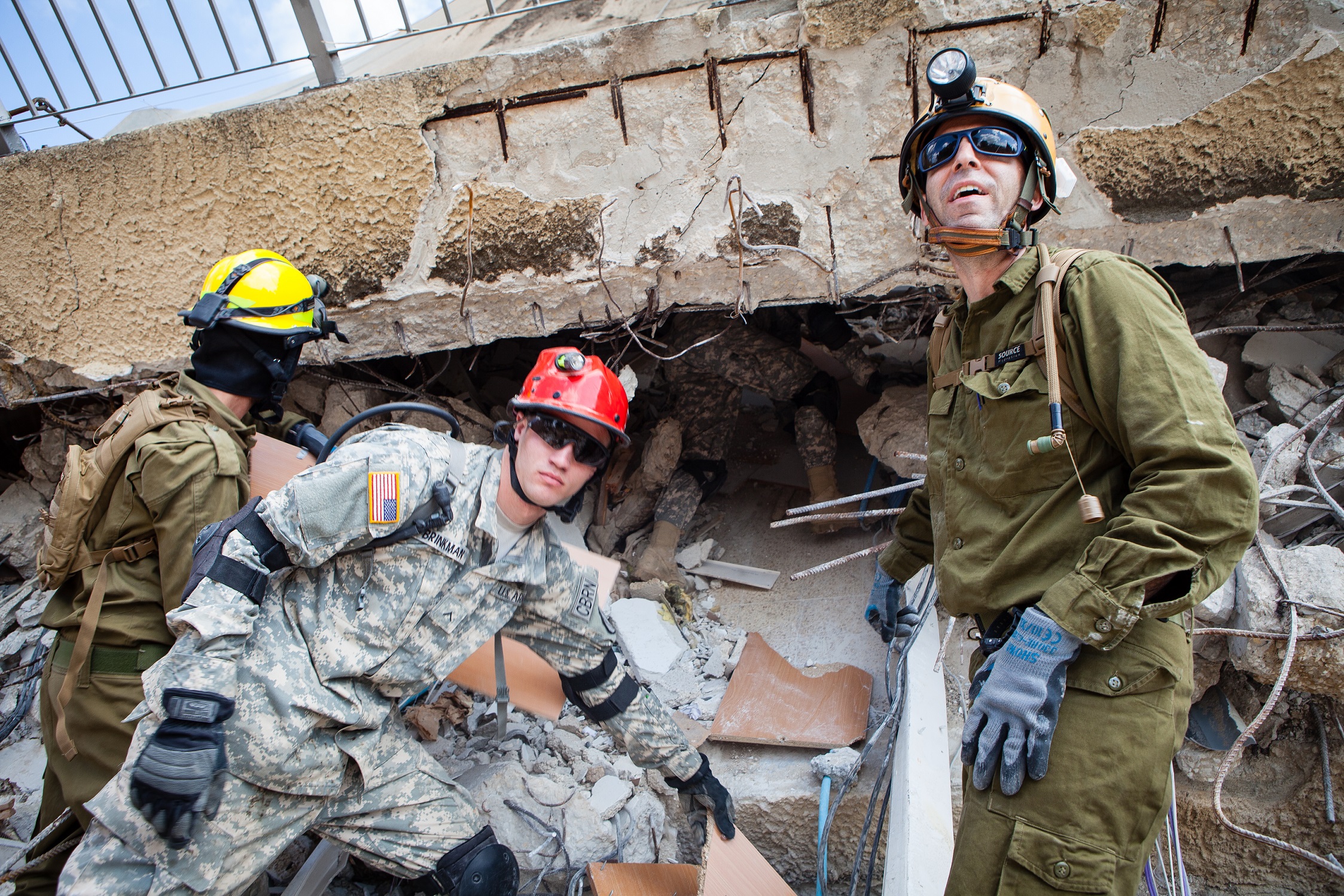
According to the Pentagon, the Abraham Accords paved the way for the transfer of Israel to CENTCOM. In fact, however, like Israel's relations with the Gulf states, its relations with CENTCOM did not emerge overnight, or even recently. Rather, they come after years of quiet development and gradually higher profile. General Joseph Votel, who played a significant role in promoting CENTCOM-IDF relations, conducted the first official visit by a CENTCOM commander to Israel in April 2018. The current CENTCOM Commander, General Frank McKenzie, made a formal visit to Israel in November 2019, yet this was not his first time in Israel. Visits and meetings with CENTCOM commanders and their staffs have occurred since early in the last decade. In early 2016 it was reported  that a tripartite dialogue channel existed between the IDF and the two commands (ICE: for IDF, CENTCOM, EUCOM), led by the IDF Deputy Chief of the General Staff. This channel began secretly a decade earlier, and has since continued with meetings of commanders and staff officers, mainly in Israel and in EUCOM headquarters in Germany.


A joint exercise for the IDF and the United States Army |
 
 
A frequent argument in the past against Israel's joining CENTCOM was the hostility between Israel and the Arabs, and the damage that would be caused to their trust in CENTCOM if direct relations were conducted with Israel. This argument, justified at the time, lost its validity long ago. As a harbinger, in 2018, Lt. Gen. Gadi Eisenkot participated in a conference of chiefs of staff hosted by US Chairman of the Joint Chiefs General Joseph Dunford, with colleagues from Saudi Arabia, Jordan, and other partners from the CENTCOM area. The commander of the Lebanese Armed Forces, who is also in the CENTCOM area, chose to boycott the conference. Tension between partners in a Command area, however, is not unique to Israel. The prolonged crisis between Qatar and Saudi Arabia, United Arab Emirates, Bahrain, and Egypt, which was only recently declared settled, took place between host countries to CENTCOM bases, and there are also harsh disputes in the EUCOM area between Turkey and the other NATO members.

Some assert that when Israel attacked Iranian threats against it in Iraq and Syria, CENTCOM benefited from plausible deniability because Israel belonged to EUCOM, and that this deniability will now be lost. There are no serious grounds, however, for asserting that the strategic, intelligence, security, and military relations between the United States and Israel can hide behind the boundaries of a command theater. The decade of regional upheaval, the expanding Iranian influence in the region, the war in Syria, and the rise of ISIS greatly increased the need for better coordination between the IDF and CENTCOM, and for the sharing of intelligence essential for their operations. Israel has conducted its campaign between wars in the CENTCOM area for many years, and the level of coordination between them is unquestionably much deeper than the de-confliction updates between the IDF and the Russian forces in Syria. The source of the tensions between Israel's activity and CENTCOM's considerations does not stem from the Command's boundaries, but from the trans-border operations of Iran and its proxies region-wide, and from concerns that US  forces in the region will be attacked in response to Israeli activity, primarily in eastern Syria and Iraq, and also in Iran itself.

Implications of the Move: Opportunities and Challenges

On the positive side, Israel's joining CENTCOM will simplify the existing coordination and cooperation with United States forces, and create potential for better integration in planning, preparation, and operations. In addition, the new configuration will help the United States promote a regional coalition with participation from Arab countries and Israel against the threats by Iran and Salafi-jihadi groups, and provide a platform for promoting security relations between US allies, as well as regional security arrangements under American sponsorship: early warning and intelligence, counter-terrorism, air defense, anti-missile defense, training, and stockpiles. This will also make it possible to gradually transfer some of the defense burden in the region from the United States to some of its partners. Under the CENTCOM umbrella, it will be more natural and easier for the IDF to maintain military contacts with parties in the region; obtain United States military support in communications with neighboring militaries, even when Israel still has no peaceful relations with their countries; and improve the regional response to common threats. One necessary step will be to station IDF liaison officers in the CENTCOM headquarters at the MacDill Air Force Base in Tampa, Florida, and in the future, possibly also in the Combined Air Operations Center in Qatar.


A joint exercise for the IDF and the United States Army |

On the challenges side, Israel assists EUCOM as a forward operational branch for drawing operational lessons, and the latter seldom needs to ease tensions between Israel and its other partners, except possibly Turkey. In an emergency, Israel has EUCOM available and attentive to its needs, including in deployment of missiles defense ships and batteries and in munitions supply. With CENTCOM, however, Israel's emergencies are usually part of crises in its wider AOR, and so Israel will have to deal with a short blanket of resources, and to compete with the needs of US forces and other partners in the region. EUCOM's experience and its deep rooted relations with the IDF are a valuable asset for both sides. In order to maximize the potential of Israel's transfer to CENTCOM, it is important to retain its superb relations and work interfaces with EUCOM, while institutionalizing its relations with CENTCOM. Israel should prearrange an option for continuing to benefit from EUCOM's advantages, including in future security crises, given its key role in NATO. It will be wise to preserve the ICE channel, even after it has fulfilled its historic role in promoting relations between the IDF and CENTCOM under EUCOM sponsorship. Another open question is where the Palestinian Authority fits into the Command areas.

An End and a Beginning

Militaries are organizations required to promote policy in their areas of responsibility. Policy usually strives to catch up with the rapidly changing reality, while the organizational structure lags far behind. The gaps between policy and organization and the emerging environment may be bridged with flexible processes, understanding that cross-border problems require out-of-boundary responses. Like Israel and the Gulf states, the IDF and the US Armed Forces have been able to identify at an early stage the challenges that they share and the essential partners for coping with them, and accordingly have worked together quietly. Just as the rich relations that were conducted discreetly for many years surfaced publicly with the Abraham Accords, the shift of Israel to CENTCOM constitutes the Pentagon's official recognition of this imperative for the sake of the interests and security of the United States and its allies in the region. After a wedding, however, comes marriage; the decision and declarations are only a first step. Israel and its partners in the United States and the region must wisely realize the potential of the new stage in their robust relationship, maximize its benefits, and navigate its constraints, for the benefit of all partners and their security.


Assaf Orion, Senior Research Fellow, Director of Israel-China research program

 Udi Dekel, managing director of INSS

Source: https://www.inss.org.il/publication/centcom 

Follow Middle East and Terrorism on Twitter
The Palestinian refugee hoax - Mitchell Bard


​ by Mitchell Bard

The refugee issue is easily solvable if we return to the original definition that applied only to people who lived in Palestine in 1948-1949, not their descendants.

The negotiation affairs department of the PLO tweeted on May 15, 2020, "Every nakba commemoration day, we mark the catastrophe that befell our people in 1948, when 957,000 Palestinians became refugees." The truth is that number was concocted, as is the current figure of 5.7 million used by the U.N. Relief and Works Agency (UNRWA). The actual number is more likely less than 30,000.

Palestinians typically claim that 800,000 to 1,000,000 Palestinians became refugees between 1947 and 19­49. The last census was taken in 1945. It found only 756,000 permanent Arab residents in Israel. On Nov. 30, 1947, the date the United Nations voted for partition, the total was 809,100. A 1949 Government of Israel census counted 160,000 Arabs living in the country after the war, which meant no more than 650,000 Palestinian Arabs could have become refugees. A report by the U.N. Mediator on Palestine (as of September 1948) arrived at an even lower figure: 360,000. The CIA estimate was 330,000. In 2011, historian Efraim Karsh analyzed the number of refugees by city and came up with an estimate of 583,000 to 609,000.

When the United Nations created UNRWA to assist the Palestinians, a refugee was defined as "a needy person, who, as a result of the war in Palestine, has lost his home and his means of livelihood."

Initially, UNRWA had a list of 950,000 names, but the agency knew that this number was inaccurate. UNRWA accepted most claims while acknowledging that, for example, many Palestinians did not report deaths in their families so they could continue to collect rations for the deceased. The agency admitted that many fraudulent cases were discovered but was unable to remove undeserving individuals from the relief rolls. It also knew that it would not get any cooperation from the refugees themselves. UNRWA was petrified, however, of criticism for failing to address the humanitarian problem:

Conferring refugee status on non-refugees in the first instance has created a situation that cannot be ignored but removing it exposes the Agency to unwarranted and unfair criticism from the misinformed public as well as fanatical opposition on the part of the undeserving recipient and his friends and supporters.

In 1951, UNRWA lamented the inability to conduct an accurate census. "It is still not possible to give an absolute figure of the true number of refugees as understood by the working definition of 'a person normally resident in Palestine who has lost his home and his livelihood as a result of the hostilities, and who is in need.' "

UNRWA now says, "When the Agency began operations in 1950, it was responding to the needs of about 750,000 Palestine refugees. Today, some 5 million Palestine refugees are eligible for UNRWA services."

Even accepting the exaggerated figures adopted by UNRWA, how did the number of refugees grow from 750,000 to 5.7 million?

We know one reason is ongoing fraud, such as was discovered from the early days of the agency. The principal explanation, however, is that UNRWA changed the definition of a refugee. Instead of providing for "a needy person, who, as a result of the war in Palestine, has lost his home and his means of livelihood," UNRWA expanded the definition to include "the descendants of Palestine refugee males, including adopted children" (emphasis added).

UNRWA took a difficult problem and, by simply redefining "refugee," made it an impossible one.

It is important to remember that the original refugees could have been settled soon after the war if the Arab states were willing to accept them. They were not, however, and confined them to camps where they could stew and become radicalized. Israel offered to take back 100,000 in the context of a peace agreement, but Arab leaders were still committed to Israel's destruction. In the interim, the refugees were useful propaganda tools – evidence, Arabs claimed, of Israel's aggression and perfidy.

Even today, more than 70 years after the war, only Jordan has accepted Palestinians as citizens. More than 1 million Palestinians are citizens of Israel, but none are citizens of Lebanon, Syria, Egypt or other Arab countries. Palestinians can be citizens in the United States, Europe – almost anyplace else.

UNRWA operates 58 refugee camps with nearly 1.6 million inhabitants. That is more than twice the Palestinian population in 1948. Twenty-seven of those camps (19 in the West Bank, eight in Gaza), with more than 800,000 "refugees," are controlled by the Palestinians. Nothing prevents the Palestinian Authority and Hamas from closing the camps, moving the refugees into permanent housing and thereby solving the problem.

When Israel controlled Gaza, it routinely proposed closing the camps and building permanent homes for the Palestinians, but the Arab states objected and voted at the United Nations to condemn Israel for even proposing such an idea.

Where are all the advocates for the Palestinians who cry crocodile tears for their welfare? They are silent when it comes to abuses by the Arab states and the Palestinian leadership.

The Palestinians are kept in camps to perpetuate the hoax that millions of refugees must be allowed to return to their homes if peace is to be achieved. They have an entirely different idea than Western peace advocates. They demand that 5 million "refugees" return to their "homes" so they will become the majority of the population (5.7 million, plus nearly 2 million Arab citizens of Israel, compared to 6.9 million Jews). This is their two-state solution – one state in the West Bank and Gaza, and a second Palestinian state in what used to be Israel. This would be merged into their ultimate objective of a state from the Jordan River to the Mediterranean Sea. No Israeli will accept this suicide pact.

The refugee issue is easily solvable if we return to the original definition that applied only to people who lived in Palestine in 1948-1949, not their descendants. This is the true number of refugees.

What is that number?

Consider an infant in 1948 would be over 70 today. An adult would be at least in their late 80s or 90s. The percentage of Palestinians in the West Bank and Gaza over the age of 65 is 3.15 percent. If we include Palestinians in Lebanon, Jordan and Syria, the figure could be as high (on average) as 4.48 percent. That means if there were 400,000 refugees in 1948 and they were all still alive, there would be only 12,600 to 17,912 refugees today. Even if you use the exaggerated number of 750,000 refugees, there would be at most 33,585.

In the Palestinian Authority, the percentage of people older than 72 is 1.4 percent, bringing the estimates down to 5,600 to 10,500. Since the life expectancy in the PA today is 76 years, the only refugees likely to be alive today were children in 1948, so the numbers would be even smaller.

If the accepted number of Palestinian refugees was less than 35,000, as it should be, how difficult would it be to solve the problem? Israel should have no problem accepting that number of Palestinians over 65 as a humanitarian gesture (more than 150,000 have been admitted in the past). Problem solved.

What about the other 5 million? Well, they're not refugees from 1948 and are not Israel's concern. They are the problem of the PA and the Arab states where they are living now.

Reprinted with permission from JNS.org.


Mitchell Bard  

Source: https://www.israelhayom.com/opinions/the-palestinian-refugee-hoax/ 

Follow Middle East and Terrorism on Twitter
China Doesn't Have to Lift a Finger to Push Biden Around - Gordon G. Chang


​ by Gordon G. Chang

The Biden administration has just endorsed one of China's most vicious attack lines against the United States.

  • "Xenophobia" has been a constant Biden theme... Within moments [of President Trump's "travel ban" last January] ... Biden went on the attack. "This is no time for Donald Trump's record of hysterical xenophobia and fear mongering to lead the way instead of science," he said. There was nothing "xenophobic" about Trump's travel ban. It was imposed on arrivals from the country where the disease first appeared. The ban, therefore, saved lives, and it would have saved even more if it had been stricter, announced sooner, and had been more rigorously enforced.... [If Biden] had been president then, the disease would almost certainly have spread faster in America. He was, during the campaign, against all such travel prohibitions.

  • Now, Biden is supporting another Chinese propaganda campaign.... The Chinese regime, which to this day uses geographical names for strains of virus, has been trying to ban any identification of China with the pandemic. Biden, with his executive order [rejoining the World Health Organization (WHO)], is doing Beijing's work as Chinese leaders try to deflect blame.

  • This decision was especially hideous because WHO was complicit in China's deliberate spread of the disease. WHO disseminated Beijing's position that the coronavirus was not readily contagious even though the organization's senior doctors knew it was highly transmissible. Moreover, WHO championed the Chinese campaign against travel bans. Americans died because of these and other indefensible actions on the part of WHO, and now Biden will go back to legitimizing and supporting that organization.

  • So far, Biden has taken steps that certainly encourage Beijing. His rejoining the Paris Agreement, his cancellation of the Keystone XL Pipeline, and his repeal of the ban on Chinese equipment in the American electrical grid, among others, favor, directly or indirectly, Beijing. Also of great concern is the failure of Commerce Secretary nominee Gina Raimondo to confirm that Huawei Technologies will remain on the department's Entity List.

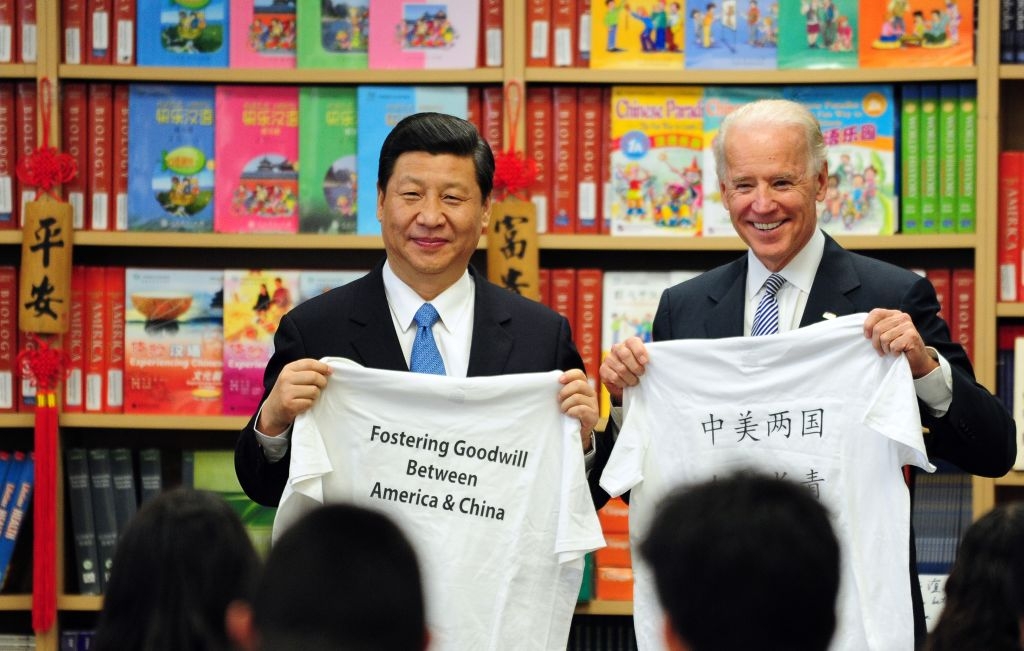
So far, President Joe Biden has taken steps that certainly encourage Beijing. His rejoining the Paris Agreement, his cancellation of the Keystone XL Pipeline, and his repeal of the ban on Chinese equipment in the American electrical grid, among others, favor, directly or indirectly, Beijing. Pictured: Then US Vice President Joe Biden and Xi Jinping, then First Secretary of the Chinese Communist Party, pose for photos in Los Angeles on February 17, 2012. (Photo by Frederic J. Brown/AFP via Getty Images)

The Biden administration has just endorsed one of China's most vicious attack lines against the United States.

The new administration's actions look as if they are setting a pattern for its responses to Beijing on the disease and other matters.

On January 26, Biden signed his executive order titled "Memorandum Condemning and Combating Racism, Xenophobia, and Intolerance Against Asian Americans and Pacific Islanders in the United States."

The order states that during the coronavirus pandemic "inflammatory and xenophobic rhetoric has put Asian American and Pacific Islander persons, families, communities, and businesses at risk."

There is nothing wrong with protecting minorities from racism, but racism is not the problem. "Political correctness presages policy incorrectness," writes the Claremont Institute's Ben Weingarten on the Newsweek site, commenting on Biden's executive order. "And when it comes to matters of life and limb, political correctness can kill."

Weingarten is correct.

"Xenophobia" has been a constant Biden theme. On January 31 of last year, President Trump announced the "travel ban," prohibitions and restrictions on arrivals from China.

Within moments of the announcement, Biden went on the attack. "This is no time for Donald Trump's record of hysterical xenophobia and fear mongering to lead the way instead of science," he said.

Biden's campaign said the attack was not in response to the travel ban, yet on the following day the candidate expressed the same thoughts in a tweet: "We need to lead the way with science—not Donald Trump's record of hysteria, xenophobia, and fear-mongering."

There was nothing "xenophobic" about Trump's travel ban. It was imposed on arrivals from the country where the disease first appeared. The ban, therefore, saved lives, and it would have saved even more if it had been stricter, announced sooner, and had been more rigorously enforced.

Biden was against the China travel ban, and if he had been president then, the disease would almost certainly have spread faster in America. He was, during the campaign, against all such travel prohibitions.

Then, Biden's criticisms of the travel ban aligned perfectly with Beijing's attacks on Trump—and on the United States.

Now, Biden is supporting another Chinese propaganda campaign. "The Federal Government must recognize that it has played a role in furthering these xenophobic sentiments through the actions of political leaders, including references to the COVID-19 pandemic by the geographic location of its origin," declares the January 26 executive order.

The order is expected to result in a ban, across the federal government, of the use of "China virus," "Wuhan flu," and variants.

President Trump emphasized "China virus" early last year, in response to Beijing's statements. On March 12, the Chinese foreign ministry launched disinformation attacks, accusing the U.S. of being the origin of the coronavirus disease and hiding its source. An official foreign ministry tweet made explicit the claim that official Chinese sources had been hinting for more than a month: The United States was ground zero for COVID-19.

Beijing has not given up on this malicious line of attack. This month, Beijing, with absolutely no evidence, has been pointing to Fort Detrick in Maryland as the source of the disease.

The Chinese regime, which to this day uses geographical names for strains of virus, has been trying to ban any identification of China with the pandemic. Biden, with his executive order, is doing Beijing's work as Chinese leaders try to deflect blame.

"The Chinese Communist Party would love to see itself delinked from the coronavirus pandemic that originated on its shores, that it sought to cover up, that it helped spread around the world, and that it has cynically sought to exploit at every turn," writes Weingarten. "So Beijing must have been cheering when it got word of a gift, in this regard, from President Joe Biden."

Moreover, Biden, within hours of taking the oath, rejoined the World Health Organization (WHO), something else Beijing wanted because, as a practical matter, it controls the political leadership of that body.

This decision was especially hideous because WHO was complicit in China's deliberate spread of the disease. WHO disseminated Beijing's position that the coronavirus was not readily contagious even though the organization's senior doctors knew it was highly transmissible. Moreover, WHO championed the Chinese campaign against travel bans.

Americans died because of these and other indefensible actions on the part of WHO, and now Biden will go back to legitimizing and supporting that organization.

China's challenge to America is comprehensive, on every front. So far, Biden has taken steps that certainly encourage Beijing. His rejoining the Paris Agreement, his cancellation of the Keystone XL Pipeline, and his repeal of the ban on Chinese equipment in the American electrical grid, among others, favor, directly or indirectly, Beijing. Also of great concern is the failure of Commerce Secretary nominee Gina Raimondo to confirm that Huawei Technologies will remain on the department's Entity List.

Analysts say Beijing is testing Biden. Yes, but so far the Chinese do not need to lift a finger. The new president is giving them what they want, and they are not even having to ask.


Gordon G. Chang is the author of The Coming Collapse of China, a Gatestone Institute Distinguished Senior Fellow, and a member of its Advisory Board.

 Source: https://www.gatestoneinstitute.org/17012/china-push-biden 

Follow Middle East and Terrorism on Twitter