by Pierre Rehov
The real plan, as can be seen from Saudi Arabia's recent moves, seems to be to avoid joining the Abraham Accords, and instead position themselves in Gaza, right on the border of Israel, to be able to attack it after Trump leaves office.
An institution built around one person, such as US President Donald J. Trump, carries the expiration date of that person's term in office. The states that join it do not.
The real plan, as can be seen from Saudi Arabia's recent moves, seems to be to avoid joining the Abraham Accords, and instead position themselves in Gaza, right on the border of Israel, to be able to attack it after Trump leaves office. No one will have his determination to make sure that any agreements are enforced.
Early on, Saudi Arabia came up with a "poison pill": the kingdom conditioned joining the Abraham Accords on the creation of a Palestinian state. Saudi Crown Prince Mohamed bin Salman has since reached an agreement with the US that reportedly allows Saudi Arabia to develop domestic uranium enrichment capabilities under safeguards that fall short of the stringent standards previously demanded by Washington, rather than importing nuclear fuel as other Gulf countries do. The uranium enrichment would, of course, be supposedly "for peaceful purposes." However, these enrichment centrifuges could also be used to make nuclear weapons -- the same kind Iran is not allowed to have.
Secretary of Energy Chris Wright signed the nuclear framework before Trump, to his great credit, the next day presented his own "poison pill": first, Saudi Arabia would have to normalize its relations with Israel and join the Abraham Accords. This requirement seems to have been, revealingly, a dealbreaker.
Instead, Saudi Arabia organized the Mecca Joint Defense Agreement with Turkey, which has a vast military, and Pakistan, which has nuclear weapons. Based on the Middle East's frequent schoolyard excuse that "it all started when he hit me back," the three countries could, for instance, provoke or attack on Israel, then when Israel responds for its own self-defense, claim that all three of them had been attacked and "forced" to retaliate: Turkey with its conventional military, Pakistan with a nuclear weapon, and Saudi Arabia by financing the expedition.
[T]he most senior levels of the Israeli security establishment that concluded that Turkey is still financing Hamas. Turkish Foreign Minister Hakan Fidan holds a seat on the Gaza Executive Board, the body charged with implementing the disarmament of Hamas.
When the White House named the executive board for the Board of Peace in January, its members included Fidan, senior Qatari official Ali Al-Thawadi and Egyptian intelligence chief Hassan Rashad. Israeli Prime Minister Benjamin Netanyahu stated publicly that the composition had never been coordinated with Israel and ran contrary to its policy.
The Board of Peace itself, 28 countries operating under UN Security Council Resolution 2803, released an interim report to the UNSC that identified Egypt, Qatar, Turkey and the United States as the four mediating states. The 15-point roadmap that now governs Hamas's disarmament was drafted by those four "guarantors"... What, though, will they actually be guaranteeing?
A former senior Shin Bet officer with three decades in the service has argued that the parties actually driving developments inside the board are Qatar and Turkey, assisted by Egypt. The arrangement amounts to the Muslim Brotherhood supervising the supposed disarming of its own Palestinian branch, Hamas.
Turkey has been strengthening its hold on Syria and positioning its military there, potentially for a pincer attack on Israel: from Syria on Israel's east and Gaza on Israel's west.
Senior Israeli officials trace the Iranian money reaching Hamas and Hezbollah along a route running through Istanbul with Turkish President Recep Tayyip Erdogan's implicit permission.
Money often settles what communiqués leave open. Eight governments -- among them Saudi Arabia, Qatar, Kuwait, the United Arab Emirates and Morocco -- signed the founding donors' declaration behind roughly $17 billion in reconstruction pledges... Whoever pays the contractors, the suppliers and eventually the policemen, will decide who governs the streets they patrol.
The political alignment already exists on paper. On August 3, Qatar, Egypt and Turkey published a declaration in their capacity as mediating countries, condemning Israeli operations in Gaza and calling on the international community to compel Israel to stop.
Trump's term of office ends in January 2029. He personally chairs the Board of Peace and will pass on that position to whoever succeeds him. Every month of delay moves the supposed complete disarmament of Hamas closer to Trump's successor, and to the states that will still be seated at the table when he or she arrives.
[T]he US State Department informed Congress that Turkey has not met the statutory conditions... which require Ankara to give up its Russian-made S-400 surface-to-air missiles. Although Turkey tested the S-400 following its delivery and has not returned it to Russia, the Turkish government claims that the system is in storage — presumably until it is taken out of storage.
Erdogan has made no secret of his intentions regarding Israel, as well as Syria, Cyprus and Greece. As recently as March 30, 2025, he stated, "May Allah, for the sake of his name ... destroy and devastate Zionist Israel" He also reportedly prayed for "mercy upon the martyrs" of Hamas and the Palestinian Islamic Jihad and a "speedy recovery" for their wounded terrorists. Previously, Erdogan stated, "Jerusalem is our city," and "Patience brings victory," and that "We are determined to not give up on our rights on Jerusalem." This is the country to which Trump wants to supply stealth fighter jets?
The Saudi nuclear file runs on an identical clock. The draft nuclear cooperation agreement reported to Congress does not contain a Saudi commitment to forgo enrichment and reprocessing, a commitment Washington spent two decades calling the gold standard for nuclear nonproliferation. The Agreement refers instead to additional "safeguards" in the most sensitive areas of cooperation, which is diplomatic phrasing for enrichment centrifuges on Saudi soil.
Even if the S-400 batteries have been shipped off from Turkey to another country, and Hamas offices in Istanbul are shuttered and independently verified as closed, no F-35 stealth fighter jets should be supplied to Turkey. After all, the S-400 missile batteries could always find their way back.
In addition, no uranium enrichment centrifuges should be allowed in Saudi Arabia, even if a binding Saudi renunciation of enrichment and reprocessing were written into the operative text, not a side letter. As we have seen with Iran, no one but Trump can be counted on to enforce international commitments.
Not one dollar for Gaza reconstruction should be disbursed through channels controlled by governments that Israel has identified as financing Hamas, the organization the money is meant to displace.
What Turkey and Saudi Arabia want from Washington is hardware, and those F-35s will still be flying and those centrifuges will still be spinning, long after the people that vouched for them have left office.
An institution built around one person, such as US President Donald J. Trump, carries the expiration date of that person's term in office. The states that join it do not.
Nothing better explains the conduct of Turkey, Qatar, Egypt and Saudi Arabia over the past eight months — and nothing in current American policy appears to be taking the countless danger signals from them seriously.
The real plan, as can be seen from Saudi Arabia's recent moves, seems to be to avoid joining the Abraham Accords, and instead position themselves in Gaza, right on the border of Israel, to be able to attack it after Trump leaves office. No one will have his determination to make sure that any agreements are enforced.
Early on, Saudi Arabia came up with a "poison pill": the kingdom conditioned joining the Abraham Accords on the creation of a Palestinian state. Saudi Crown Prince Mohamed bin Salman has since reached an agreement with the US that reportedly allows Saudi Arabia to develop domestic uranium enrichment capabilities under safeguards that fall short of the stringent standards previously demanded by Washington, rather than importing nuclear fuel as other Gulf countries do. The uranium enrichment would, of course, be supposedly "for peaceful purposes." However, these enrichment centrifuges could also be used to make nuclear weapons -- the same kind Iran is not allowed to have.
Secretary of Energy Chris Wright signed the nuclear framework before Trump, to his great credit, the next day presented his own "poison pill": first, Saudi Arabia would have to normalize its relations with Israel and join the Abraham Accords. This requirement seems to have been, revealingly, a dealbreaker.
Instead, Saudi Arabia organized the Mecca Joint Defense Agreement with Turkey, which has a vast military, and Pakistan, which has nuclear weapons. Based on the Middle East's frequent schoolyard excuse that "it all started when he hit me back," the three countries could, for instance, provoke or attack on Israel, then when Israel responds for its own self-defense, claim that all three of them had been attacked and "forced" to retaliate: Turkey with its conventional military, Pakistan with a nuclear weapon, and Saudi Arabia by financing the expedition.
On August 17 in Jerusalem, Shin Bet director David Zini and military intelligence chief Maj. Gen. Shlomi Binder briefed Jared Kushner and a Board of Peace delegation on conditions inside Gaza and on Hamas's reconstruction of its military capabilities. Their presentation included an assessment from the most senior levels of the Israeli security establishment that concluded that Turkey is still financing Hamas. Turkish Foreign Minister Hakan Fidan holds a seat on the Gaza Executive Board, the body charged with implementing the disarmament of Hamas. Both facts sat in the same room on the same afternoon and produced no visible consequence.
When the White House named the executive board for the Board of Peace in January, its members included Fidan, senior Qatari official Ali Al-Thawadi and Egyptian intelligence chief Hassan Rashad. Israeli Prime Minister Benjamin Netanyahu stated publicly that the composition had never been coordinated with Israel and ran contrary to its policy. The Board of Peace itself, 28 countries operating under UN Security Council Resolution 2803, released an interim report to the UNSC that identified Egypt, Qatar, Turkey and the United States as the four mediating states. The 15-point roadmap that now governs Hamas's disarmament was drafted by those four "guarantors," together with High Representative for Gaza Nickolay Mladenov. What, though, will they actually be guaranteeing?
Israelis who have spent careers on this file do not treat the result as an accident. A former senior Shin Bet officer with three decades in the service has argued that the parties actually driving developments inside the board are Qatar and Turkey, assisted by Egypt. The arrangement amounts to the Muslim Brotherhood supervising the supposed disarming of its own Palestinian branch, Hamas.
The Board describes itself as an objective mechanism. Its operational majority consists of governments historically hostile to Israel, which have spent two decades keeping the Hamas solvent and trying to lend it political respectability.
Turkey has been strengthening its hold on Syria and positioning its military there, potentially for a pincer attack on Israel: from Syria on Israel's east and Gaza on Israel's west. On August 18, Israeli aircraft struck an airbase near Aleppo to stop a Turkish military deployment against which Jerusalem had warned Damascus for weeks.
At its inaugural summit in February, the Board of Peace denied Turkey a place in the International Stabilization Force, instead awarding troop slots to Albania, Indonesia, Kazakhstan, Kosovo and Morocco, and giving Egypt and Jordan stewardship of police reconstruction. That arrangement left Turkey with logistics.
Hamas nevertheless keeps offices and personnel on Turkish soil, where it recruits, raises money and plans terror attacks. Senior Israeli officials trace the Iranian money reaching Hamas and Hezbollah along a route running through Istanbul with Turkish President Recep Tayyip Erdogan's implicit permission.
Money often settles what communiqués leave open. Eight governments -- among them Saudi Arabia, Qatar, Kuwait, the United Arab Emirates and Morocco -- signed the founding donors' declaration behind roughly $17 billion in reconstruction pledges, against a World Bank estimate of $71.4 billion over a decade. A senior Board of Peace official, describing the three-year mechanism capped at $400 million for debts inherited from Hamas rule, said the outside money would come from regional partners rather than from Washington. Whoever pays the contractors, the suppliers and eventually the policemen, will decide who governs the streets they patrol.
The political alignment already exists on paper. On August 3, Qatar, Egypt and Turkey published a declaration in their capacity as mediating countries, condemning Israeli operations in Gaza and calling on the international community to compel Israel to stop.
Thirteen days later, a joint statement signed by Egypt, Qatar, Saudi Arabia, the United Arab Emirates, Jordan, Turkey, Pakistan and Indonesia accused Israel of disrupting peace efforts and urged the Board of Peace to take concrete measures against any party obstructing implementation. The guarantors have a shared position on how this war ends, and it has nothing to do with security for Israel, to say the least.
The resource they are actually managing is time.
Kushner left the Jerusalem meeting predicting that weapons from Hamas could begin coming out of Gaza within 30 days and that tunnels might be filled within 60-90 days.
Seven months after the ceasefire took effect, the International Stabilization Force has still not deployed, and the Palestinian "technocratic" committee built to administer Gaza cannot physically enter it. Trump's term of office ends in January 2029. He personally chairs the Board of Peace and will pass on that position to whoever succeeds him. Every month of delay moves the supposed complete disarmament of Hamas closer to Trump's successor, and to the states that will still be seated at the table when he or she arrives.
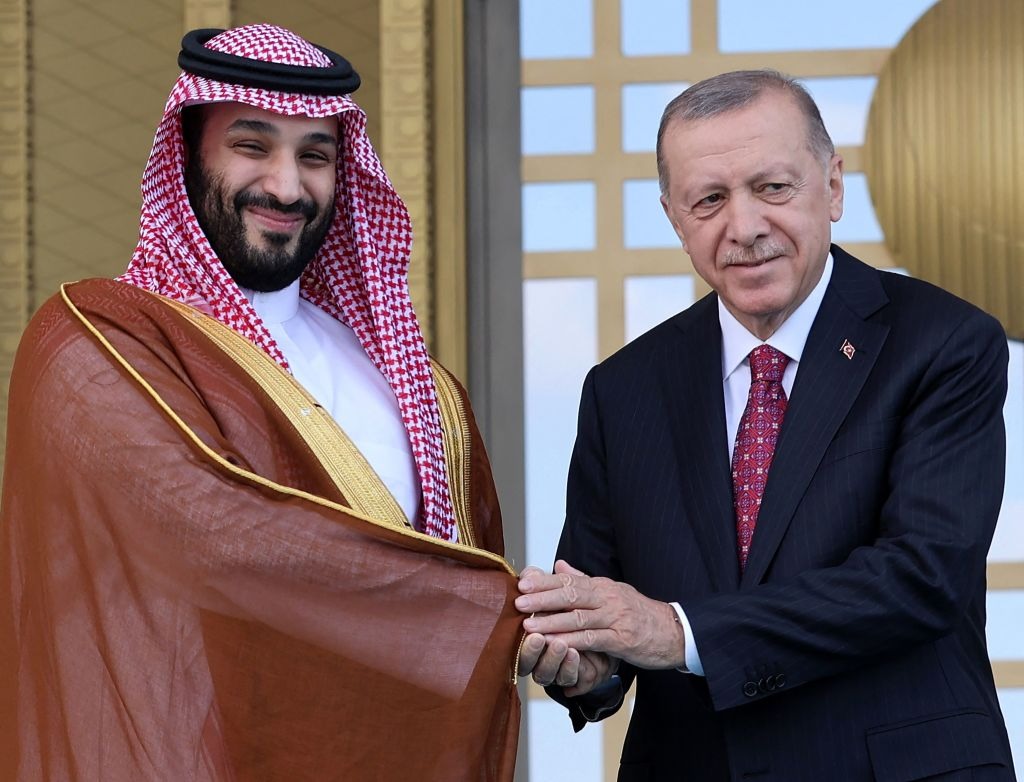
Two decisions now before Washington would outlast the arrangement entirely. Standing beside Erdogan in Ankara on July 7, Trump signaled willingness to for sell US F-35 stealth fighter jets to Turkey. Erdogan told reporters he had been promised five aircraft, a claim Trump neither denied nor corrected.
Two weeks later, the US State Department informed Congress that Turkey has not met the statutory conditions set by Section 231 of CAATSA and Section 1245 of the 2020 defense Authorization Act, which require Ankara to give up its Russian-made S-400 surface-to-air missiles. Although Turkey tested the S-400 following its delivery and has not returned it to Russia, the Turkish government claims that the system is in storage — presumably until it is taken out of storage.
While praising Turkey as a founding member of the Board of Peace, the State Department also voiced concern about the relationship with Hamas.
Erdogan has made no secret of his intentions regarding Israel, as well as Syria, Cyprus and Greece. As recently as March 30, 2025, he stated, "May Allah, for the sake of his name ... destroy and devastate Zionist Israel" He also reportedly prayed for "mercy upon the martyrs" of Hamas and the Palestinian Islamic Jihad and a "speedy recovery" for their wounded terrorists. Previously, Erdogan stated, "Jerusalem is our city," and "Patience brings victory," and that "We are determined to not give up on our rights on Jerusalem." This is the country to which Trump wants to supply stealth fighter jets?
The Saudi nuclear file runs on an identical clock. The draft nuclear cooperation agreement reported to Congress does not contain a Saudi commitment to forgo enrichment and reprocessing, a commitment Washington spent two decades calling the gold standard for nuclear nonproliferation. The Agreement refers instead to additional "safeguards" in the most sensitive areas of cooperation, which is diplomatic phrasing for enrichment centrifuges on Saudi soil. Saudi Crown Prince Mohammed bin Salman has said for years that the kingdom would pursue a nuclear weapon if Iran obtained one.
Once submitted, the US-Saudi nuclear cooperation agreement takes effect unless both chambers of the US Congress adopt resolutions of disapproval within 90 days.
Congress is the only American institution whose calendar runs longer than a presidency, and the remedies to the current administration arming terrorist-supporting, jihadist, long-term enemies of Israel are unglamorous but effective.
Even if the S-400 batteries have been shipped off from Turkey to another country, and Hamas offices in Istanbul are shuttered and independently verified as closed, no F-35 stealth fighter jets should be supplied to Turkey. After all, the S-400 missile batteries could always find their way back.
In addition, no uranium enrichment centrifuges should be allowed in Saudi Arabia, even if a binding Saudi renunciation of enrichment and reprocessing were written into the operative text, not a side letter. As we have seen with Iran, no one but Trump can be counted on to enforce international commitments.
Not one dollar for Gaza reconstruction should be disbursed through channels controlled by governments that Israel has identified as financing Hamas, the organization the money is meant to displace.
The Board of Peace was created by an executive decision and can be undone by one. What Turkey and Saudi Arabia want from Washington is hardware, and those F-35s will still be flying and those centrifuges will still be spinning, long after the people that vouched for them have left office.
Pierre Rehov, who holds a law degree from Paris-Assas, is a French reporter, novelist and documentary filmmaker. He is the author of six novels, including "Beyond Red Lines", "The Third Testament" and "Red Eden", translated from French. His latest essay on the aftermath of the October 7 massacre " 7 octobre - La riposte " became a bestseller in France. As a filmmaker, he has produced and directed 17 documentaries, many photographed at high risk in Middle Eastern war zones, and focusing on terrorism, media bias, and the persecution of Christians. His latest documentary, "Pogrom(s)" highlights the context of ancient Jew hatred within Muslim civilization as the main force behind the October 7 massacre.
Source: https://www.gatestoneinstitute.org/22814/trump-administration-determined-to-arm-hostile-jihadist-states