Thursday, October 20, 2011

CAIR's Odd Stand on Iranian Assassination Plot


by IPT News

A criminal complaint issued last week alleging members of Iran's Revolutionary Guard Corps Quds Force plotted to kill the Saudi ambassador to the United States triggered bi-partisan outrage in Washington and international condemnation.

The plot, had it not been interdicted by federal law enforcement, was seen as a potential act of war on American soil by a hostile regime. Secretary of State Hillary Clinton labeled it an international act of terrorism.

But there has been an odd silence from America's national Islamist organizations. None has issued a release on the case. And when officials from the Council on American Islamic Relations (CAIR) have commented, they have criticized the government's case and spoken in defense of the Iranian regime.

Executive directors Zahra Billoo of CAIR-San Francisco and Dawud Walid of CAIR-Michigan challenged the case's legitimacy, calling out Attorney General Eric Holder and accusing the FBI of fabrication and entrapment. The plot unraveled when Mannsor Arbabsiar, a naturalized American citizen of Iranian descent, reached out to what he thought was a representative of the Zeta drug cartel to carry out the attack.

The representative really was a Drug Enforcement Agency informant who recorded Arbabsiar's conversations. Arbabsiar is in custody, charged with conspiracies to murder a foreign official, to use a weapon of mass destruction, and conspiracy to commit an act of international terrorism transcending national boundaries.

Since then, CAIR-National has linked to an article on a leftist website from its Twitter account, posting the headline, "US Officials Peddle False Intel to Support Terror Plot Claims."

"Not believing AG Holder on Iran-Mexican drug cartel alliance," Billoo, of CAIR-San Francisco Bay Area, said in a Twitter post.

Similarly, Walid rejected the Obama administration's intelligence detailing Iranian involvement.

"If Holder hadn't announced so many 'foiled' plots that were really FBI provocateur led, I'd be more inclined to believe this #Iran plot biz," said Walid.
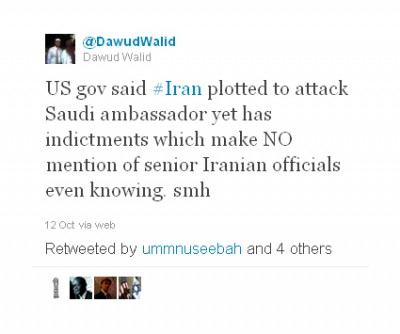
That post appears to have been taken down. A second Twitter post challenged the government's case. "Obama said evidence released but not there is none about senior Iranian officials. I read the comments carefully." He issued a similar tweet doubting claims Iranian officials were involved a day earlier, adding the Internet slang "smh" for "shaking my head."

No one has said the evidence has been released publicly. The complaint alleges that Arbabsiar was working with a Quds Force officer and arranged to have $100,000 wired into a bank account as a down payment for killing the Saudi ambassador. Such action, officials say, could not have been done without the knowledge and tacit approval of senior officials.

Walid also circulated Iranian President Mahmoud Ahmadinejad's denial of the plot on Al-Jazeera English. The "U.S. accusations over plot are attempts to divert attention from its own problems," Ahmadinejad said.

Walid routinely complains of perceived injustices by American law enforcement.

He spent a year trying to cast a 2009 shooting of a Detroit imam as unjust, even though Imam Luqman Abdullah fired first as FBI agents tried to arrest him. Abdullah had long vowed not to be taken peacefully and none of Walid's allegations of wrongdoing were substantiated in a series of subsequent investigations.
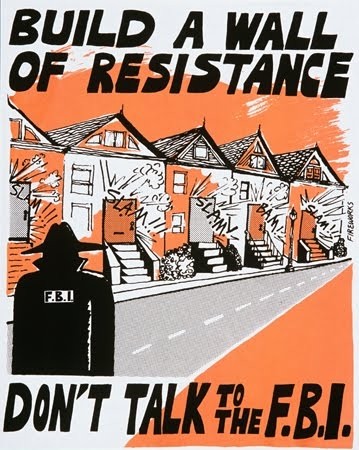
Billoo's San Francisco chapter drew attention early this year when it promoted a "Know Your Rights" event with a poster urging people to "build a wall of resistance" from the FBI. She also criticized a sting operation that led to the arrest of a Muslim man who thought he was detonating a bomb at a Portland Christmas tree lighting ceremony. "The question is, are we looking to stop radicalization and stop extremism before it becomes a problem or do we want a sensational story?" Billoo told a local television station. "And I'd really argue here that the FBI was looking for a sensational story."

CAIR's silence is reminiscent of its reaction to the Iranian regime's brutal repression of the peaceful anti-Ahmadinejad protesters after the June 2009 presidential elections. No statements of solidarity with the protesters. No calls for the violence to stop.

The situation could be putting CAIR leaders in a bit of a bind. They have had positive interactions with Iranian media and government, but they also are reliant on wealthy Gulf donors for operating funds. In 2006, CAIR officials traveled to Saudi Arabia, a majority Sunni kingdom, seeking millions of dollars in support, State Department records obtained through the Freedom of Information Act show.

In this case, CAIR might argue it is preserving its connections to the Iranian regime because they can have a benefit. Executive Director Nihad Awad was part of an interfaith delegation that traveled to Iran last month to help free American hikers, Shane Bauer and Joshua Fattal.

But CAIR officials also often appear on the Iran's government-controlled English language news outlet, PressTV, where they criticize American policy or complain of the "plight" of Muslims in America. In particular, CAIR spokesman Ibrahim Hooper recently argued about the rise of Islamophobia in America for "political reasons" on PressTV.

Ahmadinejad has come to New York in recent years to address the United Nations General Assembly. While many Western diplomats walk out during his remarks, American Islamists seek audiences with him.
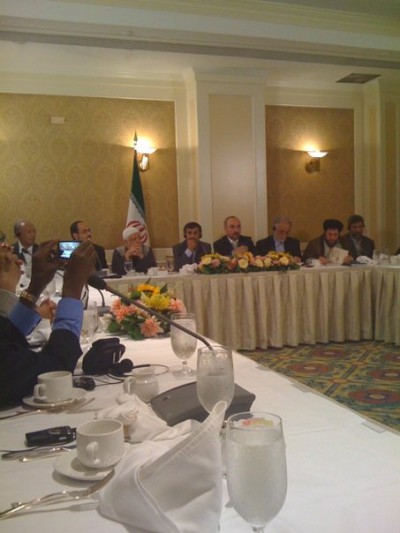
CAIR Executive Director Nihad Awad, obstructed by the camera, is two seats away from Ahmadinejad.

Awad spoke at a 2009 interfaith program Ahmadinejad attended while in New York. According to a letter from Joseph Gerson of the pacifist Quaker group, the American Friends Service Committee, Awad "stressed that Islam teaches the importance of justice – even in response to enemies, and that terror must always be condemned and rejected.

Likewise, other Islamist groups in America, such as the Muslim American Society (MAS) and the Muslim Public Affairs Council (MPAC), also remain silent on the alleged Iranian attempt to mount an attack on U.S. soil.

Given a chance to speak directly to Ahmadinejad in 2007, Mahdi Bray, then the director of MAS's political arm, said nothing about Iranian government repression, but was quick to slam the United States for "the injustices that are heaped upon Muslims right here in America."

Bray repeatedly told the Iranian leader "we share your vision" and that Allah demands his people confront injustice anywhere in the world. "We do share your vision that we must actively – actively – embrace this vision of resisting injustice no matter where it may be," Bray said. "Injustice anywhere is a threat to justice everywhere. Therefore, we share your vision for justice for all the people of the world."

It's not as if CAIR, MAS and other national Islamist groups are shy when it comes to foreign affairs. In a statement following a U.S. drone strike which killed American-born al-Qaida cleric Anwar al-Awlaki last month, CAIR distanced itself from Awlaki's violent rhetoric, but also expressed concern about due process rights for Awlaki, an American citizen.

These organizations have actively supported the non-violent Arab Spring uprisings against dictatorships in the Middle East and North Africa. Yet they have nothing to say when the Islamic Republic of Iran is implicated in a plot to assassinate a Saudi ambassador on American soil.

IPT News (The Investigative Project on Terrorism)

Source: http://www.investigativeproject.org/3241/cair-odd-stand-on-iranian-assassination-plot

Copyright - Original materials copyright (c) by the authors.

Assessing Bahrain


by Aymenn Jawad Al-Tamimi

Critics have often argued that Western nations -- the United States in particular -- have been hypocritical in their policies towards Bahrain. Is this claim accurate? Too often, no full overview has been given on what is going on in the country. Who precisely are the predominantly Shi'a protestors? What is at stake? Most importantly, which outside nations can influence the situation?

Bahrain's Shi'a majority, under Sunni minority rule since the arrival of the ruling al-Khalifa dynasty around two hundred years ago, has for a long time justifiably complained of problems of discrimination, and while Bahrain began moving in the direction of democratic reform at the turn of this century, the reforms were gradually reversed as the government became concerned that Iran would seek to take advantage of greater political freedom on the island.

Indeed, by 2010, the American human rights think-tank Freedom House had demoted Bahrain from "partly free" to "not free," citing, among other things, "harassment of opposition political figures" and "worsening sectarian discrimination."

Now, the rulers' anxieties over Iranian designs on the island are not entirely unjustified. Iran has made a claim to Bahrain many times (most recently in 2005), and has viewed the country as its fourteenth province since Shah Mohammad Reza Pahlavi's declaration of this status in November 1957.

Since the protests first began in Bahrain, it has been apparent that there are a number of pro-Iranian, Shi'a Islamists among the demonstrators: specifically the al-Haq movement led by Hassan Mushaima, who are to be distinguished from other Shi'a political movements in Bahrain like al-Wefaq, whose aim, like Iraq's Shi'a political factions, is generally to ensure that the nation's Shi'a majority leads the political process, while allowing the al-Khilafa dynasty to remain as a limited, constitutional monarchy, rather than subordinating the country to Iranian interests and plans.

The regime's mistake, however, has been to view the protesters as a monolithic bloc that is part of an Iranian plot to take over the island. Instead of trying to work towards a compromise with the more mainstream opposition and only putting on trial the likes of Hassan Mushaima, the government has targeted for detention and torture protestors from al-Wefaq and even the secular social democrats of al-Waad. In the case of al-Waad, it is notable that the group's currently imprisoned leader -- Ibrahim Sharif -- is a Sunni, and that al-Waad has cautioned protestors to be alert to possible Iranian attempts to take advantage of the demonstrations.

Meanwhile, a group of twenty medical professionals, who merely aided protestors injured at the hands of the security forces during the brutal crackdown on demonstrations, were convicted on charges of trying to overthrow the government. Bahraini officials recently announced their intention to hold a civilian trial for these medical professionals, but questions have rightly been raised regarding how different this new trial will really be.

Unfortunately, the regime's actions have only helped to trap itself in a vicious circle by empowering the extremists who promote a zero-sum narrative that the government and monarchy must be dismantled completely. The longer the repression continues, the more likely the window of opportunity for a reasonable compromise will disappear completely.

Yet more at fault here is Saudi Arabia and the Gulf Cooperation Council (GCC), which have similarly regarded the protests as an Iranian conspiracy and have accordingly deployed thousands of "Peninsula Shield" troops -- drawn from Saudi Arabia, Qatar, Kuwait and the United Arab Emirates -- to aid in the repression of demonstrations. Furthermore, Saudi Arabia has looked elsewhere among Sunni nations to recruit support for the Peninsula Shield force.

For example, as the Middle East Media Research Institute reports, in return for Saudi promises to aid Pakistan's economy, Pakistani private security firms have recruited thousands of active and demobilized Pakistani troops to assist the government in Bahrain, while Malaysia has promised to send additional contingents if necessary.

It is only in light of Saudi Arabia's and the GCC's role that one can appreciate why the West can do virtually nothing about Bahrain. Despite repeated calls by Western governments for reform and denunciations of the mass trials and convictions of medical professionals, only the Saudis and the GCC can really influence the path the Bahraini government chooses, and they are simply not listening to Western governments on the subject of Bahrain after the supposed 'betrayal' of Hosni Mubarak back in February.

Thus, the West is not being hypocritical about Bahrain at all, even taking into account approval of arms sales to the island. The United States' primary interest is of course to prevent the likes of Hassan Mushaima from ever coming to power and maintain the base in Bahrain for the U.S. Navy's Fifth Fleet. Its presence in the Persian Gulf is of course vital to prevent Iran from achieving hegemony over these waters, especially in the event that the country acquires nuclear weapons and can thereby gain a stranglehold over a major route for much of the world's oil supplies. The West is unhappy with the status quo, but also willing to put up with it because there are no viable ways to convince the government, Saudi Arabia and the GCC that a political compromise is needed. Options are severely limited, and the West is simply acting on its own interests.

Aymenn Jawad Al-Tamimi is a student at Brasenose College, Oxford University, and an intern at the Middle East Forum.

Source: http://www.meforum.org/3073/assessing-bahrain

Copyright - Original materials copyright (c) by the authors.

Tuesday, October 18, 2011

How the Left Helped Hamas Win


by Daniel Greenfield

Five years after the attack that captured Gilad Shalit, Hamas, the Islamic terrorist organization responsible, has finally won. The release of over a 1,000 terrorists in exchange for the captured Israeli soldier will turn experienced terrorists loose to participate in the next round of attack and train the next generation of terrorists.

However, the real victory belongs not to Hamas, but to its radical leftist partners. When Israel tried to isolate Hamas with a blockade, it was the international Left that did everything it could to break the blockade while spreading Hamas propaganda about starving children.

When Israel tried to take military action against Hamas, the Left threw together anti-war protests and compared the Jewish state to Nazi Germany. Code Pink met with Hamas leaders, and Viva Palestina brought money directly to Hamas. Left-wing clergy joined in a fast for Gaza and left-wing writers like Alice Walker and Henning Mankell boarded the Gaza flotilla.

While the Left tried to avoid using the word “Hamas” in their Gaza campaigns, just as they had avoided using “Saddam” in their Iraq campaigns, they were still working on behalf of a ruthless terrorist organization. Hamas pretended to be a social services agency and its leftist allies pretended they were concerned with humanitarian aid, but their true common goal was the destruction of Israel.

The Left kept Hamas from being isolated, gave it money and acted as its diplomatic corps, eroding Israel’s leverage and increasing Hamas’ standing. When the Left and its Egyptian mothership organization, the Muslim Brotherhood, joined forces to overthrow Mubarak, with Obama’s backing, that opened the door to Gaza. And it eliminated the remainder of Israel’s leverage.

In his book, “Fighting Terrorism: How Democracies Can Defeat Domestic and International Terrorists,” Netanyahu wrote, “Among the most important policies which must be adopted in the face of terrorism is the refusal to release convicted terrorists from prisons. This is a mistake that Israel, once the leader in anti-terror techniques, has made over and over again.”

Prime Minister Netanyahu is being rightly criticized for surrendering to Hamas, but he is well aware of the points that his critics are making. He has made them numerous times.

Release of convicted terrorists before they have served their full sentences seems like an easy and tempting way of defusing blackmail situations in which innocent people may lose their lives. But its utility is momentary at best. Prisoner releases only embolden terrorists by giving them the feeling that even if they are caught their punishment will be brief. Worse, by leading terrorists to think such demands are likely to be met, they encourage precisely the kind of terrorist blackmail which they are supposed to diffuse….only the most unrelenting refusal to ever give in to such blackmail can prevent most such situations from arising.

And Hamas has already stated that Gilad Shalit “will not be the last solider kidnapped.”

Why then did Netanyahu make the deal? Because the Left had drastically limited his options. Even while the international Left and portions of the Israeli Left were campaigning against any isolation of Gaza, his domestic left-wing opposition was running an aggressive Free Gilad Shalit campaign that accused Netanyahu, rather than Hamas, of keeping Shalit locked up.

Gilad Shalit became the unwitting symbol of a movement that had demanded a withdrawal from Gaza to save the lives of soldiers, and was now campaigning to release terrorists to save the life of a soldier who was only in captivity because of their withdrawal. After five years another installment of their policies is being paid for in blood.

Some Americans wonder why Israel didn’t just go into Gaza and bring him back. Again, the answer lies on the Left. When Israel withdrew from Gaza, it lost most of its intelligence assets on the ground. Short-term operations and hit and run strikes have failed as a result. Nothing short of a full-scale reclamation of Gaza would have sufficed to find and free Gilad Shalit.

Prime Minister Netanyahu does not have the same powers as the President of the United States. The Israeli Minister of Defense is Ehud Barak, a former left-wing rival, who is part of a coalition of parties that forms the Netanyahu government. Imagine if Bush had been forced to run military operations through Secretary of Defense John Kerry, who could at any time bring down the administration and force new elections if something displeased him, and you get some idea of the awkwardness of the arrangement.

While Barak isn’t the major player he used to be, in combination with a number of other prominent ex-military and ex-intelligence players on the Left, and a hostile administration in Washington, that was enough to checkmate any long-term military operation.

Previous attacks on Hamas had failed because they were only temporary strikes that did not make any serious effort to drive it out of Gaza and restore the rule of law to the area. Like the Taliban or Hezbollah, its leaders knew that all they had to do was hang on and wait till the Left’s propaganda and war crimes allegations took enough of a toll that the operation would end.

The only practical option for dealing with Hamas and its rocket attacks was to retake Gaza, but Israeli conservative politicians, like their American counterparts, rarely do much to reverse the destructive policies of the Left. Instead they try to make the status quo manageable.

Netanyahu did not believe that the odds of a temporary military operation finding Shalit had gotten any better, and he was unwilling to commit to reclaiming Gaza and expelling Hamas, which would amount to months of conflict and outrageous claims of war crimes by the Left.

The Israel of Entebbe and Osirak would have gone for it, but that era has given way to nuanced politicians concerned with the country’s public image. And so five years later, the deal was finally made. The Left has pointed out that the deal could have been years ago, and they are correct. But they are the only reason that the deal had to be made at all.

The Left had strengthened Hamas and undermined Israel. The terrorist release is Hamas’ reward, but the Left’s victory.

Daniel Greenfield

Source: http://frontpagemag.com/2011/10/18/how-the-left-helped-hamas-win/

Copyright - Original materials copyright (c) by the authors.

Navy Seeks $100m. to Protect new Gas Rigs


by Yaakov Katz

The government is considering a plan to allocate $100 million to the Navy to enable it to purchase new ships which it will require to effectively protect future Israeli gas rigs in the Mediterranean Sea.

Under consideration is the possibility that the funds will be partially provided by the companies developing the gas fields off Israel’s coast, which are estimated to contain billions of barrels of natural gas.

Israel’s discovery of large natural gas fields off its coast has raised tensions with Lebanon which claims that some of the fields are in its sovereign waters.

In early July, the cabinet approved the demarcation of Israel’s northern maritime border with Lebanon, which sets the economic rights in offshore territories that have become lucrative with the recent discoveries of vast natural-gas resources.

Israel’s concern is that Hezbollah and Hamas will try to attack the Israeli gas rigs at sea in explosive-laden ships, or with anti-ship missiles. Iran has also recently announced plans to deploy warships in the Mediterranean.

While the Navy is traditionally responsible for defending Israel’s coast and its sea-based natural resources, it has told the government that it does not have enough ships and platforms to effectively defend future oil rigs. Some government officials had raised the possibility of hiring private security contractors to protect the fields, but the plan was rejected by the Defense Ministry. The plan under consideration could see the procurement of new ships.


Yaakov Katz

Source: http://www.jpost.com/Defense/Article.aspx?id=241981

Copyright - Original materials copyright (c) by the authors.

'Freed Prisoners who Return to Terror do so at own Risk'


by Herb Keinon and jpost.com Staff

Shortly after greeting kidnapped soldier Gilad Schalit at the Tel Nof Air Force base with a hug and a salute, Prime Minister Binyamin Netanyahu warned that if any of the 477 terrorists freed for his release return to terrorism, “they do so at their own risk.”

Netanyahu, in a short address to journalists at the entrance to the base, said that the country today was “united in joy and pain.”

“Two and a half years ago I returned to the Prime Minister's Office. One of the central and complicated goals that I found on my desk was to bring back our kidnapped soldier Gilad Schalit safe and sound. Today that mission was accomplished.”

Netanyahu, describing the considerations he weighed in making the decision to agree to the 1,027 for 1 swap, said that as a soldier and commander he was often sent on dangerous missions, but always knew that if captured, the government would do everything in its power to bring him and his comrades home.

“As a leader who sends IDF soldiers every day to defend Israeli citizens, I believe that mutual responsibility is not just a slogan, but one of the foundations of our existence here.”

Netanyahu said that Israel stood by two demands in the Egyptian-mediated negotiations: that the Hamas leadership remain behind bars, and that most of those released be deported or sent to Gaza to distance them from their ability to cause more harm.

“Israel is different than its enemies, here we do not celebrate the release of murderers, here we do not raise on our shoulders those who cut off life. To the contrary, we believe in the sanctity of life. We sanctify life. That is an ancient tradition of the Jewish people. “

Defense Minister Ehud Barak addressed the media after meeting Schalit at Tel Nof, saying the prisoner deal in which terrorists were released in order to free the soldier brought with it many risks.

Barak stated that Israel would "act to prevent those risks from endangering Israeli citizens."

IDF chief of General Staff Lt.-Gen. Benny Gantz said that the return of Schalit was closure for the State of Israel, the IDF, the Schalit family and Gilad himself.

"The IDF will be with the Schalit family the whole way," Gantz said.

Herb Keinon and jpost.com Staff

Source: http://www.jpost.com/DiplomacyAndPolitics/Article.aspx?id=242254

Copyright - Original materials copyright (c) by the authors.

Ny Times Sheds More Tears For Palestinian Terrorist Killers Than For Giilad Schalit


by Leo Rennert

The New York Times, in its Oct. 18 edition, runs an article by Mideast correspondent Stephen Farrell and Jerusalem bureau chief Ethan Bronner about preparations in Israel and in Gaza on the eve of the release of Gilad Schalit, the abducted Israeli soldier held by Hamas for more than five years, in exchange for hundreds of Palestinian prisoners ("Israel and Palestinians Prepare to Swap Prisoners" page A8).

Setting the scene for the prisoner swap, the article tells Times readers that "the Tuesday handover will end five years in captivity for the Israeli soldier, Staff Sgt. Gilad Schalit; hundreds of the Palestinians have been held much longer."

It's an odious, invidious, amoral comparison between Schalit and Palestinian terrorists -- as if the only thing that matters is the lengths of their captivities. But this phony comparison doesn't hold. The real news is in the glaring contrast between Schalit, a soldier serving in an army held to high standards in dealing with civilians, and Palestinians who deliberately set out to kill as many civilians as possible.

Nowhere in the article do Farrell and Bronner point out that the Palestinians who "have been held much longer" than Schalit include bloodthirsty barbarians sentenced to lengthy prison terms for such atrocities as the lynching of two Israeli soldiers with the perpetrator proudly displaying his blood-soaked hands to an applauding mob, or the bombing of a Jerusalem pizzeria which killed 15 Israelis, or the attack on a Tel Aviv nightclub that claimed 21 lives, or the massacre of 29 Jews at a Passover seder in Netanya.

In the Times article, the only "news" about the released Palestinian prisoners is the length of their stay behind bars in Israeli prisons. Otherwise, total silence about the horrors they perpetrated and for which they drew such lengthy sentences.

Nor does the Times see fit to remind its readers that during their imprisonment, Palestinian terrorists could communicate with relatives, take advanced courses and stay in touch with the outside world, while Schalit was held incommunicado, totally cut off from the world, with Hamas even refusing to let the Red Cross visit him. In fact, his family didn't know whether he was even still alive.

No, the entire article is penned in antiseptic fashion to spare readers the real depravities to which these Palestinian prisoners sank. All that matters to Farrell and Bronner is the fact that hundreds of Palestinian prisoners were "held much longer" than Schalit -- an expurgated narrative propagated by Palestinian leaders of all stripes who go on to celebrate such hard-core terrorists as heroic role models for new generations of Palestinians.

Leo Rennert is a former White House correspondent and Washington bureau chief of McClatchy Newspapers

Source: http://www.americanthinker.com/blog/2011/10/ny_times_sheds_more_tears_for_palestinian_terrorist_killers_than_for_giilad_schalit.html

Copyright - Original materials copyright (c) by the authors.

Hamas Wins! PA Dishes Out Conspiracy Theories


by Khaled Abu Toameh

The Palestinian Authority, which was caught by surprise by the prisoner exchange agreement between Israel and Hamas, is now talking about a "conspiracy" aimed at undermining President Mahmoud Abbas.

The alleged conspiracy, the Palestinian Authority claims, was concocted by Israel and Hamas to punish Abbas for asking the UN to recognize a Palestinian state.

Just last month the Palestinian Authority was celebrating its "triumphant" move to seek membership of a Palestinian state in the UN. Abbas returned to a hero's welcome in Ramallah, where Palestinian Authority civil servants and school children were sent to greet him for "standing up against the US and Israel" at the UN.

Not surprisingly, public opinion polls published by groups that are affiliated with the Palestinian claimed that Abbas's popularity was on the rise as a result of the statehood bid.

But the celebrations in Ramallah were short-lived.The prisoner agreement has stolen the show from Abbas and his team in Ramallah. Overnight, Abbas's statehood bid looked like a silly joke compared to Hamas's "achievement."

This, in addition to the fact that a growing number of Palestinians are beginning to realize that the statehood bid was more about glorifying their leaders than achieving a state.

The Palestinian Authority has good reason to be worried about the prisoner swap. If anything, the agreement has rallied many Palestinians behind Hamas. Even some of Abbas's top aides have been forced to admit in public that the deal was a "huge achievement" for Hamas.

The agreement sends a message that the only way to get Israel to release prisoners is by kidnapping Israeli civilians or soldiers and not through negotiations, as advocated by Abbas.

Palestinian Authority officials in Ramallah have expressed deep concern over the prisoner swap, saying it would bolster Hamas's standing among Palestinians and significantly weaken Abbas and his Fatah faction.

But instead of sitting quiet and waiting until the storm passes away, the Palestinian Authority leaders have been trying to convince the Palestinian public that Israel and Hamas were "colluding" to undermine Abbas's regime.

The first statement came from Riad Malki, the foreign minister in the Palestinian Authority government, who announced that the timing of the deal, only a few weeks after Abbas submitted the controversial statehood application to the UN, was "suspicious."

Since then, several other Abbas loyalists have claimed that Israel and Hamas struck the deal now in a clear attempt to foil Abbas's statehood plan.

This was not the first time that the Palestinian Authority has talked about an Israeli-Hamas plot. Yasser Arafat used to talk about "secret meetings" between representatives of the two parties to coordinate terror attacks against the Jewish state during the second intifada, while some of his former aides continue to stick to the claim that it was Israel that founded Hamas more than two decades with the goal of undermining the PLO.

In addition, Arafat and his spokesmen have repeatedly tried to convince the Palestinian public that some of the anti-Israel terror attacks, including the assassination of Tourism Minister Rehavam Ze'evi at the hands of Palestinians 10 years ago, was an "inside job."

The Palestinian Authority, which has yet to come to terms with its defeat to Hamas in the 2006 parliamentary election and its subsequent expulsion from the Gaza Strip, is trying to sell its conspiracy theories with the hope of salvaging what is left of its credibility.

Khaled Abu Toameh

Source: http://www.hudson-ny.org/2513/hamas-wins

Copyright - Original materials copyright (c) by the authors.

Why Palestine?


by David Solway

The macabre prepossession of the international community with the “problem” of Israel is now so widespread that it has become like a cultural neurosis or even a fact of nature, that is, something that is habitual, taken for granted and rarely questioned. One drinks it in with the morning coffee, if not with one’s mother’s milk. It is treated as the central issue in the geopolitical world beside which every other consideration fades into comparative insignificance.

The People’s Republic of China has overrun Tibet, resettled it with its own citizens and imposed autocratic rule? Not on the radar. Zimbabwe has forcefully dispossessed its white farmers and mercilessly persecuted its own people? Of no account. Hundreds of thousands of Egyptian Copts are fleeing the country to avoid killings, rapes, church burnings and forced conversions? A mere bagatelle. Islamist and Salafist factions are emerging in Egypt in the wake of the much-touted “Arab Spring,” promising renewed violence whether in Helwan, Imbaba, Tahrir Square or Alexandria? A tepid reproof by EU foreign policy chief Catherine Ashton and so on to other things, mainly Israel. The Muslim Brotherhood is making inroads into the Islamic world and promulgating Sharia law in the West? Of little interest. Iran is brutally suppressing its own population and Syria is indiscriminately slaughtering its people? No flotillas. Russia is systematically murdering and imprisoning investigative journalists? It’s an internal Russian matter. Reports indicate that Venezuela and Cuba may construct missile emplacements targeting the U.S.? Forget about it. Libyan rebels are massacring black Africans? Nothing to worry about. Sudan is conducting an ethnic cleansing campaign in Darfur? It doesn’t register. Somalia is imploding owing to the bombings and depredations of the al-Shabaab terrorist network? Not our problem. Pakistan-sponsored terrorists wreak havoc in India? It merits a passing headline and is then dismissed. The Taliban is again turning Afghanistan into a killing field? Unfortunate, but there it is. Turkey refuses to acknowledge and apologize for the Armenian genocide it carried out? Well, that was long ago.

But when it comes to the Israeli/Palestinian nexus, the focus is unswerving. The UN debates the issue endlessly and propagates one denunciation of the Jewish state after another. The EU and the U.S. are fixated on a resolution to what they appear to consider a planetary imbroglio. Something called the “Quartet,” which has been aptly called a “chorus of jackals,” has been concocted to deal with the matter to the exclusion of far more pressing concerns. The media are pitching in with obscene insistence. NGOs, churches and labor unions have exceeded their mandates and competencies in engaging with a Levantine quarrel. And public opinion, especially in Europe, has been galvanized by what is in essence a parochial dispute and really none of its business.

The media and the political class are especially culpable. As James Fallows argues in Breaking the News, the media are busy practicing what is called predictive journalism and engaging in professional spin, disguising editorial opinion as impartial news coverage and thus adding political prejudice to the ostensibly neutral transmission of facts. The political class is given to what Michael Freund has dubbed “selective provocation syndrome,” that is, “when one deems Israel’s actions to be provocative while ignoring similar moves by the Palestinians.” The Palestinians, he points out, are building thirteen times the number of dwellings in Samaria and Judea as are being built by Jews, in order to establish facts on the ground in the disputed territories. “So why,” he asks, “is this too not regarded as a ‘provocation’ that undermines peace efforts?” And replies: “I guess not all ‘provocations’ are considered equal.”

Clearly, the debate is intensively weighted on the side of the Palestinians, which means that the Israelis are regularly condemned for defending themselves, for acting in accordance with historical and legal principles, and for their reluctance to sign away legitimate territory and, in effect, to jeopardize their very survival. There is little recognition of the fact that Israel has constantly signaled its willingness to embark upon realistic negotiations. As Barry Rubin writes, “So if the world isn’t going to listen to Israel’s proposals, won’t credit its eagerness to negotiate and won’t accept plans that also include Israel getting something for its troubles, there is no way Israel is ever going to satisfy it.”

The situation is frankly preposterous and provokes two salient questions: why such an unrelenting convergence of interest on this tiny slice of the world’s geography, so scarce in natural resources and constantly threatened with destruction, called Israel?; and in the context of consensual advocacy, why Palestine?

The world remains focused on Israel because Israel is a Jewish state, the Jewish family on the international block, a distinctive presence which activates the latent—as well as the manifest—content of a malingering and inexcisable anti-Semitism. For this is anti-Semitism pure and simple and it would be disingenuous to try and mitigate the truth by seeking for nuanced and textured evasions intended to downplay mankind’s longest hatred. Jews, the feeling goes, do not deserve their own state. They presumably form a collection of wandering tribes and disruptive social interlopers, justly scattered among the nations and deserving of marginalization, a historical “fossil” according to the celebrated historian Arnold Toynbee and, according to the anti-Zionist delator Tony Judt, an “anachronism.” But such pronouncements and convictions are merely an attempt to launder one’s irrational bigotries or dissemble one’s innate aversions. The current situation makes this blatantly evident. The name of the game is Judeophobia.

For the disproportion between the world’s response to a healthy, robust, legitimate and embattled democratic state the size of New Jersey and the vast cesspools of tyranny, oppression, insurgence, violence and depredation that litter the globe is incommensurable. With only occasional exceptions, the world trains its gaze almost exclusively on Israel. “One wonders,” writes Matthew Hausman, “how they can be so consumed with Israel’s alleged indiscretions and yet ignore the totalitarian and theocratic tendencies of the nations comprising the Arab-Muslim world.” Good question.

World leaders inveigh against every defensive operation that Israel undertakes to protect its sovereignty and safeguard its people. They condemn normal domestic projects, like building apartments in a Jewish neighborhood in Jerusalem, a city which also happens to be the capital of the country. The blame for stalled “negotiations” is inevitably laid at Israel’s door, in defiance of Palestinian intransigence, bellicose chauvinism and unilateral actions. Material concessions are demanded of Israel: little is required of the other side, except for a few paper agreements of approximately the same value as UN assurances—that is to say, they are worth nothing. The historicity of the Jewish sanction to the Jewish homeland is ignored. The legal instruments that have validated the Jewish state are vacated or deliberately misinterpreted. The laws of war which entitle Israel to the territories it has conquered in a defensive struggle—and that are in any case part of its ancestral allodium—are brushed aside, though recognized in every other historical instance.

At the same time, the revisionist Palestinian narrative of indigenous rights and immemorial nationhood, which has no basis in reality and is demonstrably woven out of whole cloth, is vetted by the international community and accepted without question. The Palestinian program should be perfectly transparent. As Zahir Muhsein of the Palestinian National Council told the Dutch newspaper Trouw as far back as 1977, “The Palestinian people does not exist…Only for political and tactical reasons do we speak today about the existence of a Palestinian people…to oppose Zionism.”

With regard to the Israelis and the Palestinians, the maxim is: to the losers go the spoils. The anti-Israel bias explains the spurious preoccupation, indeed the pathological obsession, with the Palestinian cause, the acceptance of the Palestinian fable of dispossession (the so-called Nakba), and the winking at the Palestinian terror franchises, the anti-Jewish incitement industry and the genocidal charters of both Fatah and Hamas. The declared goal of Hamas is the annihilation of Israel. Its mission statement reads in part: “There is no solution for the Palestinian question except through Jihad.” The cardinal purpose of the Fatah movement, according to its constitution, is the “complete liberation of Palestine, and eradication of Zionist economic, political, military and cultural existence,” to be effected by “armed struggle [which] will not cease unless the Zionist state is demolished.” Further, Article 19 of the PLO Covenant rejects the 1947 UN partition of Palestine and Article 20 denies the Jewish historical relationship to the Holy Land.

The most effective way, then, to shrink the Jewish state and render it increasingly vulnerable to successful attack by the surrounding Muslim nations is to support the claims, strategies and demands of the Palestinian leadership. Western leaders, the liberal political elite, Third World parasites and various autocratic regimes are not genuinely interested in the confection of a Palestinian state. A loose collection of mendicant clans calling themselves a “people” or a “nation,” with neither historical grounding nor political warrant and that offers nothing of value to the world at large, is, or should be, by any reasonable estimation of peripheral significance.

The agenda in play is something quite different, in part an effort to curry favor with the Islamic umma and, allied with this concern, the intent to siphon the lifeblood of the troublesome Zionist upstart. Israel represents the collective Jew who must be put in his place, not treated as an equal, but, at best, superciliously tolerated and, at worst, deprived of status or erased from the book of the living. This is where Palestine comes in. As others have remarked, Palestine is the Trojan Horse the councils of the nations wheel up to the gates of Jerusalem; “their forces join/To invade the town,” as Virgil writes in The Aeneid. Troy must fall to the ruses of its enemies. The invention of Palestine has no other purpose, whether for the Arabs, “progressive” political society or the rabble of confrontation states and rogue regimes, than the reduction of the Jewish state, on which the world’s baleful attention has fastened since at least the 1967 war.

Why Palestine? The answer is obvious. The answer is: Israel.

David Solway

Source: http://frontpagemag.com/2011/10/18/why-palestine/

Copyright - Original materials copyright (c) by the authors.

Muslims Rage Against Offending Filmmakers


by Mark Tapson

It was a bad week for filmmakers’ freedom of expression, or for the tender sensibilities of Islamic fundamentalists, depending on your point of view. The television airing of a “blasphemous” film in Tunisia sent hundreds of offended Tunisians on a rampage. An Iranian actress was sentenced to jail and ninety lashes for appearing in a film deemed critical of the Iranian regime. And Bollywood filmmakers were ordered to either change the name of a film that “hurt Muslim feelings” or face thousands of angry demonstrators across Mumbai.

“Three hundred people attacked our offices and tried to set fire to them,” said Nebil Karoui, chairman of Tunisian television station Nessma, after the station received death threats in the wake of Friday night’s broadcast of the film Persepolis. “There were messages posted on Facebook calling for Nessma to be torched and our journalists to be killed.”

Persepolis, writer/director Marjane Satrapi’s adaptation of her graphic novels about growing up during Iran’s 1979 Islamic Revolution, is critical of the fundamentalist regime and contains a scene showing a character representing Allah, which is of course blasphemous in Islam. The film won the jury prize at the 2007 Cannes Film Festival.

Worshippers poured out of al-Fatah mosque in downtown Tunis in the afternoon and began protesting after the imam preached against Persepolis, calling it a “serious attack on the religious beliefs of Muslims.” Tunisian police had to resort to tear gas to disperse thousands of protesters; fifty demonstrators who tried to attack the station were arrested.

In the wake of this and other protests in the cities of Sousse, Monastir, Sidi Bouzid and Beja, the government called not for calm and restraint, but for “respect for sacred things” – essentially faulting the station for having the temerity to broadcast Persepolis despite the pain it could cause to hair-trigger Muslim sentiments.

Despite apologizing for airing the movie, station owner Karoui’s home was attacked at night by around a hundred people hurling firebombs. He wasn’t home at the time, but his wife and children were forced to flee out the back, and a housemaid was attacked and later hospitalized.

So much for the flowering of democracy and freedom after Tunisia’s Arab Spring. In Tehran, where the 2009 Green Revolution might have led to true democracy and freedom if the Obama administration had actively facilitated it, actress Marzieh Vafamehr was sentenced last week to a year in prison and ninety lashes for her role in My Tehran for Sale, a film ironically about a theater actress whose work is banned by the authorities, and who is then forced to “go underground” to secretly express her art. Ultimately, she plots her escape from Iran. The film shows subversive footage of Iranian “rave”-style parties, and in some scenes Vafamehr, who is married to an Iranian film director, is shown without a hijab and with a shaved head.

(See the trailer for My Tehran for Sale here.)

Ninety lashes. Blogger Charity Hume writes that “in order to grasp the nature of the punishment currently sanctioned by Iran’s government,” she Googled “flogging in Iran” and described what she saw:

Dozens of photographs came up. The pictures show flayed flesh, raw skin, and the mutilated backs and legs of human beings. Because the sentence is frequently carried out in public, many of the pictures depict a ring of spectators. Here… are the tribesmen who hold down the woman as she is flayed, here are the priests and imams who have ordered the scourging. This ring of spectators who silently witness and therefore sanction the punishment have both civil and religious authority to enact this sentence with the full blessing of their religion and their legal code.

Iran also arrested six independent filmmakers last month on charges of collaborating with the BBC and painting “a black picture of Iran and Iranians.” This oppression of filmmakers critical of the Islamic fundamentalist nation is in stark contrast to the regime’s welcome offered to Western apologist filmmakers like Oliver Stone’s son Sean, who has defended the regime’s madman president, Mahmoud Ahmadinejad, and said that he is eager to make films based in Iranian history and culture.

Meanwhile in India, which boasts the wildly prolific and lucrative Bollywood film industry, the movie Azaan has found itself embroiled in controversy after a Muslim leader petitioned the Bombay High Court. Dubbed one of Bollywood’s most expensive movies ever, the action thriller centers on an undercover Army officer out to thwart a (non-Muslim) terrorist plot. It appears that the film’s name (“azaan” refers to the Muslim call to prayer) “hurts Muslim sentiments,” especially when associated with terrorism, and led a Mumbai mufti to issue a fatwa declaring that no film can be named “azaan.”

Farookh Ghosi, the vice-president of Mumbai’s largely Muslim-supported socialist Samajwadi Party, announced that

[f]ollowing the fatwa, I have filed a writ petition in the high court seeking the court’s directions to file an FIR [first information report] against the movie producers, director and actors for abusing and exploiting the holy name of “azaan” for commercial gains, which has hurt Muslim sentiments.

Ghosi also demanded a stay on the global release of the film, scheduled to be released Friday, and a ban on the movie until the producers change the title. He threatened:

If the state government fails to respond within the next 24 hours, over 10,000 Muslims along with muftis and maulanas [respected Muslim leaders] shall stage demonstrations after the Friday afternoon namaaz [prayers] all over Mumbai.

Considering how the post-prayer demonstrations against Persepolis went in Tunisia, with a mere few hundred protesters, the threat that 10,000 Muslims whose sentiments have been hurt might rage against theaters and the filmmakers throughout Mumbai is one to be taken very seriously indeed – and yet one to be combated if freedom of expression is to prevail over fundamentalist oppression.

Mark Tapson

Source: http://frontpagemag.com/2011/10/18/muslims-rage-against-offending-filmmakers/

Copyright - Original materials copyright (c) by the authors.

Monday, October 17, 2011

Israel Braces for Schalit Return, Terrorist Release


by IPT News

Efforts to block Tuesday's planned the prisoner-release deal between Israel and Hamas were rejected late Monday by Israel's High Court of Justice.

The court found it did not have the authority to stop such government action, clearing the way for Israeli soldier Gilad Schalit's freedom, in exchange for more than 1,000 imprisoned terrorists, including planners of attacks which killed scores of innocent people.

Schalit, kidnapped in June 2006, and 477 Palestinian prisoners are scheduled to go free Tuesday. Israel – bracing for the likelihood that some terrorists it plans to release will return to the battlefield – is warning it will target newly released security prisoners who engage in terrorist activities.

Prime Minister Benjamin Netanyahu sent a letter to victims' families who opposed the deal on Monday, expressing empathy for their concerns. But he said this was outweighed "by the responsibility of the Prime Minister of Israel to bring home every soldier who is sent to protect our citizens."

Public-opinion polls show considerable popular support for the Schalit deal, with 79 percent of respondents to a Yediot Ahronot poll backing it. Even so, Israelis could have second thoughts as they see some of the names on the list of militants scheduled to be released.

They include Musab Hashlemon, a Hamas operative from Hebron, who received 17 life sentences for his role in facilitating a 2004 double suicide attack in Hebron. Sixteen civilians were murdered when suicide bombers dispatched by Hashlemon detonated themselves on two city buses.

In January 2004, Hashlemon – at the time a minor Hamas operative –was released in a prisoner exchange between Israel and Hizballah. He will be deported to Hamas-ruled Gaza.

Also on the list is Nasser Yataima, involved in planning the March 2002 suicide attack on a Seder at the Park Hotel in Netanya, in which 30 people were killed and 140 wounded.

Another is Abd al-Aziz Salaha, who participated in the October 2000 lynching of two IDF reservists who mistakenly drove into a mob of Palestinians in Ramallah. Salaha was photographed holding his blood-soaked hands out of the window.

Ahlam Tamimi, a female Hamas terrorist convicted of participating in the August 2001 bombing of a Sbarro's pizzeria in Jerusalem in which 15 people were killed and 130 wounded. She has previously declared that she does not regret her role in the massacre.

Ibrahim Jundiya, who sent a suicide bomber to blow up a bus in Jerusalem in 2002, killing 11 people, will be deported to Hamas-ruled Gaza, as will Fadi Muhammad al-Jabaa, who plotted the 2003 suicide bombing of a Haifa bus, where 17 passengers were killed. Walid Aqel, who founded Hamas' military wing, the Izzedin al-Qassam Military Brigades, in the 1990s, will be released from prison and sent to Turkey.

During negotiations on the prisoner swap, Hamas refused to agree to stop attacking Israelis and declared its intention to kidnap more Israeli soldiers.

It is unclear what – if any – supervision will exist to prevent terrorists exchanged for Schalit from engaging in jihad. Many will be sent to Hamas-ruled Gaza, and others will be exiled to countries like Syria, Turkey and Qatar – all of which have a history of close relations with Hamas. Monitoring of the former detainees will be minimal, with Hamas officials stating that their status will be discussed at annual meetings involving Israel and Egypt.

Hamas plans to celebrate the Schalit deal when many of the imprisoned terrorists return to Gaza. The former prisoners will meet with Hamas Prime Minister Ismail Haniyeh, government ministers, and members of the Palestinian Legislative Council.

One of those slated to return to Gaza is Muhammad Zufi, who helped Schalit's abductors film the kidnapping. He was serving four life sentences in Israel for his terrorist activities. In the West Bank, the freed militants are to be welcomed home by PA President Mahmoud Abbas and will lay wreaths on Yasser Arafat's grave.

The news is being cheered by Hamas supporters around the world, including in the United States.

American Muslims for Palestine [AMP] hailed the release of those they called "political prisoners," from Israel's prisons. "Palestinian political prisoners are a byproduct of occupation, which is the source of all injustice and instability in the region," said AMP Chairman Hatem Bazian. "International laws guarantee all people the right to resist their occupation and to see their own freedom and self-determination."

"AMP stands in solidarity with Palestinian political prisoners," the group's statement also noted. "We continue to call on Congress to pressure Israel to release all political prisoners."

Hamas' patrons in Tehran also welcomed the terrorists' release as a victory. Iranian President Mahmoud Ahmadinejad called the swap "clearly a great victory for the Palestinian nation and for all freedom and justice fans in the world."

IPT News (The Investigative Project on Terrorism)

Source: http://www.investigativeproject.org/3236/israel-braces-for-schalit-return-terrorist-release

Copyright - Original materials copyright (c) by the authors.