by Lukas Mikelionis
Whether
it be a torpedo or mines, Jakob P. Larsen, head of maritime security
for the international shipping association BIMCO, told the Associated
Press that the incident brings the region closer to an armed conflict.
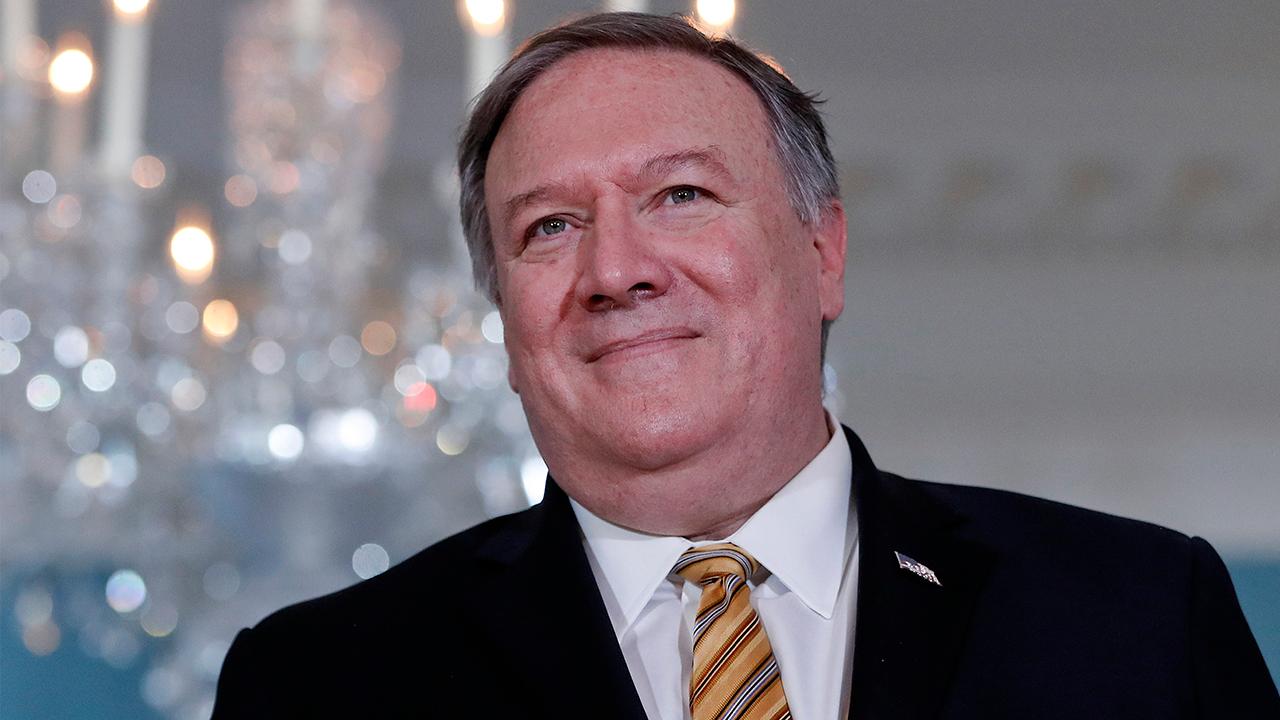
U.S. Secretary of State Mike Pompeo has blamed Iran for the "blatant assault" on oil tankers in the Gulf of Oman earlier Thursday.
In
a press conference Thursday afternoon, Pompeo said: “This assessment is
based on intelligence, the weapons used, the level of expertise needed
to execute the operation, recent similar Iranian attacks on shipping,
and the fact that no proxy group operating in the area has the resources
and proficiency to act with such a high degree of sophistication.”
He
charged that Iran is working to disrupt the flow of oil through the
Strait of Hormuz and this is a deliberate part of a campaign to escalate
tension, adding that the U.S. will defend its forces and interests in
the region, although he did not elaborate.
His comments came
shortly after a senior U.S. defense official told Fox News that the U.S.
Navy saw an unexploded mine attached to the hull of the Panama-listed,
Japanese-owned Kokuka Courageous ship, one of the two ships attacked. It
is the same type of mine used to damage four oil tankers last month in
the same area - an attack senior Pentagon officials blamed on Iran.
A
spokesman for Taiwan's CPC Corp oil refiner, which chartered the other
boat attacked on Thursday morning, the Front Altair, said it was
"suspected of being hit by a torpedo", although this not been confirmed.
Whether
it be a torpedo or mines, Jakob P. Larsen, head of maritime security
for the international shipping association BIMCO, told the Associated
Press that the incident brings the region closer to an armed conflict.
“The
shipping industry views this as an escalation of the situation, and we
are just about as close to a conflict without there being an actual
armed conflict, so the tensions are very high,” he said.
“The
shipping industry views this as an escalation of the situation, and we
are just about as close to a conflict without there being an actual
armed conflict, so the tensions are very high.”
— Jakob P. Larsen
Iran's
foreign minister Javad Zarif said of the latest incident: "Suspicious
doesn't begin to describe what likely transpired this morning."
But
U.S. officials have repeatedly warned that the Iranian regime is posing
a credible threat in the Middle East, prompting the Trump
administration to beef up security in the region in the form of
additional bombers and troops.
Gen. Frank McKenzie, the head of
American forces in the Middle East, warned during a recent trip to the
region of an unspecified “imminent” threat from Iran.
Back
in May, the U.S. military was put on alert after reports that Iranian
forces loaded missiles into launchers on two Iranian commercial boats
sailing around the Persian Gulf, according to the Wall Street Journal.
For two weeks, the U.S. shadowed the ships as tensions continued to
rise, according to the report. The ships eventually came back to a
harbor and unloaded the rockets, Iranian officials said
“The
best way to describe them is a covert, deniable first-strike weapon.
The conversion of a merchant ship for an attack in and of itself is a
very provocative act.”
— U.S. official familiar with the intelligence
“The
best way to describe them is a covert, deniable first-strike weapon,” a
U.S. official familiar with the intelligence told the newspaper. “The
conversion of a merchant ship for an attack in and of itself is a very
provocative act.”
Zarif fired back against criticism at the time,
saying that the regime had the right to self-defense. “We have a right
to defend ourselves, so if we put missiles on our boats, it is our
right,” he told ABC News on Sunday.
The
MT Front Altair, a Marshall Islands-flagged but Norwegian-owned crude
oil tanker was carrying naphtha, a flammable petrochemical product, to
Japan. The Front Altair came from Ruwais in the UAE, a loading point for
the state-run Abu Dhabi National Oil Co.
International Tanker
Management, which operates the MT Front Altair, said an explosion had
caused a fire onboard. The firm told the Associated Press the incident
is still being investigated and it was unclear what caused the
explosion. Its 23 crew members were evacuated by the nearby South
Korean-based Hyundai Dubai Vessel and are now safe, the firm said.
The
other tanker, the Kokuka Courageous, said it sustained hull damage and
21 sailors had been evacuated, with one suffering minor injuries.
The
vessel came from Mesaieed, Qatar, and Jubail, Saudi Arabia, carrying
methanol, a chemical compound used in a variety of products.
The
tensions between the U.S. and Iran have reached a fever pitch and the
diplomatic efforts to defuse the situation tend to hit a wall. Japanese
Prime Minister Shinzo Abe is visiting Iran this week and is expected to
try to de-escalate tensions between Tehran and Washington, though any
significant breakthrough is unlikely.
Yet Abe’s visit coincided
with the Iran-backed Houthi rebel attack on Saudi Arabia’s Abha regional
airport that reportedly wounded 26 people.
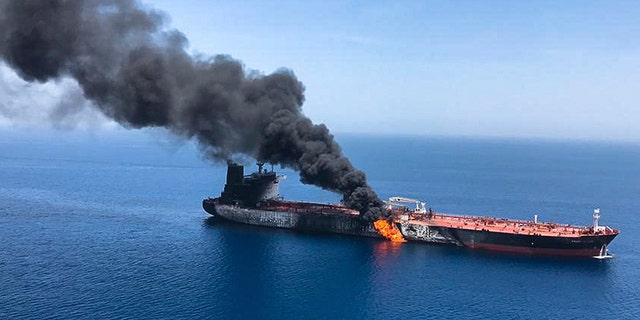
An oil tanker is on fire in the sea of Oman, Thursday, June 13,
2019. Two oil tankers near the strategic Strait of Hormuz were
reportedly attacked on Thursday, an assault that left one ablaze and
adrift as sailors were evacuated from both vessels and the U.S. Navy
rushed to assist amid heightened tensions between Washington and Tehran.
(AP Photo/ISNA)
The
U.S. was put on alert amid intelligence reports that indicated that
Iran-backed militias in Iraq are moving the missiles close to American
bases. This prompted the U.S. to order all non-essential personnel to
leave the U.S. Embassy and consulate in Iraq.
President Trump,
meanwhile, sent an aircraft carrier and B-52 bombers to the region,
along with hundreds more troops to back up the tens of thousands already
deployed in the region.
In
the midst of this, Iran is also threatening to withdraw from the 2015
nuclear accord and resume enriching uranium closer to weapons-grade
level on July 7 if European allies fail to offer new terms for the
nuclear deal.
Ilan Goldenberg, Middle East Security Director at
CNAS (Center for a New American Security), a defense and national
security think tank, tweeted Thursday:
"I’ve been saying for the past month that threat of war with Iran is
overhyped. Not after today. We should be concerned."
Fox News’ Jennifer Griffin, Lucas Tomlinson, Bradford Betz and the Associated Press contributed to this report.
Lukas Mikelionis
Source: https://www.foxnews.com/world/highly-likely-iran-responsible-oil-tanker-attack-gulf-oman-defense
Follow Middle East and Terrorism on Twitter

 decades. Unfortunately, the WebMD article ignored the overwhelming amount of data and evidence that increased carbon dioxide levels and the modest warming Earth has experienced is helping feed the world, not leading to starvation or malnutrition.

 epeatedly, freedom lovers have demonstrated how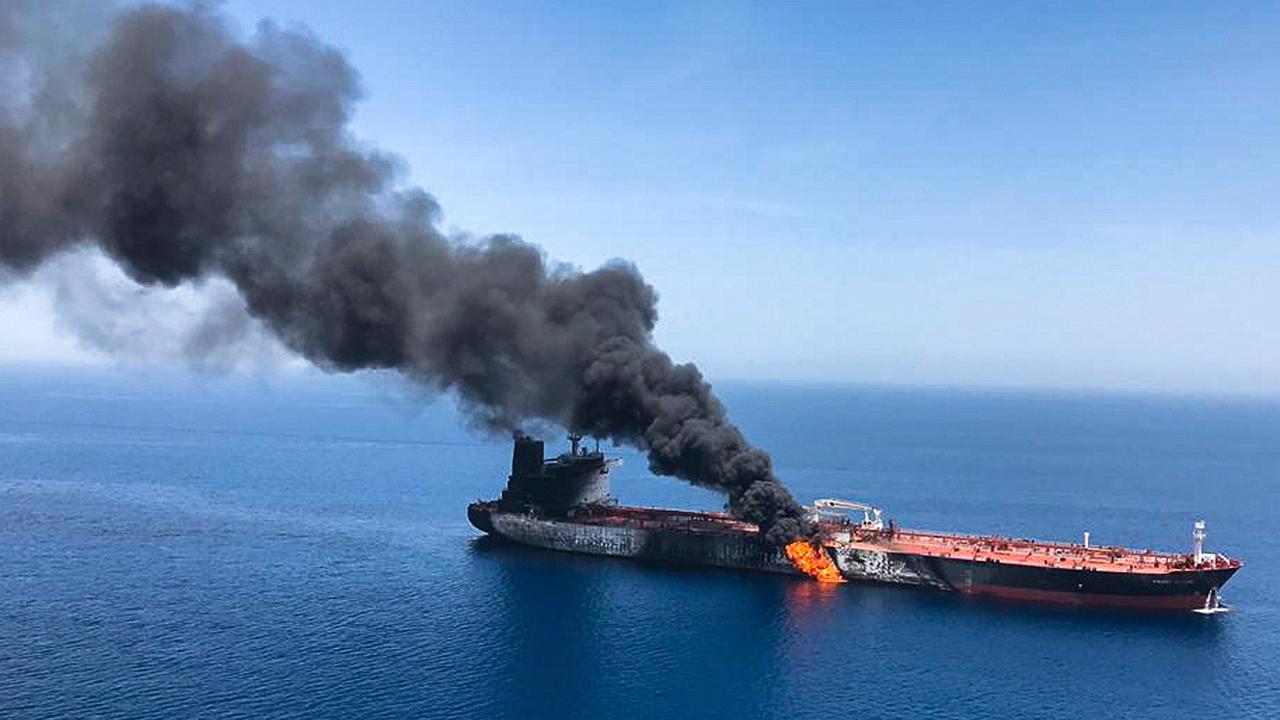

 Amongst all this, the United States has prospered too, as the international order since WWII has been structured to its benefit. U.S. GDP per capita has increased by over 300% from $17,550 (