by David Isaac
Those promoting the cessation of U.S. military aid recommend replacing that aid with binational corporations or cooperative programs that would develop new defense products, open new markets and generate potentially huge dividends for both countries.
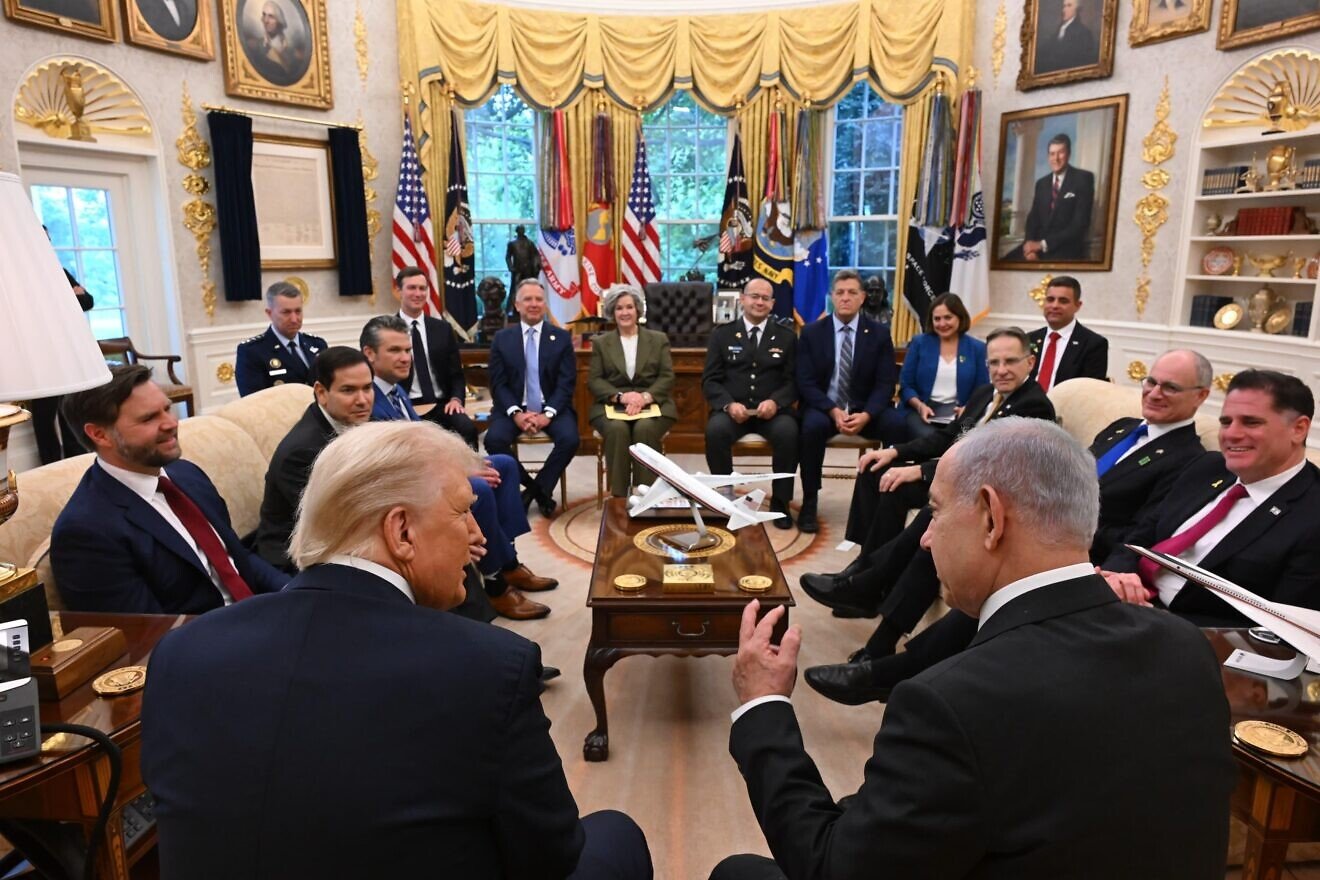
Israel has “come of age” and will wean itself off U.S. military aid, Israeli Prime Minister Benjamin Netanyahu announced in an interview last Friday with London’s The Economist. Observers JNS spoke with welcomed the prime minister’s announcement.
While many American Jews equate supporting Israel with supporting U.S. military aid to Israel, a growing group have argued precisely the opposite—that ending aid won’t undermine the U.S.-Israel relationship but rather strengthen it.
Israel will gain more independence, make wiser decisions about its military needs and place its relationship with the United States on a firmer footing, moving it from a “security aid recipient” to a “true strategic partnership,” they say.
Netanyahu says Israel aims to end its reliance on U.S. military aid within a decade.
— Clash Report (@clashreport) January 9, 2026
“We have come of age and we have developed incredible capacities.” pic.twitter.com/j39GvK66OZ
“It will be difficult in the short term, but it will be a net positive in the long term,” Gideon Israel, president of the Jerusalem-Washington Center, which works to strengthen the U.S.-Israel alliance, told JNS.
Ending aid will require a shift in Israel’s thinking, forcing it to take a closer look at its military needs, and what elements it must build in-house, said Israel, who began researching the topic 15 years ago.
Israel will also strengthen its domestic arms production. Nearly all U.S. aid, more properly known as “foreign military financing,” must be spent in the United States. As a result, the Israel Defense Forces prefers buying munitions from American companies, letting domestic production lines shut down. “You become a country that doesn’t make any weapons. And when war starts, you have no stockpiles, and no ability to replenish what you use quickly,” said Israel.
Likud Knesset Member Amit Halevy, chairman of the Subcommittee for Security Doctrine and Force Buildup, part of the Knesset’s Foreign Affairs and Defense Committee, recently held several hearings on the topic of U.S. military aid.
“From my perspective, it harms Israel. It’s used to pressure Israel. And it’s a stain on our relationship, which should be based on partnership, on our common interests and values,” Halevy told JNS.
Halevy, who has observed the negative effects of the aid for years, said the picture became sharper during the Gaza war. “The Biden administration cut off all the arms shipments to Israel. That’s not aid. That’s blackmail,” he said.
Halevy referred to the May 2024 decision by then-President Joe Biden to delay the transfer of weapons shipments to Israel over its intention to enter Rafah. Netanyahu complained publicly in June, calling it “inconceivable” that the United States was withholding weapons and ammunition during Israel’s war against Hamas.
Former Israeli Ambassador Yoram Ettinger, who has urged Israel for decades to move off aid, told JNS: “Foreign aid humiliates Israel. We are neither foreign, nor do we seek aid. We are partners. Weaning Israel off foreign aid will substantially enhance Israel’s standing in the eyes of the American public.”
Israel’s position worldwide would also improve. Military assistance encourages the impression that Israel is a dependency of the United States. When Israel says it can do without, it signals to countries such as Saudi Arabia, the United Arab Emirates and others “that we are indeed as strong as they take us to be.”
Ettinger first began writing on the subject in 1991 while stationed as a diplomat in the Israeli Embassy in Washington, D.C. “One of the very few positive reactions to my papers came from the then-contender for Likud leadership, who was Netanyahu,” he said. In 1996, Prime Minister Netanyahu, in his first speech to a Joint Session of Congress, announced the phasing out of non-military U.S. economic aid.
Israel had received tens of billions in economic assistance. All such assistance ceased by 2007. “Now he wants to phase out the rest,” said Ettinger.
Netanyahu told The Economist that he wants to end military aid over a 10-year period. Israel’s economy will reach about a trillion dollars within a decade, he said. (Israel’s nominal GDP for 2025 is estimated at $610 billion.)
Rafael BenLevi, senior fellow at the Misgav Institute, who has been researching the issue of U.S. aid, explained that as Israel’s economy grows, U.S. military aid makes up an ever-shrinking percentage of Israel’s state budget.
“In the 1970s, on average, the value of the aid as a percentage of the state budget was 20%. Since then, this number has gone down consistently every decade until in the 2020s this percentage was 2.8%,” he told JNS.
“In terms of a percentage of Israel’s GDP, in the 1970s it was on average around 17%. This, too, has dropped consistently as Israel’s GDP has grown until in the 2020s it has been 0.7%,” he added.
New model
Those promoting the cessation of U.S. military aid recommend replacing that aid with binational corporations or cooperative programs that would develop new defense products, open new markets and generate potentially huge dividends for both countries.
Ettinger envisions programs modeled on the U.S.-Israel foundations established in the 1970s that are still ongoing. One of them, the Israel-U.S. Binational Industrial Research and Development Foundation (BIRD), was formed in 1977 to promote R&D between U.S. and Israeli companies for joint project development.
“To date, BIRD’s investment of more than $406 million in joint projects has helped generate direct and indirect revenues exceeding $10 billion,” the foundation reported on Oct. 12, 2025.
Ettinger proposes establishing one defense-related foundation a year for 10 years. The foundations would bring together American defense contractors with Israeli startups to develop groundbreaking technology. He suggested areas such as mini-satellites, cybersecurity, AI and air defense.
“The dramatic expansion of U.S.-Israel defense cooperation will be of a magnitude that will dwarf the $3.8 billion annual foreign aid,” he said.
A March 2025 plan put out by the Heritage Foundation also calls for cooperative programs in place of aid. “Our vision for the future of the U.S.-Israel relationship is bringing it from what we call the special relationship, and elevating it to a strategic partnership,” Daniel Flesch, the Heritage Foundation’s senior policy analyst for Middle East and North Africa, told JNS.
That “special relationship” was fixed in the 10-year foreign military financing memorandum of understanding (MOU) put in place by President Ronald Reagan. Up for renewal every 10 years, the current MOU expires in fiscal year 2028. It provides Israel $3.8 billion annually, including $500 million for cooperative missile defense programs.
The Heritage plan calls for a 19-year phaseout, but Flesch said he wasn’t surprised to learn of the 10-year timeframe proposed by Netanyahu. “There were people on the Israeli side who were saying, ‘You’re being much too generous. Let’s end it sooner,” he said.
Partly driving the timing of the push are changing attitudes among Americans, including conservatives, regarding Israel. Harvard-Harris and Pew Research Center Polls show declining support for the Jewish state among younger Americans.
“We did this largely recognizing that on the U.S. side of the ledger, there were issues with U.S. support toward Israel, largely on the Democratic side, but obviously a little bit on the Republican side,” said Flesch. “Our assessment was it is time now with the renegotiation on the MOU to take into account these shifting domestic political dynamics and concerns.”
Despite supporting an end to military aid, Gideon Israel, of the Jerusalem-Washington Center, stressed that the growing American opposition to aid, including among young conservatives, can only be described as a “colossal Israeli public relations failure.”
“The fact that in America it’s seen as a charity is a failure by multiple prime ministers to explain that this is a great deal for America. All they’ve done is say, ‘Thank you,’ reinforcing the impression that it’s a handout,” he said. “And so we shouldn’t be surprised by a situation where everybody thinks it’s a waste of money and that Israel is a parasite.”
He described Israel as both a marketing and R&D department for American weaponry, boosting U.S. arms sales globally while also improving them. When Israel buys and successfully uses advanced U.S. weapons, such as the F-35, and takes out Russian and Chinese-made equipment, it proves their superiority, prompting other countries to buy them, he said.
“What they call ‘aid’ is pumped back into the America economy many times over,” he continued. “Yet, the only one who over the years has really talked about the benefits the U.S. received was Yoram Ettinger. He was an island in the sea.”
Ettinger said, “It’s true that I don’t hear anyone among Israel’s top policy makers or top diplomats in the U.S. educating Americans on the fact that this is the best-ever investment made by the United States, with a return on investment well over 1,000% year in and year out.”
When Israel first received the F-35 in 2018, it was a troubled aircraft with technical deficiencies, he noted. Israel quickly resolved those issues, “not because we are so smart, but because of the challenges facing Israel, which force us to upgrade any system which we receive from the United States.”
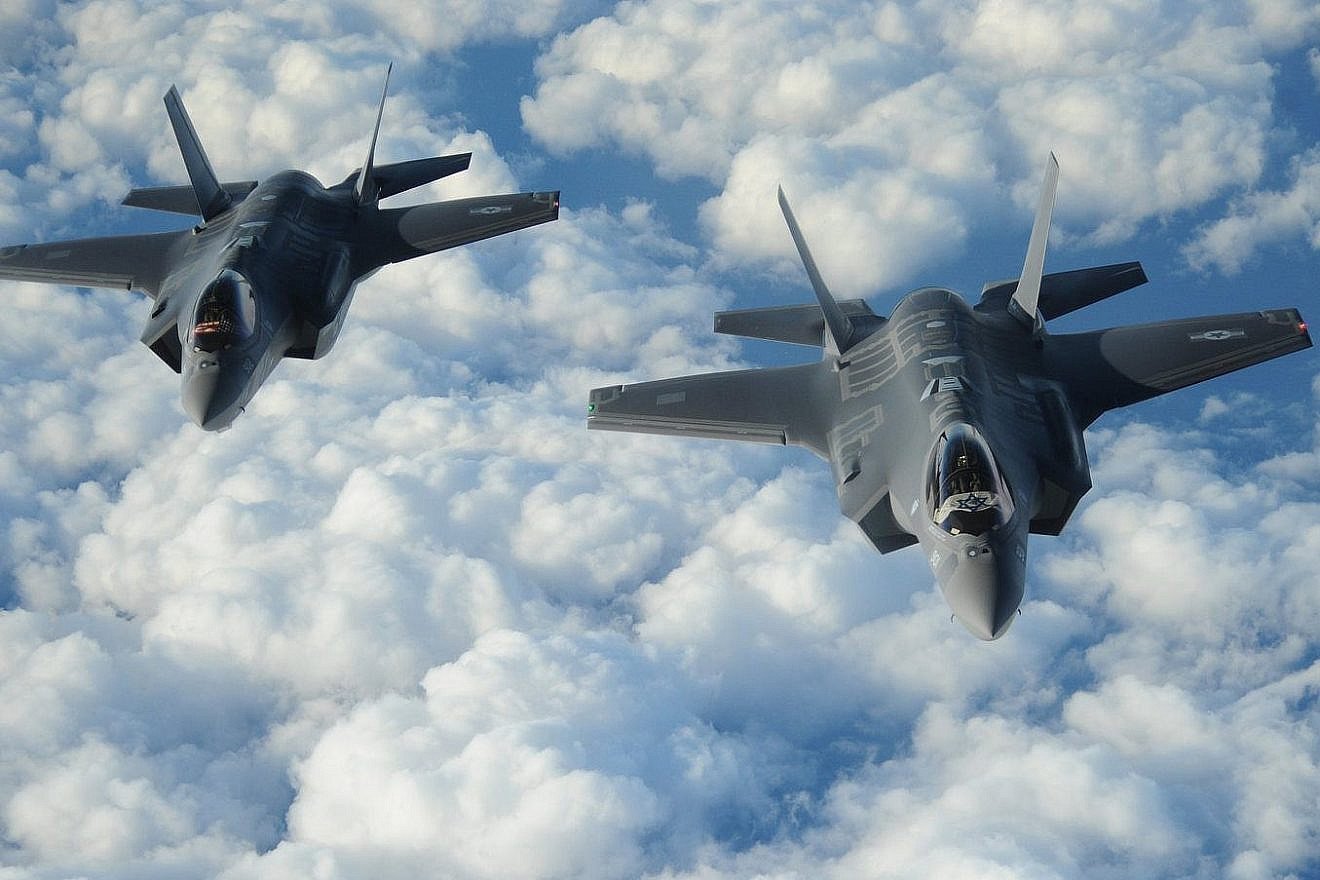
It is well documented that Israel’s version of the F-35, called the “Adir,” includes extended range and significantly upgraded capabilities, including electronic warfare systems to counter Russian and Iranian air defense systems, which Israel has shared with the United States.
According to Defense.Info, in its June 14, 2025 issue: “Pentagon officials have acknowledged that Israel’s experience provides valuable insights into sustaining F-35 operations during high-intensity conflict.”
On Jan. 7, Lockheed Martin reported a record-breaking year for the F-35 program, delivering 191 F-35s, beating the previous delivery record of 142.
David Isaac
Source: https://www.jns.org/from-aid-to-alliance-why-israeli-leaders-say-ending-us-military-assistance-is-long-overdue/

No comments:
Post a Comment