by Bassam Tawil
The last thing Israel and the US need in the Gaza Strip is another Oslo Accord-style counterfeit agreement.
Placing the Gaza Strip under the jurisdiction of an international body that includes longtime supporters of Hamas and other terrorists will unfortunately be even more disastrous than the 1993 Oslo Accord, signed between Israel and the Palestine Liberation Organization (PLO).
The last thing Israel and the US need in the Gaza Strip is another Oslo Accord-style counterfeit agreement.
In reality, there are only two countries capable of carrying out this task: the US and Israel. Other countries -- not only Arab and Muslim, as Jordan's King Abdullah II warned, but also European, including, Germany, Italy, Britain and Canada -- clearly have less than no interest in actively combating terrorism in the Gaza Strip.
[A]s Trump said about Venezuela, "We're going to run the country until such time as we can do a safe, proper and secure transition... We can't take a chance that somebody else takes over... that doesn't have the good of the... people in mind."
If the US can run Venezuela or Greenland, or set up "security" for Ukraine consisting of US businesses, why not in the Gaza Strip -- smaller but geopolitically just as critical for the US -- as well?
US and Israeli control of the Gaza Strip would, ironically, provide the least risk to all the parties involved -- most of all to the Palestinians of Gaza. Such an arrangement seems the only realistic solution that could lead to reduced violence and long-term regional stability.
A joint US and Israeli security and business presence there could result at last in the emergence of moderate, pragmatic Palestinians. Such an outcome will certainly never take place if Qatar, Turkey, Pakistan or the Palestinian Authority are allowed inside the Gaza Strip. There is a far higher probability of accords being torn up and a new war launched after Trump leaves office.
American or Israeli control of the Gaza Strip would not only prevent Palestinian terrorists from gaining more power and launching attacks again but also send a reassuring message to neighboring Arab and Islamic states that they would be able to rely on the US when it comes to combating Islamist terrorism against their own regimes as well.
A strong US and foreign business presence, with the knowledge that these investments are safely protected, would not only create job opportunities and improve living conditions for local residents but could also make Gaza the spectacular "Gaza Riviera" it is waiting to become.
At the moment, many countries are hardly rushing to invest in Gaza. If countries aligned with the Muslim Brotherhood were in charge, there would be no way of protecting their investment, or even enforcing law and order.
If the US Administration thinks that an Arab and Muslim "Peace Board" will actually take any significant action to ensure that Hamas disarms and disbands, they are in for a nasty shock. The minute the first shot is fired, the last thing on the minds of the "Board of Peace" will be enforcing "Peace."
After two years of death and destruction, many Palestinians would prefer to live under American or even -- without admitting it of course --- Israeli control, than under a terror group that has brought them nothing but death, destruction and a new nakba (catastrophe).
Saudi Arabia and other Arab and Islamic countries would most likely be happy to be on the side of the "strong horse."
Strange as it may seem, Trump and Israeli Prime Minister Benjamin Netanyahu are popular among many Arabs and Muslims: they are viewed as reliable, sturdy and uncompromising leaders who can be counted on to keep their word.
If Arab and Muslim states disagree, they are welcome to stay behind and watch the train leave the station. If not, the Gaza Strip and the "Board of Peace" will be just another failed experiment.
US President Donald J. Trump is expected to announce the formation of a "Board of Peace" to oversee temporarily the running of the Gaza Strip and manage its reconstruction. According to multiple reports, Qatar and Turkey are among several countries that have been invited to join the board.
Both countries are widely known as major international supporters of political Islam, specifically through their historical and ongoing backing of terrorist and Muslim Brotherhood groups – including Hamas, which is currently ruling the Gaza Strip and has shown no signs of letting up. With countries such as these, it is, frankly, hard to see how the new board would be able to bring peace, security and stability to the Middle East.
The assumption that Qatar or Turkey would participate in any effort to disarm Hamas and other Palestinian terror groups in the Gaza Strip is perhaps well-intentioned but excruciatingly misguided. Both Qatar and Turkey have always served as defenders of Hamas, and both countries have warmly welcomed its leaders and top activists as residents of Doha and Ankara.
Placing the Gaza Strip under the jurisdiction of an international body that includes longtime supporters of Hamas and other terrorists will unfortunately be even more disastrous than the 1993 Oslo Accord, signed between Israel and the Palestine Liberation Organization (PLO).
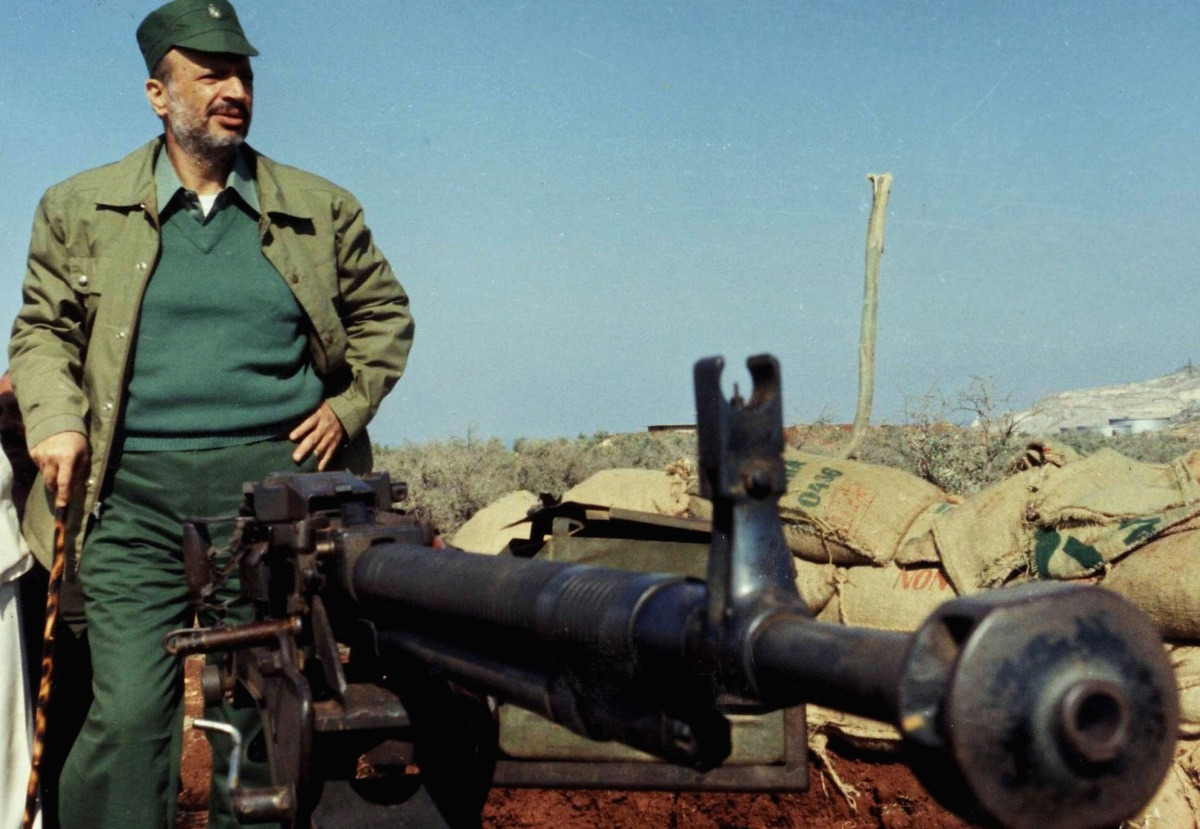
The Oslo Accords were based on, again, the well-intentioned but false assumption that the PLO and its leader, Yasser Arafat, would serve as real peace partners and combat terrorism in the West Bank and Gaza Strip. On September 9, 1993, Arafat wrote to Israel's Prime Minister Yitzhak Rabin:
"The signing of the Declaration of Principles marks a new era in the history of the Middle East. In firm conviction thereof, I would like to confirm the following PLO commitments:
"The PLO recognizes the right of the State of Israel to exist in peace and security.
"The PLO accepts United Nations Security Council Resolutions 242 and 338.
"The PLO commits itself to the Middle East peace process, and to a peaceful resolution of the conflict between the two sides and declares that all outstanding issues relating to permanent status will be resolved through negotiations.
"The PLO considers that the signing of the Declaration of Principles constitutes a historic event, inaugurating a new epoch of peaceful coexistence, free from violence and all other acts which endanger peace and stability. Accordingly, the PLO renounces the use of terrorism and other acts of violence and will assume responsibility over all PLO elements and personnel in order to assure their compliance, prevent violations and discipline violators..."
Shortly before signing the Oslo Accord, however, Arafat compared them to the Treaty of Hudaibiyya, in which the Islamic prophet Muhammad had pledged not to attack the Quraysh tribe in Mecca for ten years. Nonetheless, within two years, Muhammad assembled an army of 10,000, marched into Mecca, and conquered it.
Shortly after signing the Oslo Accord, Arafat was caught trying to smuggle four arch terrorists into Israel in his official convoy: "Three terrorists were in the trunks of each Mercedes, and the fourth, Jihad al-Amarin, was lying on the back seat and Arafat was sitting on top of him," Avi Dichter, former head of Israel's security, Shin Bet, reported at the time.
More than 30 years later, it is clear that the Oslo experiment has failed utterly. Under Arafat's newly created Palestinian Authority, a governing body dominated by his loyalists in the PLO's ruling Fatah faction, Palestinian terror groups, including Hamas, actually flourished. They were aided by lavish unconditional donations from Europe -- "almost 30 billion euros since 1994" -- which spared Palestinian leaders the effort of actually having to develop an economy. As a result, these funds were free to be used for terrorism and corruption. Arab countries, including Qatar, Saudi Arabia and Kuwait, also generously pitched in. Consequently, ever since the PLO was imported by Israel into the West Bank and Gaza Strip, thousands of Israelis have been killed in continuous terror attacks.
The last thing Israel and the US need in the Gaza Strip is another Oslo Accord-style counterfeit agreement. Gaza already has too many Islamist terror groups roaming its streets. Like the US Department of Defense -- now the Department of War, to achieve real peace, Gaza too needs a "Board of War" that will combat terrorism and destroy the terrorists' military and political infrastructure for good.
In reality, there are only two countries capable of carrying out this task: the US and Israel. Other countries -- not only Arab and Muslim, as Jordan's King Abdullah II warned, but also European, including, Germany, Italy, Britain and Canada -- clearly have less than no interest in actively combating terrorism in the Gaza Strip.
That is why the Trump administration needs to seriously consider placing the Gaza Strip under the exclusive control of the US and Israel – at least, as Trump said about Venezuela:
"We're going to run the country until such time as we can do a safe, proper and secure transition... We can't take a chance that somebody else takes over... that doesn't have the good of the... people in mind."
If the US can run Venezuela or Greenland, or set up "security" for Ukraine consisting of US businesses, why not in the Gaza Strip -- smaller but geopolitically just as critical for the US -- as well?
US and Israeli control of the Gaza Strip would, ironically, provide the least risk to all the parties involved -- most of all to the Palestinians of Gaza. Such an arrangement seems the only realistic solution that could lead to reduced violence and long-term regional stability.
For the past decades, the US and Israel have been the only two countries leading the fight against Islamist terror groups and individuals -- including Al-Qaeda, Islamic State (ISIS), Hezbollah, Hamas, and the Palestinian Islamic Jihad.
US and Israeli control of the Gaza Strip would also enable the peaceful Gazans to gain ground against Gaza's radical elements. Most Palestinians living in the Gaza Strip have always been afraid to speak out against Hamas. Those who dared to criticize the terror group or disagree with its policies or actions were killed, tortured, arrested or forced to flee.
A joint US and Israeli security and business presence there could result at last in the emergence of moderate, pragmatic Palestinians. Such an outcome will certainly never take place if Qatar, Turkey, Pakistan or the Palestinian Authority are allowed inside the Gaza Strip. There is a far higher probability of accords being torn up and a new war launched after Trump leaves office.
American or Israeli control of the Gaza Strip would not only prevent Palestinian terrorists from gaining more power and launching attacks again but also send a reassuring message to neighboring Arab and Islamic states that they would be able to rely on the US when it comes to combating Islamist terrorism against their own regimes as well. Notably, Arab countries such as Egypt, Jordan, Saudi Arabia, the United Arab Emirates and Bahrain, for years have not only felt threatened but have often been attacked by the Muslim Brotherhood, Hamas, Hezbollah and Yemen.
US and Israeli control would lead to foreign investment and economic development in the Gaza Strip. A strong US and foreign business presence, with the knowledge that these investments are safely protected, would not only create job opportunities and improve living conditions for local residents but could also make Gaza the spectacular "Gaza Riviera" it is waiting to become.
At the moment, many countries are hardly rushing to invest in Gaza. If countries aligned with the Muslim Brotherhood were in charge, there would be no way of protecting their investment, or even enforcing law and order.
Worse, these potential donors see that Hamas and other terror groups are still controlling large parts of the Gaza Strip with no intention of disarming or stepping down. If the US Administration thinks that an Arab and Muslim "Peace Board" will actually take any significant action to ensure that Hamas disarms and disbands, they are in for a nasty shock. The minute the first shot is fired, the last thing on the minds of the "Board of Peace" will be enforcing "Peace."
After two years of death and destruction, many Palestinians would prefer to live under American or even -- without admitting it of course --- Israeli control, than under a terror group that has brought them nothing but death, destruction and a new nakba (catastrophe).
This does not mean that these peaceful Palestinians are going to convert to Christianity or Judaism, but many would be secretly happy to live under the rule of democracies that respect human rights, protect their freedom of speech, improve their living conditions, and finally bring them real "peace and prosperity."
The strategic partnership that joint US-Israeli control of the Gaza Strip would promote could only influence the broader Middle East in a positive way and facilitate more rapidly the dream of achieving normalization between Israel and its Arab neighbors. Saudi Arabia and other Arab and Islamic countries would most likely be happy to be on the side of the "strong horse."
Strange as it may seem, Trump and Israeli Prime Minister Benjamin Netanyahu are popular among many Arabs and Muslims: they are viewed as reliable, sturdy and uncompromising leaders, who can be counted on to keep their word.
Finally, US and Israeli control of the Gaza Strip would make it easier immediately to implement humanitarian aid programs. The US and Israel could, as they have been doing, ensure that the food and medicine end up in the hands of those who really need them, and prevent Hamas and other terror groups from stealing the humanitarian aid entering the Gaza Strip. The United Nations, the Palestinian Authority and other international organizations have failed to deliver humanitarian aid – or to prevent it from being stolen and sold by Hamas to fund its terror activities. The only countries that apparently have the will and the capability to see to it that the infrastructure and living conditions of the Gazans could improve quickly and significantly are Israel and the US.
It is not too late for the Trump administration to consider this option. It is truly the best way to bring security, stability, and prosperity to Gaza and to the region. If Arab and Muslim states disagree, they are welcome to stay behind and watch the train leave the station. If not, the Gaza Strip and the "Board of Peace" will be just another failed experiment.
Bassam Tawil is a Muslim Arab based in the Middle East. His work is made possible through the generous donation of a couple who wish to remain anonymous. Gatestone is most grateful.
Source: https://www.gatestoneinstitute.org/22201/gaza-us-israeli-control

No comments:
Post a Comment