by Majid Rafizadeh
The same institutions and voices that were so shrill and relentless when condemning Israel in the name of Palestinian rights are, when courageous Iranian lives are at stake, spectacularly non-existent. This double standard only exposes the bottomless hypocrisy at the heart of much contemporary human rights activism.
When it comes to Iran... where ordinary, unarmed people demanding freedom are being beaten, tortured, imprisoned, and gunned down in the streets by their own leaders, this high-minded moral chorus has all but disappeared.
The same institutions and voices that were so shrill and relentless when condemning Israel in the name of Palestinian rights are, when courageous Iranian lives are at stake, spectacularly non-existent. This double standard only exposes the bottomless hypocrisy at the heart of much contemporary human rights activism.
The Iranian people, after weeks of being massacred in the streets, are still waiting for that "locked and loaded" promise that Trump keeps making but never delivers. To them, once again, as during the term of President Barack Hussein Obama, it must look as if their deaths do not matter, and do not trigger the same "moral reflex" as other conflicts.
Is Trump really going to thwart the efforts of these unimaginably courageous people trying to rid themselves of a brutal despotism that has been attacking them for 47 years?
The silence tells them that the human rights of the global liberal and leftist establishment are not truly universal at all -- but conditional, applied extremely selectively based on being paid and transported by professional organizers, as well as on often fabricated anti-American and anti-Jewish geopolitical narratives.
Instead, what we see is -- nothing. A few indignant statements are released, carefully worded to be stripped of urgency. There are no mobilizations, no sense that what is happening in Iran represents a deadly emergency. This passivity contrasts with the manufactured energy poured into other causes. The moment outrage is selective, it is no longer moral; it is just political puffery.
Women who resist are harassed, tortured, raped in detention or even killed. In recent uprisings, women have openly defied the regime. They have removed their headscarves and called for freedom while daring to imagine a life without fear. Many are today paying with their lives for their courage while the loud, fearless, sanctimonious "defenders of human rights" just shop at the supermarket.
These protests are not just about Iran. They are about whether human rights are truly universal or just rhetorical twaddle deployed when one has nothing better to do.
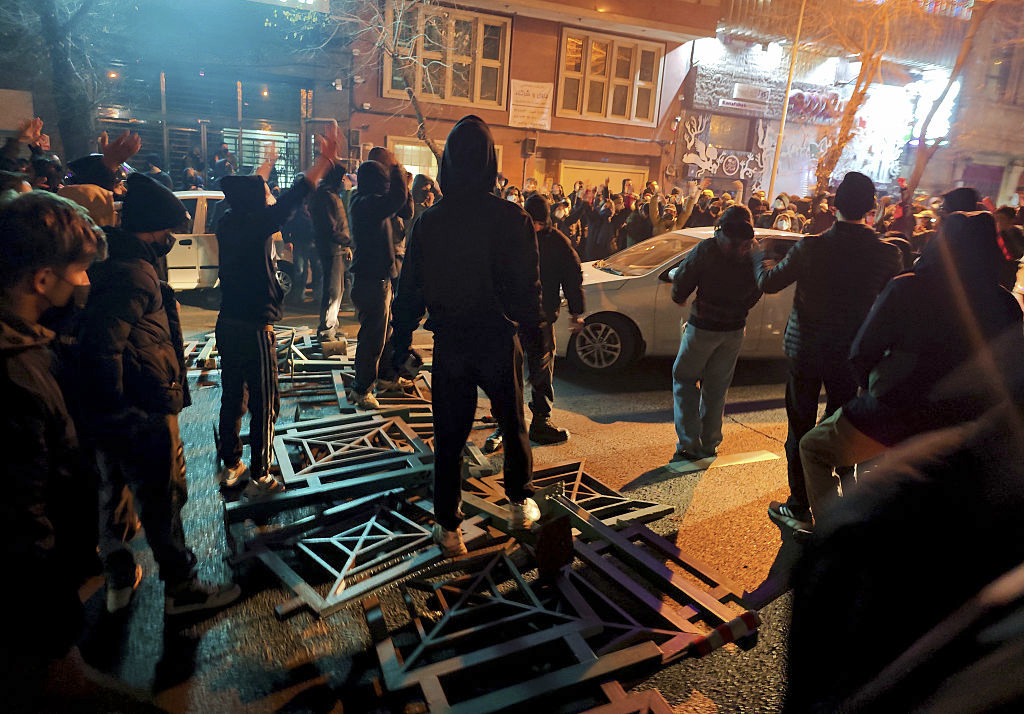
The United Nations, prominent NGOs, liberal politicians, and left-leaning activist networks seemingly love to frame themselves as some kind of elevated moral conscience for the international system. They speak the language of "justice," "dignity," and "universal human rights," and insist -- sometimes with threats and violence -- that silence in the face of oppression is "complicity."
When it comes to Iran, however, where ordinary, unarmed people demanding freedom are being beaten, tortured, imprisoned, and gunned down in the streets by their own leaders, this high-minded moral chorus has all but disappeared.
If the slaughter has stopped, it is reportedly "only because residents are being held hostage in their homes by machine gun-wielding security forces that have flooded the streets."
The same institutions and voices that were so shrill and relentless when condemning Israel in the name of Palestinian rights are, when courageous Iranian lives are at stake, spectacularly non-existent. This double standard only exposes the bottomless hypocrisy at the heart of much contemporary human rights activism.
Across Iran, protests have erupted in a desperate struggle for survival. People are not marching because they are paid, bored or seeking attention. They are marching because they are being suffocated by an authoritarian system that controls nearly every aspect of their lives. The regime has responded in the only way it knows how: with unremitting brute force. Security forces fire live ammunition into crowds, raid homes at night, arrest protesters, beat detainees behind closed doors, and for all we know, hang them in secret.
Internet access has been deliberately cut to isolate the population, both to prevent images of bloodied streets and grieving families from reaching the outside world and to prevent demonstrators from communicating with one another. Bless Elon Musk for his Starlink. We are witnessing repression in its most classic and savage form. Where is the sustained outrage? Where are the mass demonstrations in Western capitals? Where are the daily headlines, the emergency UN sessions, the endless panel discussions, the moral urgency?
The silence tells Iranians that their suffering is negotiable, as the ayatollahs tried to convince US President Donald J. Trump. He first sounded delighted but then, to his unending credit, backtracked.
The Iranian people, after weeks of being massacred in the streets, are still waiting for that "locked and loaded" promise that Trump keeps making but never delivers. To them, once again, as during the term of President Barack Hussein Obama, it must look as if their deaths do not matter, and do not trigger the same "moral reflex" as other conflicts.
Is Trump really going to thwart the efforts of these unimaginably courageous people trying to rid themselves of a brutal despotism that has been attacking them for 47 years?
The silence tells them that the human rights of the global liberal and leftist establishment are not truly universal at all -- but conditional, applied extremely selectively based on being paid and transported by professional organizers, as well as on often fabricated anti-American and anti-Jewish geopolitical narratives.
For people risking their lives -- risking literally everything -- in the streets of Tehran, Mashhad, Shiraz, and countless smaller cities, this silence means abandonment.
For years now, Iranians have been fighting for their most basic rights: to speak freely, to hear music, to dance, to feel their hair blown by the wind, to choose their leaders freely, to live without fear of arbitrary arrest, and to have a future that is not dictated by a sadistic, sociopathic elite.
The uprisings have come in waves. Each time, the regime has responded with intimidation, mass killings, torture, prison sentences, and countless atrocities. Many thousands, over the years, have been killed unjustly, with nothing even resembling due process. Thousands have disappeared into prisons where torture is routine and confessions are extracted through pain, humiliation, and ferocity.
Every uprising is followed by executions meant to instill terror and crush hope. Even so, each time, the people return to the streets. This persistence alone should command respect and solidarity from anyone who claims to stand for even the tiniest human right.
Instead, what we see is -- nothing. A few indignant statements are released, carefully worded to be stripped of urgency. There are no mobilizations, no sense that what is happening in Iran represents a deadly emergency. This passivity contrasts with the manufactured energy poured into other causes. The moment outrage is selective, it is no longer moral; it is just political puffery.
For decades, women in Iran have lived under laws that regulate their bodies, clothing, movement and behavior. Mandatory hijabs are not a cultural choice; they are enforced through surveillance, intimidation and sometimes murder. Women who resist are harassed, tortured, raped in detention or even killed. In recent uprisings, women have openly defied the regime. They have removed their headscarves and called for freedom while daring to imagine a life without fear. Many are today paying with their lives for their courage while the loud, fearless, sanctimonious "defenders of human rights" just shop at the supermarket.
Where are the feminist organizations, the massive street protests, the celebrity campaigns, the nonstop advocacy? The same groups that mobilize instantly for women's issues such as "glass ceilings" have reduced Iranian women to footnotes, if they mention them at all. The same holds true for all women doctrinally told they are inferiors. The silence is insulting. Iranian women apparently do not fit neatly into preferred narratives, or their struggle is inconvenient, or condemning a theocratic tyranny conflicts with other ideological alignments.
The message this disdain sends to Iran's regime is that repression has no international cost. When authoritarian rulers see that mass murder provokes only muted pieties, how can they not feel emboldened? Silence is the green light that allows viciousness to continue, normalized and unchecked.
What is striking is that some of the few voices speaking out forcefully have come from unexpected places, such as Trump and leaders of Israel. Regardless of one's views on their broader politics, their words on Iran have been unambiguous and blunt. They have openly condemned the regime's violence and framed the protests as a legitimate struggle for freedom. While many so-called human rights defenders hedge their language on Iran and Jews, Trump and pro-Israel voices have shown a willingness to call regimes what they are and to supply consequences.
If the West truly wants to stand with the Iranian people, the continued presence of Iranian embassies and diplomats in Western capitals sends a message of the regime's legitimacy and acceptance. Closing these embassies and expelling regime representatives would notify the Iranian people and everyone else that the world will no longer recognize or tolerate governments that massacre their own people.
Restoring and protecting internet access to Iranians is also critical. When the regime shuts down communications, it not only prevents coordination -- it is hiding crimes. Providing Iranians with tools to stay connected, to share their stories, and to document abuses would be a hugely effective form of support. Amplifying Iranian voices in international media, giving protesters a platform to speak for themselves, and refusing to let their struggle fade from public attention are equally vital.
Finally, authoritarian regimes respond to pressure only when it is real and credible. The possibility of intervention has already somewhat changed the mullahs' calculations. Pressure consists of making clear that red lines exist, and that crossing them will not be free of cost. Without credibility, no bloodshed will ever stop.
The Iranian people will remember who spoke up, who acted, and who did not. If these so-called human rights defenders, liberals, and leftists who claim to champion justice remain silent now, their credibility may deservedly be gone.
It is time to speak up clearly and consistently and stand with the Iranian people. These protests are not just about Iran. They are about whether human rights are truly universal or just rhetorical twaddle deployed when one has nothing better to do. Supporting the Iranians in their struggle for freedom is supporting freedom itself.
- Follow Majid Rafizadeh on X (formerly Twitter)
Dr. Majid Rafizadeh is a political scientist, Harvard-educated analyst, and board member of Harvard International Review. He has authored several books on the US foreign policy. He can be reached at dr.rafizadeh@post.harvard.edu
Source: https://www.gatestoneinstitute.org/22203/human-rights-defenders

No comments:
Post a Comment