Sunday, May 20, 2018

H.A.L.P.E.R. Spells Game Up for Obama's Spies - Clarice Feldman


by Clarice Feldman

We now have an imaginary crime – collusion – with imaginary evidence and even imaginary defendants.


Last week I reported that Internet sleuths had winkled out the name of the spy/agent provocateur that Obama's intelligence officers had used on the Trump campaign. The New York Times and Washington Post, the Democrats' semi-official newspapers this week megaphoned the instigators, offering up their justifications without naming his name. 

Again, the name is Stefan Halper, who, as I wrote here last week, was paid a substantial sum by the Department of Defense's Office of Net Assessment. 

If it was for this work – and it suspiciously looks like it because the payments were made in July and September of 2016 when he was weaseling his way into the campaign – then we know we have the DNI, CIA, DOJ, FBI, Dept. of State and the Defense Department working for Hillary's election and to smear and create a basis for further spying on Trump and his campaign. 

The NYT and Washington Post stories were clearly dictated by the perpetrators of this unprecedented effort to interfere with our elections. A careful reading shows that they leaked just enough about Halper to positively identify him while the press refuses to name him because the selective leakers warned, "that exposing him could endanger him or his contacts." If you buy that nonsense, please send me your name and contact information because I have a great investment deal for you. Nevertheless, in trying to justify what was done, the papers revealed more of how Halper worked to entrap low-level campaign workers, perhaps to pad up a nonexistent predicate for the spying which had already occurred and which continued, even after the election when Deputy Attorney General renewed the fatally flawed FISA warrant. 

In the selective leak to the press the officials who claim neither we nor Congress are entitled to this information we, nevertheless, learn this about his work:

From the Post story: Halper struck up a conversation with Carter Page (a longtime FBI asset and witness against Russian interests himself) in July 2016 posing as an academic "interested in American politics." In late summer Halper met with Trump campaign co-chairman Sam Clovis and offered to provide "foreign policy expertise to the Trump effort." Clovis begged off further meetings in which they discussed policy toward China due to the press of campaign activities. In September, he contacted George Papadopoulos, "an unpaid foreign policy advisor" to the Trump campaign, and invited him to London to work on a research paper on energy for which he paid him $3,000. The Post concedes this is a standard intelligence trick --offer to pay a mark you're trying to recruit for a report on an innocuous subject. 

I suspect like the long-debunked claim that Valerie Plame was a covert agent whose naming jeopardized national security; the claim that Halper's name must not be revealed is utter bunk, but the press incuriously bought it then and buys it now:
The stakes are so high that the FBI has been working over the past two weeks to mitigate the potential damage if the source's identity were revealed, according to several people familiar with the matter. The bureau took steps to protect other live investigations that he has worked on and sought to lessen any danger to associates if his identity became known, said these people, who spoke on the condition of anonymity to discuss sensitive intelligence operations.
The Wall Street Journal's Kimberley Strassel has been having a field day unraveling the many contradictions of the intelligence community's shifting stories and the persistent stonewalling by the DoJ and FBI to congressional investigators at the very same time they are dropping tales to compliant press. 

For example, she tweets:
5. Back in Dec., NYT assured us it was the Papadopoulos-Downer convo that inspired FBI to launch official counterintelligence operation on July 31, 2016. Which was convenient, since it diminished the role of the dossier
Kimberley Strassel
‏
Verified account

 
@KimStrassel
May 16
More


6. Now NYT tells us FBI didn't debrief downer until August 2nd. And Nunes says no "official intelligence" from allies was delivered to FBI about that convo prior to July 31. So how did FBI get Downer details? (Political actors?) And what really did inspire the CI investigation?
Let me explain this. In May 2016 Australia's High Commissioner to the UK, Alexander Downer (a Hillary friend) met with Papadopoulos in a London wine bar and questioned him about Russia and the Hillary emails. Two months later he reportedly forwarded information about the conversation to the FBI, which it claimed was the basis for the counterintelligence investigation of Trump, but as Strassel notes – Downer wasn't questioned by the FBI until days after the investigation was opened.

Halper and Downer weren't alone in trying to see if Papadopoulos had information about the hacked DNC emails (whose impenetrable password you may recall, was "password").

Former FBI agent Mark Wauck suggests Halper may have been operating under a preliminary investigation(PI), not a full Investigation (FI)
The FBI is asked--way back as early as 2015, but who knows? -- to be helpful to the Dems and they agree. What they do is they hire non-government consultants with close Dem ties to do "analytical work" for them, which happens to include total access to NSA data. Advantages? For the Dems, obviously, access to EVERYTHING digital. A gold mine for modern campaign research. For the FBI there's also an advantage. They get to play dumb -- gosh, we didn't know they were looking at all that stuff! They also don't have to falsify anything, like making [stuff] up to "justify" opening a FI [full investigation]on an American citizen and then lying to the FISC to get a FISA on the USPER [US person] and having to continually renew the FISA and lie all over again to the FISC each renewal. And the beauty of it all is, who's ever going to find out? And even if they do, how do you prove criminal intent?
So everything's humming along until a pain in the a** named Mike Rogers at NSA does an audit in 4/2016, just as the real campaign season is about to start. And Rogers learns that 85% of the searches the FBI has done between 12/2015 and 4/2016 have been totally out of bounds. And he clamps down -- no more non-government contractors, tight auditing on searches of NSA data. Oh sh*t! What to do, just give up? Well, not necessarily, but there's a lot more work involved and a lot more fudging the facts. What the FBI needs to do now is get a FISA that will cover their a** and provide coverage on the GOPers going forward. That means, first get a FI on an USPER [US person] connected to the Trump campaign (who looks, in [April] or [May] 2016, like the GOP candidate) so you can then get that FISA. That's not so easy, because they've got to find an USPER with that profile who they can plausibly present as a Russian spy. But they have this source named Halper.
So they first open a PI [preliminary investigation]. That allows them to legally use NatSec Letters and other investigative techniques to keep at least some of what they were doing going. But importantly this allows them to legally use Halper to try to frame people connected to the Trump campaign -- IOW, find someone to open a FI on so they can then get that FISA. However the PI is framed, that's what they're looking to do. It has legal form, even if the real intent is to help the Dems. And you can see why this had to be a CI [counterintelligence] thing, so in a sense the Russia narrative was almost inevitable -- no other bogeyman would really fit the bill, and especially on short notice.
So that's what they do, and Halper helps them come up with Papadopoulos and Page, so by the end of July they've got their FI. Problem. Their first FISA is rejected, but eventually, 10/2016, they get that.
And then Trump wins and Rogers visits Trump Tower. And the Deep State has a fit.
If his surmise is valid, it's likely all leading Republican contenders were also the subject of preliminary investigations.

Sundance fisks the NYT article on the repeated efforts to get nonexistent information from Papadopoulos by Halper, Downer, and also Halper's female assistant who over drinks tried to get him to admit he knew about Russian attempts to affect the election when the other two attempts had failed.

Halper, per the NYT, also spied on General Michael Flynn. 

The justification peddled to and bought by the NYT is that the FBI agents and their contractor Halper were just trying to protect Trump from the Russians. I may be naïve, but I should think that spying on all the communications of a political candidate and his associates (and unmasking and leaking what might help his opponent) seem a preposterous justification when a meeting to convey their concerns would have been more than adequate. It sounds like an after-the-fact weak justification for otherwise inexplicable conduct.

When the efforts of the intelligence community conspirators failed, they came up with another gambit:
"So until election day, the "working group at Langley" was trying to dig up dirt on the Trump campaign and wasn't coming up with any. But Brennan didn't want his efforts to go to waste, so he leaked to Senator Harry Reid the existence of the counterintelligence probe into the Trump campaign. He couldn't leak any damning findings from that probe because there weren't any. But he could inflict political damage by getting Reid to tell the press darkly of the probe's existence."
And the same press which is trying to persuade us to believe an impossible thing every day, dutifully marched in step to spread the word that there was a counterintelligence investigation into Trump, believing we were all dumb enough to think a shrewd billionaire had great interest in conniving with the Russians. At the same time the press was downplaying Hillary's far more substantive financial contributions and connections with Russia and Russian interests, even her endorsing the sale of a substantial amount of our uranium deposits to them.

Soon enough, we are told, we'll get the long-awaited report of the DOJ's Inspector General on the first part of his inquiry – the investigation into Hillary's misuse of classified information on her email servers. Nevertheless, the DOJ stonewalling continues. Senator Chuck Grassley has had quite enough of this, demanding a copy of the letter describing the scope of the Special Counsel's mandate and power by Deputy Attorney General Rosenstein. He's given the Department of Justice until May 31 to hand over an unredacted copy of the Rosenstein memo naming Mueller and describing (in the vaguest terms) Mueller's powers and jurisdiction.(The same thing he's asking for was just provided to Judge T.S. Ellis in the Manafort case in Virginia.) How desperate are the Democrats to keep us from knowing what went on and what is still going on? This desperate: Senator Mark Warner (D-Va) is claiming that the FBI must not accept congressional oversight:

In essence he's arguing a notion that Judge Ellis has correctly swatted away – that the intelligence community is entitled to operate as a government on its own, without oversight. A preposterous argument from a member of the Gang of Eight whose job it is to conduct – wait for it – all oversight of the DOJ and FBI. Of course, as Sundance notes, Warner has every reason to shun congressional oversight and transparency – he was in on the intelligence scam himself:
Mark Warner was also the guy caught text messaging with DC Lawyer Adam Waldman in the spring of 2017. (his first assignment) Waldman was the lawyer for the interests of Christopher Steele – the author of the dossier.
While he was working as an intermediary putting Senator Warner and Christopher Steele in contact with each other, simultaneously Adam Waldman was also representing the interests of… wait for it… Russian billionaire Oleg Deripaska.
Derispaska was the Russian person approached by Andrew McCabe and Peter Strzok and asked to assist in creating dirt on the Trump campaign, via Paul Manafort.
You see, Senator Mark Warner has a vested interest in making sure that no-one ever gets to the bottom of the 2016 political weaponization, spying and surveillance operation.
Senator Mark Warner was a participant in the execution of the "insurance policy" trying to remove President Trump via the Russian Collusion narrative.
In this regard – vested interests in hiding from us the extent of the Obama Administration's lawless perfidy – Senator Warner is not alone. Ben Weingarten at The Federalist discusses how there is no longer any upside for Mueller's investigation to continue and offers up why he thinks Mueller continues on this pointless endeavor. 

He notes how the latest effort of the Mueller team – the indictment of 13 Russians and three front companies – has devolved into clownishness. Mueller clearly thought these flawed indictments would never go to trial and the public relations affect was all that he wanted. Ka-Boom – wrong. One of the companies named hired very capable counsel who has, among other things, noted that one of the three entities named wasn't in existence at the time of the purported offense, some of the people named do not exist, and the offense charged is not illegal in any event.

The company has made discovery demands, the court has denied the Mueller request for delay.
The Russians will now get to enjoy all the benefits of our legal system without the actual "employees" involved ever likely appearing in court. So what was once a no-downside case for the Mueller special counsel has now become one with little upside.
At best, the Mueller special counsel may be highly embarrassed in being forced to essentially fold by dismissing the indictment, or at least the charges against Concord Management. Of course, this would delegitimize the special counsel by showing that one of its few non-process-crime cases pertaining to its Russia-centric mandate fell apart.
Adding insult to injury, a New York Sun editorial posits the special counsel could find itself facing litigation from Concord Management under the "Hyde Amendment" concerning frivolous criminal prosecutions. Russia will certainly be laughing.
Why continue this, he asks, and answers:
The Russiagate investigations inevitably seem to lead back to the investigators. This is not because the president's defenders are running interference. Rather, so many people seem to have been invested in protecting assumed presidential winner Hillary Clinton, then in destroying her opponent and victor Donald Trump, that too many loose ends were never tied up and the malefactors need to cover their tracks. The Mueller special counsel is run by their friends and colleagues.
The cover-up effort has come into focus because it is so widespread and the fact pattern has played itself out over and over too many times. Every day we see more evidence of it in stonewalling, leaking, disingenuously raising national security concerns, contradictory statements, and claims that protecting the integrity of institutions justify unethical if not illegal actions when it is these actions themselves that have destroyed the integrity of those institutions. ...
But increasingly it is very clear that for the non-useful idiots, all of the most insane narratives about Trump must be kept up or their credibility will be shredded.
Wretchard tweets something impossible to deny: "The biggest problem with politically weaponizing intelligence agencies is it CREATES a pathway for the foreign takeover of the system. If once a hostile power takes over the WH, it obtains the power to remain indefinitely."

We now have an imaginary crime – collusion – with imaginary evidence and even imaginary defendants. What is not imaginary is the selfish effort to destroy our polity by several handfuls of men and women who abused their positions of trust for intended partisan gain that failed. Give them the hook already.

Clarice Feldman

Source: https://www.americanthinker.com/articles/2018/05/halper_spells_game_up_for_obamas_spies.html

Follow Middle East and Terrorism on Twitter

Copyright - Original materials copyright (c) by the authors.

Iraqi Election Opens New Chapter - Amir Taheri


by Amir Taheri

More than two-thirds of the newly elected members of the next parliament are either openly hostile to Iranian "meddling" or insist that relations with Iran should not go beyond good-neighborly behavior.

During the British House of Commons' stormy debate on 29 August 2013 on whether or not to intervene in Syria to stop further chemical weapon massacres by President Bashar al-Assad, the then leader of the opposition Ed Miliband boasted that he could prove intervention wrong by just one word: Iraq!

For almost two decades that four-letter word has been used by people with many different shades of politics to describe the futility, not to mention "the criminality", of intervention by democratic powers against even exceptionally tyrannical regimes.

As Iraqis went to the polls the other day to elect a new parliament, and thus their next government, I realized that the four-letter word mouthed with scorn by people like Barack Obama and Miliband, was now replaced by a five-letter word: Syria!

If "Iraq" is a symbol of what intervention could produce, the word "Syria" illustrates what non-assistance to a nation in danger could lead to.

As Iraq is emerging from a tempestuous phase of history, having coped with collapse of state structures, sectarian war, ethnic secessionism and pariah-hood imposed by do-gooders of all ilk in the West, Syria remains a giant-size slaughterhouse not only for Assad's death-machine but also for Russian air forces, Iranian "shrine defenders" and their Lebanese, Afghan and Pakistani mercenaries, not to mention Turkey's neo-Ottoman "ghazis".

Just a year after Iraq shook off the yoke of tyranny it was on its way to a new life with a not always coherent strategy of democratization. Since 2003, Iraq has had many ups and downs, has made many mistakes, and, needless to say, has suffered a great deal.

However, the overwhelming majority of its people have remained committed to two principles: preventing the recreation of a new machinery of repression, and power-sharing through the mechanism of elections. I think they have been successful on both counts. Attempts at fabricating a new "strongman" and under him a new repressive machine, having reached their peak in Premier Nuri al-Maliki's final phase in office, failed convincingly.

Attempts at grabbing power by circumventing the political process also failed when the Hakim family's Badr brigade and Muqtada Sadr's Mahdi Army militia failed to disrupt the democratic process by force. An attempt by Massoud Barzani to do "do his own thing" through an illegal independence referendum in the Kurdish Autonomous Region also failed. The most vicious challenge to the newly began democratic process in Iraq came from the so-called Islamic State. That challenge, too, was met and defeated, albeit at a heavy price in blood and treasure.

Right now Iraq, where intervention happened, is on its way to a better future, albeit not necessarily on a straight line. Syria, where non-intervention was imposed by Obama and Europeans who mimicked him, is going nowhere, unless deeper into tragedy.

The good news is that the Iraqi election did take place without violence and with a minimum of hanky-panky. I would have preferred the election to be postponed for a few more months to allow an estimated 2.3 million "internally displaced" people to be put on the electoral register. That the turnout, around 45 per cent, was at least 17 per cent lower than the previous general election is partly due to the inability of many "displaced persons" to be readmitted to the legal process.

Another reason for the low turnout was the decision by some voters in the predominantly Shiite provinces to stay home.

The two "lists" backed by Iran, that of al-Maliki and the former militia commander Hadi al-Ameri, spent vast sums of money, much of its brought from Tehran in cash, but end up with 92 seats, out of 329, in the next Council of Representatives (parliament). And this despite the fact they stood on openly sectarian platforms.

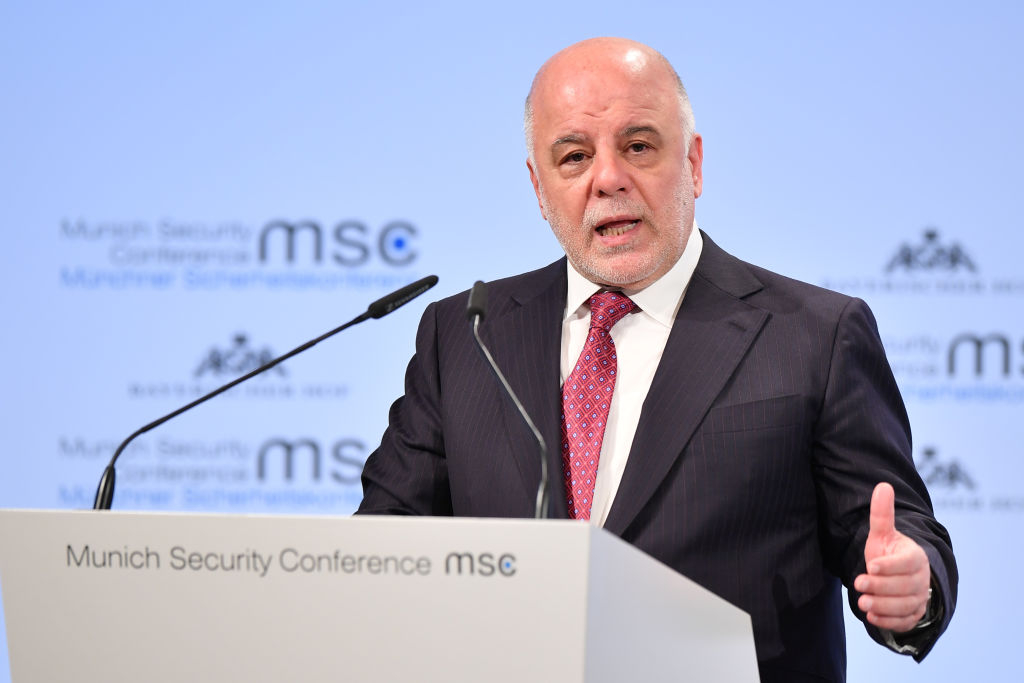
Prime Minister Haidar al-Abadi's "Victory" list also failed to impress, partly because it tried to build a cult of personality around its leader as the "conqueror" who defeated ISIS.


In the recent Iraqi election, the "Victory" list of Prime Minister Haidar al-Abadi (pictured) failed to impress, partly because it tried to build a cult of personality around its leader as the "conqueror" who defeated ISIS. (Photo by Sebastian Widmann/Getty Images)

This election also highlighted the limits of influence that the mullahs of Najaf could exert. The principal figure among them, Grand Ayatollah Ali-Muhammad Sistani, refused to endorse any "list" and only called on voters to chase away "corrupt and selfish politicians." (He couldn't vote because he is an Iranian citizen.) Most other mullahs also stayed in the side-lines, conscious [t]hat most Iraqis look to mullah-dominates system in Iran as a warning not as a model.

Despite higher voter turnout, the political landscape in the Kurdish Autonomous region has also changed with parties backed by Iran losing support while, paradoxically, those with closer ties to Turkey maintaining their position. Overall, however, Iraqi Kurds still represent a reservoir of support for the United States, provided Washington wishes to play a leading role in Iraq.

Despite attempts by sections of Western media to invent a new imaginary victory for the Islamic Republic in Iran, the Iraqi election showed that a majority of Iraqis resent Tehran's attempts at intervening in their affairs. More than two-thirds of the newly elected members of the next parliament are either openly hostile to Iranian "meddling" or insist that relations with Iran should not go beyond good-neighborly behavior.

Last Tuesday, General Qassem Soleimani, head of the "Jerusalem Corps" and in charge of "exporting revolution," flew to Baghdad in a forlorn attempt at stitching together a coalition subservient to Tehran. However, he may have just added to his string of his political failures in Lebanon and Syria.

This does not mean that Iran is scripted out of Iraqi politics. That is some away off, although the process could be accelerated by the Khomeinist regime's own crisis. Thus, the next prime minister, and hence Cabinet, may still need a wink and a nod from Iran and the United States following a pattern set by both the George W Bush and Barack Obama administrations.

President Donald Trump may want to change that pattern, as he has done with some other policies inherited from his predecessors. He could aim at excluding Iran. But that would require a genuine and strong American commitment of the kind that helped Federal Germany, Japan, South Korea and Taiwan, among others, transform themselves into modern democracies.

The chief lesson of this election is that a majority of Iraqis wish to focus on their national identity rather than ethnic and sectarian divisions. Before the end of term for the newly elected parliament, Iraq would mark the centenary of its re-emergence as a nation-state after the fall of the Ottoman Empire. My hope is that Iraqis will start preparing for that great occasion to prove wrong those who opposed their liberation.
This article was originally published by Asharq al-Awsat

Amir Taheri,  formerly executive editor-in-chief of Iran's premier newspaper, Kayhan, before the Iranian revolution of 1979, is a prominent author based on Europe. He is the Chairman of Gatestone Europe.

Source: https://www.gatestoneinstitute.org/12332/iraqi-election

Follow Middle East and Terrorism on Twitter

Copyright - Original materials copyright (c) by the authors.
Will the Mullahs' Regime See Its 40th Anniversary? - Boris Gulko


by Boris Gulko

The future of the Islamic Republic of Iran in the light of recent events is extremely bleak.


Until recently, Iran was lucky. It was approaching domination in the Middle East. In addition to Lebanon, Iran controlled Iraq, Syria, and the Iranian client has been successful in the civil war in Yemen. A common idea is needed to unite the people. In this, the leaders of Iran followed the path of the Third Reich, choosing the Jews to act as the common enemies as the uniting element. One can also see a mystical connection between Iran and the Reich. After all, the "true Aryans" by definition are the Persians. Hitler was an impostor.

The regime's first serious acts of war against the Jews were two terrorist acts organized by the Iranian Embassy in remote Buenos Aires – on March 17, 1992 against the Israeli Embassy, when 29 were killed and 242 wounded, and on July 18, 1994 in the Jewish community center, with 85 killed and more than 200 wounded. All the children in the kindergarten located in this center perished.

The world reacted to these atrocities indifferently. Then the Iranian ayatollahs set a closer and larger goal – the "Zionist entity" itself. They surrounded Israel from all sides. The first battles went well for Iranian supporters.

In the north of Israel, the second Lebanon war with the Lebanese Shiite organization Hezb'allah took place in July-August 2006, lasted 34 days, and ended in a draw. Every shot of Israeli artillery was registered by lawyers. The rockets of Hezb'allah, based in private houses, were considered inviolable. The Israeli leadership several times set the date of invasion of its troops, then postponed it. Finally, the UN Security Council announced a ceasefire.

The next front of the war with Israel formed in the south of Israel. Hamas, equipped by Iran, launched thousands of rockets against Israel. Two IDF operations – "Cast Lead" (from December 27, 2008 to January 18, 2009), and "Cloud Pillar" (from November 14 to November 21, 2012) to defeat the Hamas did nothing of the sort.

The third, most serious anti-Israeli front, according to the mullah's plan, was created in Syria. The Iranians made a major contribution to the defeat of the Sunni ISIS. Alawite Assad's regime was rescued, together with their client Hezb'allah, and prepared Syria as a base for aggression against Israel. According to estimates, about 20 billion dollars freed by Barack Obama went to create in Syria more than 50 military facilities – disguised bases for launching missiles, reconnaissance and command posts, weapons storage, radars, and other military equipment. These actions were ignored in international circles. Then, instead of the Islamists and their patron Obama, unexpectedly appeared an unpredictable Trump.

The rapid developments of the last days, similar to the development in a fascinating novel, were unexpected by everyone. They began when, at the end of April, at night, unknown aircraft (unknown only for those without imagination) bombed a base with 200 Iranian missiles in Syria. Some Iranians were killed, among them, a general.

The world did not have much time to react to this unprovoked attack, because on May 1st, the Holiday of Solidarity of Workers, Israeli Prime Minister Benjamin Netanyahu arranged a grand show in Jerusalem. Before the cameras of all the major news agencies in the world, he unveiled half a ton of secret documents stolen in Tehran, proving that everyone knew that Iran was working on nuclear weapons. How such an operation was carried out can't be imagined. Such a heist would be equal to stealing Lenin's sarcophagus from the Kremlin Mausoleum and putting it on display in a middle of Khreshchatyk, Kiev's main street.

The U.S. responded to the disclosure of Netanyahu by terminating the Obama-Iran "agreement" (the Senate never approved this "treaty").

Two successively arrogant actions of the Zionists demanded retribution. Iranian President Hassan Ruhani, however, felt uneasy and leaned toward silently swallowing the bitter pill. But the head of the Revolutionary Guards, General Mohammad Ali Jafari, insisted on a reciprocal action to save face. The night after the celebration of Victory Day in Moscow with Putin and Netanyahu on a visit there, with the military orchestra performing on the Red Square the anthem of Israel "HaTikvah," the Iranian troops fired on Israel an almost timid volley of 20 missiles. Sixteen of them, fired at open spaces, landed in Syria, the remaining four were shot down by the Israelis. It seems that the Iranian military wanted to say with this attack: "It's nothing personal, we just want to show that we are men too and can't be humiliated constantly at will."

The Israelis were preparing for such a turn, and they didn't miss the opportunity. Almost immediately they conducted a massive bombing of all Iranian military facilities in Syria. It was, according to experts, Israel's largest military operation since the Yom Kippur War of 1973. All the Iranian military equipment mentioned above, on which 20 billion dollars was spent, was turned into a heap of scrap metal.

After that, Israel complained to the UN about Iran's missile attack, and Britain, France and Germany condemned Iran for this attack.

Iran's response was modest. They distributed a photo of their supreme leader Ayatollah Khameini, reading the Farsi translation of the anti-Tramp book Fire and Fury. It seems that the Trump opposition has acquired a new member. I doubt that it's a valuable addition.

The future of the Islamic Republic of Iran in the light of recent events is extremely bleak. According to polls, 75% of Iranian youth are opposed to the authorities. They are accused of squandering the defrosted Obama's money for external adventures to the detriment of the urgent needs of the Iranians. Iran's finances suffer from monstrous inflation. The euro exchange rate was 70 thousand rials to one , and after recent events the rial lost another 40% of its value. Now the threat of new and heavy economic sanctions is hanging over the Iranian economy. The population of Iran is well educated – much better than in neighboring countries, and tired of destructive economic consequences of Islamist ideology.

But the main thing is that the authorities have become an object of ridicule. A no longer fearful public is openly mocking them. In recent years, there have already been two major uprisings against the mullahs, and a third is expected. The WSJ reported on May 6 on "hundreds of recent outbreaks of labor unrest in Iran." Bret Stevens at the New York Times concludes: "The conditions that led to the so-called "green movement of 2009" arose in Iran again."

The most sensitive of non-U.S. observers predict a change of power in Tehran. Caroline Glick of the Jewish Press suggests: "The United States wants not only to review the deal with the mullahs how to change the regime... Strikes, demonstrations, riots and other expressions of popular disgust towards the regime are frequent in Iran." Although the authorities have nowhere to retreat: "If the internal opposition gets power, the current leaders will be hanged – they will not be able to leave the country, because they have nowhere to run."

Melanie Phillips in the London Times asserts: "All efforts should now be directed at encouraging and supporting the Iranian people so that they can topple their leaders."

It can be hoped that to the question: "whether the IRI regime will exist before its 40th anniversary," we will get an answer – no, it will collapse beforehand.

Translated by Alla Axelrod.

Boris Gulko

Source: https://www.americanthinker.com/articles/2018/05/will_the_mullahs_regime_see_its_40th_anniversary.html

Follow Middle East and Terrorism on Twitter

Copyright - Original materials copyright (c) by the authors.

Political earthquake in Iraq threatens to thwart Iran's plans - Yochanan Visser


by Yochanan Visser

Firebrand anti-Iran control cleric emerging as winner of Iraqi elections.


Moqtada al-Sadr
Moqtada al-Sadr
Reuters
Iran’s Iraq project is in danger now that a Shiite cleric (sic) is surprisingly emerging as the big winner in the country’s first election since the rise and defeat of Islamic State.

After Iraq’s Independent High Electoral Commission (IHEC) released preliminary results of the May 12 election it appeared the Sa’iroun list of the maverick Shi’ite cleric Moqtada al-Sadr was emerging as the winner with the Iran-backed Badr (Conquest) Party, which is in fact a paramilitary organization, in second place.

Al-Sadr’s Sa’iroun list (marching towards reform in English) consisted of an odd coalition of his Shiite supporters, secularists and the Iraqi Communist Party.

The IEHC reported on Wednesday Sa’iroun won in 6 of Iraq’s 18 provinces while the final results will be released later on Thursday.

After the news of his unexpected win broke al-Sadr made clear he would not form a government coalition with the Badr Party and with former Iraqi Prime Minister Nuri al-Miliki.

This drew the ire of Iran which announced prior to the Iraqi election it would not allow “liberals (secularists) and communists” to govern Iraq.

The Islamic Republic immediately dispatched Qassem Soleimani, the commander of the Quds Force of the Iranian Revolutionary Guards Corps, to Bagdad in an attempt to form a new cabinet that would have the approval of the Mullahs in Tehran.

Soleimani is a friend of Hadi al-Ameri the leader of the Badr Party who was Tehran’s preferred candidate to form a new Iraqi government.

Al-Ameri is also one of the commanders of the Hash al-Shaabi umbrella organization of predominantly Iranian-backed Shiite militias in Iraq which was integrated in the Iraqi army at the end of 2016 and was more than instrumental in winning the war against ISIS in the country.

Soleimani is trying to reach consensus about the forming of a Shi’ite dominated coalition, according to an Iraqi official who serves as an intermediary between al-Sadr and other factions.

The firebrand cleric is against Iran’s growing dominance over Iraq and campaigned on a nationalist platform which tapped into growing public discontent with the corrupt political establishment in the country.

Al-Sadr, whose Mahdi militia also fought the U.S. army during the American occupation of Iraq, reacted strongly against Iran’s meddling in internal Iraqi affairs and announced on social media he "rejected any foreign intervention in the efforts to form a new government."

In another message he announced he would work with others to form a government “as long as they are not occupiers of our country, both for occupation and for domination."

Soleimani is now trying to form a coalition without Sadr, who hates the Iranians, and works to isolate the Shi’ite cleric but chances are slim he will succeed, according to insiders in Iraqi political affairs.

Al-Sadr on the other hand, is calling upon other factions to meet with him and said his door was open and his hands extended to “ build our Iraq and form a government of honest and patriarchal technocrats."

The question is now what Iran will do when al-Sadr succeeds to form a government without the Badr Party thereby thwarting Tehran’s plan to turn Iraq into another client state in the Middle East.

The first indication of what might be coming was the bombing of two offices belonging to the Sadr organization and other Shiite groups which are aligned to the Iraqi cleric.

“One bomb exploded at an office of the Saraya al-Salam or military wing of the Sadrist movement. The other bomb struck at an office belonging to a religious organization, Malek al-Ashtar, linked to the Sadrists,” the well informed Anti-War blog reported on Wednesday.

No casualties were reported since the offices were empty at the time of the bombings.

The United States, meanwhile, reacted positively to the preliminary results of the election in Iraq.

State Department spokeswoman Heather Nauert said she was glad the election had been peaceful and said the fact that the voting had been “relatively free of violence is certainly a pretty amazing feat.” 

Nauert said she was confident the Iraqis were “likely to have to form some sort of coalition government,” and indicated the State Department wasn’t much concerned by Ira
n’s openly meddling in the forming of a government in the war-torn country.

“Iran’s reach” into other countries is “always a concern of ours,” Nauert said adding that the U.S. has “a great deal of trust and faith in the Iraqi people.”


Yochanan Visser is an independent journalist/analyst who worked for many years as Middle East correspondent for Western Journalism.com in Arizona and was a frequent publicist for the main Dutch paper De Volkskrant. He authored a book in the Dutch language about the cognitive war against Israel and now lives in Gush Etzion. He writes a twice weekly analysis of current issues for Arutz Sheva.

Source: https://www.israelnationalnews.com/News/News.aspx/246199

Follow Middle East and Terrorism on Twitter

Copyright - Original materials copyright (c) by the authors.

Haley: Another shameful day for human rights - Elad Benari


by Elad Benari

U.S. Ambassador to the UN blasts UNHRC after vote to establish commission to examine Israeli "war crimes" in Gaza.


Nikki Haley
Nikki Haley
Reuters
U.S. Ambassador to the UN Nikki Haley on Friday blasted the UN Human Rights Council (UNHRC) after it voted to establish a Commission of Inquiry to examine possible war crimes committed by Israel during the recent confrontations on the Gaza border.

“At a time when Venezuela lurches toward dictatorship, Iran imprisons thousands of political opponents, and ethnic cleansing has taken place in Burma, the UN’s so-called Human Rights Council has decided to launch an investigation into a democratic country’s legitimate defense of its own border against terrorist attacks. It is another shameful day for human rights,” said Haley.

The resolution voted upon earlier Friday was approved by a vote of 29-2, with 14 abstentions, following a day-long special session in Geneva. The U.S. and Australia were the only two countries that voted against the resolution.

Germany, Hungary, Japan, the Republic of Korea, Croatia, Ethiopia, Georgia, Kenya, Panama, Rwanda, Switzerland, Togo, and Britain abstained. Ukraine and Mongolia were not present at the time of voting.

Israel's Ambassador to the United Nations, Danny Danon, also condemned the move earlier on Friday.

"The fact that this shameful decision was made even after Hamas officials admitted that the vast majority of those killed were terrorists proves, once again, that nothing can separate this Council from its hatred of Israel. The day this Council investigates the war crimes of Hamas is the day it can be called the Human Rights Council," said Danon.

The violent riots on the Israel-Gaza border, dubbed the “March of the Return”, started on March 30, before the embassy relocation, and have been openly encouraged by Hamas.

Earlier this week, one of the leaders of the group openly admitted that most of the Gazans killed by Israeli fire during border protests and clashes were members of the terrorist group.


Elad Benari

Source: https://www.israelnationalnews.com/News/News.aspx/246200

Follow Middle East and Terrorism on Twitter

Copyright - Original materials copyright (c) by the authors.

Erdogan Unhinged - Ari Lieberman


by Ari Lieberman

The erratic behavior of Turkey's leader calls for a decisive response.


In the past twenty-four hours, Turkey’s increasingly unhinged Islamist leader, Recep Tayyip Erdoğan, has taken the following actions and made the following pronouncements; 
  • Recalled its ambassadors to the United States and Israel;
  • Expelled Israel’s ambassador to Ankara, Eitan Na’eh and then attempted to humiliate him at the airport by subjecting him to intrusive scrutiny;
  • Expelled Israel’s consul general in Istanbul, Yossi Levi Sfari;
  • Hosted the rabidly anti-Zionist and anti-Semitic fringe group known as Neturei Karta and pronounced them to be “representatives of the Jewish community.” The Neturei Karta is a reviled, marginal cult numbering no more than perhaps 1,500-2,000 members worldwide. They are infamously known for their shamefully submissive and obsequious conduct before the enemy. 
  • Voiced support for Hamas, a terrorist organization recognized as such by most of the world’s civilized community;
  • Referred to Israel as a “terrorist state,” and;
  • Called upon the Muslim world to unite against Israel and downgrade ties.
I recently noted 12 reasons why Turkey should be expelled from the North Atlantic Treaty Organization forthwith. I can now come up with a half-dozen more. Turkey under Erdoğan has transformed itself into the Sunni version of Iran. It is expansionist, having invaded two of its neighbors within the past two years; has little regard for human rights, little regard for press freedoms, treats the judiciary (which has been stacked with Erdoğan shills) as a tool of oppression and routinely snatches and detains foreign nationals on contrived charges for future bargaining positions.

But expelling Turkey from NATO is insufficient. The United States (I expect little from our craven NATO allies) can and must do more to punish Turkey for its outrageous, pariah-like conduct. First, working with Congress, President Trump should formally recognize the historic tragedy of the Armenian genocide, the systematic extermination of 1.5 million Armenians. The Turkish government has routinely denied its role in committing this genocide, disputing the numbers killed and perniciously claiming that those who were murdered or starved to death were simply casualties of war. Turkey must acknowledge its sole responsibility, and formal U.S. recognition of the Armenian genocide would provide the Turks with the necessary jolt.

Second, the U.S. should consider imposing a partial arms embargo on Turkey. Turkey is slated to receive the F-35 fifth generation fighter. That deal should be nixed immediately on humanitarian and security-related grounds. The F-35 contains top secret stealth and other technologies that must be safeguarded. The Turks have proven to be untrustworthy, having betrayed intelligence assets to Iran. Moreover, they’ve been caught red-handed transferring banned electronic components to the Islamic Republic. The embargo should also include restrictions on the sale of attack helicopters and spare parts for the Turkish air force, which is being utilized by the Turks to bomb and strafe Kurdish civilian areas within Turkey and Syria. In Afrin, the Turkish air force bombed militias allied with coalition forces in the fight against ISIS, without regard for U.S. concerns.

Concurrent with the arms embargo, the administration should increase military assistance to Greece, which is the recipient of frequent Turkish aggression in the form of ship rammings and airspace intrusions. We must ensure that Greece as well as Cyprus can defend themselves against Turkish expansionism in the Mediterranean. Recent gas findings in the eastern Mediterranean along with Greek-Israeli-Cypriot cooperation in energy exploration, marketing and infrastructure, brings urgency to the matter. 

For years, the Turks have waged an unrelenting campaign of terror against their Kurdish minority. It is estimated that since 1984, more than 40,000 people (mostly Kurdish civilians) have died in Turkey’s merciless campaign of terror against the Kurds. The Kurdistan Workers' Party (PKK), the guerrilla group waging a campaign for greater Kurdish autonomy in Turkey is currently listed as a Foreign Terrorist Organization (FTO) by the U.S. State Department. The State Department should give serious consideration to de-listing the PKK from the FTO categorization but that action would largely depend on whether the PKK can refrain from targeting civilians.

Finally, the U.S. should declare the IHH, the Turkish-backed non-government organization that refers to itself as a “humanitarian relief foundation,” as a terrorist organization. The IHH is a Muslim Brotherhood offshoot with close links to Hamas. It was responsible for organizing the 2010 flotilla in which its ships tried to break the Israeli naval quarantine around Gaza. Israel maintains this quarantine to prevent arms and other contraband from reaching Hamas. Israel intercepted the flotilla and during the course of the operation, its naval commandos boarded the Mavi Marmara (the largest of the blockade-running ships). They were instantly attacked by IHH terrorists armed with clubs, knives and “hot weapons.” The commandos killed 10 of the Turkish assailants in self-defense. The IHH has been placed on Israel’s terror watch list and the group has been banned from the country.

In 2010, a bipartisan group of 87 senators penned a letter to Barack Obama requesting that the IHH be investigated and asked the administration to consider placing the IHH on the FTO list. The Obama administration took no action. The time has come for the Trump administration to list the IHH as an FTO, which would have an immediate negative impact on the group’s financial situation and hamper its fundraising and logistical activities.

Like all bullies, Erdoğan must be made to understand that his words and actions have consequences. It is doubtful that these actions will sway this megalomaniac but it may make Turks understand that their leader is leading them into the abyss. 


Ari Lieberman is an attorney and former prosecutor who has authored numerous articles and publications on matters concerning the Middle East and is considered an authority on geo-political and military developments affecting the region.

Source: https://www.frontpagemag.com/fpm/270209/erdogan-unhinged-ari-lieberman

Follow Middle East and Terrorism on Twitter

Copyright - Original materials copyright (c) by the authors.
America's Missile Defense Programs - Part I - Peter Huessy


by Peter Huessy

This missile defense capability gives the President of United States, for the first time, the strength needed to defend the country from ballistic missile threats. — Lt. Gen. (ret.) Trey Obering, former Director of the Missile Defense Agency, 2004-2008.

With the American withdrawal from the Iran nuclear "deal" and the President's on-again-off-again forthcoming summit with the leader of North Korea, missile threats to the United States and its allies are very much a concern.

Iran last week for the first time launched rockets from Syria aimed at Israel, which used Iron Dome defenses to shoot them down.

And as part of any nuclear deal with North Korea, the US and its allies are seeking to eliminate not just North Korean nuclear weapons, but also strictly limit the North Korean missile arsenal.

What, then, is the status of America's missile defense programs, particularly the system of interceptor missiles and radars that now protect the American people -- irrespective of the outcomes of the summit in Singapore between the President and the head of North Korea or possible future negotiations with Iran?

A frequent refrain of U.S. missile defense critics has been that America's ground-based interceptors (GBI's) in Alaska and California are so limited to be of little use in protecting against rogue state missile threats such as from North Korea and Iran. On the other hand, these same critics simultaneously claimed the U.S. missile defenses were potentially so effective against China and Russia as to dangerously undermine deterrence and international stability.

Of course, U.S. missile defenses cannot be both ineffective against small threats but effective against large threats. This confusion was addressed by retired Lt. Gen. Trey Obering, the former Director of the Missile Defense Agency from 2004-2008 in a recent speech.

Obering said the reason the US initially provided a "limited missile defense" is because "that was all we were able to do."

Obering noted that the 1972 ABM Treaty was in effect from Reagan's 1983 SDI speech through 2002. No US missile defense system protecting the American people was legally possible. Missile defense critics accepted this, and bafflingly repeated that keeping the American people 100% vulnerable to enemy ballistic missiles was the "cornerstone to strategic stability".

Just think: for a significant number of "expert analysts", giving Iran and North Korea the ability to blow us all to kingdom come was considered acceptable. In short, the thinking was that mutual vulnerability would give rise to mutual deterrence, as it is meant to do with Russia and China.

Fifteen years ago, prior to the deployment of the Ground Based Interceptor (GBI), system in California and Alaska, the U.S. had no defense against long-range missiles. U.S. sea-based interceptors were also not deployed on ships because testing had not been completed. And the PAC-3 Patriot missile defenses had never been deployed operationally.

In summary, said Obering, in late 2003 and early 2004, the U.S. had no missile defense except a very small number of old Patriot missiles, not even initially designed for missile defense.

Again, as General Obering recalled, "There were people in this country that were very, very happy with that. They thought missile defense was destabilizing. They thought it was too technically hard to do. And they thought that it would be political Armageddon" if missile defenses were deployed.

Despite the strong opposition to missile defense in the Senate, however, the Congress, along with the administration pf George W. Bush, the Missile Defense Agency, the aerospace industrial partners, and the American Combat Commanders, have been responsible for a remarkable production and deployment of missile defense capabilities beginning in the summer of 2004.

"When we began to deploy these capabilities, were they perfect?" Obering continued. "No, they were not, and we knew they weren't perfect. But the critics kept saying they should not be deployed unless they were perfect."

Even when the tests proved that the defenses worked, critics alleged that the tests were rigged.

The important thing was to get some military utility into the hands of the war fighters and then improve the material going forward. "That's why," Obering explained, "the GBI interceptors in Alaska and California in the ground today are not the same ones the United States put out there before." In fact, using these upgraded interceptors, the United States has intercepted five of the past six targets, an 80% success rate.

Now says General Obering, the U.S. has built upgraded early warning radars and new X-band radars. These new technologies are in Alaska, California, the United Kingdom, Greenland, Massachusetts, Japan, and Israel. There is, in addition, an extremely powerful sea-based X-band radar that sits in Hawaii. All help identify and track attacking missiles.

The United States also has hundreds of mobile land-based interceptors and sea-based Standard Missile 3s on Aegis BMD-capable ships, including interceptors at the Aegis Ashore site in Romania, with another site coming in Poland.

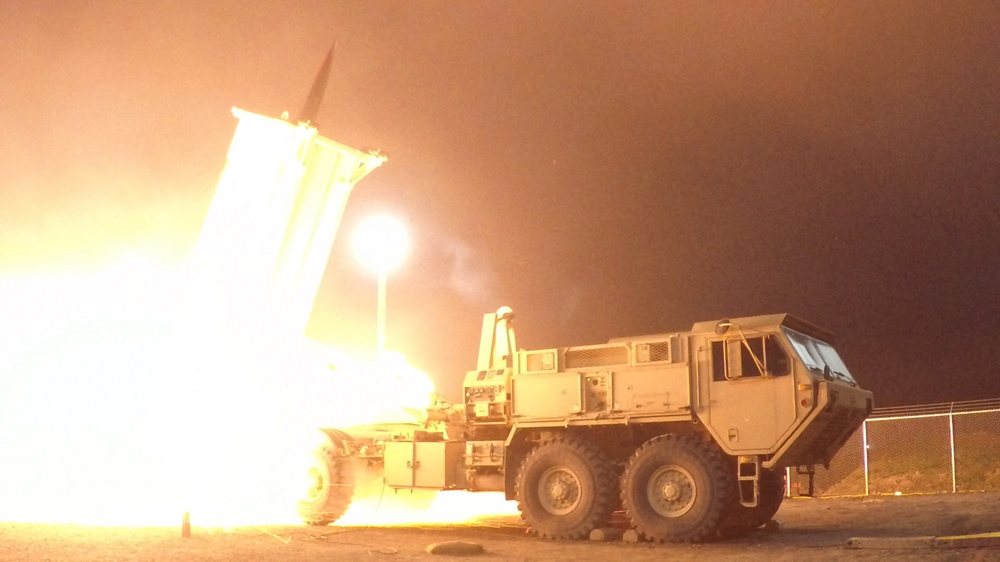
The THAAD (Terminal High Altitude Area Defense) system, now deployed in Korea, could not hit anything when it was first tested, according to General Obering. The United States had failure after failure. But then the U.S. figured out the missile technology; now the THAAD has the most successful test record of any ballistic missile in the U.S. inventory.

Surprisingly, even when an American missile defense system had no successful test record upon which to rely, the United States was able to use it in real combat. For example, said Obering, during Operation Iraqi Freedom, despite having no certified missile defense available, when Army Major General Stan Green said he needed help, General Obering, with just a handshake, got Patriot-3 sent to the theater anyway. It was successful in three intercepts of Iraqi missiles.

Now, some 14 years after the first deployment of missile defense interceptors, the United States and its allies -- particularly Israel, a number of Gulf states, Japan, and the Republic of Korea -- have deployed world-wide thousands of interceptors of all kinds. These interceptors include a GBI system in Alaska and California. The system is slated to grow from 44 to 64 and then 100 interceptors.

Today, unlike the pre-2004 days, should an enemy of United States launch an ICBM at Los Angeles, the U.S. military will swing into action. A National Guard unit in Alaska will track, find and destroy whatever warhead is coming by firing the necessary GBI at the incoming missile.


A Terminal High Altitude Area Defense (THAAD) interceptor is launched from the Pacific Spaceport Complex Alaska on July 30, 2017. (Image source: U.S. Joint Chiefs of Staff)

According to Obering, this missile defense capability gives the President of United States, for the first time, the strength needed to defend the country from ballistic missile threats. It took the United States many years to get where it is now, but the U.S. finally took that important step with an initial deployment of missile defenses in 2004. In January 2018, emergency supplemental funding was added to the defense budget to upgrade and improve the Alaska missile defense system.

Dr. Peter Huessy is President of GeoStrategic Analysis, a defense consulting firm he founded in 1981, as well as Director of Strategic Deterrent Studies at the Mitchell Institute for Aerospace Studies.

Source: https://www.gatestoneinstitute.org/12323/missile-defense-programs

Follow Middle East and Terrorism on Twitter

Copyright - Original materials copyright (c) by the authors.

The Homeless Hole That Ate Los Angeles - Daniel Greenfield


by Daniel Greenfield

What’s a few billion more for social justice?


The homeless are everywhere in the City of Angels. The retail strip of any neighborhood, no matter how glitzy, will host at least one wandering schizophrenic cursing random pedestrians and the sky. Colorful tent cities grow in the shade of blighted overpasses like poisonous mushrooms. There are homeless encampments on the lawn at City Hall across from the LAPD HQ. Near Venice Beach, the smell of ordure can be overpowering, and last year the befouling of public streets led to a Hepatitis A outbreak. The hard rain that’s falling isn’t coming from the cloudless sky: it’s streets being power washed with bleach.

Walk down a street in the trendier parts of Los Angeles and you’re more likely to spot marijuana dispensaries than churches. The ubiquitous green cross is everywhere. Its faithful believe in only one higher power that they can’t smoke. So as the homeless problem grew, they turned to government.

And to higher taxes.

Proposition HHH was going to solve the homeless crisis by hiking property taxes to raise $1.2 billion. The money would be used to build housing for the homeless. $1.2 billion could house all the homeless.

Couldn’t it? If it couldn’t, it was part of a $4.6 billion package of homeless tax hikes. There was Proposition H which added to the already hefty sales tax. Los Angeles voters backed that one too.

But instead the number of homeless increased faster than the supply of homeless housing. By ’18, the number of homeless was up to 58,000 from 32,000 in 6 years. Increasing subsidies to the homeless only increased their number. As usual, government social welfare was generating more of the problem.

And, even more predictably, no amount of social services spending was ever enough. The annual shortfall was estimated this year at $270 million. The new projected cost hovers at $628 million. 

The Measure H sales tax wasn’t supposed to run a deficit (but like every government program ever, it was bound to) until the fourth year when costs would exceed revenue (necessitating more tax hikes.)

But the tax and spend holiday came early instead because government excels at spending money.

The homeless housing being approved costs an average at $479,000 per unit. Two run at $650,000.

That’s not homeless housing: it’s homeless luxury condos. And it’s being paid for by the same middle class that is being squeezed out of Los Angeles by the coalition of Democrat politicos and lefty activists.

Total development cost for Measure HHH has hit $869 million.

Why is “affordable housing” so unaffordable? One reason is that, as usual, it’s also kickbacks to a variety of special interest groups. If you want incentives for building affordable housing, you have to pay union wages. And that raises costs by 30% making building affordable housing… unaffordable to actually build.

The linkage fee, due in 2019, is the latest brilliant plan to solve the housing crisis by taxing housing. The $100 million it raises will go into the same gaping hole where shortfalls twice as high as that just vanish.

The $4 billion bond in 2018 is just more money leaking into an unpluggable money hole.
Government regulations raise the cost of housing so that only luxury condos are profitable. And then tax the luxury condos to build affordable housing which end up costing luxury condo prices. The middle class flees a city and state where it can’t afford to buy a house. And after tax reform’s impact on the wealthy in high tax states, the exodus of those who have been subsidizing this is also underway. 


And so the plan to tax luxury condo buyers to build luxury condos for the homeless may hit a snag.

That won’t however stop voters from voting for them.

California’s top-two primaries are the single greatest act of voter suppression today. The primaries make it futile for Republicans to participate in elections. When there isn’t a Republican on the ballot in the general election, the only voters who show up are lefty Democrats motivated to vote against more centrist Democrats. And that swings the electorate to a demographic that will vote for any lefty plan.

But it’s the sense of crisis that moved voters to pass multiple tax hikes and spending packages.  Public officials and activists cried, “crisis” and got everything that they wanted. But they were the ones who created the crisis. And every taxpayer dollar that they got was dedicated to making the crisis worse.

All the plans to fight homelessness only attracted more homeless. That’s the reality behind the mysterious massive increase in the homeless population. Whether it’s in Los Angeles or New York, when lefties begin a major campaign to fight homelessness, the number of homeless suddenly increases.

There are a variety of reasons for this phenomenon, including newfound motives by activist groups to discover more homeless once there’s a funding bonanza. And the programs bring in homeless from outside the area or incentivize people who aren’t homeless to claim the status to get the benefits.

At the rate of $479,000 per unit, trying to house every homeless vagrant will quickly outpace any of the old tax hikes and revenue plans. When 26,000 new homeless people can show up in 6 years, building housing for all of them would cost $13 billion. And housing them would require permanent subsidies.   

The last budget came in at a little over $9 billion. The proposed 2018-19 budget is $9.9 billion and includes $430 million in homeless spending. That’s up from $178 million last year. To put that into perspective, Los Angeles will spend less than $300 million on street and road infrastructure that is a core function of municipal management. 5% of the budget is going to a tiny fraction of the population.

And yet social welfare spending on that tiny fraction can quickly eat up much of city spending. And then turn into what Mayor Garcetti dubbed an, “almost undefeatable spout.”

The “undefeatable spout” manifests itself in lefty social welfare programs. The spout bursts forth because individual maladjustment is treated as a social problem that is the fault of society. Subsidizing the misbehavior makes it worse while corruption and incompetence gobble up the cash. The amounts actually needed outstrip expectations. And the problem is never solved because it’s never addressed.

Instead it’s enabled, coddled, subsidized, encouraged and transformed into a proud victim identity. And a few years later, it’s even worse than ever. But what’s a few billion more for social justice?

Homelessness is not a social problem. Mostly it’s due to untreated mental illness and drug abuse. There are people who became homeless after suffering life setbacks, but it might have been better not to price them out of their homes. Government regulations have made Los Angeles one of the more expensive places to build housing. Adding to the cost of housing will only price more people out of their homes.

The left’s idea of helping the homeless does them no favors.

Decriminalizing abusive behaviors like public urination and defecation led to a Hepatitis A outbreak. Taxing homes will raise housing prices higher so that government housing becomes the only option for more people. And that will further increase demand for housing beyond anything that can be met.

And then the “undefeatable spout” eats your budget.

Los Angeles is only getting started. Billions more will be thrown at the homeless problem. The problem will get worse. New tax hikes and spending measures will roll out every year. And there will be more schizophrenics wandering the streets or fouling the beach. The same homeless hole that’s eating San Francisco has camped its colorful tent in Los Angeles. And isn’t leaving no matter how much is spent.


Daniel Greenfield, a Shillman Journalism Fellow at the Freedom Center, is a New York writer focusing on radical Islam.

Source: https://www.frontpagemag.com/fpm/270214/homeless-hole-ate-los-angeles-daniel-greenfield

Follow Middle East and Terrorism on Twitter

Copyright - Original materials copyright (c) by the authors.