Tuesday, April 8, 2025

Supreme Court slapdown of Judge Boasberg sends message to federal judges on overreach - Ben Whedon


by Ben Whedon

In a 5-4 decision, the justices opted both to overturn the Boasberg TRO halting Trump’s enforcement of the AEA, but also declared the D.C. District of Columbia an inappropriate venue for the case in light of the convicts’ detention in Texas.


The Supreme Court decision reversing U.S. District Judge James Boasberg’s block on President Donald Trump’s deportation of gang members under the Alien Enemies Act sent a stern message to federal judges nationwide that overreach and venue shopping won't be tolerated.

The Trump administration has witnessed a record number of temporary restraining orders (TROs) against its policies, with lower-level federal judges imposing sweeping blocks on executive actions, notably those involving immigration.

The Department of Justice has repeatedly urged the Supreme Court to narrow the scope of federal injunctions or to clarify the extent of lower court judges’ authority to interfere in executive branch operations.

In a 5-4 decision, the justices opted Monday both to overturn the Boasberg order halting Trump’s enforcement of the AEA, but also declared the D.C. District of Columbia an inappropriate venue for the case in light of the gang member's detention in Texas.

They did, however, assert that the Venezuelans in custody had the right to challenge their deportations.

“Regardless of whether the detainees formally request release from confinement, because their claims for relief 'necessarily imply the invalidity’ of their confinement and removal under the AEA, their claims fall within the ‘core’ of the writ of habeas corpus and thus must be brought in habeas,” the judges wrote. “The detainees are confined in Texas, so venue is improper in the District of Columbia. As a result, the Government is likely to succeed on the merits of this action.”

“For all the rhetoric of the dissents, today’s order and per curiam confirm that the detainees subject to removal orders under the AEA are entitled to notice and an opportunity to challenge their removal,” they added. “The only question is which court will resolve that challenge. For the reasons set forth, we hold that venue lies in the district of confinement.”

Texas courts are part of the Fifth Circuit Court of Appeals, one of the most conservative courts in the nation. The change of venue represents a partial win for Trump as the courts are far more likely to be receptive to government arguments on immigration authority.

The need for due process, however, will slow the deportation process to a degree. Trump had hoped to use the AEA to speedily remove members of the Venezuelan gang Tren de Aragua, which gained notoriety in 2024 for its takeover of several apartment complexes in Colorado.

Trump did notch a bonus win, however, after Chief Justice John Roberts blocked a deadline Boasberg imposed to repatriate an illegal alien from Venezuela whom the administration sent to El Salvador.

Trump allies acknowledged that the decision represented a victory, but stopped short of celebrating in light of its limited scope.

Sen. Ron Johnson, R-Wis., told Just the News that "this ruling provides only a temporary reprieve in one case among many where partisan Federal District Court judges are throwing up roadblocks to frustrate President Trump's efforts to honor his campaign promise to secure the border and deport illegal immigrants.

"It's welcome, but the Supreme Court needs to do far more to rein in district judges who are exceeding their constitutional authority," he added.

Harvard Law School Professor Emeritus Alan Dershowitz, moreover, opined that "[i]t looks like SCOTUS will rule that Trump has broad substantive power to deport but he must exercise that power within due process constraints."

The decisions on Monday represent one of the first actions from the nation's nine justices to chastise lower courts over forum shopping and the excessive issuance of TROs.

An April 2024 study from the Harvard Law Review found that 96 TROs had been issued since President George W. Bush took office up until the publication date. Sixty-four of those were under Trump’s first term. Biden faced only 14 and Trump’s second term has already exceeded that total.

The administration previously highlighted to the court that "District courts have issued more universal injunctions and TROs during February 2025 alone than through the first three years of the Biden Administration.”

“That sharp rise in universal injunctions stops the Executive Branch from performing its constitutional functions before any courts fully examine the merits of those actions, and threatens to swamp this Court’s emergency docket,” acting Solicitor General Sarah Harris writer in March.

Harris had asked the justices to narrow the scope of several lower court orders blocking Trump’s executive order directing federal agencies to interpret the 14th Amendment as not granting citizenship to the children of illegal aliens.

While the Boasberg case and the challenges to the birthright citizen executive order address different legal issues, the justices’ decision on Monday could signal how they may approach some of the other appeals.

The condemnation of the case being brought in the District of Columbia rather than Texas, for instance, could suggest the court appears poised to take a more cynical view of cases brought in venues traditionally favorable to the party out of power.

The Harvard Law Review study found that 86.5% of the TROs issued from the Bush presidency through 2024 were issued by justices appointed by a president of the opposite party from the one in power at the time.

Some of the more conservative justices previously warned of the need to address the scope of a lower court judge’s authority, with Associate Justice Samuel Alito issuing a scathing dissent in early March in which he raged over the court’s decision to keep in place a lower court order demanding that the administration distribute USAID funds.

"Does a single district-court judge who likely lacks jurisdiction have the unchecked power to compel the Government of the United States to pay out (and probably lose forever) 2 billion taxpayer dollars?” he wrote. “The answer to that question should be an emphatic 'No,' but a majority of this Court apparently thinks otherwise. I am stunned.”

Associate Justice Clarence Thomas, for his part, wrote in 2018 of TROs that "[i]f their popularity continues, this court must address their legality.” The Monday order sidestepped the issue and made no determination as to the legitimacy of TROs in general.

In the meantime, Republican lawmakers have explored alternative means of reining in federal judges absent a Supreme Court decision. Sen. Chuck Grassley, R-Iowa, for instance, has introduced legislation to limit judicial injunctions to the parties in the case, rather than allow them to issue a nationwide rule.

"When a national injunction is put in place, it affects all the other 92 district federal district courts, I should say, court districts throughout the country," Grassley told Just the News.

"It becomes national. We want to limit what the judge can do to that district and to the people before it. And the second thing is, we want it to be appealable very quickly, so if the judge screws up constitutionally, we can do something about it."

 
Ben Whedon

Source: https://justthenews.com/government/courts-law/tuescotus-slapdown-boasberg-sends-message-federal-judges-injunctions

Follow Middle East and Terrorism on Twitter

Full remarks: Netanyahu at the White House - JNS Staff


by JNS Staff

"You stand by us, you’re standing with us, you’re a great, great champion of our alliance and you actually do things that you say you do," said the Israeli premier.


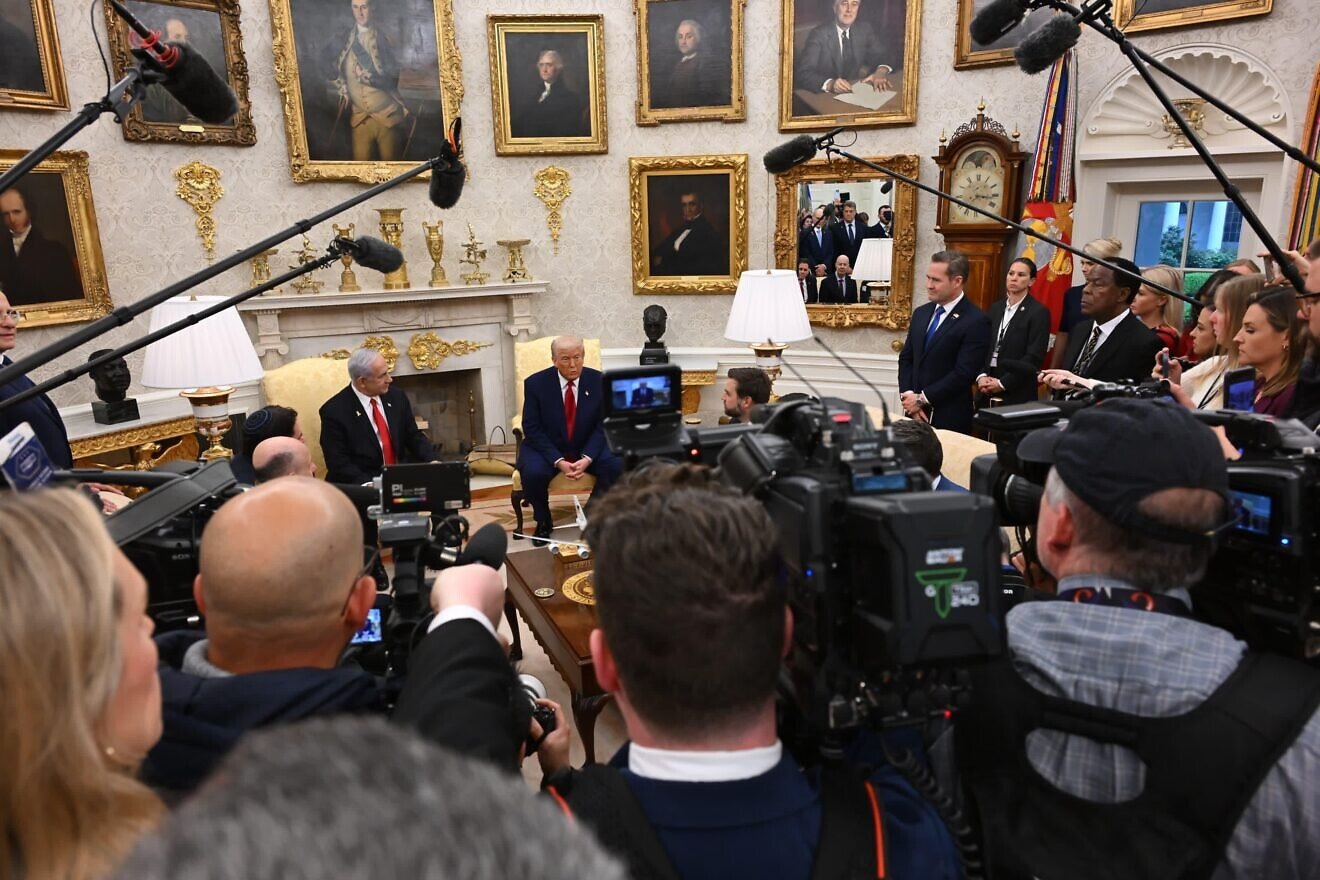
Israeli Prime Minister Benjamin Netanyahu and U.S. President Donald Trump meet in the Oval Office of the White House, April 7, 2025. Photo by Avi Ohayon/GPO.

Below is the full text of the statement delivered by Israeli Prime Minister Benjamin Netanyahu alongside U.S. President Donald Trump at the White House on April 7, 2025:

Thank you, Mr. President. Thank you, Donald.

I want to first thank you for inviting me again to the White House. You’ve been a remarkable friend of the State of Israel. You stand by us, you’re standing with us, you’re a great, great champion of our alliance and you actually do things that you say you do. And I think people respect that enormously. I certainly do, and the people of Israel do, and I think the Jewish people do as well.

We just saw your representative at the Department of Justice fighting antisemitism, standing up for Israel in international forums. I just want you to know from the heart that it’s deeply appreciated.

As you said, we had the opportunity to talk today about many subjects. First, if I can mention tariffs; it’s the subject of some interest today. I can tell you that I said to the president a very simple thing, “We will eliminate the trade deficit with the United States.” We intend to do it very quickly. We think it’s the right thing to do.

We’re going to also eliminate trade barriers, a variety of trade barriers that have been put up unnecessarily. I think Israel can serve as a model for many countries who ought to do the same.

I recognize the position of the United States. It says, you know, we’re allowing other countries to put tariffs on us, but we don’t put tariffs on them. And, you know, I’m a free trade champion but free trade has to be fair trade. And I think that’s basically the position that you have put forward, Mr. President. We are going to eliminate the tariffs and rapidly.

I had the opportunity to speak to [U.S. Commerce] Secretary [Howard] Lutnick yesterday. We talked about how we could affect this quickly, and I hope to bring a solution very quickly. We’re not talking about intentions, we’re not talking about, you know, just words. We’re talking about results. And those results are going to come fast.

We spoke about Gaza. The hostages is obviously a human story of just unbearable agony. I speak to the families. I spoke to them yesterday. I spoke to another one when I was in Hungary before I came here. I speak to them every day, and they’re in agony. The hostages are in agony, and we want to get them out.

Steve Witkoff, who is President Trump’s very able representative, helped us get a deal that got 25 out. We’re working now on another deal that we hope will succeed.

We’re committed to getting all the hostages out, but also eliminating the evil tyranny of Hamas in Gaza and enabling the people of Gaza to freely make a choice to go wherever they want. I mean, they should have that choice.

And the president put forward a vision, a bold vision, which we discussed as well, including the countries that might be amenable and are amenable to accepting Palestinians … have their free choice if they choose to go there. That’s the second thing that we discussed, but the hostages came right on top. 

We also discussed the situation in Syria. We have … we’ve had neighborly relations with Turkey that have deteriorated, and we don’t want to see Syria being used by anyone, including Turkey, as a base for attack against Israel.

Turkey is a country that has a great relationship with the United States. The president has a relationship with the leader of Turkey. We discussed how we can avoid this conflict in a variety of ways, and I think we can’t have a better interlocutor than the president of the United States for this purpose.

Of course, we also discussed Iran. Look, we’re both united in the goal that Iran does not ever get nuclear weapons. If it can be done diplomatically in a full way, the way that it was done in Libya, I think that would be a good thing. But whatever happens, we have to make sure that Iran does not have nuclear weapons.


JNS Staff

Source: https://www.jns.org/full-remarks-netanyahu-at-the-white-house/

Follow Middle East and Terrorism on Twitter

IRS and DHS reach historic deal to aid in pursuit of illegal immigrants subject to deportation - Louis Casiano


by Louis Casiano

The move comes as the Trump administration continues to ramp up its mass deportation efforts that target criminal illegal immigrants


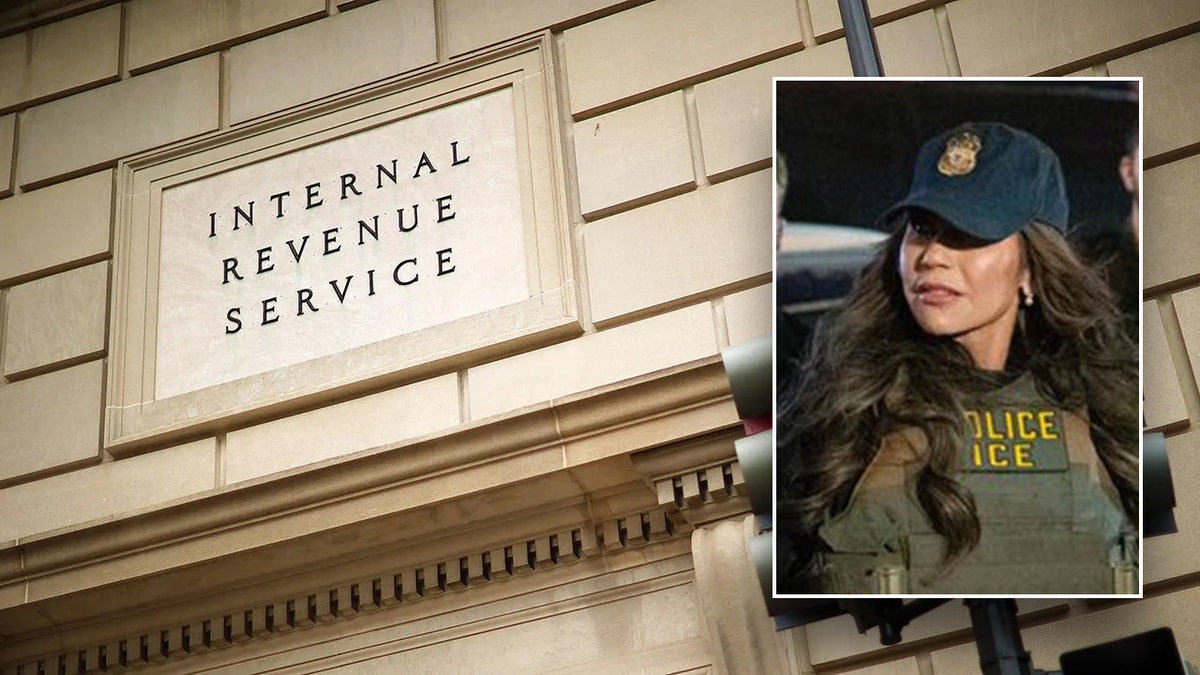
FOX NEWS EXCLUSIVE: The Department of Homeland Security (DHS) and Internal Revenue Service (IRS) have come to an agreement to permit ICE to access taxpayer information to locate illegal immigrants subject to deportation. 

The Trump administration filed a memorandum of understanding late Monday with a court to create guardrails and a process for ICE requests to the IRS to further investigations of criminal illegal immigrants who have failed or refuse to leave the United States 90 days after a judge has issued a final order of removal. 

"The Internal Revenue Service and the Immigration and Customs Enforcement have entered into a memorandum of understanding to establish a clear and secure process to support law enforcement’s efforts to combat illegal immigration," a Treasury Department spokesperson told Fox News Digital in a statement. 

COURT ORDER HALTING DEPORTATION FLIGHTS ‘UNCONSTITUTIONALLY IMPEDES’ EXECUTIVE BRANCH, TRUMP ALLIES ARGUE

IRS documents

The Treasury Department is weighing options on how to streamline the agency, Fox Digital learned.  (Luke Sharrett/Bloomberg via Getty Images)

"The bases for this MOU are founded in longstanding authorities granted by Congress, which serve to protect the privacy of law-abiding Americans while streamlining the ability to pursue criminals," the statement said. "After four years of Joe Biden flooding the nation with illegal aliens, President Trump’s highest priority is to ensure the safety of the American people."

A senior Treasury Department official said the illegal immigrants have been given due process but have overstayed 90 days post a judge's removal order. 

Kristi Noem calls on IRS to deputize agents

An agreement between the Department of Homeland Security (DHS) and the Internal Revenue Service (IRS) has been filed with a court to allow authorities to further target illegal immigrant subject to deportation.  (Chip Somodevilla/Getty Images / Department of Homeland Security)

The MOU outlines a process to ensure that sensitive taxpayer data information is protected while allowing law enforcement to pursue criminal violations, the official said. 

The Treasury Department is committed to protecting the privacy of law-abiding taxpayers, but a criminal exception obligates the agency to assist law enforcement, the senior official said. 

JUSTICE DEPARTMENT TELLS FEDERAL JUDGE IT MIGHT INVOKE STATE SECRETS ACT ON HIGH-PROFILE DEPORTATION CASE

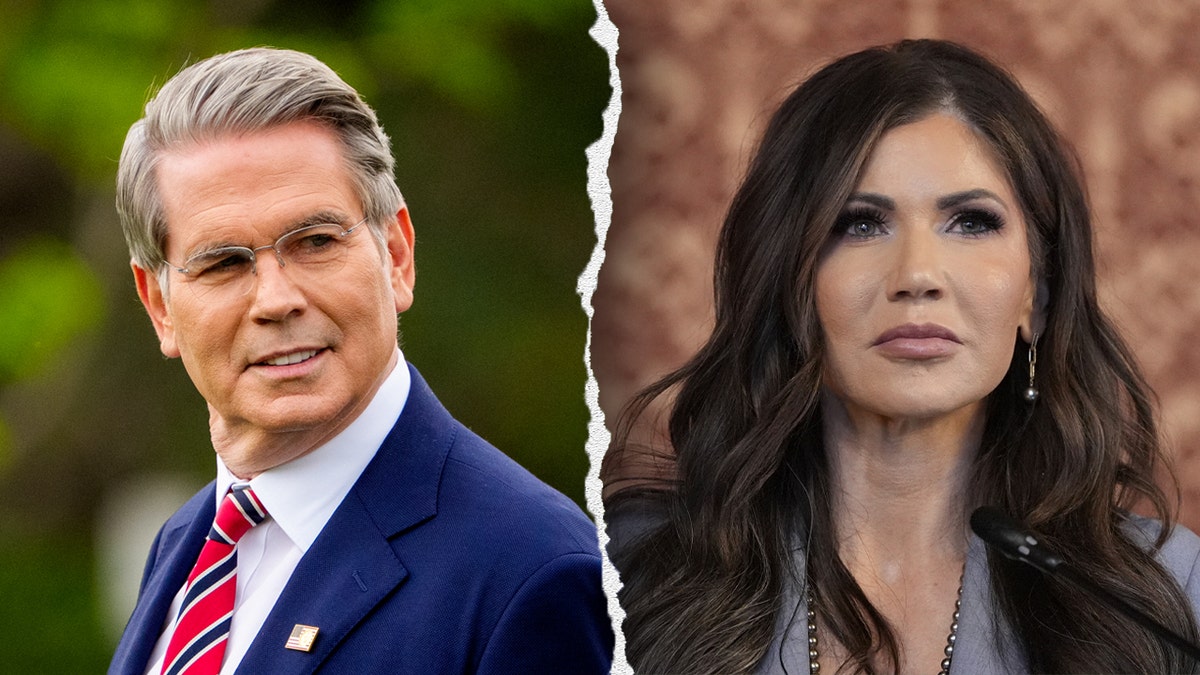
Treasury Secretary Scott Kenneth Homer Bessent and DHS Secretary Kristi Noem

Treasury Secretary Scott Kenneth Homer Bessent and DHS Secretary Kristi Noem. (Getty Images)

A draft agreement reported last month by the Washington Post said it would limit ICE to confirm the addresses of illegal immigrants who have final removal orders.

The deal would allow ICE to submit the names and addresses of illegal immigrants to the IRS, who could then cross-check those immigrants' tax records and provide the immigration agency with current address information.

Some veteran IRS officials have expressed concerns, arguing that the narrow exception was meant only for criminal investigations and not for immigration enforcement. They also worry that the policy will hinder tax collection from illegal immigrants, who are still subject to federal taxes despite being in the country illegally.

CLICK HERE TO GET THE FOX NEWS APP


The agreement comes as President Donald Trump has continued to ramp up the deportation effort he promised on the campaign trail, while attempting to use every available resource in order to aid immigration authorities. 

Fox News Digital's Michael Lee contributed to this report.


Louis Casiano is a reporter for Fox News Digital. Story tips can be sent to louis.casiano@fox.com.

Source: https://www.foxnews.com/politics/irs-dhs-reach-historic-deal-aid-pursuit-illegal-immigrants-subject-deportation

Follow Middle East and Terrorism on Twitter

Cabinet ministers issue joint condemnation of Supreme Court - Israel National News


by Israel National News

Multiple ministers denounced the Supreme Court today for its handling of the hearing regarding the dismissal of Ronen Bar.


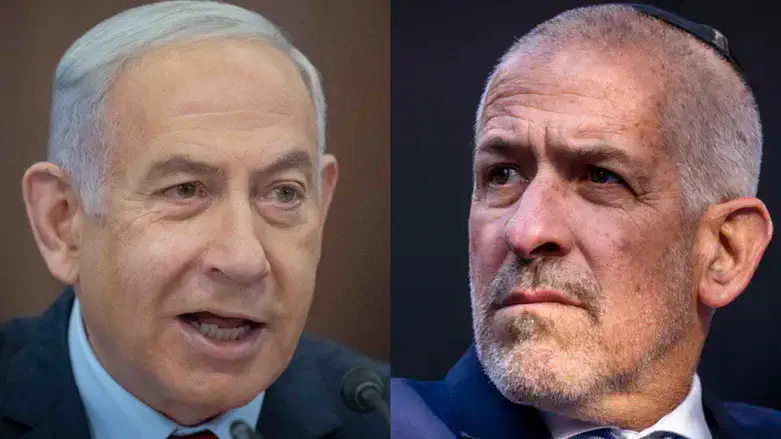
Ronen Bar and Netanyahu
Ronen Bar and Netanyahu                                                               Flash90

Government ministers criticize the Supreme Court for the way the discussion is being conducted today (Tuesday) regarding petitions against the dismissal of Shin Bet head Ronen Bar.

Minister of Justice Yariv Levin said: "The cries heard today in the Supreme Court hall echo the cries of millions, whose rights are trampled and whose democratic decision made at the ballot box is taken from them by a handful of arrogant and detached judges. For decades, this has been done quietly, with an appearance of respectability, and with voices of criticism being silenced immediately."

"In the last two years, since I put the judicial reform on the table, the truth has come to light. The people can no longer be silenced. We want true freedom before Passover," Levin added.

The Minister of National Security, Itamar Ben Gvir, said: "It is regrettable that the head of the ISA is clinging to his role instead of understanding the hint and going home. Time and again he tries to remain in his position by force. This is not democratic, it is not professional – and it will also not succeed."

Education Minister Yoav Kisch noted that "When the Supreme Court takes upon itself the powers of the Knesset and the government – powers that are not its own – it is natural that many citizens will feel this is the place where they should shout their cry. Instead of throwing the case out, Supreme Court judges continue the discussion on an issue where the law is clear to all. The head of the ISA must finish his term by April 10."

The opposition accused the Prime Minister of trying to sow chaos in the courtroom. Chairman of the Democrats Yair Golan claimed: "The chaos in the Supreme Court is an order from above. The poison machine has entered the Supreme Court in order to intimidate the judges. This is how a mafia operates. The struggle between the rule of law and the accused Netanyahu has never been clearer than this."

Opposition leader Yair Lapid added: "The orchestrated riot in the Supreme Court and the disgraceful exploitation of the pain of bereaved families at the hands of Netanyahu and his people is a dismal move by the criminal October 7th government that seeks to harm the rule of law and communal life in Israel."


Israel National News

Source: https://www.israelnationalnews.com/news/406572

Follow Middle East and Terrorism on Twitter

Iran's water crisis at tipping point in threat to Islamic regime's stability - Ohad Merlin


by Ohad Merlin

Iran expert Dr. Sharona Mazalian Levi says prolonged water outages, empty reservoirs, and crop failures may be a recipe for social unrest.


Lake Urmia, a salty lake located in northwestern Iran between the provinces of West Azerbaijan and East Azerbaijan (photo credit: SHUTTERSTOCK)
Lake Urmia, a salty lake located in northwestern Iran between the provinces of West Azerbaijan and East Azerbaijan
(photo credit: SHUTTERSTOCK)

“Iran is drying up,” Dr. Sharona Mazalian Levi from The Alliance Center for Iranian Studies at Tel Aviv University affirmed, painting a grim picture of what she described as one of the most pressing environmental challenges facing the Islamic Republic today.

“Iran is facing an unprecedented water crisis that threatens the nation’s stability,” Mazalian Levi said. She explained that multiple factors have converged to create this critical situation, with several major provinces now reaching what she deemed “a tipping point.”


According to Mazalian Levi, the Iranian Energy Ministry declared last week that the provinces of Tehran, Isfahan, Razavi Khorasan, and Yazd are facing a severe water crisis. She highlighted the alarming state of the Karaj Dam, which supplies water to millions in Tehran and the surrounding areas.

“The Karaj Dam is now at only 6% of its capacity,” she noted, referencing reports from Tasnim news agency that 94% of the reservoir is empty. “This isn’t just an environmental issue; it’s a potential catalyst for civil unrest and disorder that could lead to national instability.”

The Karaj Dam lake in Iran (credit: SHUTTERSTOCK)Enlrage image
The Karaj Dam lake in Iran (credit: SHUTTERSTOCK)

Two of the main catalysts for the crisis are what Mazalian Levi named “poor management of the water sector,” as well as a population growth of more than 250% in only 50 years. “This includes over-extraction from natural water sources and aquifers to the point of depletion,” she added.

However, Mazalian Levi traced the origins of the crisis further back in history. According to the researcher, following the 1979 revolution, Iran found itself internationally isolated and was forced to develop an autarkic economic system. Religious leaders, including then-supreme leader Ruhollah Khomeini, encouraged citizens to embrace farming and agriculture as a way of life, drawing from texts regarding the Prophet Muhammad himself.

“This agricultural push significantly increased water usage at a time when the country was still relying on outdated and inefficient irrigation technologies,” she explained. “Simultaneously, Iran experienced tremendous population growth, from approximately 37 million on the eve of the revolution to around 90 million today.”

Mazalian Levi also pointed out that the influx of millions of undocumented Afghani migrants has further strained resources, creating an exponential rise in demand for water. Urban migration has compounded the problem, with rural residents moving to major cities like Tehran, Mashhad, and Karaj, placing even greater pressure on urban water supplies.

“The most important river in Afghanistan, the Helmand, flows into Iran,” Mazalian Levi explained.

“According to a 1973 agreement, the Afghans pledged to transfer around 820 million cubic meters of water to neighboring Iran yearly (with an option to lower the quantities in case of water scarcity). However, recently, the Afghan government violated the agreement and blocked the flow to the Islamic Republic, which intensified the already tense relations between the Shi’ite and Sunni neighbors,” the Iran expert added.

Social upheaval and frustration 

The consequences of these developments are being felt across Iranian society. Mazalian Levi described a dire situation where authorities deliberately cut off water supply lines, often for extended periods and without prior notice.

“People are left with murky water and even mud coming out of their taps,” she said, citing video evidence from the city of Ahvaz. “Water tankers are being dispatched across the country, medical teams find themselves preparing for surgery without water, and household activities are disrupted without warning.”

She shared an example from a news report about a frustrated resident in the city of Pardis in Tehran Province who complained that water flows through taps for only two hours per day.

The agricultural sector has been hit particularly hard. Farmers are being forced to abandon water-intensive crops like wheat and rice in favor of varieties more suited to drought conditions. Many are giving up farming altogether and migrating to cities in search of alternative employment.

“Crop variety is shrinking, and the country’s food security is being undermined,” Mazalian Levi warned. “There are real shortages of fruits, vegetables, legumes, grains, and oils, leading to rising food prices and increased dependence on imported food.”

This dependence is especially problematic given the hyperinflation Iran has experienced in recent years, making imported food prices increasingly volatile and unaffordable for many Iranians.

Nature directly affected

Another actor directly affected by the water crisis in Iran is nature itself, as demonstrated by Lake Urmia, a salty lake located in northwestern Iran between the provinces of West Azerbaijan and East Azerbaijan.

According to Mazalian Levi, in the past, the lake was one of the largest salt lakes in the world and the largest in the Middle East at about 5,700 square kilometers. However, according to estimates, its area is now less than 1,000 sq.km.

“Over the past few decades, Lake Urmia has experienced significant drying, which has led to a drastic decrease in its size,” Mazalian Levi explained.

“The reasons for this are varied. First, the country has built many dams on the rivers and streams that flow into the lake for the benefit of the agricultural and irrigation industries in the region and industrial plants. In this way, the diversion of water sources has reduced the amount of water flowing into the lake."

“Secondly, climate change and the decrease in precipitation have also reduced the amount of water reaching the lake. Thirdly, over-pumping of groundwater and salt in the area for the production of industrial salt and food [has impacted the water level].”

According to Mazalian Levi, the drying up of Lake Urmia has also damaged the regional ecosystem that existed there.

“The lake was an important and central habitat for a wide variety of animals, including Persian ibex, goats, sheep, fish with special tolerance to the salty environment of the water, birds such as pelicans, ducks, flamingos, and more” the researcher elaborated. “Some of the unique animals became extinct or disappeared from the regional landscape, and the diversity of the fauna has decreased dramatically.”

However, this was not the only damage; it also affected the residents of the area. The decrease in the water level has brought with it new phenomena that have made it difficult for the residents of the area, such as salt and dust storms, which cause respiratory diseases and burning eyes.

“Local tourism and fishing have also been affected. Over the past decade, the Iranian government has promised to restore the lake, but this is a very complex challenge. Dams have been opened to restore natural flow to the lake, but this does not seem to be enough to turn the tide.”

Finally, Mazalian Levi emphasized that water – the most fundamental source of life – has become a critical factor that could determine Iran’s future stability and resilience. The government’s appeals for water conservation appear to have had limited impact in a society where, as she put it, “It’s every person for themselves in the face of this escalating crisis.”


Ohad Merlin

Source: https://www.jpost.com/middle-east/iran-news/article-848182

Follow Middle East and Terrorism on Twitter

Rep. Greene: DOGE Taking Aim at $10 Billion Wasted Annually On Empty Federal Buildings - AG Staff


by AG Staff

Most agency HQs are only 25% occupied yet taxpayers are forced to keep footing the bill.


The Department of Government Efficiency (DOGE) will continue to go after waste and fraud within the federal government with a hearing on Tuesday April 8 that takes aim at the $10 billion spent annually maintaining mostly vacant federal buildings.

Rep. Marjorie Taylor Greene (R-GA) in a post on X, formerly Twitter, posed the question, “$10 BILLION a year to maintain empty federal buildings… and for what?”

The Georgia Congresswoman shared a post from the DOGE Subcommittee that claims that taxpayers have been paying billions of dollars each year to maintain empty federal buildings that serve no purpose.

On Tuesday, the DOGE Subcommittee will be exposing what they have learned during their investigation of the federal government’s real estate portfolio and identifying the numerous properties that they say are squandering taxpayer dollars.

According to the subcommittee, American taxpayers are paying a $10 billion bill each year to maintain and furnish buildings which are largely unused.

The DOGE team says, as of 2023, only 25% of the buildings housing federal agency headquarters were occupied.

Last month, the Trump administration had posted online a list of 440 federal properties it had identified as “not core to government operations.”

That list was later revised to show just 320 properties that were under consideration to offload.

The General Services Administration (GSA) told the Associated Press that the list had sparked “an overwhelming amount of interest” and would be republished in the “near future” after further evaluation.

The GSA also clarified, “To be clear, just because an asset is on the list doesn’t mean it’s immediately for sale,” while noting that it would “consider compelling offers” in order to do “what’s best for the needs of the federal government and taxpayer.”

By selling the unused buildings, the GSA said it would ensure “that taxpayer dollars are no longer spent on vacant or underutilized federal space,” adding that shrinking the federal real estate footprint, “helps eliminate costly maintenance and allows us to reinvest in high-quality work environments that support agency missions.”

Rep. Greene voiced her support for the DOGE Subcommittee hearing, saying, “Taxpayers are getting SCAMMED,” and that “We must eliminate the waste!”


AG Staff

Source: https://amgreatness.com/2025/04/07/rep-greene-doge-taking-aim-at-10-billion-wasted-annually-on-empty-federal-buildings/

Follow Middle East and Terrorism on Twitter

Monday, April 7, 2025

Europe tries to organize united response to Trump tariffs, but consensus appears challenging - Eric Lyman


by Eric Lyman

Trump appointed Elon Musk, meanwhile, says he's hoping for a “zero tariff situation” between the US and Europe.


The European Union will try this week to present a united front against President Donald Trump's tariffs, with the European Commission planning to present to members Monday a list of U.S. products on which to impose extra duties.

The plan by the commission, which coordinates EU trade policy, is in specific response to Trump's earlier steel and aluminum tariffs rather than the broader, more-recently announced reciprocal levies, according to Reuters. But the consensus among the countries appears challenging, considering the leaders each have their own domestic considerations.

Among the EU leaders who appear most eager to retaliate are French President Emmanuel Macron, who is calling Trump's tariffs “brutal and unfounded.” 

Macron wants, in response, to suspend billions in French investments in the U.S. until the tariffs are removed. He has called on other European Union member states to do the same. 

Ursula von der Leyen, president of the European Commission, said European countries were “prepared to respond” to the new policies, but afterward said “There seems to be no order in the disorder."

In Germany and Italy, the European Union’s largest and third-largest economies, respectively, the situations are more complicated. 

German Chancellor Olaf Scholz criticized the measures as “an attack on the global trade order.” But he’s a lame duck after a humiliating defeat in February’s general election. And Friedrich Merz, Scholz’s likely successor, is trying to cobble together a viable coalition, adding the U.S. levies to an already long list of obstacles he faces. 

Italy’s Giorgia Meloni is probably the European leader closest to Trump. Ahead of his tariff announcement, she had been a steady voice urging “prudence” when it came to Europe’s debate over potentially aggressive countermeasures.

But afterward, Meloni finds herself trying to walk the same delicate line other European leaders have traversed in recent weeks, calling the tariffs “a mistake but not a catastrophe” and vowing to defend Italy’s interests while still calling for talks to avert a trade war. 

Meanwhile, Meloni’s lieutenant, Trump devotee and Italy’s Deputy Prime Minister Matteo Salvini, has said Europe should not even consider countermeasures. 

“Taking revenge for tariffs? Opening trade wars with the U.S. would be an unfortunate choice,” said Salvini, who in February said Trump could deserve a Nobel Peace Prize this year. 

The result? The trade issue, along with differences of opinion about Ukraine and the debate over European rearmament, has left Meloni straining to prevent what was once Europe’s most stable major coalition from collapse. 

Against that backdrop, billionaire entrepreneur and Trump administration appointee Elon Musk this weekend appeared to split from the administration on European tariffs, saying he hoped for a “zero tariff situation” between the US and Europe.

As is often the case in Europe, the challenge is getting enough consensus among 27 member states to put action behind words. 

In recent years, Europe has fallen short when it comes to migrants, security, foreign economic development, anti-democratic developments in neighboring Turkey, universal basic income, anti-racism laws, and any number of other areas. 

When Trump first announced a 25% tariff on imported steel and aluminum, Europe unveiled its own package of around $30 billion in targeted retaliatory tariffs that were scheduled to enter into force last Tuesday. 

In response, Trump threatened 200% tariffs on wine and other alcohol from Europe, so leaders quickly voted to delay implementing their tax package for two weeks. 

That April 15 deadline remains on the books, and one test of European unity in this area will be to monitor whether the European tariffs are allowed to enter into force – or perhaps even strengthened. 

Meanwhile, European markets are tanking. The Stoxx 600 index of European companies shed more than 15% of its value in the two weeks ending Friday (more than double the damage to the Dow Jones average over the same span), with carmakers, financial institution and transport companies hit especially hard.

In several European markets, losses on Friday alone were the largest since the Sept. 11, 2001, attack on the World Trade Center in New York.

The euro currency has also weakened against the U.S. dollar, bond yields have spiked, and economists warn it wouldn’t take much to push slow-growing European economies into recession territory.

 
Eric Lyman

Source: https://justthenews.com/world/europe/europe-reacts-tariffs

Follow Middle East and Terrorism on Twitter

Netanyahu's US visit: From Biden's cold shoulder to Trump's open door – analysis - Herb Keinon


by Herb Keinon

Netanyahu meets Trump at the White House for the second time in two months, displaying a shift from cold relations with Biden to an open door policy with the current administration.


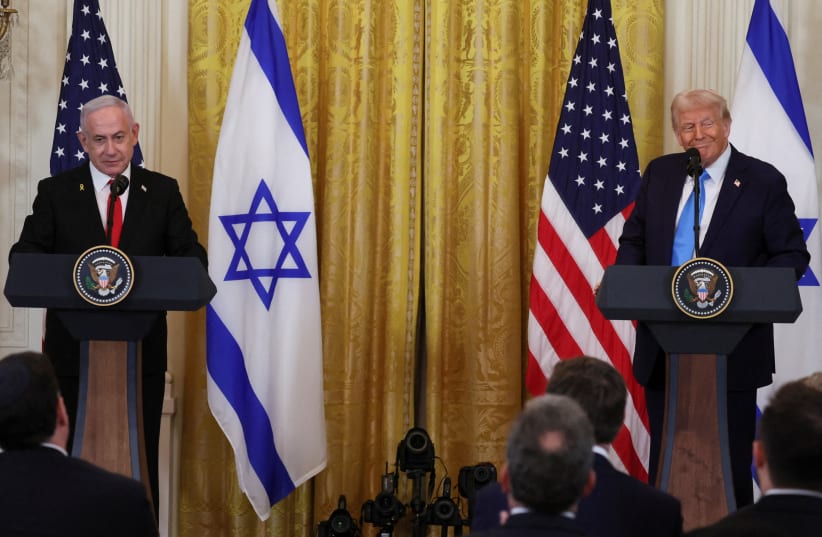
U.S. President Donald Trump and Israeli Prime Minister Benjamin Netanyahu hold a joint press conference in the East Room at the White House in Washington, U.S., February 4, 2025. (photo credit:  REUTERS/Leah Millis )
U.S. President Donald Trump and Israeli Prime Minister Benjamin Netanyahu hold a joint press conference in the East Room at the White House in Washington, U.S., February 4, 2025.
(photo credit: REUTERS/Leah Millis )

In the 29 months that Prime Minister Benjamin Netanyahu’s term as prime minister overlapped with former US president Joe Biden, he met with the president once in the White House. On Monday, Netanyahu is scheduled to hold his second meeting in the White House with President Donald Trump in just two and a half months.

That contrast speaks volumes. During the Biden years, access was rationed, tensions surfaced regularly, and there was often a sense of a crisis always lurking around the corner. Under Trump, the rhythm is entirely different: open doors, close coordination, and the sense of a looming crisis has been replaced by a working assumption of close alignment.

This hastily arranged visit differs from Netanyahu’s first one in early February, just two weeks after Trump’s inauguration. Netanyahu was the first foreign leader to meet Trump in the White House. That meeting was widely seen as symbolic – a way to publicly close the door on the tense Biden years when it took months for Biden to call Netanyahu, let alone invite him for a meeting.

JPost Videos

That Trump invited Netanyahu so soon after the inauguration sent a signal that the relationship was now on an entirely different footing. If that meeting was largely symbolic – though there was also content, most significantly Trump’s surprise announcement of a vision to relocate Gazans – this meeting suggests something else: not only a relationship restored, but one moving in a distinctly different direction.

US PRESIDENT Donald Trump and Prime Minister Benjamin Netanyahu speak to reporters before meeting at the White House this month. Their talks marked the return to the US-Israel relationship of deep respect, friendship, and trust that had been missing during the previous four years, say the writer. (credit: Elizabeth Frantz/Reuters)Enlrage image
US PRESIDENT Donald Trump and Prime Minister Benjamin Netanyahu speak to reporters before meeting at the White House this month. Their talks marked the return to the US-Israel relationship of deep respect, friendship, and trust that had been missing during the previous four years, say the writer. (credit: Elizabeth Frantz/Reuters)

What is the meeting focusing on?

The meeting with Trump is expected to focus on several key issues: Israel’s renewed offensive in Gaza, the hostage crisis, Iran, growing tensions between Israel and Turkey, and Trump’s decision to slap 17% tariffs on Israeli products. In announcing his trip, Netanyahu said he would be the first foreign leader to meet face-to-face with the president about the new US tariffs, which, if they remain at 17% on Israel, will further burden an economy already strained by 18 months of war.

But beyond the issues, the very existence of the meeting itself is a signal that the relationship is on a different trajectory. That is a signal that Netanyahu is keen to send both to the Israeli public and the region.

As far as the region is concerned, the visit – taking place as Israel is extending its offensive in Gaza – will, unless Trump suddenly puts the brakes on the operation (something unlikely), be seen as a US endorsement of the new Israeli tactics. The two are expected to discuss the hostage situation and what further leverage can be applied on Hamas.

What is likely to be glaring is the lack of public declarations from the administration regarding the humanitarian situation in Gaza, a constant feature of discussion with the Biden administration and often a source of public friction.

The Biden administration, while providing support for Israel, made it a point to publicly place guardrails on the IDF’s operations. Trump has not added those guardrails, and it would come as a surprise if he did so this time either – instead, likely continuing to give Netanyahu the green light to do what he deems necessary in Gaza to destroy Hamas and free the hostages.

The visit is also coming as Washington is paying increased attention to Iran. With Trump having warned the Iranians that they will either have to give up the bomb through negotiations or lose it through military action, this visit – where Iran, as always, will undoubtedly be a central topic of discussion – creates the impression that the US and Israel are coordinating on this issue.

The matter has taken on more urgency given the US military buildup in the region and its attacks on the Houthis in Yemen.

And a new issue, less prominent in previous meetings but one that has suddenly moved to the forefront – especially given Turkish President Recep Tayyip Erdogan’s increasingly bellicose rhetoric toward Israel (last week he said he hoped Allah would destroy Israel) – is the matter of Israeli-Turkish relations.

With Turkey a US NATO ally, Washington is in a position to cool tensions between the countries that have risen as Ankara is eyeing increasing influence in Syria.

Last week, the IAF struck key Syrian airbases, reportedly to prevent Turkey from taking control of them. While Turkey’s Foreign Minister Hakan Fidan sought to lower the temperature, saying at a NATO meeting on Friday that Ankara is not looking for confrontation with Israel in Syria, Defense Minister Yisrael Katz made clear the strikes were also a message to Turkey – even if he didn’t mention the country by name. In a warning to Syrian President Ahmad al-Sharaa, he said Syria would pay a heavy price if it allowed “forces hostile to Israel to enter Syria and threaten Israeli security interests.”

Netanyahu is likely to raise the issue in Washington as part of a broader effort to ensure continued US understanding of Israel’s red lines in Syria, particularly at a time when Ankara is probing for openings. His meeting with Trump sends a signal to the Turks that Israel retains strong American backing.

As far as the Israeli public is concerned, the politics of the visit should not be overlooked. For Netanyahu, showing that he can pick up the phone, fly to Washington, and walk into the Oval Office without diplomatic turbulence is a reminder to voters, allies, and critics alike that when it comes to managing Israel’s most important foreign relationship, he still has no peer.

With this visit, Netanyahu is essentially saying: “Qatargate, schmatergate. While the Israeli media obsesses over Jonathan Urich and Eli Feldstein, I am navigating at the highest levels of diplomacy.” His message to the domestic audience: “You are dealing with distractions; I have an open door to the White House.”

There’s also political value in this meeting for Trump. Having a foreign leader come to Washington to discuss tariffs – and not just security – reinforces the message that his economic policies are working and that “America First” is not just a slogan but a framework foreign leaders must take seriously.

For Trump, Netanyahu’s visit can be presented as proof that his tough tariff talk is bringing world leaders to the table. It sends a signal to others: if you want favorable terms or to avoid penalties, you come to Washington and deal directly with the man in charge.

This plays directly into Trump’s preferred image – not just as a global power broker, but as a president whose economic leverage delivers results. With the stock markets sliding, it provides an opportunity to shift the narrative and highlight the international relevance of his trade agenda. In that sense, the meeting is mutually beneficial: both leaders are looking to score domestic points as criticism is mounting at home.

 
Herb Keinon

Source: https://www.jpost.com/israel-news/article-849116

Follow Middle East and Terrorism on Twitter

Hamas fires ten rockets at South, one wounded in Ashkelon - Jerusalem Post Staff


by Jerusalem Post Staff

The police said it was operating in an area of Ashkelon where an impact had been reported.


A man in his 30s sustained light wounds from rocket shrapnel following Hamas's rocket barrage in Israel's South, Israel's emergency response service, Magen David Adom (MDA), reported on Sunday.

Starting at 9:01 p.m. local time, rocket sirens sounded in the areas of Ashdod and Ashkelon. 

The military said some 10 rockets were fired at Israeli territory from the Gaza Strip, half of which were intercepted. Several impacts had been reported in various area, the IDF added.   

After being briefed on the situation, Prime Minister Netanyahu, who was on his way to Washington, told Defense Minister Israel Katz to respond with force. He also approved the continued increase of Israeli military operations in the Gaza Strip. 

Katz responded: "I instructed the IDF to carry out a powerful blow against Hamas. We will not accept rocket fire at Israel." Shortly after this statement, the IDF reported that an air force jet had attacked the launcher from which the launch was detected.

Scenes of an impact from a Hamas rocket in Ashkelon, April 6, 2025. (credit: MDA SPOKESPERSON)Enlrage image
Scenes of an impact from a Hamas rocket in Ashkelon, April 6, 2025. (credit: MDA SPOKESPERSON)

MDA said its paramedics transferred to the Barzilai Medical Center in Ashkelon the man who was in light condition. Paramedics also treated a number of individuals who were suffering from anxiety and who had been injured while running to shelter. 

The police said it was operating in an area of Ashkelon where an impact had been reported, while the Ashkelon Municipality noted a rocket that had crashed in the city had caused damage to property.  

Hamas's military wing, the Izz al-Din al-Qassam Brigades, subsequently claimed responsibility for the rocket barrage.

Responses to the rockets

"If anyone needed a reminder of why we must not stop just before the destruction of Hamas, they received it this evening in the form of rocket launches from Gaza to the cities of the South," Finance Minister Bezalel Smotrich shared on X/Twitter shortly after.


"We promised the citizens of Israel that Hamas will be destroyed and the residents of the South will be able to live in peace and security for many years," Smotrich added, noting, "we will stand by that." 

National Unity head Benny Gantz wrote on Twitter/X following the barrage, "Hamas is the enemy, which, after a year and a half of war, is still firing missiles at Israeli citizens." 

"Israeli citizens didn't really need a reminder, but apparently, the Prime Minister and coalition members did," Gantz asserted, adding the enemy was "not the head of the Shin Bet, not the attorney-general, not the High Court of Justice.

"The State of Israel deserves leadership that focuses on defeating our enemies," Gantz added, rather than one that concentrated on "internal strife and division."

This is a developing story.


Jerusalem Post Staff

Source: https://www.jpost.com/breaking-news/article-849115

Follow Middle East and Terrorism on Twitter

The Poverty of the Criticism of Trump’s Agenda - Victor Davis Hanson


by Victor Davis Hanson

The left rages against Trump but offers no real alternatives on debt, trade, or immigration—just noise, while results quietly pile up.


Two strange phenomena now characterize the political landscape.

One, opposition to the Trump administration’s initiatives has reached a near-unprecedented fever pitch.

The frenzy is manifested in strange ways. At the bottom end, there is an epidemic of street terrorism, including the keying of Teslas, bullying their owners, firebombing dealerships, or vandalizing charging stations.

All that is mostly the logical but dirty reification of those in the media and the Democrats who brand Elon Musk as a foreign-born counterfeit citizen and a disloyal un-American foreigner, thus deserving to be “taken down,” in the words of Rep. Jasmine Crockett. Or is he to be ostracized as an “ass-h*le” in the invective of Sen. Mark Kelly and Minnesota Governor Tim Walz? The latter cheered a downturn in Tesla stock prices, contrary to the interests of his own state’s public portfolio.

Sometimes, the impotent Democrat Congress issues kickboxing/ninja videos of its feistier female representatives. At other moments, senators race to the bottom, echoing each other’s pottymouth expressions of “sh*t.”

Rep. Al Green could neither disrupt nor end Trump’s speech to a joint session of Congress by shaking his cane and screaming epithets. Nor, as he damned Trump on the floor of the Senate for 25 hours in a filibuster to nowhere, could Sen. Cory Booker offer a single word that might offer his supposedly better way to address crushing debt and deficits.

Two, there is a second common denominator to all this frenzy and fury: there is so far no alternate agenda on trade deficits, budget deficits, and debt.

That is, no one on the left—or, for that matter, the libertarian right or the now inert Republican establishment—can outline an alternate pathway to Trump’s remedies for America’s dire problems. Just as the left used to worship Tesla’s breakthrough EV cars and now tries to destroy them, so too it once lectured the country on the merits of tariff-enforced symmetrical trade—until Donald Trump made that his signature issue.

So in lieu of serious counter-proposals, we get from the left vulgarity, the smash-mouth of Rep. Crockett, and street terror against fellow Americans. All this inanity is the natural bookend to the prior four years of lawfare, the efforts to remove Trump from state ballots, the Mar-a-Lago raid, and two assassination attempts.

Most of the organs of Wall Street, the free-market think tanks, and the few liberation university economics departments likewise issue virulent denunciations of tariffs, of even massive DOGE cuts in the federal workforce and budget, and, strangely, of the deportation of Tren de Arugula, a terrorist-designated violent foreign gang whose members entered and now reside illegally in the United States.

So why does the left not simply claim that its prior support of tariffs was wrongheaded? (See the now-ancient denunciations by Nancy Pelosi and Bernie Sanders of Bush-era “free trade,” deindustrialization, globalization, and lost jobs.) Now, the left supports… what exactly? Mini-tariffs? No tariffs? Reciprocal tariffs?

Absent is concern about the ticking time bomb of $3 billion in interest payments on the debt per day, in addition to the monstrous $37 trillion in debt itself. Did Cory Booker spend a single minute of his 25-hour address to outline ways to reduce our 125% debt to annual GDP?

Per year, the interest cost on the debt is larger than the defense budget; does AOC ever note that? The current Biden vestigial budget is nominally $1.7 trillion in the red. Is there a Democrat agenda to head us toward balanced budgets?

So, what does the left propose as its financial remedies?

Is it to raise taxes on those who should “pay their fair share?” That is, do they want the top rates to rise from 37% to 40%, 45%, 50%, so that their own constituent “affluent” in blue states like high-tax California, Illinois, and New York should properly and deservedly pay the IRS 50% to 60% of their earnings in income tax alone?

Does the tax-and-spend left prefer instead a value-added tax or some sort of federal sales tax? Or do they think current levels of spending are just fine?

Is there really no waste, fraud, and abuse in the federal budget, but instead too few federal workers?

Or are they modern monetary theorists, who believe money is but a construct, one that the government can do with in whatever manner it wishes? Thus, debt is simply remedied by printing more of the construct, or finding ways to expropriate private wealth, or inflating our way out of debt?

But again, please tell us how the left has a superior agenda to Trump’s that will get us more quickly and efficiently to a balanced budget, if not a reduced national debt.

Or is debt itself not supposed to be a problem? Does the left believe interest rates are the real crux? As in the recent past, if interest rates are no more than the rate of inflation, then essentially, the government can borrow all it wants at zero interest—and literally did so at times over the last half century. Is that their remedy?

Can the Republican establishment help out and pause a moment from their napalming of the Trump initiatives? Can it issue briefs that outline how to take us to either a balanced budget and reduced debt or convince us that debt in all manifestations is no big deal?

Then we turn to trade deficit. Again, there is utter silence about solutions from most critics. No counter-proposals, no alternate agenda, just fury and hysteria—or denials that deficits and debt are a problem at all.

So, does the left or right believe that 50 years of continuous trade deficits do not matter? Who cares if we are running a near $1 trillion annual outflow in the gap between what we export and import?

Please make the argument that the real losers are the recent economies of India, China, or Mexico, which supposedly foolishly tax imports and yet demand tariff-free exports, all to run up surpluses. Are they suicidal and we, the masters of trade deficits, the real geniuses?

Does it matter that almost all of the proposed Trump tariffs are in some way responsive? In that sense, they are calibrated on autopilot, leaving the proverbial ball in the court of those with high tariffs and huge surpluses to set new shared reciprocal rates.

So, if it was wrong for Trump to level reciprocal tariffs, was it right for others to initiate asymmetrical tariffs on us?

Is it more logical to damn those who object to $1 trillion in annual trade deficits rather than those whose tariffs resulted in their warped surpluses?

Or is it wiser to blame the victim? The U.S. deserves its trade deficit because it is too affluent, too naïve to object, or too profligate to be saved?

Or is the argument one of the Sermon on the Mount: we must turn the other cheek as we have for a half century? Or, as an affluent sort of good Samaritan, can we afford to stay forbearing and take the hit for the global team?

The final problem with the notion of Trump as the 80-day destroyer of America is not just the poverty of economic counterproposals from the left or right. It is also the complete news blackout of what Trump has already accomplished in 10 weeks.

Does anyone notice that, almost overnight, America’s southern border is now magically secure, with virtually no illegal immigration—and without the much-ballyhooed need for “comprehensive immigration reform?”

How did we go from 10,000 illegal aliens a day to near zero? What was so bad about identifying hundreds of billions of budgetary dollars in fraud and waste in a mere two months?

Why are we now talking about ways to end the Ukraine war rather than boasting “as long as it takes” to feed the new Stalingrad?

Why are the Houthis now being abandoned by the Iranians, who, in a matter of weeks, no longer seem to be the feared bully of the Middle East? Were not their terrorist tentacles just months ago considered unstoppable and sacrosanct?

Was it wrong finally and dramatically to reflect the wishes of 80 percent of the American people, who do not want biological males to overturn a half-century’s worth of hard work to obtain parity for women’s sports?

We, as a nation, need to calm down.

Either acknowledge, however reluctantly, the good that has already been done in the first ten weeks. Or, if one feels the border should be open, or the war should be accelerated in Ukraine, or the campuses were just fine until 2025, or women just need to get over losing to transgendered men, then just say so.

Or if one believes huge trade and budget deficits and unsustainable national debt are no big deal, then argue just that.

Or, if the rub is that Trump is addressing these existential and long-neglected crises in the wrong way, then please present alternate plans for quicker and better resolutions or better messaging.

Should he limit tariffs only to those nations with deficits and asymmetrical tariffs? Should he speak more quietly and mention more frequently that he was moved to act only by a half-century of neglect? Could he emphasize more that the $3-4 trillion in promised foreign investment will ignite job growth within a year?

But if there is no alternate agenda, no constructive criticism, then why would anyone listen to those who either helped to get us into this mess or have no clue about its solutions?


Victor Davis Hanson

Source: https://amgreatness.com/2025/04/07/the-poverty-of-the-criticism-of-trumps-agenda/

Follow Middle East and Terrorism on Twitter