Wednesday, April 9, 2025

Trump hopes Netanyahu is ‘being appreciated, because he’s been a great leader’ - Alex Traiman


by Alex Traiman

There is a great battle of civilizations taking place, a World Series, that includes the West.
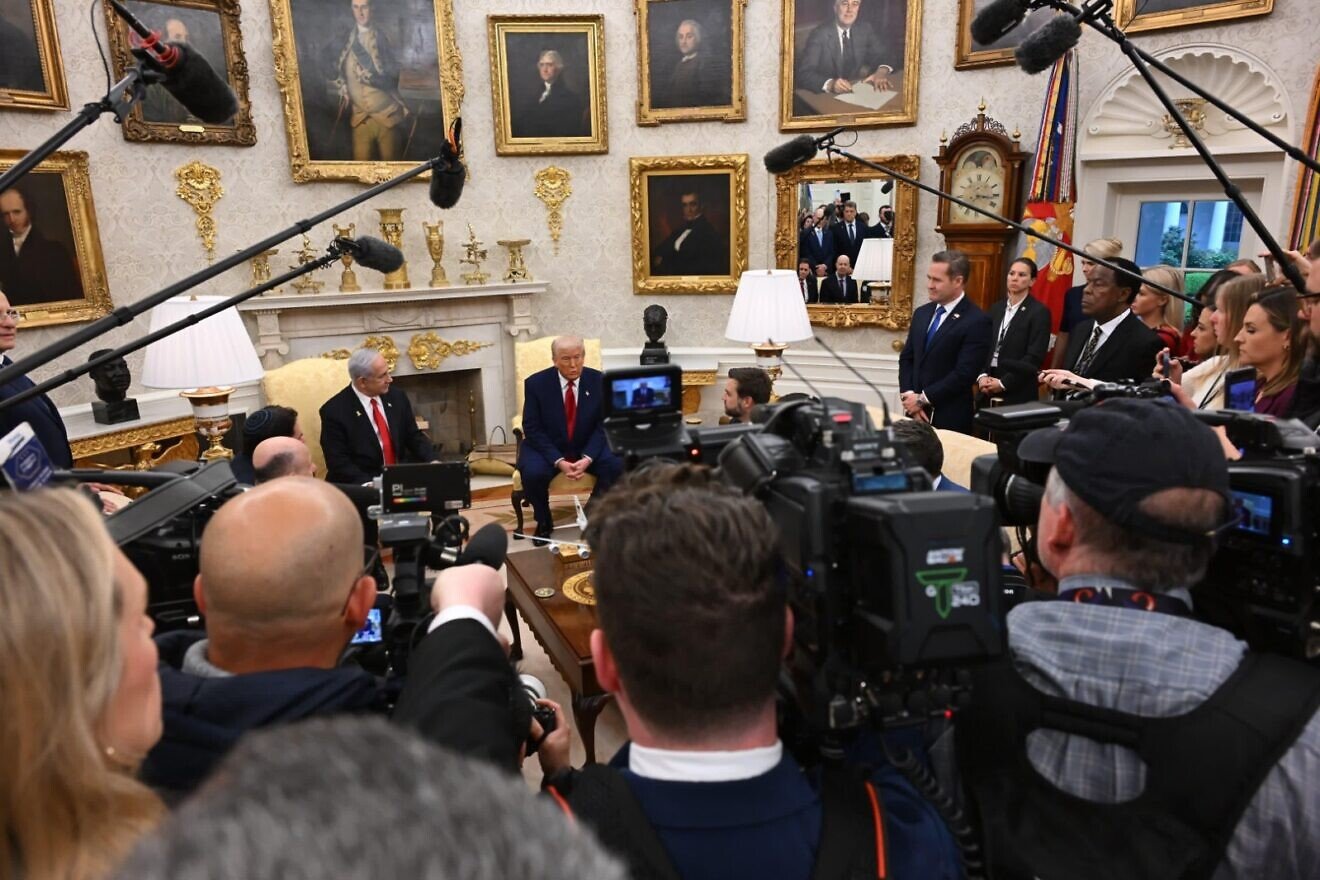
 

U.S. President Donald Trump and Prime Minister Benjamin Netanyahu talk to the press at the White House on April 7. Photo by Avi Ohayon/GPO.

Among all the other headlines on Iran, Gaza, hostages, Houthis, Turkey and tariffs, one of the statements U.S. President Donald Trump made to the media with Israeli Prime Minister Benjamin Netanyahu on April 7 was perhaps seen as a throwaway line. Yet it may have been among the most important statements made during the lengthy press conference.

Regarding Netanyahu, Trump stated: “I hope he’s being appreciated, because he’s been a great leader.”

From inviting Netanyahu to be the first world leader to meet him at the White House after his Jan. 20 inauguration to inviting him now a second time before many world leaders have even gone once, making him the first leader to come to the Oval Office to discuss the administration’s controversial new tariffs, Trump has demonstrated that he truly respects Israel and its prime minister.

“We appreciate you being here, and we are a friend of Israel. As you know, I always say that I’m by far the best president that Israel has ever had,” Trump stated, while acknowledging that most Israelis see it the same way. 

“And it’s an honor to be so, and to be so proud. We have many friends in Israel. They are not in an easy area; it doesn’t go easy, but we are helping them. And likewise, they have been helping us very much,” he said.

A large and vocal minority within Israel refuses to acknowledge Netanyahu’s leadership, even as he has been navigating some of the most difficult challenges in Israel’s history. For the prime minister’s reflexive detractors, Netanyahu can do nothing right—even the things that are seemingly obvious to everyone.

On this trip, Netanyahu was ensuring the world’s most important superpower is in lockstep with Israel on long list of complicated issues related to the complex multifront war, regional realignment and now an economic realignment.

A Times of Israel article summarizing Netanyahu’s trip was titled, “After softball visit to Hungary, Netanyahu strikes out in DC meeting with Trump.”

The article started by acknowledging that just prior to the meeting with Netanyahu, the baseball world champions, the Los Angeles Dodgers, came to visit Trump in the White House. The piece went on to use baseball analogies to chronicle what the author perceived as three swings and misses by Netanyahu in the Oval Office: That he didn’t secure tariff relief; that America will reenter nuclear talks with Iran; and that Trump is a friend of Netanyahu’s enemy, President Recep Tayyip Erdoğan of Turkey. And it implied that Netanyahu had been on a cushy state-funded vacation in Budapest.

The piece was a foul ball. Netanyahu’s meetings with Hungarian Prime Minister Viktor Orbán and then Trump were not only highly productive; they were essential. And both are likely to prove highly consequential in the weeks ahead.

Defeating the International Criminal Court

Facing an arrest warrant issued by the International Criminal Court, it is essential for Netanyahu to demonstrate that he is not completely landlocked.  If the Israeli leader can touch down in a major European capital, and be treated with pomp and circumstance, it belittles the court’s attempt to bully Israel.

When Orbán announced that Hungary would withdraw from the ICC for becoming a “political tool,” Netanyahu praised his ally. “This is not only important for us, it’s important for all democracies. It’s important to stand up to this corrupt organization that has equated a democracy that is challenged for its very existence by the most horrific terrorist powers on earth.”

Netanyahu went on to predict: “You are the first, I dare to say I don’t think the last, but the first state that walks out of this corruption and this rottenness. I think it will be deeply appreciated not only in Israel but in many, many countries around the world.”

If Netanyahu does not prevail over the court, IDF soldiers could be next on the warrant list. Hundreds of thousands of Israelis would be prevented from safely leaving Israel’s borders. The weeks ahead will prove whether Netanyahu’s prediction that other countries will follow Hungary’s lead is correct, and whether Israel will ultimately win the battle against the International Criminal Court.

There is a great battle of civilizations taking place, a World Series, that includes the West. There is a battle for the soul of Europe, the soul of America and the soul of Israel. 

Viktor Orbán is a leading figure in the battle for Europe.  Donald Trump is attempting to reset American power and a broken world order. And Benjamin Netanyahu is on the frontlines against radical Islamic forces as well as anti-Israel and anti-nationalist Western powers. All three are fighting against their own well-funded domestic deep states.

Removing daylight

When the president of the United States sends an invitation to an Israeli prime minister, there is little choice but to accept. Especially now. Israel desperately relies on American assistance for critical munitions and weapon supplies and international backing as it fights Hamas, as well as Iran and its band of terror proxies.

Israel needs American backing for any plans to resettle hundreds of thousands of Gazans outside the battered Strip, or for any military campaign to destroy Iran’s nuclear program. And while Trump has proven himself to be a loyal ally, there is plenty of room for America and Israel to veer into differing policy directions. 

A face-to-face meeting can aid in realignment and reduce any perceived daylight between America and Israel. The prime minister had been working on arranging a second meeting with Trump in the coming weeks, after the Passover holiday. 

The issue of tariffs prompted a more urgent get-together. Israel, like so many other countries in the world, was about to get hit with a stiff tariffs regime on exports to America. With America being Israel’s largest export market, mostly in the hi-tech sector, Israel’s economy stood to lose big.

Negotiating tariffs

Netanyahu advanced his upcoming trip to jump to the front of the line of leaders wanting to discuss tariffs. The leadoff visit brought Netanyahu into a position of both national and global leadership.

In the Oval Office, Netanyahu told Trump regarding existing Israeli tariffs on American products, “We are going to eliminate the tariffs and rapidly,” adding, “We’re going to also eliminate trade barriers, a variety of trade barriers that have been put up unnecessarily.”

He then said, “We will eliminate the trade deficit with the United States. We intend to do it very quickly. We think it’s the right thing to do…. I think Israel can serve as a model for many countries who ought to do the same.”

Trump was gracious, stating, “I appreciate very much what you said about the tariffs.”

The Times of Israel and other Netanyahu critics pointed to the fact that Trump did not commit to reducing the newly announced 17% tariff on Israeli goods. They explained the lack of a tangible takeaway as Trump’s inherent rejection of Netanyahu’s offer, and therefore a diplomatic failure.

Maintaining leverage

However, it is very likely that Israel has indeed improved its economic position. There was no way Trump was going to publicly announce the results of his discussions with Netanyahu over tariffs. 

The reason is simple: Dozens of other heads of nations are about to follow Netanyahu’s lead and try negotiating new trade agreements with the United States.

Had Trump announced any reduction of Israel’s tariffs, it would have created a baseline for negotiations with other countries. There was simply no way the author of “The Art of the Deal” was going to put his cards on the table and give up negotiating leverage ahead of a marathon round of calls with other heads of state.

Meanwhile, it was clear that Trump welcomed Netanyahu’s statements, eager to demonstrate to other nations that if they want to negotiate a reduction, they should follow Netanyahu’s lead.

A conciliatory approach

With Netanyahu typically a recipient of Trump’s material support, the visit provided an appropriate opportunity for Netanyahu even up the deficit of diplomatic tradeoffs by giving Trump what it was Trump wanted: a world leader coming to him publicly with a conciliatory approach on trade.

Following his visit to the White House, Netanyahu stated, “President Trump has asked countries to reduce their trade deficits with the United States to zero. I told him, ‘This is not so difficult for us. We will do it.’ This is the little that we can do for the U.S. and its president, who does so much for us.”

Let my people go!

Trump spent a major portion of the press briefing talking about the plight of the remaining Israeli hostages, and the barbaric conditions in which they are being held. It is clear the issue has struck a major nerve, and that while dealing with numerous other issues, Trump is prioritizing the return of the hostages.

Trump did Netanyahu a favor by stressing that not only are he and his Middle East envoy Steve Witkoff working hard to secure the return of the hostages, but so is Netanyahu. At home, Netanyahu faces continual baseless accusations by his longtime political opponents that he is abandoning the hostages. 

For months, anti-Netanyahu protestors were busy repairing their image by supporting the families of the hostages, after attempting to tear the country to shreds in the weeks before Oct. 7, 2023. Yet, in recent weeks, the movement has returned to the same divisive and destructive rhetoric and tactics. 

Most of the country now realizes that the anti-Netanyahu movement’s focus on the hostages is ultimately disingenuous. The issue was carefully selected because the protest organizers projected from the outset that Netanyahu would be unlikely to succeed in resolving the hostage crisis.

In fact, this is the very reason the movement chose the phrase “Bring Them Home” as the centerpiece of their signage and protests, instead of the more appropriate “Let my people go!” While the latter phrase places responsibility for the hostages’ release on Hamas, “Bring them home” puts the responsibility squarely on Netanyahu.

Meanwhile, Netanyahu has proved his detractors wrong, returning 196 of 255 hostages so far, and focusing immense attention on trying to negotiate additional releases.

While noting that “the Israeli people want the hostages out, more than anything. They want the hostages out,” Trump acknowledged Netanyahu’s persistence. “This man is working very hard with us to do that. I mean, I don’t know. I hope he’s being appreciated, because he’s been a great leader. He’s working very, very hard on the hostages and many other things.”

Following the meeting, Netanyahu stated, “The president looked at me and told the journalists who were present: ‘This man is working constantly to free the hostages.’ I hope that this shatters the lie that is being circulated to the effect that I am not working for them, that I don’t care. I do care, and I am doing it, and we will be successful.”

‘I don’t understand why Israel gave up Gaza’

Meanwhile, Trump doubled down on his paradigm-shifting statements in February regarding the United States taking a leading role in the rebuilding of Gaza while resettling Gazans outside of the now-battered Strip.

Asked what he thought about Gaza, Trump stated, “I think it’s an incredible piece of important real estate, and I think it’s something that we would be involved in. But you know, having a force like the United States there, controlling and owning the Gaza Strip, would be a good thing, because right now, all it is for years and years, all I hear about is killing and Hamas and problems. And if you take the people, the Palestinians, and move them around to different countries, and you have plenty of countries that will do that.”

Then Trump acknowledged what members of the Israeli right have been saying for years, since Israel’s fateful 2005 disengagement. (It should also be noted that Israel’s left was incensed by right-wing street protests against the ill-fated withdrawal.)

“I don’t understand why Israel never gave it up. Israel owned it. It wasn’t this bad,” he said. Then, referring to Netanyahu, Trump noted, “So, I can say he wouldn’t have given it up. I know him very well. There’s no way.”

Land for peace formula: ‘Not good’

Taking a strong dig at Ariel Sharon, a right-wing, Likud Party prime minister who went on to unilaterally implement the very same left-wing policy he vowed to oppose in a general election, Trump stated, “They took oceanfront property, and they gave it to people for peace. How did that work out? Not good.”

The comment sent a strong signal about Trump’s stance on left-wing delusions regarding a future Palestinian state in the biblical provinces of Judea and Samaria, referred to as the West Bank by those who don’t want the rest of the world to know it is historic, indigenous Jewish territory.

Resettling Gazans = Total victory

Moving one million Gazan residents or more out of the Strip to other countries will shift the entire balance of power within the Israeli- Palestinian conflict, turning Palestinians from a demographic threat between the Jordan River and the Mediterranean Sea into an ethnic minority.

Netanyahu on Tuesday credited Trump for his bold and refreshing thinking, stating that the two leaders, “discussed President Trump’s vision, because we are currently in contact with countries that are talking about the possibility of taking in many Gazans. This is important because in the end, this is what needs to happen.”

Meanwhile, it is clear that Netanyahu’s team has been influencing “Trump’s vision.”  Resettling the Gazans has long been an unstated war aim and will represent the ultimate “total victory” Netanyahu has been referring to over Hamas.

Getting the hostages home and resettling Gazans elsewhere would be an inning-ending double play.

‘Iran is going to be in great danger’

Diffusing the ticking time bomb of Iran’s illicit nuclear weapons program without military intervention would certainly be a dream scenario. 

A military conflict could have severe consequences for Israel, as well as for other countries in the region. Iran has already threatened to launch attacks on Iraq, United Arab Emirates, Bahrain, Qatar or Saudi Arabia if America launches military strikes.

Yet, a non-military solution can only be accomplished with the credible threat of maximum economic sanctions and military force. With snapback sanctions on Iran set to go into effect in the coming weeks, significant economic pressure is nearly in place.

More importantly, America’s punishing airstrike campaign across Yemen, targeting Iran’s terror proxy, the Houthis, is proof positive that Trump is not afraid to use targeted military force to restore law and order to the Middle East. Furthermore, there is a precedent. America pressured Libya to allow U.S. inspectors to come into the country and dismantle its nuclear program.

This appears to be Trump’s preferred path, and Netanyahu appears to be onboard. Both leaders made it patently clear that they are unwilling to accept a nuclear Iran.

“I think if the talks aren’t successful with Iran, I think Iran is going to be in great danger, and I hate to say, great danger, because they can’t have a nuclear weapon,” Trump stated in the Oval Office. “You know, it’s not a complicated formula. Iran cannot have a nuclear weapon … and if the talks are not successful, I actually think it would be a very bad day for Iran if that’s the case.”

Trump is attempting a two-out rally to pressure Iran to give up its illicit nuclear program. But it is clear that the count is full. The Israeli Air Force is swinging the bat on deck, with the U.S. Air Force coming up after.

Netanyahu on Tuesday said of the meeting with Trump that first, “We agree that Iran will not have nuclear weapons. This can be done by agreement, but only if this agreement is Libyan style: They go in, blow up the installations, dismantle all of the equipment, under American supervision and carried out by America. This would be good.”

Netanyahu and Trump also seem to be on the same page that negotiations must not turn into an attempt for Iran to step out of the box and buy extra time. “The second possibility, that will not be, is that they drag out the talks. Everyone understands this. We spoke about this at length,” said the Israeli premier.

Jive Turkey

One of the war’s biggest surprises was the sudden fall of Bashar Assad, and Turkey’s push into belligerent push into northern Syria via its own proxy, Hayat Tahrir a-Shams (HTS), and its desire to establish military bases in the country.

Israel took bold action in the immediate aftermath of Assad’s fall to destroy the overwhelming majority of Syria’s military assets. The last thing Israel wants is a militarized terror group—HTS, formerly affiliated with Al-Qaeda—on its northern border.

Netanyahu stated on Tuesday that “Turkey wants to establish military bases in Syria, and this endangers Israel. We oppose this and are working against it. I told President Trump, who is my friend and also a friend of [Turkish President Recep Tayyip] Erdogan: ‘If we are in need of your help, we will discuss it with you.'”

In the press briefing, Trump pledged to help mediate between Israel and Turkey, if necessary. “I told the prime minister, I said, just maybe if you have a problem with Turkey, I really think I’m going to be able to work it out. And I have a very, very good relationship with Turkey and with their leader, I think we’ll be able to work it out. So I hope that’s not going to be a problem.”

Trump noted that Turkey has essentially taken control of Syria “through surrogates.” There are multiple ways to deal with this problem. One would be to open up another military front. Trump seeks to de-escalate the region’s conflicts. It appears he is willing to accept Erdogan’s “very smart” move, provided that Syria remains essentially demilitarized, and Erdogan does not directly threaten Israel.

If Erdogan is not content, Trump is willing to step in. “Any problem that you have with Turkey, I think I can solve,” Trump said.

Great closeness and friendship

Netanyahu concluded by acknowledging the importance of his rapidly scheduled meeting with Trump. “I have just finished my second visit to the U.S. in two months, a very warm visit with my friend President Donald Trump. You could be impressed from the great closeness and friendship between us, which was expressed in the issues we discussed,” he said.

The trip to America, preceded by the trip to Hungary, were both wins for the prime minister. Rather than strike out or be humiliated, like his opponents falsely project, Netanyahu demonstrated that he remains at the top of his game, in a league of his own. 

Israel’s beleaguered prime minister scored several runs with a series of the base-clearing line drives in the gap.


Alex Traiman is the CEO and Jerusalem bureau chief of the Jewish News Syndicate (JNS) and host of “Jerusalem Minute.” A seasoned Israeli journalist, documentary filmmaker and startup consultant, he is an expert on Israeli politics and U.S.-Israel relations. He has interviewed top political figures, including Israeli leaders, U.S. senators and national security officials with insights featured on major networks like BBC, Bloomberg, CBS, NBC, Fox and Newsmax. A former NCAA champion fencer and Yeshiva University Sports Hall of Fame member, he made aliyah in 2004, and lives in Jerusalem with his wife and five children.

Source: https://www.jns.org/trump-hopes-netanyahu-is-being-appreciated-because-hes-been-a-great-leader/

Follow Middle East and Terrorism on Twitter

Fallen civilian heroes of October 7 and slain hostages to be officially honored - Jerusalem Post Staff


by Jerusalem Post Staff

"The decision reflects the state’s commitment to honor civilians who demonstrated extraordinary bravery."


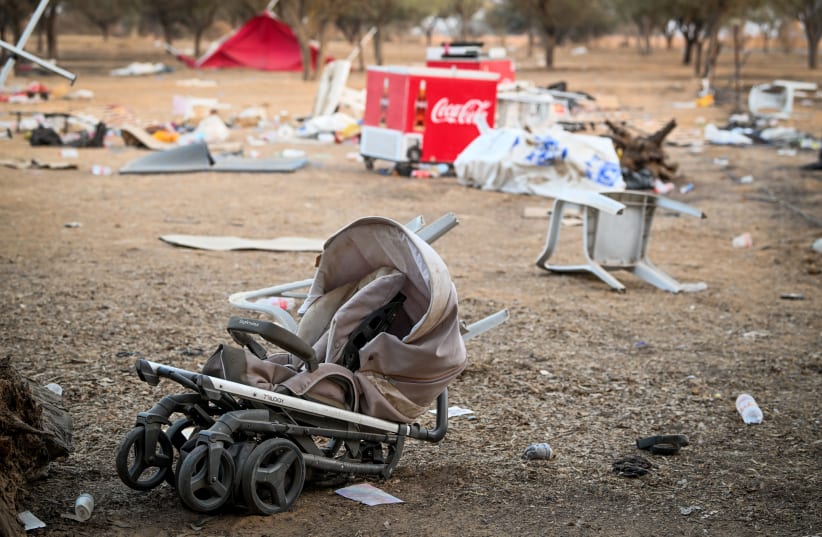
The aftermath of Hamas's Nova music festival massacre in Re'im, southern Israel, on October 7, 2023. Picture taken November 2, 2023 (photo credit: Arie Leib Abrams/Flash90)
The aftermath of Hamas's Nova music festival massacre in Re'im, southern Israel, on October 7, 2023. Picture taken November 2, 2023
(photo credit: Arie Leib Abrams/Flash90)

Civilians who acted in a heroic or exceptional manner during the October 7 massacre and died in the process will now receive dedicated recognition and commemoration from the government, the IDF announced on Wednesday.

The same framework will apply to hostages who were murdered in captivity, as well as individuals who served in the IDF during the "Iron Swords" war and were killed in terror attacks outside of their active service. 

The statement said the decision reflects the "state’s commitment to honor civilians who demonstrated extraordinary bravery, while maintaining the distinction between soldiers and civilians." The framework distinguished them from IDF casualties and victims of terror attacks.

JPost Videos

The groups eligible under the framework are: Civilians who fought during the October 7–8, 2023 attack, meeting criteria including time, location, connection to the IDF, proactive combat or rescue activity, and death in battle; hostages who were murdered or killed in captivity in Gaza; and reservists who served in the IDF during the “Iron Swords” war and were killed in hostile acts while not on active duty.

The recognition of their acts will include military representation at a civilian funeral ceremony in a civilian cemetery, as well as a special plaque on their gravestone indicating the individual's unique status, alongside the national emblem.

 Israel's Prime Minister Benjamin Netanyahu takes part in a ceremony marking the Hebrew calendar anniversary of the Hamas attack on October 7 last year that sparked the ongoing war in Gaza, at the Mount Herzl military cemetery in Jerusalem on October 27, 2024. (credit: GIL COHEN-MAGEN/POOL VIA REUTERS)Enlrage image
Israel's Prime Minister Benjamin Netanyahu takes part in a ceremony marking the Hebrew calendar anniversary of the Hamas attack on October 7 last year that sparked the ongoing war in Gaza, at the Mount Herzl military cemetery in Jerusalem on October 27, 2024. (credit: GIL COHEN-MAGEN/POOL VIA REUTERS)

Military-style commemoration

"This will visibly and symbolically honor the uniqueness of the event, similar to a military gravestone," the statement read.

Additionally, the special status of the individual will be mentioned at the annual state memorial ceremony for victims of hostile acts, held at the Mount Herzl memorial in 2025.

Their names will also be added to the national memorial website for victims of hostile acts.

The framework was debated in March after Defense Minister Israel Katz proposed that a dedicated framework be established to honor and commemorate civilians who fell victim to acts of terror and demonstrated exceptional bravery in the Iron Swords war. 

The idea partially resulted from the demand of the family of Alon Shamriz, who was kidnapped to Gaza on October 7 and mistakenly shot by the IDF. The state previously rejected his family's request to recognize him as an IDF casualty.

A designated committee within the IDF Personnel Directorate, including a representative from the Organization for Victims of Terror Attacks, will evaluate each case individually to determine who qualifies under this new status. 


Jerusalem Post Staff

Source: https://www.jpost.com/israel-news/article-849475

Follow Middle East and Terrorism on Twitter

Is Europe Still Fighting Lost Energy Wars? - Drieu Godefridi


by Drieu Godefridi

Would the Trump administration let stand a new European encroachment on US sovereignty? It looks as if the EU -- once again is trying to dictate the law on American soil.


  • The signal is clear: in the United States, no one any longer jokes with those who hinder the economy and trample on the rights of others under the guise of idealism.

  • Greenpeace would apparently like organizations such as itself to directly or indirectly cause hundreds of millions of dollars worth of damage, while preventing any court from intervening.

  • The applicability of the EU anti-SLAPP directive to the judgment in question is doubtful...

  • It looks as if the EU, through this directive, once again is trying to dictate the law on American soil. Transatlantic tensions, already fuelled by trade disputes, issues of free speech, NATO funding and the war in Ukraine, would mount further.

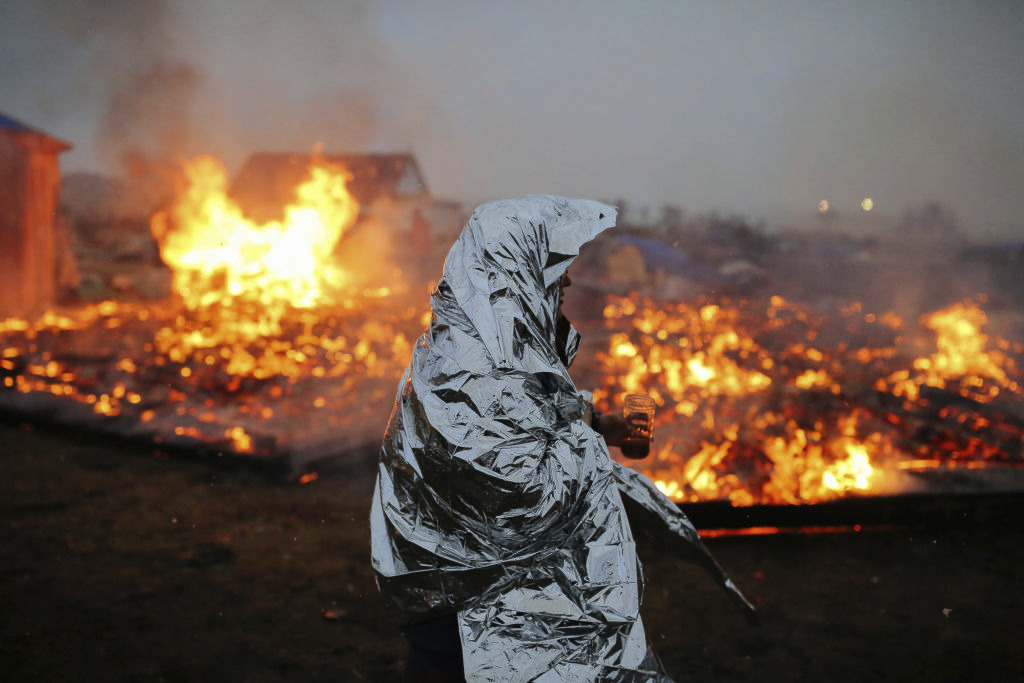
In a spectacular decision, a court in North Dakota ordered the environmentalist organizations that comprise Greenpeace to pay $665 million in damages for "defamation, trespass, nuisance, civil conspiracy and other acts," to Energy Transfer, the company behind the Dakota Access Pipeline. Pictured: Activists who attempted to block construction of the Dakota Access Pipeline set structures on fire at the Oceti Sakowin protest camp, on February 22, 2017 in Cannon Ball, North Dakota. (Photo by Stephen Yang/Getty Images)

The news came down like a thunderbolt. In a spectacular decision, the Morton County courthouse in Mandan, North Dakota, ordered the environmentalist organizations that comprise Greenpeace to pay $665 million in damages to Energy Transfer, the company behind the Dakota Access Pipeline. The figure appears a monumental slap in the face to Greenpeace, which was sued by Energy Transfer for "defamation, trespass, nuisance, civil conspiracy and other acts," following demonstrations against the pipeline project in 2016 and 2017.

The North Dakota jury did not pull any punches. Greenpeace was declared liable; its methods illegal and its actions harmful. Greenpeace has already announced that it will appeal.

Beyond the legal wrangling, this ruling raises the question: what if this case marks the start of a major transatlantic rift between an America defending its energy interests and a Europe mired in its green romanticism?

Let us look at the facts. The Dakota Access Pipeline -- a nearly 1,900-kilometer artery that carries crude oil from North Dakota's Bakken shale formation to Patoka, Illinois -- has been the focus of much passion. As early as 2016, Sioux and Cheyenne Indian tribes, supported by an armada of activists, celebrities and organizations including Greenpeace, denounced the project as threatening sacred tribal lands as well as water resources. Tens of thousands of signatures poured in on petitions, and protests at the construction sites paralyzed the work -- all costing Energy Transfer some $300 million in delays and extra costs.

The anger often degenerated into outright violence and large-scale vandalism, much to the annoyance of local populations, who became fed up with these crusaders who had appeared from elsewhere. Faced with this chaos, President Donald J. Trump, freshly inaugurated in 2017, issued a presidential memorandum to speed up the project, while brushing aside what he called an "incredibly cumbersome and horrific authorization process."

The pipeline became operational in May 2017. Energy Transfer nevertheless immediately decided to go on a legal offensive. According to Energy Transfer, Greenpeace had orchestrated the demonstrations, financed the disorder and spread lies about the pipeline.

The jury in Mandan, North Dakota, agreed on March 19, 2025, and ruled that Greenpeace International, Greenpeace USA and Greenpeace Fund Inc. must pay combined damages of $665 million to Energy Transfer, a sum that sounds like a declaration of war on environmentalist NGOs. The days of omnipotence and de facto impunity for environmentalist NGOs were over.

Greenpeace USA is now crying that it will be forced into bankruptcy. Really? With its network of donors -- small, large and mega-large -- the NGO should be able to bounce back. The signal is clear: in the United States, no one any longer jokes with those who hinder the economy and trample on the rights of others under the guise of idealism.

Meanwhile, Europe is getting restless. Greenpeace International has invoked the European anti-SLAPP directive -- an EU initiative to protect individuals, especially journalists and activists, from abusive lawsuits (Strategic Lawsuits Against Public Participation) aimed at silencing criticism or public participation, by providing safeguards like early dismissal of unfounded claims and financial protections. The anti-SLAPP directive, adopted in April 2024 by a European Union always ready to support and finance the most extremist NGOs, concretely aims to immunize these organizations against legal proceedings. Greenpeace International filed a lawsuit against Energy Transfer under the anti-SLAPP directive in the Netherlands, in February 2025.

Greenpeace related the incident to broader environmental concerns, according to its statement:

"Based in the Netherlands, Greenpeace International is citing Dutch law on torts and abuse of rights, as well as Chapter V of the EU Directive, adopted in 2024, which protects organisations based in the EU against SLAPPs outside the EU, and entitles them to compensation. The Directive, along with existing Dutch law, paves the way for GPI to pursue remedies against three entities in ET's corporate group... for the damage it has suffered and continues to suffer as a result of the SLAPP suits and related actions in the US. Greenpeace International sent Energy Transfer a Notice of Liability in July 2024, summoning it to withdraw its lawsuit in North Dakota and pay damages, or face legal action. Energy Transfer refused to do so."

Greenpeace would apparently like organizations such as itself to directly or indirectly cause hundreds of millions of dollars worth of damage, while preventing any court from intervening.

The applicability of the EU anti-SLAPP directive to the judgment in question is doubtful, because:

  1. The anti-SLAPP directive in question has not yet entered into force in the Netherlands.
  2. It is first and foremost Greenpeace USA that has been found liable (for $400 million) for acts committed in the USA, while the EU's anti-SLAPP directive is solely related to cross-border disputes. According to Article 1 of the anti-SLAPP directive, it pertains to clearly baseless claims or exploitative legal actions in civil cases that have cross-border elements, targeting individuals or entities — known as SLAPP targets — due to their involvement in public participation. The requirement of 'cross-border implications' means that SLAPPs related solely to domestic cases are not covered by the directive.
  3. Greenpeace was found liable for activities that led to violence, not for having expressed its opinion. Incitement to violence is not an opinion, and the EU anti-SLAPP directive does not cover acts of violence. Its primary focus is on protecting individuals and entities engaged in public participation from manifestly unfounded claims or abusive court proceedings in civil or commercial matters with cross-border implications.

If judges in the Netherlands nevertheless find in favor of Greenpeace International, anything is possible: such a ruling would be another slap(p) in the face to the United States. Would the Trump administration let stand a new European encroachment on US sovereignty? It looks as if the EU, through this directive, once again is trying to dictate the law on American soil. Transatlantic tensions, already fuelled by trade disputes, issues of free speech, NATO funding and the war in Ukraine, would mount further.

Beyond this legal duel, there is a clash of civilizations at play. On one side, Trump's America, driven by the mantra "drill, baby, drill" and a newfound pride in fossil fuels. Shale oil and gas, abundant and cheap, have made America the world's leading producer of hydrocarbons. The US is seeing energy independence boosted by massive exports of liquefied natural gas.

On the other side, a Europe stubbornly pursuing its Green Deal, a project as costly as it is illusory, sacrificing its competitiveness on the altar of environmentalist dogma. While in Europe, factories are closing, they are reopening in the United States. The contrast between pragmatism and ideology is striking.

What can we learn from all this? America has chosen its side: energy sovereignty, prosperity, an end to impunity for NGOs that engage in illegal activities. Greenpeace may appeal and its activists may cry "gagging prosecution," but the tide clearly seems to be turning.


Drieu Godefridi is a jurist (University Saint-Louis, University of Louvain), philosopher (University Saint-Louis, University of Louvain) and PhD in legal theory (Paris IV-Sorbonne). He is an entrepreneur, CEO of a European private education group and director of PAN Medias Group. He is the author of The Green Reich (2020).

Source: https://www.gatestoneinstitute.org/21523/eu-greenpeace-dakota-access-pipeline

Follow Middle East and Terrorism on Twitter

Tuesday, April 8, 2025

A majority of self-identified leftists think political assassination is a societal good - Andrea Widburg


by Andrea Widburg

This is scarcely surprising considering that Democrats have long since become a death cult, but the metastasis to political murder is terrifying.

Before the 21st century, Democrats were mostly working- and middle-class Americans who believed in the rule of law and loved America. The murderous ones—the violent Black Panthers and Weathermen—existed on the fringe. Now, though, the fringe has moved to the heart of the Democrat party, which is a death cult. And like all death cults, it’s requiring greater sacrifices. The latest manifestation is that a majority of self-identified leftists believe that assassinating people for political ends (e.g., Donald Trump and Elon Musk) is fully justified.

One of the things that radical Muslims and leftists have in common is that they are death cults. The Islamic penchant for rape, torture, and murder on gleefully sadistic scales (e.g., the Yazidis, Israelis, and Christians in Africa) speaks for itself. However, we in the West have been indoctrinated not to recognize the Democrat death cult for what it is.

Abortion, once framed as a rare act to protect women from abuse or death, is now a massive industry with heavy government funding. Women no longer feel it’s a last resort. It is, instead, a first resort to preserve a woman’s comfort level and even something to be proudly “shouted.” Since 1973, it’s estimated that over 63 million babies have been shouted out of existence. Even the pagans limited themselves to sacrificing only a few babies, and they did it out of a desperate need to placate the gods, not to follow their bliss.

Image: X screen grab (cropped).

The climate change belief system is also a death cult. Its more fervent adherents are open about the need to reduce the human population by 90% or so. The rank and file, who also believe that Mother Gaia (that is, the insensate Earth) can only be saved by erasing the human beings who give the Earth value, won’t speak in terms of mass depopulation, but they will stop having children.

And finally, transgenderism is a death cult. When you are pushing an ideology that encourages people to sterilize their children or themselves, and when you are advocating “care” that radically increases suicide rates...that’s a death cult.

In addition to death, leftism is a violent cult. While leftists like to focus obsessively on January 6, the reality is that the greatest amount of political violence in America is tied to the left. Most recently, George Floyd’s drug death in 2020 led to protests so violent that they resulted in the highest recorded civil disorder damages in American history: $1-2 billion in insured damages and over two dozen people killed. However, the Democrat party’s violent antics stretch back much further:

  • The American Civil War
  • The KKK
  • The 1960s protests
  • The 1970s underground bombings and shootings (e.g., the Weathermen), all of which came from the American left and, as Bill and Bernardine Ayers show, melded into the Democrat party
  • The Ferguson riots after Michael Brown’s suicide by cop
  • The Baltimore riots after Freddie Gray died
  • The 2017 attempt to assassinate the entire Republican House leadership.
  • The antisemitic violence across America’s campuses since October 7, 2023
  • The mourning when the two assassination attempts on Trump failed
  • The celebration of Luigi Mangione for assassinating an insurance company executive
  • The war on Tesla owners, even though those same owners were once leftist darlings because many bought their cars as part of the climate death cult

And that’s just what I can think of off the top of my head.

But the blood lust is growing. The Network Contagion Research Institute and the Rutgers University Social Perception Lab conducted a joint poll of 1,264 people to determine their perceptions about politicized violence. Although we’ve all seen the verbal insanity unleashed against Donald Trump and Elon Musk since the election, it was still shocking to learn that a majority of leftists, especially those who escaped X’s allegedly toxic atmosphere for the “safe space” of Blue Sky, support political violence, including assassination:

The findings signal a threat to political stability and public safety. Key data points include:

  • Murder Justification: 31% and 38% of respondents stated it would be at least somewhat justified to murder Elon Musk and President Trump, respectively.
    • These effects were largely driven by respondents that self-identified as left of center, [fn. omitted] with 48% and 55% at least somewhat justifying murder for Elon Musk and President Trump, respectively, indicating significantly higher justification for violence against these figures.
  • Property Destruction: Nearly 40% of respondents (39.8%) stated it is at least somewhat acceptable (or more) to destroy a Tesla dealership in protest.
  • Psychological/Ideological Correlations with Assassination Culture: These beliefs are highly correlated with one another, as well as with the justification of the murder of the UnitedHealthcare CEO and hyper-partisan left-wing ideology.

[snip]

  • Online Amplification of Radical Ideation: BlueSky plays a significant and predictive role in amplifying radical ideation.

You can read the whole study here, although I warn you that it’s deeply depressing.

However, it’s not surprising. When it comes to Democrat violence, it’s not just the Antifa types. The mainstream media, whether MSNBC, The Washington Post, CNN, or the harridans of The View, encourage radicalism and constantly hint that violence is an acceptable approach to politics:

Democrats outside of the media, and even in the halls of Congress, are also preaching the language of violence: 

America has gone through violent convulsions before. If you read Bryan Burrough’s riveting Days of Rage: America's Radical Underground, the FBI, and the Forgotten Age of Revolutionary Violence, you’ll be reminded of the violence that leftist revolutionaries brought to America, with bombings becoming a regular occurrence in the 1970s. However, back in the day, most Americans, including the media, were appalled, and these violent actors were recognized and denigrated as fringe activists who had to be stopped before destroying the country.

It's different this time. These are not fringe ideas. They lie at the heart of the Democrat party and, as the old movie tagline goes, we should “Be afraid. Be very afraid.” Unless America’s law enforcement and justice system rein in these violent impulses and actions immediately, they can quickly metastasize with devastating consequences for America. 


Andrea Widburg

Source: https://www.americanthinker.com/blog/2025/04/a_majority_of_self_identified_leftists_think_political_assassination_is_a_societal_good.html 

Follow Middle East and Terrorism on Twitter

The Russia Tariff Canard - Charlton Allen


by Charlton Allen

The latest political hit job on Donald Trump’s tariff policy—accusing him of “sparing” Russia while targeting Ukraine—stands out for its sheer dishonesty.


Cheap political attacks have been part of American life since before the ink dried on the Constitution. Even George Washington took fire from scornful scribes accusing him—the man who freed us from the shackles of the British crown—of monarchist leanings.

But the latest hit job on Donald Trump’s tariff policy—accusing him of “sparing” Russia while targeting Ukraine—stands out for its sheer dishonesty. It’s not just lazy. It’s willfully misleading.

The claim—explicit or implied—echoed across the New York Times, Axios, BBC, and the global peanut gallery—that Trump “spared” Russia while targeting Ukraine is more than misleading. It’s a lazy distortion at best—built to deflect attention from what’s actually happening: a long-overdue reset of U.S. trade policy that, for once, puts America’s interests first.

Let’s be clear: Russia has not been “spared.” It’s already under a battery of sanctions and trade restrictions that make any discussion of tariffs functionally moot. Under Trump and Biden, U.S. policy has effectively walled off Russian goods—sanctioning everything from energy and banking to luxury items.

There’s no point in slapping tariffs on goods that can’t legally enter the country in the first place. Trump’s critics pretend not to understand that tariffs aren’t symbolic gestures—they’re economic instruments. You don’t use a wrench to saw a plank.

Ukraine, by contrast, gets preferential access to U.S. markets under special tariff regimes. Trump’s plan to realign that access isn’t about punishment but leverage. The Trump Doctrine doesn’t sort the world into saints and sinners, as the Beltway crowd likes to imagine. It treats every relationship—friend or foe—the same way: with a simple test of reciprocity, sovereignty, and strength calibrated by what serves American interests.

And here’s where the critics give up the game: the same media and political class now rending their duty-free Armani suits in performative agony over Trump’s tariffs on Ukraine were silent—or worse, supportive—when the Biden administration waived sanctions on the Nord Stream 2 pipeline in 2021.

That waiver let Russia’s state-aligned energy project proceed, cutting Ukraine out of transit revenues and deepening Germany’s dependence on Russian gas. If Trump had done the same, it would’ve triggered another impeachment.

But because it was Biden, the foreign policy elite just nodded along. Worse still, despite all the wailing from Eurocentric wonks on both sides of the Atlantic, it was that blunder, not tariffs or American steel, that helped keep the Russian war machine humming. Their pipeline. Their mistake.

So why the outcry now? Because Trump’s critics—ever desperate to cast him as a Kremlin pawn, facts be damned—can’t help themselves. Never mind the spectacular collapse of their collusion narrative over the past decade. They’ve pulled the Russia card yet again, twisting trade policy into their favorite bête noire: Russia collusion, the sequel no one asked for… and no one with sense wants to (Nord)stream.

The problem? The facts—stubborn things that they are—refuse to cooperate.

During an interview on ABC’s This Week, Kevin Hassett, who headed Trump’s Council of Economic Advisers, stated that tariffs aren’t about moral posturing—they’re a strategic form of leverage. Hassett explained that Russia was temporarily exempted due to ongoing peace negotiations with Ukraine, and that it would be “inappropriate” to disrupt those talks with a new trade barrier.

He emphasized that the exemption wasn’t permanent, noting, “It doesn’t mean that Russia, in the fullness of time, is going to be treated wildly different than every other country.” Hassett also revealed that more than 50 countries had already reached out to negotiate in response to the tariff announcement—a sign that the policy is working precisely as intended: forcing foreign powers to the table.

Moreover, the moral indignation rings hollow coming from a global class that funded Putin’s war machine for years while mocking Trump for trying to stop it. It was Trump who sanctioned Nord Stream 2. It was Biden who lifted those sanctions. And now we’re supposed to believe Trump is the one helping Russia?

The tired Washington consensus is unraveling—and Trump’s tariffs are both a symptom and a cure. They reject the notion that America must continually subsidize its allies, even as those same allies flood our markets, erode our industries, and evade their share of global responsibilities. If Ukraine wants continued American support, it must deal with a Washington that now operates from strength, not guilt.

In the end, this Russia narrative is a hackneyed canard—a tired distraction designed to obscure what’s really happening: a foundational reset in how America deals with friends and foes. 

And make no mistake, this isn’t Obama’s dusty reset button from Staples—it’s a serious recalibration grounded in strength, reciprocity, and less entanglement in the failed foreign and economic orthodoxies of the past. Washington—George, that is—would be proud.

Yet Trump’s critics remain trapped in an early Cold War archetype, where every shift in U.S. policy must somehow trace back to Moscow. Unable to grasp the new logic, they fall back on the only script they know: McCarthyite smears and reheated collusion drama.

But the truth is more straightforward. Tariffs on Ukraine are negotiable. American sovereignty is not. And those spreading this nonsense aren’t defending Ukraine—they’re defending the failed globalism that made Ukraine vulnerable in the first place.

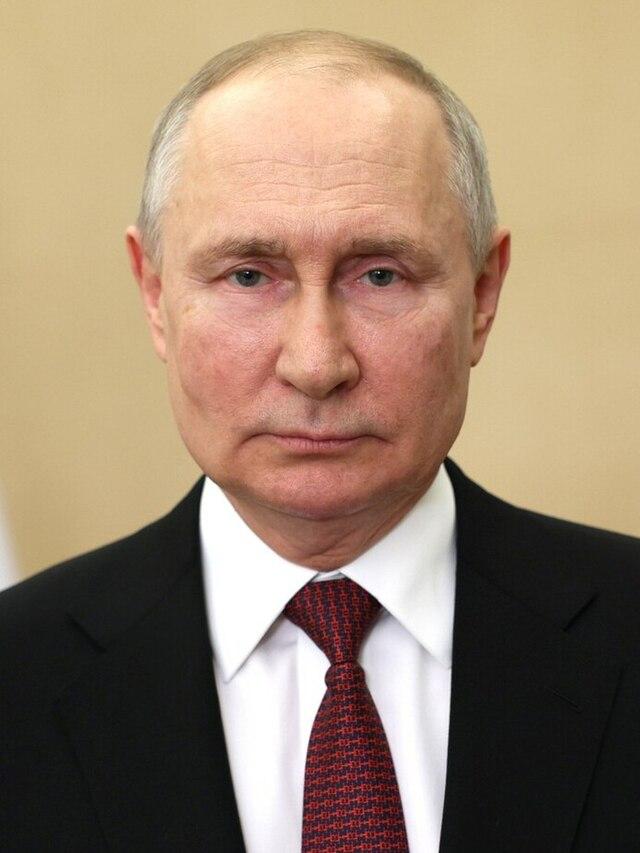
Kremlin.ru, CC BY 4.0 <https://creativecommons.org/licenses/by/4.0/legalcode.en>, via Wikimedia Commons

Image: Kremlin.ru, CC BY 4.0, via Wikimedia Commons, cropped.


Charlton Allen is an attorney, former chief executive officer, and chief judicial officer of the North Carolina Industrial Commission. He is the founder of the Madison Center for Law & Liberty, Inc., editor of The American Salient, and the host of the Modern Federalist podcast. X: @CharltonAllenNC

Source: https://www.americanthinker.com/articles/2025/04/the_russia_tariff_canard.html

Follow Middle East and Terrorism on Twitter

Gaza official admits natural deaths listed as war fatalities - Canaan Lidor


by Canaan Lidor

The rare admission followed an analysis that showed some 3,400 reported casualties from previous tallies had been dropped from the latest one.


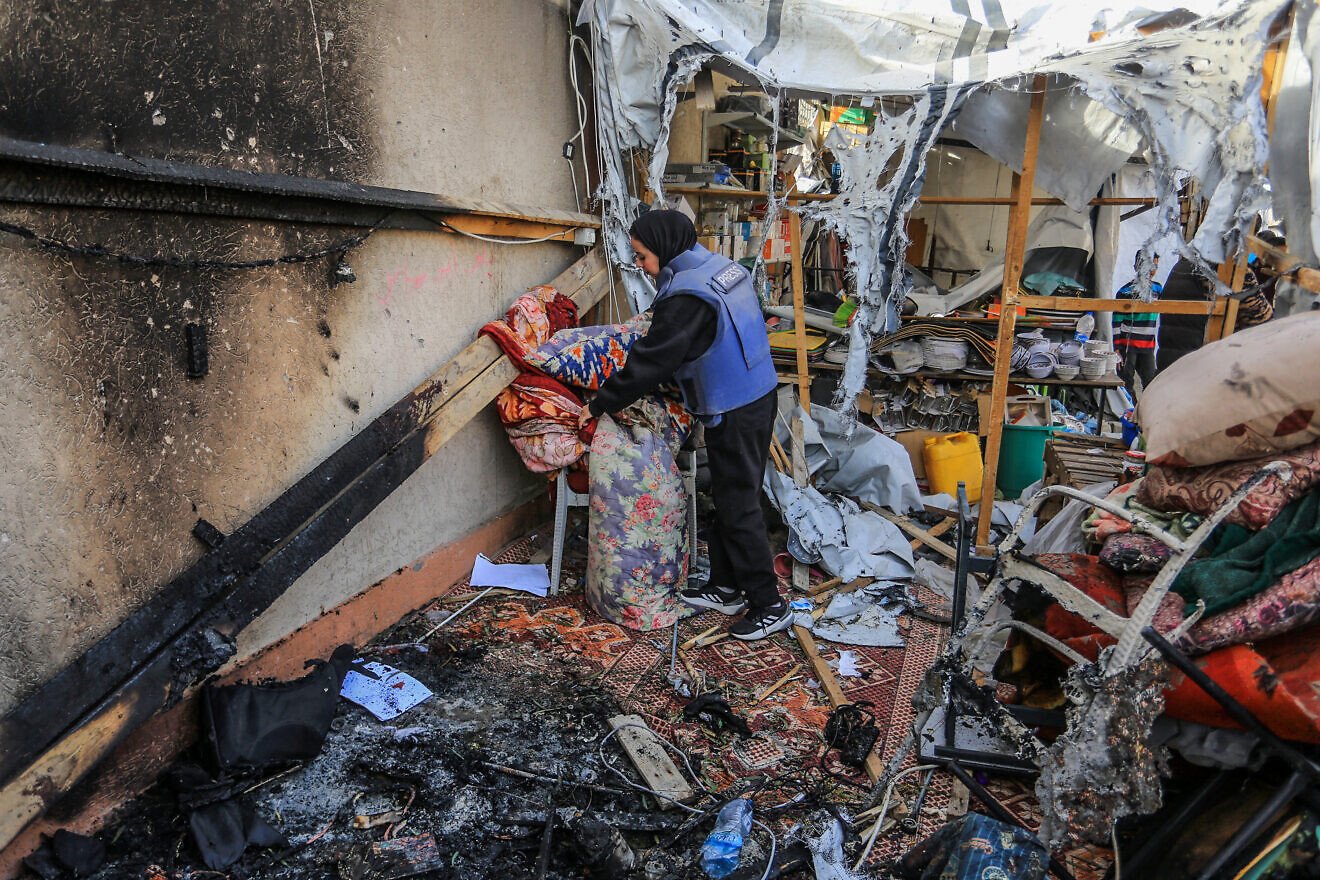
Palestinians at the site of an Israeli airstrike in Khan Yunis, in the southern Gaza Strip, on April 7, 2025. Photo by Abed Rahim Khatib/Flash90.

Many of those listed as war fatalities in Gaza actually died of natural causes or did not die at all, a Palestinian health official working for Hamas admitted on Saturday, following an analysis that showed massive discrepancies in casualty tallies.

The head of the statistics team at Gaza’s Hamas-controlled health ministry, Zaher al-Wahidi, made the admission to Sky News after an analysis by the HonestReporting nonprofit last week found that some 3,400 individuals listed as war casualties in earlier tallies had been dropped from the ministry’s latest update.

Comparing the October and August tallies to the March one, HonestReporting researcher Salo Aizenberg found “around 3,400 names missing” from the latest one, “including over 1,000 minors,” he told JNS.

“We realized that a lot of people died a natural death,” Wahidi told Sky News regarding the October tally. “Maybe they were near an explosion and they had a heart attack, or houses caused them pneumonia or hypothermia. All these cases we don’t [attribute to] the war,” he said.

According to Sky News, 1,852 people appearing in October’s official list of war fatalities were removed from the March one after it was found that some had died of natural causes or were alive but had been imprisoned. In total, 3,952 names have been removed in several corrections from Gaza’s reported death toll since the war began, according to the outlet.

Whereas the Gaza Health Ministry had previously admitted error that it attributed to reporting mechanism issues, it had not conceded that natural deaths were counted along with war casualties.

The March statistics changed the age distribution of reported fatalities in Gaza: Of all deaths recorded by Hamas between the ages of 13 to 55, which is the general combat age for Hamas fighters, 72% were male, according to the HonestReporting analysis.

Sky News in its analysis said that 44% of remaining deaths were “working-age men,” meaning men aged 18-60, while in the previous tally they comprised 41%. The percentage of women dropped from 19% in the November tally to 17% in the corrected March tally, according to Sky News. The list of deaths provided by the Hamas-run ministry stood at 50,609 on Saturday following the removals.

The Israel Defense Forces has said some 17,000 terrorists have been killed in Gaza since Oct. 7, 2023, when approximately 6,000 Hamas terrorists invaded Israel, murdering some 1,200 people and abducting another 251. Israel launched an ongoing military campaign to dismantle Hamas and retrieve its hostages.

The admission that natural deaths had been included in the war casualty lists is “a major issue,” said Aizenberg. Before his work for HonestReporting, which focuses on exposing anti-Israel bias in the media, Aizenberg participated in the writing of a report on Gaza death statistics for the London-based Henry Jackson Society security think tank. That report from December indicated that the latest casualty figure at the time included the approximately 5,000 people who die of natural causes each year in the Gaza Strip.

To date, the Hamas-run ministry has not published a list of natural deaths since Oct. 7, 2023. The latest admission “means that every list that they’ve ever issued is a mix of war deaths and natural deaths,” said Aizenberg.

The Health Ministry figures also do not distinguish between combatants and noncombatants.


Canaan Lidor

Source: https://www.jns.org/gaza-official-admits-natural-deaths-listed-as-war-fatalities/

Follow Middle East and Terrorism on Twitter

Art of the Tariff Deal: Dozens of foreign powers negotiate for free trade instead of retaliation - Ben Whedon and Steven Richards


by Ben Whedon and Steven Richards

Preliminary announcements from Trump himself and senior administration officials suggested that unlike China, dozens of key trading partners were prepared to negotiate favorable trade agreements to eliminate or at least reduce the tariffs.


Many politicians and policymakers predicted that Monday would be a “Black Monday.” While the equities market closed lower, the drops were at a lower pace than last week. In connecting the tariffs to the market's volatility, part of the evenness of Monday's trading came on the heels of news that numerous American trading partners agreed to negotiate with President Donald Trump and offered free trade deals to ratchet down his “reciprocal tariffs.”

Last Wednesday, which Trump dubbed “Liberation Day,” the president announced large-scale tariffs on nearly every country, declaring that the measures would help to end American trade deficits with foreign powers and bolster domestic production of goods. Thursday and Friday witnessed precipitous declines in the stock market, though the administration made clear it would hold the course.

Preliminary announcements from Trump himself and senior administration officials, moreover, suggested that many key trading partners were prepared to negotiate favorable trade agreements to eliminate or at least reduce the tariffs. 

Talking to us

“Countries from all over the World are talking to us. Tough but fair parameters are being set. Spoke to the Japanese Prime Minister this morning. He is sending a top team to negotiate!” Trump posted on Truth Social. “They have treated the U.S. very poorly on Trade. They don’t take our cars, but we take MILLIONS of theirs. Likewise Agriculture, and many other ‘things.’ It all has to change, but especially with CHINA!!!”

In the meantime, Trump urged Americans to avoid being a “PANICAN” and to have patience with the market as it adjusted to the economic rebalancing.

“The United States has a chance to do something that should have been done DECADES AGO. Don’t be Weak! Don’t be Stupid! Don’t be a PANICAN (A new party based on Weak and Stupid people!). Be Strong, Courageous, and Patient, and GREATNESS will be the result!” he posted.

Evidently, at least some investors took his advice as key indices defied predictions of a precipitous fall and instead dropped only by modest amounts. The DOW Jones closed down 0.91%, while the Nasdaq rose 0.10%, and the S&P 500 dropped 0.23%.

More than 50 countries have asked to parley 

Several Trump administration officials hit the airwaves over the weekend, shedding light on President Trump’s tariff strategy and indicating that negotiations are an important component of the plan. “So, the fact is, the countries are angry and retaliating and, by the way, coming to the table,” National Economic Council Director Kevin Hassett said during an interview with ABC News on Sunday. 

He said that the tariffs imposed last week, so far, have spurred many countries to approach the administration to begin negotiations. “I got a report from the [U.S. Trade Representative] last night that more than 50 countries have reached out to the president to begin a negotiation,” Hassett said. 

Treasury Secretary Scott Bessent said in an interview with NBC News on Sunday that the tariffs have allowed President Trump to create “maximum leverage for himself” in any trade negotiations. “More than 50 countries have approached the administration about lowering their non-tariff trade barriers, lowering their tariffs, stopping currency manipulation,” he said, echoing Hassett, but warned that talks could take time.

Some of the messaging out of the administration has been mixed, contributing to the confusion. Commerce Secretary Howard Lutnick suggested in an interview on Sunday that the tariffs were designed to do more than spur negotiations. 

“There is no postponing. They are definitely going to stay in place for days and weeks. That is sort of obvious. The president needs to reset global trade,” Lutnick told CBS News. “Everybody has a trade surplus and we have a trade deficit. We are paying away our future and our lives. Come- the countries of the world are ripping us off, and it's got to end.” 

Neither the U.S. Trade Representative nor the White House responded to requests for comment about which countries have approached Trump to negotiate a deal, but several have announced proposals publicly or are preparing negotiating teams.  

"Europe is always ready for a good deal"

Many nations initially balked at the prospect of dropping their tariffs or making other concessions in response to American tariffs, and immediately went into public outrage. At the same time, some early actors have offered generous agreements and may be poised to quickly conclude their trade disputes as Trump appears eager to strike deals. Lenient terms, moreover, may prompt other nations to follow suit in pursuing economic rapprochements with Washington.

After initially vowing to impose retaliatory tariffs of its own, the European Union has quickly reversed course and publicly floated a proposal on Monday to wipe away all tariff barriers with the United States. 

“We have offered zero-for-zero tariffs for industrial goods as we have successfully done with many other trading partners. Because Europe is always ready for a good deal. So we keep it on the table,” European Commission President Ursula Von der Leyen said at a press conference. 

The EU currently tariffs several U.S. exports, including apparel, accessories, cotton and t-shirts at a 12% rate and vehicles at a 10% rate. Some Trump administration officials have also expressed frustration with EU value-added taxes (VAT) that increase the price of imported goods, but are not a traditional tariff.

Trump spoke with Prime Minister Shigeru Ishiba on Monday morning via video call. Trump’s own announcement indicated they had set the framework for a “tough, but fair” arrangement, though Ishiba stated that "Japan has been the biggest investor in the United States for five straight years and the tariff policies could hurt our Japanese companies' investment capabilities.”

Ishiba has further agreed to send a negotiating team to the United States in order to resolve the trade dispute. The country currently faces the prospect of a 24% tariff on all of its goods. Ishiba further suggested that he would present an arrangement to the Trump White House that would involve the expansion of Japanese purchases of American liquefied natural gas (LNG), cars, and agricultural products, Bloomberg reported.

“When we negotiate with the US we want to present a package. That will take some time, but we will make it a success,” he said. Treasury Secretary Scott Bessent on Monday confirmed he would lead the American negotiations and thanked the Japanese government for its “outreach and measured approach to this process.”

Israel, for its part, has moved to eliminate all of its tariffs on American goods, with Prime Minister Benjamin Netanyahu meeting with Trump on Monday at the White House.

“I recognize the position of the United States,” Netanyahu said. “It says, you know, ‘we're allowing other countries to put tariffs on us, but we don't put tariffs on them.’ And, you know, I'm a free trade champion, and free trade has to be fair trade.”

“And I think that's basically the position that you've put forward, Mr. President, we are going to eliminate the tariffs, and rapidly,” he vowed. “I ended up [with] the opportunity to speak to Secretary Lupin yesterday. We talked about how we could affect this quickly, and I hope to bring the solution very quickly. We're not talking about intentions. We're not talking about, you know, just words. We're talking about results.”

Other key American trading partners, including Vietnam, Canada, and Argentina, have expressed interest in negotiating lowered tariffs or the elimination of trade barriers altogether, though the European, Japanese and Israeli proposals still appear to be further along.

China's immediate reaction

The Chinese responded quickly to Trump’s tariffs by imposing their own 34% tariff on American imports in retaliation. Trump, however, has offered Beijing an exit strategy from the trade dispute by threatening to cut off all negotiations entirely should they fail to walk back the tariff. To back up his threat, he further warned of an additional 50% tariff on Chinese goods if they declined.

“[I]f China does not withdraw its 34% increase above their already long term trading abuses by tomorrow, April 8th, 2025, the United States will impose ADDITIONAL Tariffs on China of 50%, effective April 9th. Additionally, all talks with China concerning their requested meetings with us will be terminated!" he warned.

He reiterated his warning to Beijing during the Monday conference with Netanyahu, saying “I have great respect for China, but they can't do this with just, we're going to have one shot at this, and no other president is going to do this, what I'm doing, and I'll tell you what, it's an honor to do it, because we have been just destroyed, what they've done to our system.”

No pain, no gain

Trump’s efforts are not without drawbacks for the United States, especially in the short term. Major indices have plummeted in recent days and prompted many calls from supporters to ease off the more substantive tariffs. Nevertheless, the administration has signaled it will move forward and prominent supporters have pointed to the drops as necessary sacrifices to achieve long-term benefits.

“Is there going to be some short term pain? Yes, but that's him pushing back against the elites,” Utah state Rep. Trevor Lee, R, said on the Just the News, No Noise television show. “That's him pushing back against those who have these big corporate corporations heavily involved in the stock market.”

“And what this is going to do is not only help with the trade deficit, and quite frankly, the same tariffs he put on his first administration were kept on by the Biden administration, so they must have done something good there,” he added. “And long term, the stock market is going to rebound. It's going to be fine. It's not even lower than it's been the last eight years. It's still way up.”

During his press conference with Netanyahu, Trump addressed the tariff negotiations with the European Union and pointed to the need of constituent nations for American investment to keep their economies afloat. He particularly pointed to European need for American energy.

“The European Union has been very, very bad to us. They don't take our cars like Japan, in that sense, they don't take our agricultural product, they don't take anything practically, and yet, they said millions of cars in a year, Mercedes Benz, Volkswagen, BMWs,” he told reporters.

“They're sending millions and millions of cars into the US. But we don't have a car that's been sold to the European Union or other places. But let's go for the European Union, and it's not going to be that way,” he went on. “It's got to be fair and reciprocal. It's got to be fair. It's not fair. We have a deficit with the European Union of $350 billion and it's going to disappear fast," Trump said. 

"And one of the reasons, and one of the ways that that can disappear easily and quickly, is they're going to have to buy our energy from us, because they need it.”


Ben Whedon and Steven Richards

Source: https://justthenews.com/nation/economy/tuedonald-tzus-art-deal-foreign-powers-capitulate-free-trade-amid-tariff-row

Follow Middle East and Terrorism on Twitter

Trump renews call to relocate Gazans to other countries - David Isaac


by David Isaac

There are "plenty" of countries willing to take in Gazans, said the U.S. president.


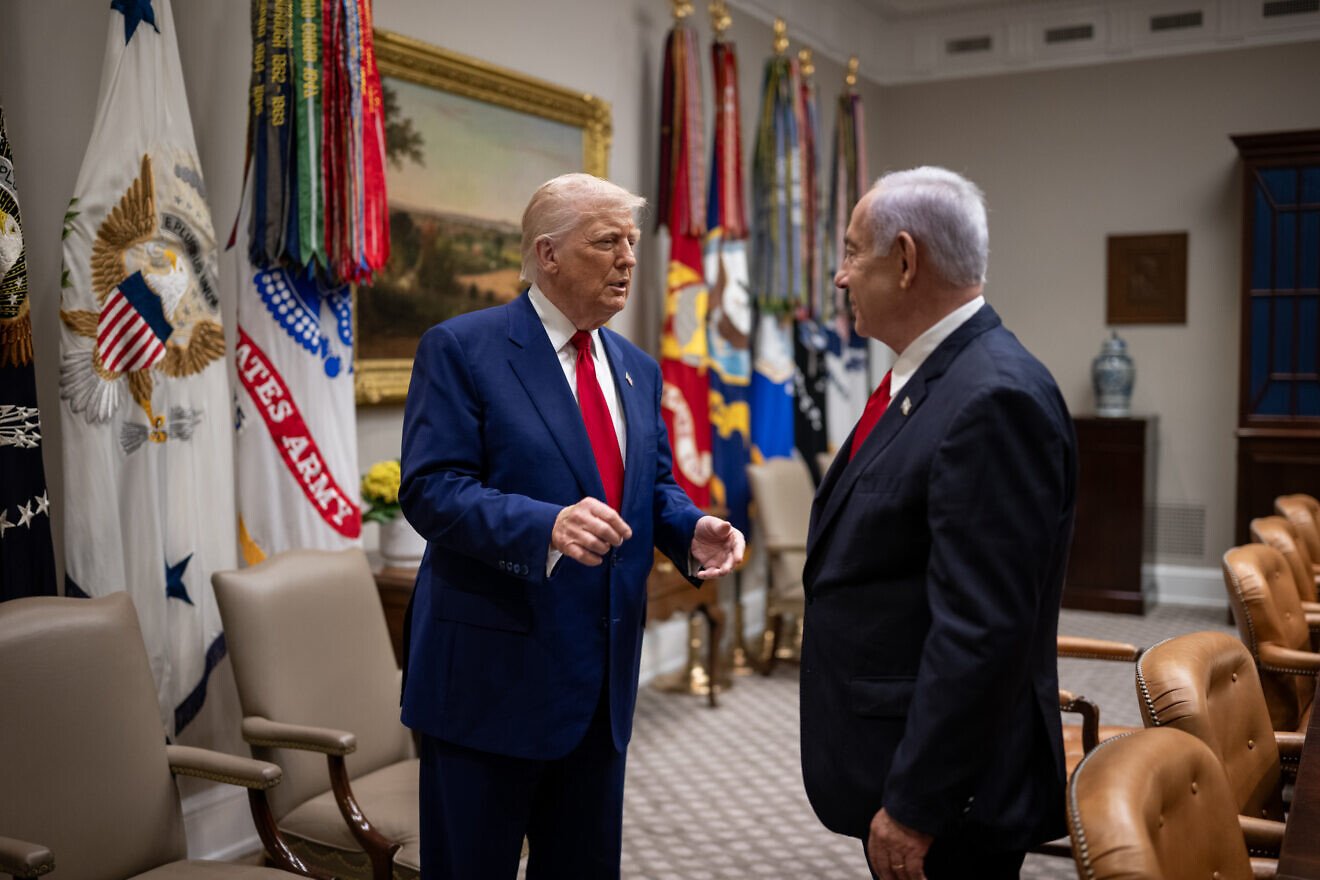
U.S. President Donald Trump greets Israeli Prime Minister Benjamin Netanyahu in the West Wing of the White House, April 7, 2025. Credit: Daniel Torok/White House.

U.S. President Donald Trump on Monday renewed his call to transfer to safer locales those Palestinians who wish to leave the Gaza Strip

“For years and years, all I hear about is killing and Hamas and problems,” he said during a press gathering in the Oval Office on Monday together with Israeli Prime Minister Benjamin Netanyahu.

“And if you take the people, the Palestinians, and move them around to different countries, and you have plenty of countries that will do that … you really have a freedom zone … a zone where people aren’t going to be killed every day,” he added.

The U.S. president first announced his Gaza relocation plan during a press conference with Netanyahu in February.

Netanyahu, who has endorsed the plan, said on Monday that “what the president is talking about is: give people a choice. Gazans were closed in. Every other place, including arenas of battle, whether it’s Ukraine or Syria, or any other place, people could leave. What is wrong with giving people a choice? … Enabling the people of Gaza to really make a choice to go wherever they want?”

He noted that Gaza’s reconstruction would take years.

A senior Israeli diplomatic source told JNS on April 4 that polls showed that many Palestinians in Gaza want to leave.

“Even before Israel restarted military action, 60% said they wanted to leave—40% of those don’t want to come back, and another 20% want to go but with the option to return. That’s more than 1 million people who say they want to leave,” said the source.

Israelis support the president’s proposal, according to polls.

The sticking point has appeared to be finding partner countries willing to take Gazans in. However, Netanyahu said on Monday that “countries are responding to [Trump’s] vision. We’re working on it. I hope we’ll have good news for you.”

Though he would not name the countries, Danny Danon, who returned to serve as Israel’s ambassador to the United Nations in 2024, having previously held the post from 2015 to 2020, said in December 2023 that South American and African countries had expressed interest in taking in Palestinians in exchange for financial remuneration.

Arab countries should lend a hand, too, as they “have an obligation to help the Palestinians. Let them help instead of giving inflammatory speeches,” said Danon.

Arab countries have so far refused to lend a hand to Trump’s proposal, instead offering alternative reconstruction plans in which Gazans would stay in place.

U.S. Special Envoy to the Middle East Steve Witkoff, in an interview with Tucker Carlson in March, appeared to reject such reconstruction plans as unrealistic.

“I think it’s really important that when you’re making these decisions that you level-set the facts,” he said, pointing out that the conditions in the Strip are far too dangerous to live in.

“How do we put people back in a battle zone where there are munitions all over the field? Or where there are these latent conditions so that a kid can fall into a hole and go 40, 50, 60 feet down, and you’d never know that he was there,” he added.

“Who would do such a thing? If we had buildings and those conditions in New York, there would be yellow tape all around it and no one would be allowed in,” said Witkoff, estimating it would take 15 to 20 years to rebuild Gaza.

He shared the president’s view that past policy prescriptions for Gaza hadn’t worked, perpetuating a cycle of war, rebuilding and more war. It didn’t make “any sense,” he said, adding, “The president began to say, ‘Maybe we need to think about it in a different way.’”


David Isaac

Source: https://www.jns.org/trump-renews-call-to-relocate-gazans-to-other-countries/

Follow Middle East and Terrorism on Twitter