by Nima Gholam Ali Pour
Can the US no longer defeat its enemies? Has the regime of the mullahs transformed Iran into a country that can actually defy the US?
At some point, people will also ask the obvious question: if the US had military dominance, why is the regime still in power? This is a regime that defied America yet remains in power. What does that mean? Can the US no longer defeat its enemies? Has the regime of the mullahs transformed Iran into a country that can actually defy the US? If so, then they have fulfilled the promise they made to the people in 1979. Iran was supposed to become a country that would not be ruled by "American imperialism." Through the Islamabad MOU, the mullahs have fulfilled that promise.
What people in Iran see is that the United States made promises that this regime would be removed from power. The US and Israel did everything they could and failed. The Islamabad MOU gives the impression that Iran is the victor dictating its terms to the US. All of this provides a great deal of legitimacy to a regime whose ideology is based on hostility toward the US and Israel.
The Islamabad MOU will not lead to peace.
Every Friday, the regime's supporters chant, "Death to America, Death to Israel." The regime does not promise welfare reforms or tax cuts. Its ideology is hostility toward the United States and Israel -- and by appearing as the victor in this war, it has gained legitimacy.
This is an aggressive regime that will start more wars and that must be removed from power.
Peace with the Islamic Republic of Iran is a fantasy. Both Obama and Trump appear to have embraced that fantasy, and future generations, along with the Iranian people, will pay the price for it.
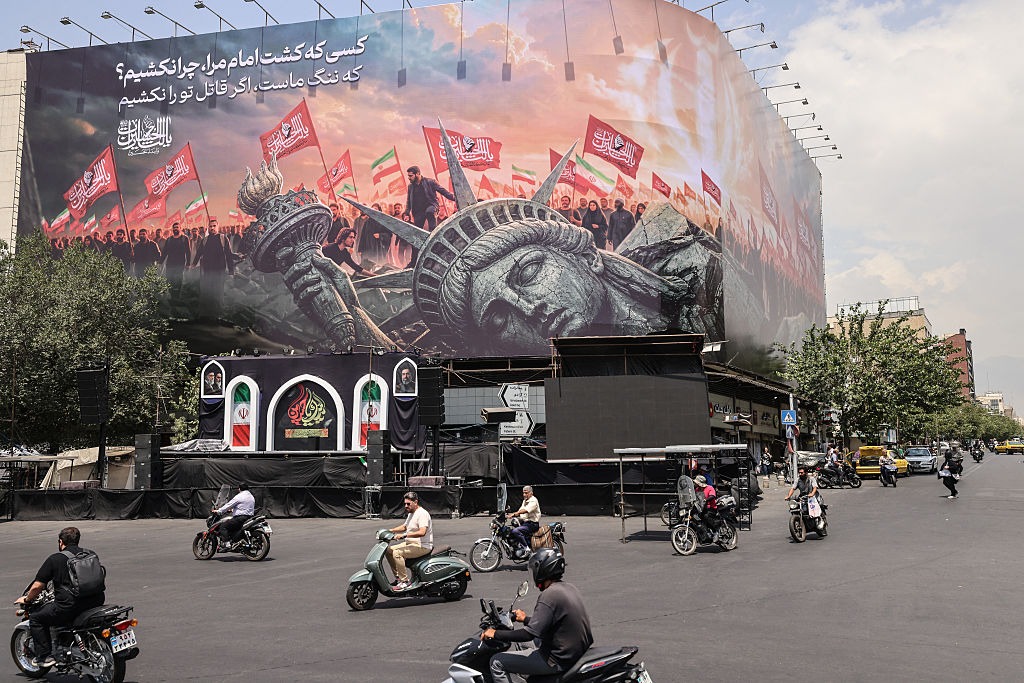
The US and Israeli military conflict with Iran, which began on February 28 and does not appear to have come to an end, was a complete failure for both the United States and Israel. If this has not yet been recognized by everyone because the current US administration needs to portray itself as victorious for the midterm elections, it is nevertheless important to see this reality.
The Islamic Republic of Iran has so far emerged as the victor from this military conflict. The Islamabad Memorandum of Understanding (MOU) cements the current regime in Iran and its legitimacy among the enemies of the United States and Israel, especially jihadists. President Donald Trump himself keeps repeating that he is not seeking regime change in Iran.
In the public narrative, a military victory for the Islamic Republic has always been defined as the defense of Iranian territory and the survival of the Islamist regime. This definition also applied when Iraq invaded Iran in 1980.
Although the US did not play a direct role in the Iran-Iraq War, events involving the US were nevertheless used to portray the inconclusive outcome of the war as evidence that the Iranian regime had stood up to "American imperialism" and survived.
The same military figures who, by their own account, stood up to "American imperialism" during the Iran-Iraq War later went on to wage proxy wars across the Middle East and continued their war against the US in Iraq by killing many American soldiers. The Islamic Revolutionary Guard Corps' Qasem Soleimani, Mohammed Bagher Ghalibaf, Abbas Araghchi, and Ali Larijani are all veterans of the Iran-Iraq War. The examples of such veterans within the Iranian regime are countless – and they believe they already defeated "American imperialism" once by repelling Saddam Hussein's invasion of Iran.
Now that they have defended their regime and Iranian territory for a second time, they naturally believe that they have defeated "American imperialism" again. It does not matter that the US has decimated the regime's leadership and achieved military dominance. As in the Iran-Iraq War, the deaths of political and military leaders were portrayed as acts of martyrdom, and in the current narrative of the Islamic Republic, dying as a martyr is considered an honor.
The military dominance of the United States and Israel will be compared to the Battle of Karbala in 680, where Imam Hussein was defeated by the vastly superior army of Caliph Yazid. The argument will be that Iran was an underdog, just like Imam Hussein, but that "the truth" and what was "morally right" ultimately triumphed.
This is the theological message at the heart of the story of Karbala. It was used by the regime even when the Iran-Iraq War was going in Iraq's favor.
Of course, one may ask whether the Iranian people will embrace these religious messages once again, 38 years after the end of the Iran-Iraq War. That is by no means certain. The regime, however, has not fallen. When a person is portrayed as a martyr over and over again through parades, films, and books, people eventually begin to accept that narrative. A repeated lie eventually becomes an indisputable truth. That is how propaganda works.
At some point, people will also ask the obvious question: if the US had military dominance, why is the regime still in power? This is a regime that defied America yet remains in power. What does that mean? Can the US no longer defeat its enemies? Has the regime of the mullahs transformed Iran into a country that can actually defy the US? If so, then they have fulfilled the promise they made to the people in 1979. Iran was supposed to become a country that would not be ruled by "American imperialism." Through the Islamabad MOU, the mullahs have fulfilled that promise.
One can, of course, debate and question all of this. What people in Iran see is that the United States made promises that this regime would be removed from power. The US and Israel did everything they could and failed. The Islamabad MOU gives the impression that Iran is the victor dictating its terms to the US. All of this provides a great deal of legitimacy to a regime whose ideology is based on hostility toward the US and Israel.
Even if the Iranian people are dissatisfied with the regime, they see that it can defend Iran's territorial integrity and deliver on what it promises -- which has always been to defy the United States and "American imperialism."
Every Friday, the regime's supporters chant, "Death to America, Death to Israel." The regime does not promise welfare reforms or tax cuts. Its ideology is hostility toward the United States and Israel -- and by appearing as the victor in this war, it has gained legitimacy.
We never needed to end up in this situation at all. Even without being a military expert, it was obvious from the outset that the US had no plan for how to remove the Iranian regime when the war began at the end of February. There was no step-by-step roadmap from the start of the operations to the fall of the regime.
After the Twelve-Day War last year, it became clear that for such a scenario to be feasible, it would be necessary to arm volunteers from the Iranian diaspora. That is why in August, I wrote the following:
"Regime change can happen if all the necessary conditions are in place. This means Middle East-based exiled Iranian opposition groups that wish to remain relevant must be prepared to move into Iran when armed intervention is needed to aid in regime change. It also means that the countries in the region that want regime change in Iran must facilitate the movement of Iranian opposition groups within and across their borders, and enable them to be armed and trained for such a mission.
"The next time Iran is in a war like the recent conflict, Iranian opposition groups must be on the ground, armed and ready to support regime change and exploit the vulnerabilities that emerge in the wake of airstrikes."
It was always obvious that the American and Israeli militaries would not be able to overthrow the regime. It was always obvious that, if regime change were the objective, this would require a prolonged conflict. It was always obvious that the American political climate and economic realities would not permit a prolonged war with Iran. As a result, there was never a realistic plan for removing the current regime.
The Islamabad MOU will not lead to peace. The Iranian regime will continue to advance its interests and expand its influence. Despite this war, the regime still wields significant influence in Iraq, Yemen and Lebanon. This regime is far from defeated as a regional power.
This is an aggressive regime that will start more wars and that must be removed from power. Therefore, the Iranian opposition must be armed if regime change is ever to become possible. It is only Iranians who are prepared to sacrifice their lives to liberate Iran in a prolonged war, which will be bloody because the mullahs' regime has nowhere to flee and will fight to the last man.
War will come. Peace with the Islamic Republic of Iran is a fantasy. Both Obama and Trump appear to have embraced that fantasy, and future generations, along with the Iranian people, will pay the price for it.
- Follow Nima Gholam Ali Pour on X (formerly Twitter) and Facebook
Nima Gholam Ali Pour is a Member of the Swedish Parliament
Source: https://www.gatestoneinstitute.org/22679/peace-with-islamic-republic-of-iran

No comments:
Post a Comment