Tuesday, November 28, 2017

Iranian Wrestler Throws Match To Avoid Competing With Israeli - Ari Lieberman


by Ari Lieberman


The Mullahs transform international sport into Jew-hate.


This past Saturday, wrestling fans watched in sheer disbelief as Iran once again disgraced itself in the arena of international sport. Iranian freestyle wrestler Alireza Karimi-Machiani paired up against his Russian opponent in the 86kg category of the Senior U23 World Championship in Poland. Going into the fourth minute of the competition, the Iranian led the Russian 3-2. At this point, Karimi-Machiani’s coach began yelling from the sidelines, “Ali bebaaz,” which translated to “Ali, you must lose.” Karimi-Machiani paused during the bout to briefly confer with his trainer and appeared hesitant and confused but ultimately capitulated to his trainer’s dictates, losing by a humiliating 3-14.

Losing is an anathema to highly competitive professional athletes who relentlessly train to win. Occasionally, corrupt athletes and their coaches will deliberately throw a match for pecuniary gain. In the instant case, the deliberate loss orchestrated by the Iranian coach carried with it far more pernicious overtones, ones laced with antisemitism and racism. Had Karimi-Machiani emerged victorious, he would have had to face Uri Kalashnikov, an Israeli. The loss was thus a deliberate attempt to circumvent a competitive event due to an athlete’s nationality. Such conduct fundamentally undermines both the purpose and spirit of international sporting events.

The behavior exhibited by the Iranian team represented the zenith of unsportsmanlike conduct, even for a nation prone to disgracing itself in the public arena. Karimi-Machiani could have done the principled thing and disregarded his trainer’s nefarious instructions, though this would have almost certainly resulted in the end of his wrestling career in the Islamic Republic and would have quite possibly landed him in Iran’s notorious Evin Prison – where rape and torture by prison guards are the norm – on some contrived charge.

The event triggered a firestorm among Iranians on social media with most voicing contempt and criticism for the coach and the Islamic Republic’s mullahs. Many expressed sympathy for Karimi-Machiani’s untenable situation though some nevertheless voiced criticism over his failure to defy his coach. 

This isn’t the first time the Iranians displayed such outrageous conduct. In August 2016, an Iranian wrestling coach was caught on hot mic instructing his wrestler to place ice on his hand and fake an injury to avoid competing against an Israeli. The event was filmed at the World Youth Championships in Hungary. The coach warned the boy that if he competed, he would be removed from the team and his career would be finished. After tearful protest, the boy reluctantly complied.

The instant event comes on the heels of the Abu Dhabi Judo Grand Slam tournament fiasco where Emirate officials attempted to make life unbearable for the Israeli team. They first tried to prevent the team from competing by imposing visa impediments. The team overcame those hurdles only to endure further humiliation by their Muslim hosts.

Muslim officials refused to allow the Israelis to display their national flag on their uniforms. Moreover, Israelis who medaled were subjected to further indignities and forced to watch as the the flag of the International Judo Federation was unfurled in lieu of the Blue and White. In one particularly bizarre spectacle, Tal Flicker, who captured the gold, listened with a combination of contempt and disgust as the Israeli national anthem was substituted with the IJF’s anthem on orders of Abu Dhabi officials.

The Israeli team’s strong showing at Abu Dhabi – 1 gold and 4 bronze – exposed the Emirate nation’s absurd xenophobic policies for the world to see. Embarrassed Muslim officials apologized to the Israeli team for the way they were treated. The apology may also have been prompted by prodding from IJF president Marius Vizer, who was outspoken in his support for the Israeli team.

Though the apology was an encouraging development, it comes woefully short of addressing the systemic problematic behavior exhibited by Arab nations and some non-Arab, Muslim nations – chiefly Iran – when competing against Israeli athletes in international forums. It has become routine for Arab and Iranian athletes to fake illness or otherwise forfeit matches against Israelis. On other occasions, Arab athletes have refused to shake hands with Israelis upon completion of a match. The incident involving Egyptian Judoka  Islam El Shehaby at the 2016 Rio Games can be counted as among the most notorious of these. El Shehaby was soundly defeated by Israel’s Or Sasson but refused to bow or shake Sasson’s outstretched hand, prompting booing from the audience.

The time has come for firm action by international sporting officials. Muslim nations that refuse to host Israelis or otherwise treat them disparately should be disallowed from hosting any international sporting event. Moreover, Iran which has demonstrated the most egregious behavior and is a serial offender should be permanently banned from all international sporting events until it demonstrates a drastic change in its infantile and malevolent behavior.  It is a harsh sanction but one that is certainly warranted under the circumstances.  

Ari Lieberman is an attorney and former prosecutor who has authored numerous articles and publications on matters concerning the Middle East and is considered an authority on geo-political and military developments affecting the region.

Source: http://www.frontpagemag.com/fpm/268545/iranian-wrestler-throws-match-avoid-competing-ari-lieberman

Follow Middle East and Terrorism on Twitter

Copyright - Original materials copyright (c) by the authors.

Monday, November 27, 2017

Our chance with Jerusalem's Arabs - Nadav Shragai


by Nadav Shragai

An almost unbelievable 46% of east Jerusalem Arabs view the police positively. In addition, the willingness of Arabs from the east of the city to forge ties with Jews – proves that the story of east Jerusalem Arabs is complex and multi-faceted.

Here is a different, optimistic viewpoint on the position and placement of east Jerusalem's Arabs within the fabric of Israeli society: 42% of this budget-deprived community, despite living in neighborhoods whose level of infrastructure and services is often reminiscent of developing nations, feel a sense of belonging to Israeli society – a very high and surprising statistic.

A third (33%) of this group, even though it is currently embroiled in a harsh national and religious conflict with us, is proud to be Israeli. In east Jerusalem, where Hamas has gained a foothold in recent years, 43% of Arabs recognize the historical and religious connection between the Jewish people and the land of Israel.

An almost unbelievable 46% of east Jerusalem Arabs view the police positively. In addition, the willingness of Arabs from the east of the city to forge ties with Jews – as demonstrated both in an Israel Hayom poll from last week and in soon-to-be-published research on the employment of east Jerusalem Arabs by Marik Shtern and Ahmed Asmar – proves that the story of east Jerusalem Arabs is complex and multi-faceted.

Eighty-five percent of east Jerusalem Arabs were born after the city's reunification in 1967, and do not remember a time when the city was divided. Many are undergoing a process of "Israelization," not to say westernization, and are becoming more and more like Israeli Arabs. Some, dissatisfied with their permanent residency status, are requesting Israeli citizenship, but this is granted sparingly.

Despite this, however, merely a few thousand of the 335,000 east Jerusalem Arabs have voted in municipal elections for Jerusalem's city council, even though they have the right to vote, as permanent residents. Incidentally, far more east Jerusalem residents would vote, and perhaps shape a list that actually represents them in the municipality, had they not been terrorized by Fatah and Hamas.

Theoretically, they could determine a third of the seats in city hall. In practice, however, they seldom exercise their right to vote as this would be interpreted as recognizing Israeli control over the unified city.

But this time things can be different. The voice of reason is finally being heard on the streets of east Jerusalem. They are slowly acknowledging that the way to change the physical and societal crisis in these neighborhoods goes through the budgets and political influence in Safra Square, the seat of the Jerusalem Municipality.

As Jews and Israelis, we shouldn't be afraid of this change. If voters and political lists from east Jerusalem were to participate actively in local elections, it would be a welcome thing. Jerusalem is a binational city, and that is not going to change anytime soon.

For past 50 years, we have failed to take care of providing them with proper sewers, sidewalks, roads, lighting, parks and other infrastructure and basic services. Therefore, it is only fitting and right for them to do it for themselves – from within, through the only place they can influence municipal priorities, putting aside the political debate over Jerusalem.

However, Israel needs to create the conditions for them to participate in truly free elections. They will not come to the ballots if they fear being shot on the way, or having their cars torched. The police and the Shin Bet security agency, for their part, must enable the Arabs to vote without fear. Technology can also be used to this end – in the 21st century, it is possible to vote using a computer, even from home or from the workplace.

Even those who fear east Jerusalem Arabs influencing national Jewish interests in Jerusalem should not be afraid of striking a true partnership with them. Though the Jewish majority in Jerusalem has in fact shrunk over the years, it remains steady at 60%. Furthermore, the momentous decisions about Jerusalem – construction, budgets and borders for example – are decided by the national government, not the municipality.

Incidentally, it is possible to restore the Jewish majority in the city if we reject American pressure and build up Jerusalem and its environs at a much greater pace – even if we just move the city limits a little in the north, beyond the separation barrier, which already de facto disconnected Arab neighborhoods from Jerusalem, and establish separate Israeli local councils for the Arabs there.


Nadav Shragai

Source: http://www.israelhayom.com/opinions/our-chance-with-jerusalems-arabs/

Follow Middle East and Terrorism on Twitter

Copyright - Original materials copyright (c) by the authors.

Are Americans Destroying Themselves from Within, as Lincoln Feared? - Dr. Jiri and Leni Valenta


by Dr. Jiri and Leni Valenta

The wheels of two Russiagates – Trump’s and now Hillary’s – are deepening domestic conflicts, and calls for Trump’s impeachment grow. Where is the US headed?


BESA Center Perspectives Paper No. 658, November 27, 2017


EXECUTIVE SUMMARY: “America will never be destroyed from the outside. If we falter and lose our freedom, it will be because we destroyed ourselves,” wrote Abraham Lincoln. Americans must keep his wisdom in mind. The wheels of two Russiagates – Trump’s and now Hillary’s – are deepening domestic conflicts, and calls for Trump’s impeachment grow. Where is the US headed? 


Trump and Putin’s Joint Statement on Syria 


Among the accomplishments of Donald Trump’s just completed Far East tour was a joint statement on November 11 with Russian President Vladimir Putin on Syria. (Their planned Danang summit was canceled, however. As prominent advisor to the Russian foreign affairs ministry Andrey Kortunov explained, “Putin is presently toxic for Trump;” i.e., any contact with him harms Trump at home.)


In the statement, the two leaders agreed:

 “…there is no military solution to the conflict in Syria… the ultimate political solution… will include … free and fair elections under UN supervision.” They also resolved “…to maintain open military channels of communication between military professionals to help ensure the safety of both US and Russian forces …until the final defeat of ISIS is achieved.”

As Kortunov said, Syria was “a step in the right direction, but collaboration remains situational, not strategic.”


Trump’s foe, Hillary Clinton, and her advisor, former acting CIA Director Mike Morell, had a very different agenda for Syria. In August 2016, Morell advocated “killing Russians” and “mak[ing] Russians pay a price.” A hawkish supporter of US military interventions in Iraq, Libya, and Syria, Clinton publicly endorsed Morell’s advice. Trump, on the other hand, rather than threaten to fight the Russians, sought a limited partnership with them against ISIS. It is thus hardly surprising that Putin decided to support Trump in the 2016 election.


Clinton, the defeated candidate, has not accepted the election result and is leading the effort to try to undo it. Her reasoning, as she alleges in her new memoir, What Happened, is that Trump’s victory was the result of a “Russian plot.” To Morell, Trump’s election was “the political equivalent of 9/11.”


North Korea: Coercive Diplomacy


As Trump was preparing for his Far East tour, he was demonized by two former presidents with smear code words. “Bigotry,” declared George W. Bush on October 19, “…is blasphemy against the American creed…Russian interference in our election should never be tolerated.” Obama followed a day later: “We have folks who are deliberately trying to get folks angry, to demonize people with different ideas.” On November 7, the eve of Hillary Clinton’s defeat, a third president, her husband Bill Clinton, spoke of Trump’s comments about “fake news” as mirroring the “’dictators’ club’ of world leaders.”


All three presidents failed to cope with the North Korean threat, leaving Trump holding the much-kicked can. Unlike them, Trump is trying something new: coercive diplomacy. Along with Trump’s “fire and fury” rhetoric” has come the deployment of three US Navy aircraft carriers in the waters off North Korea, flights of the US and allied air force near North Korea’s borders, US army maneuvers near the DMZ with their South Korean counterparts, and a tightening economic embargo.


This is something North Korean dictators have not experienced since their capture of the Pueblo US navy intelligence ship in 1968. Like Richard Nixon and Ronald Reagan, President Trump has thus come to be viewed by his adversary as an unbalanced, unpredictable hawk. Yet his coercive diplomacy has already had a sobering effect on “Rocket Man.” There have been neither nuclear explosions nor ballistic missiles over Japan since September 15.


Meanwhile, Kim Jong-un’s depiction of Trump as a deranged “dotard” has been effectively endorsed by Bob Corker, Chairman of the Senate Committee on Foreign Affairs, who called him “mentally unstable.” This, and calls to impeach the “warmonger,” have the North Koreans licking their lips.


Hillary and Vlad: From Love to Hate


Adding to the growing rift at home is an emerging new Russiagate – Hillary’s.  Viewed by Putin in 2009 as the quarterback in the “reset” of US-Russo relations, he welcomed Bill and Hillary’s help in the purchase of vast uranium stakes in America’s west by his nuclear agency, Rosatom. From 2010-13, three purchases of stakes from Canadian mining company Uranium 1 were made by Rosatom with the consent of President Obama, Hillary Clinton, and the nine-member Committee on Foreign Investment in the US  [CFIUS].


The sales gave Russia a controlling interest in over 20% of America’s uranium reserves. Thereafter, the Clinton Foundation received $145 million in donations from interested parties, as reported by Peter Schweizer, author of Clinton Cash.  Bill also earned a $500,000 speaking fee for a single speech at a Kremlin-allied bank.


What is now being investigated is whether the sale of the uranium to Russia endangered US national security. New revelations indicate that the Obama administration approved the deal despite evidence obtained by the FBI allegedly linking the Clintons to collusion with Russia in a massive uranium racketeering scandal involving kickbacks and money laundering.


Then there is the unverified dossier of Trump’s purported activities with prostitutes while staying at the Moscow Ritz Carlton in 2013. The dossier was produced, with Hillary’s money, by British MI6 agent Christopher Steele from Russian sources. Steele was a subcontractor for a Washington company, Fusion GPC, that provided opposition research to both political parties. The dossier is said to have been passed to the FBI by Trump foe and Hillary Clinton’s close friend, Senator John McCain.


The Trump-Putin Bromance


In 2013, while organizing the Miss Universe pageant in Moscow, Donald Trump developed an excellent relationship with the pageant’s host, Russian mogul Aris Agalarov. This is the same Agalarov whose family manager, Rob Goldstone, arranged the June 9, 2016 meeting between Donald Trump, Jr., Trump son-in-law Jared Kushner, and a lobbying group headed by Russian lawyer Natalia Vesselnitskaya. She is connected to Russia’s chief prosecutor and Putin’s confidant, Yury Chaika. Like Steele, she also worked with Fusion GPS.


Goldstone e-mailed Trump Jr.: “Emin [Agaralov’s son] just called … with something very interesting.” He had offered to provide “official documents and information that would incriminate Hillary.” Trump Jr. responded with interest and a meeting took place – a meeting about which political novice Trump Jr. should have informed the FBI. But he denies ever receiving any Hillary “dirt,” and there’s no evidence that he did.


It is true that President Trump doesn’t want to show his tax returns for 2008-13, and it is undeniable that he had some lucrative real estate dealings with Russian oligarchs during those years. We may yet learn more.


“Toxic” Putin


The canceled summit prevented Trump from exploring with Putin a possible dual Russian-Chinese embargo of North Korea. However, Trump does at times display naiveté about foreign leaders, who might try to exploit his lack of experience.  Now, with the help of his savvy generals, he has the time to bone up on Putin, the complex anti-communist, Machiavellian autocrat, who manages at the same time to be a friend of Israel, an ally of Iran, and an anti-ISIS partner with Trump. Trump must be careful with the “toxic“ Kremlin leader, whom Henry Kissinger has described as “a cold calculator of the Russian national interest.”


Trump has finally realized that Putin organized the hacking of DNC e-mails to find compromising material on Hillary Clinton. As Donna Brazile revealed in her book, Hacks, the democratic socialist Bernie Sanders (a sort of Menshevik) lost in the primaries to Clinton (referred to in Bill’s White House as a “Bolshevik”) through the devious machinations of her loyalists.


Trump’s reluctance to accept that it had been Putin who ordered the hacking derived from his mistrust of the leaders of the intelligence community, who were largely Obama loyalists hostile to him. He does trust his new CIA director, Mike Pompeo, who briefs him daily. Thus he finally acknowledged, “…I am with our agencies, especially as currently constituted with the leadership.”


Conclusion


Like Nixon in 1973-74, Trump returned from a successful trip abroad greatly concerned about the future of his presidency. Even Nixon during Watergate, however, was not so viciously and repeatedly attacked at home while he conducted diplomacy abroad.


Trump’s congressional foes continue to slow down crucial legislation and his new senior appointments to the government while railing that progress is not being made. If the Democrats become the majority party in Congress in 2018, they will control its agenda and might even prepare the president’s impeachment, as occurred in Washington in 1973-74.


Though we cannot predict the outcome of the ongoing power struggle, we worry about the continuing pattern in American politics in which the party out of power seeks primarily to sabotage and block the one that’s in.


In spite of Trump’s fumbles, political correctness deficit, and failure to combine his coercive diplomacy with a public one to expose the horrors of the North Korean communist gulag, his savvy foreign affairs strategy is working. He became the first American leader to be honored with an invitation to dine in Beijing’s Forbidden City. Like Nixon earlier, he is respected by some foreign leaders of both an authoritarian and a democratic bent.


Still, the crucial question persists. Can America overcome the perils of domestic division that Lincoln feared on the eve of the Civil War? At present there is a lack of bipartisanship in Congress, a media that too often conflates fact with speculation, a growth of extremist groups on both sides of the political spectrum, and increased killings of police.


Can the idiosyncratic yet patriotic president find some of Lincoln’s inner strength and skill to forge a national consensus at home? And can Americans, for the sake of the survival of the republic and the preservation of alliances with democratic partners in Europe, Asia, and Israel, stop hating each other?  Or are they destined to destroy themselves from within, as Lincoln feared?


BESA Center Perspectives Papers are published through the generosity of the Greg Rosshandler Family


Dr. Jiri Valenta is a Non-Resident Senior Research Associate at the BESA Center. He and his wife, Leni, are the principals of The Institute of Post Communist Studies and Terrorism (jvlv.net). A member of the Council on Foreign Relations, Jiri served for a decade as a professor and coordinator of Soviet and East European Studies at the US Naval Post-Graduate School and was a consultant to senior members of the Reagan administration.

Source: https://besacenter.org/perspectives-papers/americans-self-destruction/

Follow Middle East and Terrorism on Twitter

Copyright - Original materials copyright (c) by the authors.

The Jihad on Sufism - Raymond Ibrahim


by Raymond Ibrahim


And why a jihad by any other name is still a jihad.


Raymond Ibrahim is a Shillman Fellow at the David Horowitz Freedom Center.

On Friday, November 24, some 30 gunmen carrying the Islamic State flag bombed and stormed a Sufi mosque in Egypt’s North Sinai, about 125 miles northeast of Cairo.  They managed to massacre at least 305 people, 27 of whom were children.  “The scene was horrific,” said Ibrahim Sheteewi, an eyewitness. “The bodies were scattered on the ground outside the mosque. I hope God punishes them for this.”

Not only is this considered the deadliest terrorist attack in Egypt, but one of the strangest as well.  As the NYT’s explains, “The scale and ruthlessness of the assault, in an area racked by an Islamist insurgency, sent shock waves across the nation — not just for the number of deaths but also for the choice of target. Attacks on mosques are rare in Egypt, where the Islamic State has targeted Coptic Christian churches and pilgrims but avoided Muslim places of worship.”

Indeed, whereas the bombing and burning of churches and the slaughter of Christians in Egypt at the hands of, not just ISIS, but Muslim mobs and murderers, is hardly an uncommon occurrence in Egypt, attacks on mosques in the name of jihad naturally is.

One Muslim cleric from the region who requested anonymity best captured the general shock: “I can’t believe they attacked a mosque.”  In the West, this selfsame shock of Muslim on Muslim terrorism is used to support the politically correct mantra that terror groups such as the Islamic State truly have nothing to do with Islam—otherwise they would not bomb mosques and kill fellow worshippers of Allah.

Because the attack occurred late Friday, and, as of this writing, it is only Sunday, meaning still the weekend, capitalizing on this tragedy as a way to distance Islam from terrorism has not yet begun in the West; but, if precedent is any indicator, it soon will.

For example, last year during the closing days of Ramadan, a spate of terror attacks occurred in Bangladesh, Iraq, and Saudi Arabia—all Muslim nations; these were followed by a media outpouring of  "told you Islam wasn't responsible for terrorism,” or, to quote Bangladesh's Prime Minister Sheikh Hasina, “Anyone who believes in religion cannot do such act. They [Islamic State] do not have any religion, their only religion is terrorism."  Speaking after the San Bernardino terror attack that left 14 dead, Barrack Obama agreed: "ISIL does not speak for Islam. They are thugs and killers, part of a cult of death... Moreover, the vast majority of terrorist victims around the world are Muslim." After the November 2015 Paris terrorist attacks, which left 130 people dead, the UK’s Independent published an article titled, “Paris attacks: Isis responsible for more Muslim deaths than western victims.”  And the Daily Beast argued that, “Before the Paris horror, ISIS was killing Muslims on a daily basis. We Muslims despise these crazy people more than anyone else does….  But the number one victim of this barbaric terror group is Muslims. That’s undisputed.”

Along with distancing Islam from violence—real Muslims are not supposed to kill other Muslims in the name of jihad—this argument further clouds the issue of who is the true victim of Islamic terrorism:  Why talk about the Muslim slaughter of non-Muslims—whether Western people, Israelis, or Christian minorities under Islam—when it is Muslims who are the primary victims most deserving of sympathy?

The problem with this argument, however, is that the Islamic State does not view its victims as Muslims.  Indeed, mainstream Sunni Islam—the world’s dominant strand of Islam which 90 percent of the world’s Muslims, including ISIS, adhere to—views all non-Sunnis as false Muslims; at best, they are heretics who need to submit to the “true Islam.” This is largely how Sunnis view Shias and vice versa—hence their perennial war.  While Western talking heads tend to lump them all together as “Muslims”—thus reaching the erroneous conclusion that ISIS is un-Islamic because it kills “fellow Muslims”—each group views the other as enemies.

A saying attributed to the Muslim prophet Muhammad even validates this: “This umma [nation] of mine will split into seventy-three sects; one will be in paradise and seventy-two will be in hell.”  When asked which sect was the true one, the prophet replied, “al–jama‘a,” that is, the group which most literally follows the example or “sunna” of Muhammad.

Overall, then, when Sunni jihadis slaughter Shias—or Sufis, Druze, and Baha’i—they do so under the exact same logic as when they slaughter Christian minorities, or European, American, and Israeli citizens: all are infidels who must either embrace the true faith, be subjugated, or die.

Concerning Sufis in particular, last January an ISIS commander situated in Sinai “outlined the group’s hatred for Sufis and their practices, including the veneration of tombs, the sacrificial slaughter of animals and what he termed ‘sorcery and soothsaying.’”   The Islamic State has further referred to Sufism as a “disease” that needs to be “eradicated.”  Accordingly, approximately a year ago, ISIS beheaded Sulayman Abu Hiraz, a Sufi cleric reportedly over 100 years old, on the charge of sorcery.

The argument that ISIS and other jihadi organizations kill fellow Muslims proves nothing.  Muslims have been slaughtering Muslims on the accusation that they are “not Islamic enough” or the wrong “kinds” of Muslims from the start: So what can the open non-Muslim—such as the Western infidel—expect?  Indeed, if anything, that ISIS kills other “Muslims” only further validates the supremacist and intolerant aspects of Sunnism, which is hardly limited to ISIS.  Just look to our good “friend and ally,” Saudi Arabia, the official religion of which is Sunni Islam, and witness the subhuman treatment Shia minorities experience.

In the end, it’s just jihad and more jihad, for all and sundry.

Raymond Ibrahim is a Shillman Fellow at the David Horowitz Freedom Center, a Judith Friedman Rosen Writing Fellow at the Middle East Forum and a CBN News contributor. He is the author of Crucified Again: Exposing Islam’s New War on Christians (2013) and The Al Qaeda Reader (2007).

Source: http://www.frontpagemag.com/fpm/268529/jihad-sufism-raymond-ibrahim

Follow Middle East and Terrorism on Twitter

Copyright - Original materials copyright (c) by the authors.

Taqiyya, Ahmadi style - Bruce Bawer


by Bruce Bawer


Even Islam's “good guys” lie about Islam.


Founded in 1889 in British India, Ahmadiyya is an Islamic sect that actually preaches everything that Islam as a whole pretends to stand for: love, peace, forgiveness, and the brotherhood of all humankind. It rejects terrorism, violent jihad, and the concept of “abrogation” whereby later, nastier passages of the Koran are considered to trump earlier, nicer bits.

That's the good news about Ahmadiyya Muslims – or Ahmadis, for short. The bad news is that they make up only about 1% of the world's Muslims. Almost all of the other 99% regard them as infidels. In India they're officially categorized as Muslims and allowed to worship freely, but that's an exception: in Pakistan, which has the largest Ahmadi population on earth, they're considered non-Muslims, they're not allowed to call themselves Muslims, and they're banned from non-Ahmadi mosques. In Saudi Arabia, in the Palestinian territories, and in several other countries in the Islamic world, Ahmadis are brutally persecuted both by authorities and by their non-Ahmadi neighbors.

A wildly disproportionate number of the Muslims in North America and Europe who have organized anti-terrorism rallies have been Ahmadis. At these events, they routinely give speeches declaring fervently that terrorism is un-Islamic; that jihad, properly understood, means inner struggle and good works; and that Islam teaches sexual equality, freedom of religion, freedom of speech, and the separation of church and state. Again, Ahmadi Islam does teach all these things. But mainstream Islam doesn't. Indeed, a big part of the reason why mainstream Islam abhors Ahmadi Islam is that the sect's beliefs are utterly at odds with the tenets of Sunni and Shia Islam.

So, yes, hurrah for Ahmadi Muslims. If they were the 99% and Sunni and Shia Muslims were the 1%, we could stop worrying so much about Islam. But alas, that's not the case. Hence, even though Ahmadi Muslims' beliefs are admirable, it's problematic when they step in front of crowds of Westerners and present their own version of Islam as if it were the Islam of the majority. Sure, one assumes that when they do this sort of thing, they see themselves as fighting against what they consider the misinterpretations of Islam that are spread by the 99%. But what they're actually doing, whether they intend it or not, is whitewashing mainstream Islam.

Which brings us to a photograph that a Facebook friend of mine posted the other day. It was a picture of a booklet entitled True Islam, which she said was being distributed to students at Ohio State University. I googled “True Islam,” and found, at the website trueislam.com, a scrollable version of the booklet. It's a simple, reader-friendly piece of work, which begins by telling us that “[e]xtremists are trying to DIVIDE us. Let’s UNITE instead.” It goes on to say that “HATE is fueled by lies....We need to wage a Jihad of TRUTH, human-to-human. And win the hearts with LOVE.”

There follows a list of eleven statements, each identified as an Islamic “TRUTH.” “TRUTH 1” is that true Islam “[w]holly rejects all forms of terrorism.” “TRUTH 2” is that true Islam “[b]elieves in Non-Violent Jihad of the self and of the pen.” And so on – all the usual ways in which Ahmadi Muslims represent their faith. Fair enough. But nowhere in this text is the reader informed that these are not, in fact, normative Islamic beliefs but, instead, the beliefs of a tiny, persecuted minority. Not until the very end of the text does the reader encounter, in small letters, the words “AHMADIYYA MUSLIM COMMUNITY,” along with a copyright statement. These words are not accompanied by an explanation of what “Ahmadiyya” means.

Now, to the extent that Ahmadi Muslims are striving to bring mainstream Muslims into their fold, I applaud them. But that's not the purpose of the “True Islam” campaign. Its obvious goal is to put a pretty face on Islam. The charitable way of looking at this effort is to say that Ahmadis are standing up for their own loving, peaceful brand of Islam in the face of a violent, hateful version thereof. But when they hide the fact from non-Muslim readers that they're only 1% of the Muslim population, and that their theological views are considered heretical by the other 99% percent, they're not educating the public – they're deceiving it.

Some examples. The “True Islam” text quotes Robert Salaam, identified as an “American Muslim Blogger & Marine Veteran,” as saying that “This campaign expresses the values, beliefs, and ideals of the entire Muslim community regardless of sectarian differences.” Lie. The “True Islam” text invites readers to “[d]iscover what True Islam is directly from Muslims (not the extremists).” There is no hint that by “extremists” the campaigners mean 99% of the world's self-identified Muslims.

The “True Islam” text emphasizes that it's important “to put cherry-picked [Koran] verses back in context.” But the text itself is rich in cherry-picking. It quotes the Koran as saying: “Whosoever killed a person...it shall be as if he had killed all mankind; and whoso saved a life, it shall be as if he had saved the life of all mankind.” This passage is widely cited by apologists for Islam. But as Robert Spencer has pointed out, the passage, in context, is anything but sunny. On the contrary, the Koran text is quoting a divine commandment to the Jews – who, the Koran explains, went on to violate it. In the Koran, this commandment is followed by a list of punishments for Jews who disobey Allah. Spencer quotes Ibn Warraq's summing up: “The supposedly noble sentiments are in fact a warning to Jews. ‘Behave, or else’ is the message. Far from abjuring violence, these verses aggressively point out that anyone opposing the Prophet will be killed, crucified, mutilated, and banished!”

Toward the end of the “True Islam” text is a brief statement under the rubric “About this campaign.” This, surely, would the proper place to explain that the people behind this campaign are members of a tiny, ideologically aberrant sect. Instead, the text blithely tells us that “Extremists like ISIS depend on people’s ignorance of Islam to grow. That’s why the more people know about Islam’s true teachings – and what Muslims truly believe – the less they’ll fall for ISIS’s propaganda.” To suggest that the “TRUTHS” conveyed here are what most Muslims truly believe is sheer hogwash.

The “True Islam” campaign amounts to more than a brochure and a website. At the site, there's a link to the book An Elementary Study of Islam by Mirza Tahir Ahmad, the current leader of the worldwide Ahmadiyya movement. Like the “True Islam” brochure, the book presents a loving, peaceful vision of Islam while dodging the fact that this vision is that of a minuscule minority of Muslims. Customer reviews of the book on Amazon.com are overwhelmingly positive. “A great overview of the basic tenants [sic] and practices of Islam,” wrote one reader. “Perfect for a beginner like, myself, to gain an essential understanding of Islam.” Many other purchasers agreed. “Great for kids,” one enthused.

There's more. The “True Islam” site informs us that these Ahmadi propagandists “host Coffee, Cake & True Islam meetups all over America.” If you type in your zip code, you'll be given information about upcoming “meetups” near you. I typed in my old Manhattan zip code and discovered several upcoming meetups in the neighborhood, including one on November 29 at the Princeton University Club on West 43rd Street. I typed in my mother's old Los Angeles zip code and found several forthcoming “True Islam” events near there, too.

“TRUTH 8” in the “True Islam” text reads, in part: “True Islam categorically rejects... lying.” This statement is meant as a wholesale repudiation of the mainstream Islamic concept of taqiyya – the idea that it's okay to tell lies to advance the faith. It But this whole “True Islam” campaign, however those behind it may justify it to themselves, is nothing more or less than just such a lie – and a massive, mischievous, and menacing lie, to boot.


Bruce Bawer is the author of “While Europe Slept,” “Surrender,” and "The Victims' Revolution." His novel "The Alhambra" has just been published.

Source: http://www.frontpagemag.com/fpm/268527/taqiyya-ahmadi-style-bruce-bawer

Follow Middle East and Terrorism on Twitter

Copyright - Original materials copyright (c) by the authors.

A Better Source of Nuclear Power? - Mac McDowell


by Mac McDowell

Do Thorium reactors offer a solution to America's power-generation problems

Two disturbing scientific reports have surfaced recently from Europe. The first is that a plume of radioactive particles has been detected drifting across northern Europe with a suspected source from within Russia. The second report is a post-mortem concerning the Chernobyl Nuclear Facility meltdown, in that report, it was concluded that the very first explosion at the nuclear facility was the result of a supercritical, rapid, and uncontrolled nuclear fission chain reaction, or as the popular press calls it, a nuclear explosion. These reports derive their conclusions from the detection of an isotope of Xenon gas which can only be produced by nuclear fission. 

There are currently over 400 Uranium-based nuclear reactors operating all over the industrialized world. Since the introduction of nuclear power plants, four have had serious malfunctions. The first of these was in 1959 in Simi Valley, California when a liquid sodium cooled reactor suffered a partial meltdown. The next accident occurred in 1979 at Three Mile Island in Pennsylvania when another partial meltdown occurred. Following that accident was the Chernobyl disaster, which was then followed by the Fukushima nuclear power plant in Japan which suffered a meltdown.

Uranium-based reactors have numerous safety features built into their designs, yet catastrophic failures have occurred.

Considering the alternative is fraught with difficulties. The long shadows of Three Mile Island, Chernobyl, and Fukushima have made the debate over nuclear power a minefield for politicians and policymakers alike. All the incidents from 1959 to present have a common thread and that is that they were all designed on the principle of using solid fuel Uranium rods. The lesson to be learned from these incidents is that it does not matter how many safety precautions are in place; eventually Murphy’s Law will prevail, and an unanticipated scenario will occur and cause a problem. This is because conventional solid fuel reactors cannot be designed to failsafe, no matter how hard we try.

But there is a solution to this problem: Generation IV reactors based upon Thorium instead of Uranium.

In 1942, the first-generation nuclear reactor design was successfully operated at the University of Chicago. The fuel was made of Uranium, with graphite bricks moderating the nuclear reaction to ensure against a runaway chain reaction. It was understood very quickly that using graphite presented a serious fire risk (case in point: the Chernobyl reactor used graphite as the moderator) so the designers began looking for other nonflammable ways to moderate the nuclear reaction.

As an alternative to the graphite-moderated reactor design, work began on a second-generation heavy water reactor. The first of these was put into operation in 1944 at the Argonne National Laboratory. The problem with the heavy water reactor is that it had to be operated under extremely high pressure, giving rise to the possibility of piping failure or a radioactive steam explosion risk. This is the design that was employed at Three Mile Island and Fukushima.

The third generation reactor design was the result of the Cold War arms race between East and West. These political tensions created a significant demand for Plutonium as a weapons material, Fast Breeder Reactors designs satisfied this demand. The Fast Breeder Reactor relies on liquid sodium as a coolant. The first liquid-sodium cooled reactor was built in 1957 in Simi Valley, California. The risk with this design is that sodium is explosive when it comes into contact with water. This design is inherently unsafe since the liquid-sodium piping is used to create steam for power by passing the piping through a boiler filled with water. The wall of the piping is all that stands between the liquid sodium and the water; a leak in that piping would be disastrous.

Continuing this trend was an insanely bad idea that fathered a fourth generation of nuclear reactor design. Someone in the U.S. Air Force hierarchy decided that if the Navy has nuclear-powered vessels, then the Air Force should have nuclear-powered bombers. Even though the scientists involved thought that this was a bad idea, they did see an opportunity to design a new type of reactor which did not use Uranium fuel rods. To head the project, Oak Ridge National Laboratory (ORNL) selected Dr. Alvin Weinberg, the same scientist that taught Admiral Rickover how to operate the Navy’s nuclear fleet.

This crazy idea began to get traction, and therefore funding from Washington. Dr. Weinberg knew that a flying nuclear reactor had to be exceptionally safe, lightweight, and small to operate for aviation applications. His solution was to go into an entirely new direction than the standard Uranium reactor. Dr. Weinberg decided to use liquid fluoride-thorium salt as the fuel. The advantages of this design over Uranium reactors are numerous; but most important was inherent safety. Thorium is a metal which, when combined with Fluoride, forms an insoluble salt; and when it is heated, it turns into a stable liquid. While it may seem as though molten salts are dangerous, in fact, such salts are currently used as the heat exchange medium for solar power generation in California. Additionally, there is an experimental molten salt solar concentrator at Sandia National Laboratory, so the idea of using molten salt to provide energy is not as farfetched as it might seem.

Unlike conventional nuclear reactors, the molten salt reactor can be designed to failsafe. An experimental Liquid Fluoride Thorium Reactor (LFTR) was designed and built at Oak Ridge National Laboratory in 1964 under the project title of Molten Salt Reactor Experiment (MSRE). Developed by Dr. Weinberg, the reactor was so inherently safe that operation of the reactor almost boring.

Even the waste products from a LFTR design are safer. They do not need long-term storage (e.g. 10,000 years for Uranium waste products). Safe storage is only needed for 300 years before becoming inert.

MSRE was operated successfully from 1965 to 1969. However, as with many successful projects that the government embarks upon, the MSRE project was ended and the reports were shelved.

Within the pages of those dusty reports, it is revealed that there are numerous advantages of LFTR designs over solid fuel Uranium reactors. For Instance, the melting point of the Fluoride-Thorium salt is in excess of 2000o F. If a reactor containment vessel breach were to occur and the molten salt were to spill out of containment, it would quickly solidify and plug the leak.

During operation, a failsafe salt plug at the bottom of the reactor vessel is actively cooled so that it will remain in a solid state. This cooled plug keeps the molten salt from draining into a fail-safe tank which would stop the reaction. In the event of a power failure, like the one in that occurred in Japan at the Fukushima facility, the lack of power would result in this salt plug melting, and the molten salt would drain into a fail-safe tank where it would cool and solidify without an incident.

The LFTR design has proven to be self-correcting. In one instance, there were indications that the reactor began to overclock and approach dangerously high temperatures. Before the operators could react and correct the problem, the molten salt began to thermally expand and decrease the density of the nuclear material. The nuclear reaction slowed down, dropping temperatures. The problem self-corrected before the operator could intervene. 

Now that the Twenty-First Century has dawned, this may be the time to renew interest in molten salt reactors for three very good reasons. The first is that the United States will be retiring many of the 99 nuclear power plants currently in operation at a more accelerated rate in the coming decade, and these power plants are not being replaced.

Secondly, Thorium is three times more abundant than Uranium.

Perhaps the most surprising reason for renewed interest is that the Nuclear Regulatory Commission is not telling the industry what direction to take, a significant departure from the past.

As demands upon the electrical power grid continue to grow, the LFTR design is poised to provide a safer solution for future power needs not just in the U.S. but worldwide.


Mac McDowell is a freelance writer and retired government scientist.

Source: http://www.americanthinker.com/articles/2017/11/a_better_source_of_nuclear_power.html

Follow Middle East and Terrorism on Twitter

Copyright - Original materials copyright (c) by the authors.

Pakistan Demonstrates Yet Again That It Is No Ally of the U.S. - Robert Spencer


by Robert Spencer


President Trump should follow through on his hints that he would end this sham alliance.


Our longtime friend and ally Pakistan last week showed yet again which side it is really on. The Pakistani government last week released Hafiz Saeed from house arrest – the mastermind of the 2008 Mumbai jihad massacre, a man with a ten million dollar U.S. bounty on his head.

The Pakistanis didn’t release Saeed into U.S. custody, but to freedom and the adulation of his jihad-supporting countrymen, as well as in India. TNN reported Saturday that “police were on their toes in Lakhimpur city on Friday morning after members of a community allegedly celebrated the release of Mumbai terror attack mastermind and co-founder of Lashkar-e-Taiba Hafiz Saeed in Pakistan.” (Lashkar-e-Taiba is a prominent Pakistani jihad group.) “Some residents of Begum Bagh colony in Shivpuri area allegedly decorated their houses with green flags and also raised slogans like ‘Hafiz Saeed zindabad’ and ‘Pakistan Zindabad’. The issue was immediately brought to district magistrate Akashdeep’s notice after which police force was rushed to the colony.”

Saeed is even more popular in Pakistan itself, which may be why the Islamic Republic has so far ignored U.S. calls to re-arrest Saeed. If they did arrest him again, they could be facing even more riots by Islamic hardliners, and Pakistani government officials are already dealing with riots in Islamabad that have killed six people and wounded 200 as Islamic supremacists demand the arrest of a government official on blasphemy charges.

Those riots are hardly the hallmark of a “moderate” or Western-oriented nation, and they are all the more reason why the sham alliance between the U.S. and Pakistan needs to be ended. Financial Times reported in September that “the Trump administration is considering dropping Pakistan as an ally as it examines tough measures to quell more than 20 terrorist groups it says are based in the country.” President Trump needs to follow through on this.

Trump has accused the Pakistani government of “housing the very terrorists that we are fighting. And it’s true, with the most notorious of these being Osama bin Laden himself. Journalist Carlotta Gall, who reported from Afghanistan for the New York Times for twelve years, reported in March 2014 that

soon after the Navy SEAL raid on Bin Laden’s house, a Pakistani official told me that the United States had direct evidence that the ISI chief, Lt. Gen. Ahmed Shuja Pasha, knew of Bin Laden’s presence in Abbottabad. The information came from a senior United States official, and I guessed that the Americans had intercepted a phone call of Pasha’s or one about him in the days after the raid. ‘He knew of Osama’s whereabouts, yes,’ the Pakistani official told me. The official was surprised to learn this and said the Americans were even more so.

He shouldn’t have been. It had been obvious for years at that point, and remains obvious, that the Pakistanis had been aiding the same jihadists that the U.S. government has been giving them billions of dollars to fight. The New York Times reported on that at length back in 2008. Not only did Ahmed Shuja Pasha, the head of the Pakistani government’s spy service, know the whereabouts of Osama, but so did many other top officials in the Pakistani government.

The Pakistani government, meanwhile, is getting U.S. money to fight terrorists. This is what they’re using it for: Sky News reported in January 2014 that “Pakistani officials have reportedly used a secret counter-terrorism fund to buy wedding gifts, luxury carpets and gold jewellery for relatives of ministers and visiting dignitaries.” This is better than funneling to the terrorists themselves the money that the Pakistani government received from the U.S. to fight terror, but it shows how seriously the Pakistani authorities have taken their role in the “war on terror”: not seriously at all. Three years have passed since these facts were revealed; the Obama administration, of course, did nothing. Trump needs to take action.

For far too many years now, the U.S. government has been suffering from a strange addiction: an addiction to shoveling huge amounts of money to old Cold War allies that aren’t really allies at all. The end of this farce with Pakistan should have come long ago; we can only hope that Trump will now act upon his remarkably clear-sighted view of this sham ally.

Robert Spencer

Source: http://www.frontpagemag.com/fpm/268530/pakistan-demonstrates-yet-again-it-no-ally-us-robert-spencer

Follow Middle East and Terrorism on Twitter

Copyright - Original materials copyright (c) by the authors.

Russia's Dangerous Nuclear "Diplomacy" - Debalina Ghoshal


by Debalina Ghoshal

Russia would undertake building and operating the nuclear power plants – then start influencing the foreign policy decisions of the country supposedly to "protect" the nuclear power plants from terrorists, and from there to project military influence in the region as it has done in Syria.

  • Russia's state owned nuclear energy organization, Rosatom, of Uranium One celebrity, has been trying to develop nuclear cooperation with most of the Middle East countries.
  • Russia would undertake building and operating the nuclear power plants – then start influencing the foreign policy decisions of the country supposedly to "protect" the nuclear power plants from terrorists, and from there to project military influence in the region as it has done in Syria. Russia has already strengthened its defense and military cooperation with Iran and Turkey.
  • Middle Eastern countries seem as eager to partner with a great power such as Russia as Russia does to partner with them. That way, "everyone" in the region could enjoy greater influence, militarily and otherwise.
Russia has been trying to relieve itself of the economic slowdown it has faced ever since the West imposed sanctions on it for invading the Ukraine. To that end, Russia's state owned nuclear energy organization, Rosatom, of Uranium One stardom, has been attempting to develop nuclear cooperation with most of the countries in the Middle East. Russia apparently considers the Middle East and North Africa two of the most lucrative markets; countries in the Middle East have already expressed interest in building 90 nuclear power plants at twenty-six sites across the region by 2030.

The Russian government has strongly supported the success of a company globally. Rosatom, for instance, already opened a regional office in Dubai, even though the United Arab Emirates does not have nuclear cooperation with Russia and cooperates with South Korea instead.

Russia, active during the "Iran deal" negotiations as a mediator between the E3 (Britain, Germany, France) with the United States on one side and Iran on the other, was one of the countries to gain from the Iranian nuclear deal – as was Rosatom. Russia, in 2015, signed nuclear cooperation agreements with both Iran and Jordan.

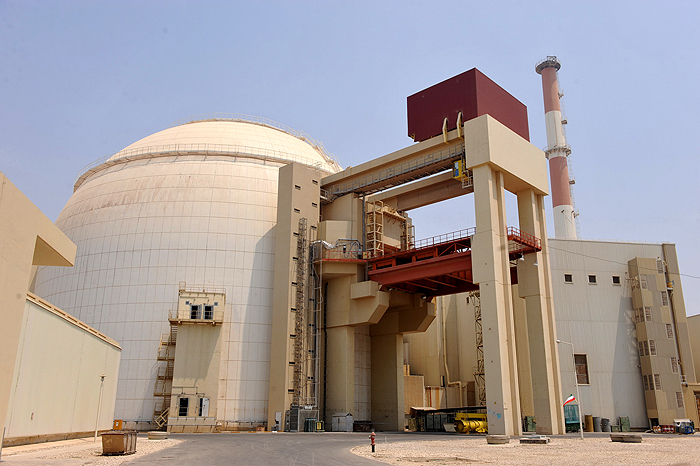
One the strategies Rosatom developed was the Build Own Operate (BOO) plan. Under it, Russia would undertake building and operating the nuclear power plants – then start influencing the foreign policy decisions of the country supposedly to "protect" the nuclear power plants from supposed terrorists, and from there to project military influence in the region as it has done in Syria, with its naval base at Tartus and its air base at Latakia.

Russia has already strengthened its defense and military cooperation with Iran and Turkey.
Rosatom has also signed nuclear cooperation agreements with Turkey and Saudi Arabia, and could also potentially play a significant role in the Gulf Cooperating Countries (GCC) Countries. Bahrain has already expressed desire for nuclear energy; Rosatom is certainly an option. Middle East countries all require inexpensive electricity; Russia would undoubtedly be happy to supply -- among other ventures -- nuclear power plants.

Rosatom will most likely face competition from other big players in the region such as China and South Korea, which are also trying to gain a foothold in the Middle East's nuclear energy market. South Korea has been working on enhancing nuclear cooperation with Jordan; the UAE has four South Korean nuclear power plants under construction. South Korea's conglomerate, Korean Electric Power Corporation (KEPCO), however, is apparently facing debt problems , a possible advantage for Rosatom. In addition, South Korea's new President Moon Jae-in evidently opposes nuclear energy and has ordered nuclear energy phased out. If South Korea walks out of the nuclear energy market in Middle East, that would give Rosatom one less competitor to deal with.

Meanwhile, more openings have appeared for Russia as Westinghouse Electric Co., once a subsidiary of Toshiba, has gone bankrupt, while the SA Areva of France is coping to recover from stagnation. At the moment, the only serious major threat to Rosatom would be China.

Russia, however, seems to be finding it easy to maneuver itself in the Middle East to establish a nuclear -- and diplomatic -- monopoly in the region. It has been providing lucrative offers to the Middle Eastern countries including financial packages for the nuclear deal. This means that Russia pre-financed the nuclear cooperation by providing loans that will later be paid off by the countries to which the loan has been provided. Russia has also been ensuring nuclear safety and waste management for the countries with which it is involved and sometimes even reprocesses spent fuel, as with Iran.


The Russian-built Bushehr nuclear power plant, in Iran. (Photo by IIPA via Getty Images)

Middle Eastern countries seem as eager to partner with a great power such as Russia as Russia does to partner with them. That way, "everyone" in the region could enjoy greater influence, militarily and otherwise.

Debalina Ghoshal, an independent consultant specializing in nuclear and missile issues, is based in India.

Source: https://www.gatestoneinstitute.org/11351/russia-nuclear-diplomacy

Follow Middle East and Terrorism on Twitter

Copyright - Original materials copyright (c) by the authors.